Portuguese Food Guide: Traditional Dishes & Regional Specialties
July 7, 2026
If you're wondering what to eat in Portugal, start with the country's classics: Francesinha in Porto, Bacalhau à Brás or Bacalhau à Gomes de Sá almost anywhere, Caldo Verde in the Minho, Leitão à Bairrada in Central Portugal, Cataplana de Marisco in the Algarve, Carne de Porco à Alentejana in the Alentejo, and, of course, a warm Pastel de Nata fresh from the oven.
But Portuguese food is much more than a list of famous dishes.
It's a cuisine shaped by one of Europe's longest coastlines, centuries of seafaring, mountain villages that relied on preserving every scrap of meat, convent kitchens that transformed leftover egg yolks into extraordinary pastries, and trade routes that stretched from Brazil to India, Japan, and Africa.
The best meal you eat in Portugal will probably not be the one with the longest queue outside.
It might be grilled sardines on a plastic table during Lisbon's June festivals. It might be an elderly couple serving slow-cooked chanfana in a tiny restaurant in the Beiras. It might be a family-run tasca in Porto where the Francesinha sauce hasn't changed in fifty years because nobody has ever asked it to.
This guide isn't simply a collection of Portuguese recipes.
It's a guide to understanding why Portugal eats the way it does, where each dish belongs, when to order it, and what makes it worth travelling for.
Whether you're planning your first trip to Portugal or looking to explore beyond the famous custard tarts, these are the dishes, traditions and regional specialties that define one of Europe's most underrated cuisines.
What will be covered in this guide:
• Part 1: Why Portuguese Food is Unique
• Part 2: Fish and Seafood
• Part 3: Meat Dishes
• Part 4: Soups, Sandwiches and Petiscos
• Part 5: Desserts, Cheeses and Drinks
• Part 6: Seasonal Guide, Local Customs & FAQ
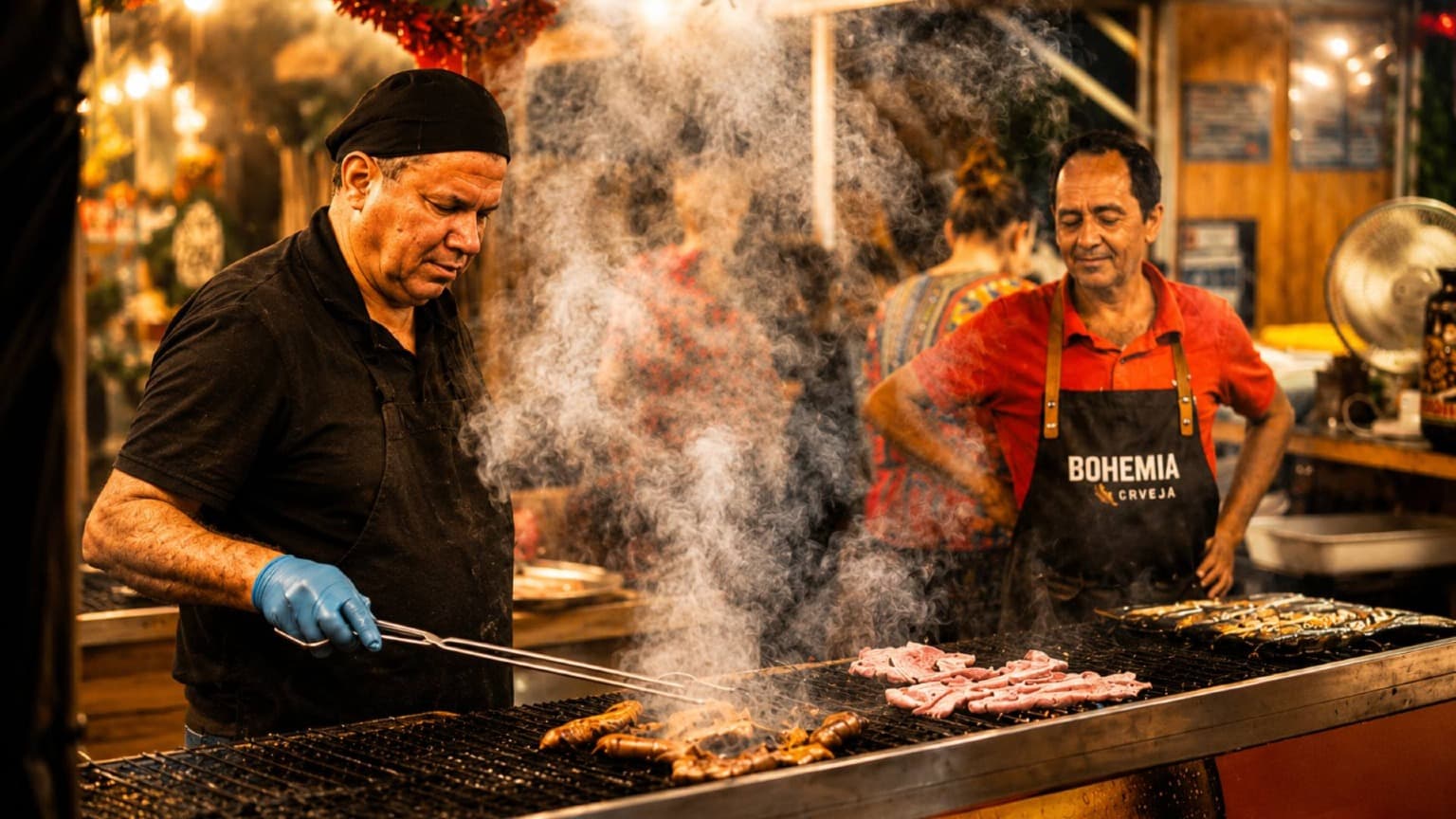
Portuguese cuisine comes alive during local festivals, where grilled meats, fresh seafood, and traditional recipes bring communities together around the table.
PART 1: Why Portuguese Food Is Unlike Any Other Mediterranean Cuisine
People often group Portugal with Spain, Italy and Greece under the convenient label of "Mediterranean food."
Geographically, that makes sense.
Culinarily, it doesn't.
Portugal faces the Atlantic, not the Mediterranean, and that difference influences almost everything that reaches the table.
The ocean provides sardines, octopus, clams, goose barnacles, sea bass, monkfish and countless other species that have shaped Portuguese cooking for centuries. Inland, colder winters and poorer soils encouraged a very different cuisine built around pork, smoked sausages, cabbage, beans, chestnuts and bread. Add one of Europe's oldest wine cultures, abundant olive oil, and nearly 500 years of global maritime exploration, and Portuguese cuisine becomes something entirely its own.
Unlike many modern food cultures that celebrate innovation, Portugal often celebrates continuity.
Many of the country's most beloved dishes would still be immediately recognizable to someone who lived here two hundred years ago.
Recipes have been refined over generations rather than reinvented every decade.
That's one reason Portuguese food feels deeply connected to place. Every region still cooks the dishes that made sense for its landscape long before tourism arrived.
Another defining feature is restraint.
Portuguese cooking rarely tries to impress with complicated techniques or elaborate presentation. Instead, it relies on excellent ingredients prepared simply and confidently. Fresh sardines need little more than coarse salt and charcoal. A perfectly roasted octopus depends more on timing than seasoning. Great olive oil appears everywhere, not as decoration but as an essential ingredient.
It's food designed to nourish before it performs.
That simplicity can surprise visitors who arrive expecting richer sauces or heavier seasoning. Instead, they discover flavours that are cleaner, more direct and deeply satisfying.
Then there is bacalhau.
Perhaps nowhere else in the world has embraced an ingredient so completely despite never producing it locally. Atlantic cod isn't caught in Portuguese waters, yet salted cod became the country's culinary symbol thanks to centuries of preservation techniques and long-distance trade with northern Europe and Newfoundland. Portuguese cooks proudly claim there are 1001 ways to prepare bacalhau, more than one for every day of the year. Whether or not the number is literal hardly matters; it reflects the extraordinary place cod occupies in Portugal's culinary identity.
The country's sweet tooth tells another story.
Many of Portugal's most famous desserts were born inside convents between the seventeenth and nineteenth centuries. Egg whites were commonly used to starch religious habits and clarify wine, leaving kitchens with a surplus of yolks. Rather than waste them, monks and nuns combined them with sugar (another luxury flowing into Portugal from Madeira and later Brazil) to create rich pastries that remain icons today. Pastéis de nata may be the most famous, but they're only one member of an astonishing family of convent sweets.
Portugal's former overseas empire also left lasting marks on the national table.
Piri-piri chillies reached Portuguese kitchens through southern Africa. Vindaloo evolved from Portuguese marinades in Goa. Tempura is widely believed to trace its roots to Portuguese missionaries introducing battered vegetables to Japan during the sixteenth century. Even tea drinking in Japan has surprising Portuguese connections.
Yet despite influences arriving from four continents, Portuguese food never lost its identity.
Instead, it absorbed new ingredients while remaining unmistakably Portuguese.
Perhaps that's why travellers often struggle to describe Portuguese cuisine after visiting.
It isn't quite Mediterranean cuisine.
It isn't Spanish.
It isn't French.
It isn't Italian.
It's something quieter, older and more deeply rooted in everyday life.
And that's exactly what makes it memorable.
👉 Want to experience authentic Portuguese food with a local guide? Join Cooltour Oporto's Porto Food Tour, where local stories, traditional recipes, and authentic Portuguese flavors come together in one unforgettable culinary experience. If you're travelling beyond Porto, explore our food experiences across Portugal, from Lisbon and the Douro Valley to the Algarve, Madeira, and the Azores.
Portuguese Food by Region
One of the easiest mistakes visitors make is assuming they can eat "Portuguese food" anywhere in Portugal.
Technically, they can.
But they shouldn't.
Portugal may be one of Europe's smaller countries, yet its regional cooking is remarkably distinct. A dish that defines one area may be almost impossible to find done properly just two or three hours away. Understanding those regional differences is one of the quickest ways to eat better during your trip.
Here's a simple way to think about it.
Porto: Francesinha, Tripas à Moda do Porto, Bacalhau à Gomes de Sá
Portugal's capital of comfort food, historic taverns and hearty northern cooking.
Northern Portugal: Caldo Verde, Rojões, Alheira, Posta Mirandesa, Vinho Verde
Stretching from the green landscapes of Minho to the mountains of Trás-os-Montes, Northern Portugal is known for family farming, smoked meats, rustic cuisine, and some of the country's oldest culinary traditions.
Douro Valley: Roast kid, smoked meats, almonds, Port and Douro DOC wines
One of the world's oldest demarcated wine regions, where traditional cuisine has evolved alongside centuries of winemaking.
Central Portugal: Leitão à Bairrada, Chanfana, Serra da Estrela cheese
From the Beiras to Bairrada, Central Portugal combines rustic mountain cooking with world-famous cheeses, roasted suckling pig, and excellent sparkling wines.
Lisbon: Bacalhau dishes, Pastéis de Nata, Amêijoas à Bulhão Pato
Centuries as Portugal's maritime capital have created one of the country's richest and most varied food cultures.
Alentejo: Açorda, Carne de Porco à Alentejana, black pork
Bread, olive oil and slow cooking define Portugal's largest region.
Algarve: Cataplana, grilled sardines, octopus, seafood rice
Fresh Atlantic seafood, Moorish influences, citrus fruits, and sunshine shape the cuisine of Portugal's southern coast.
Madeira: Espetada, Bolo do Caco, Black Scabbardfish, Poncha
The volcanic island of Madeira is famous for its skewered beef, garlic bread, tropical fruit, fortified wine, and unique island traditions.
Azores: Cozido das Furnas, Queijo São Jorge, limpets, fresh tuna
The Azores offer one of Portugal's most distinctive food cultures, where volcanic cooking, exceptional dairy products, and Atlantic seafood define the local cuisine.
One pattern becomes obvious almost immediately.
The closer you are to the Atlantic, the more seafood dominates the menu.
Travel inland and fish gradually gives way to pork, goat, lamb, smoked sausages and bread-based dishes designed to sustain farming communities through cold winters.
Even desserts tell the same geographical story.
Around Lisbon you'll find convent pastries rich with egg yolks and sugar. In the Douro and Trás-os-Montes, almonds and honey appear more often. The Algarve introduces figs, oranges and almonds inherited from centuries of Moorish influence.
Rather than trying to sample everything in one trip, it's better to eat each region for what it does best.
Order seafood by the coast.
Eat pork in the north.
Don't leave Bairrada without trying leitão.
Save room for pastries wherever you are.
Portugal rewards travellers who follow its geography.
And perhaps that's the country's greatest culinary secret: the further you move away from a generic tourist menu and towards what each region has cooked for generations, the more memorable every meal becomes.
👉 Planning a food trip around Portugal? Explore our regional Portugal Travel Guides to discover what to eat, where to go, and the best local experiences in Porto, Lisbon, the Douro Valley, the Algarve, Madeira, the Azores, and beyond.
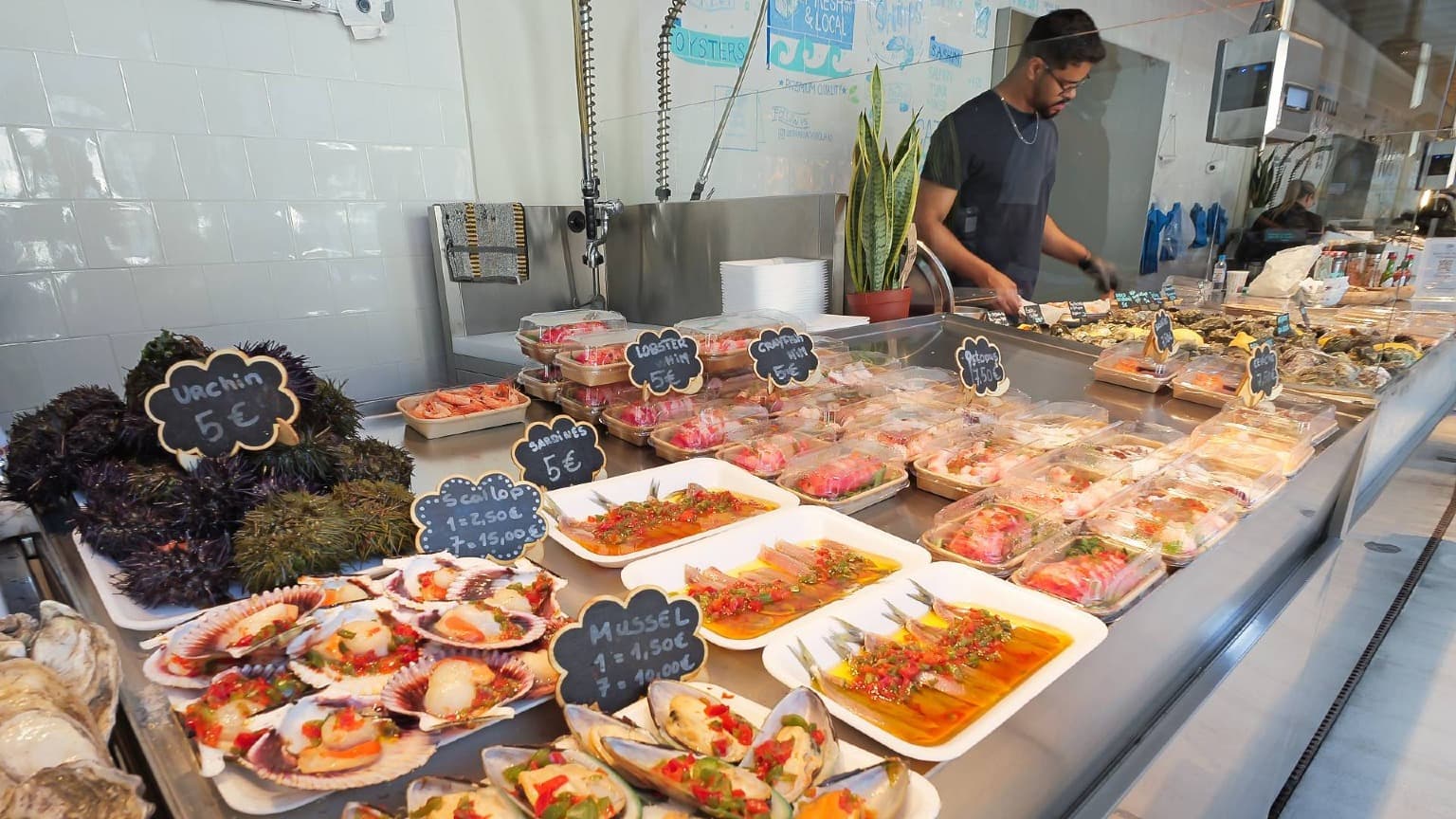
Mercado do Bolhão in Porto showcases the fresh ingredients, seafood, and regional specialties that define Portuguese cuisine from north to south.
PART 2: The Atlantic Table: Portugal's Greatest Fish and Seafood Dishes
If there's one ingredient that defines Portugal more than any other, it isn't olive oil or pork.
It's the Atlantic Ocean.
For more than 800 kilometres (500 miles), Portugal faces the sea. Long before beach holidays became fashionable, fishing villages dotted the coastline from Minho to the Algarve, supplying markets with sardines, octopus, shellfish, sea bass and countless other species. That relationship with the ocean shaped not only what Portuguese people eat, but how they cook.
Unlike many seafood cuisines that rely on heavy sauces or complex seasoning, Portuguese cooking often does the opposite. The fresher the fish, the less it needs. Olive oil, garlic, parsley, coriander, coarse sea salt and charcoal are usually enough.
That's why some of Portugal's greatest seafood dishes appear surprisingly simple.
The skill lies not in disguising the ingredient, but in knowing when to leave it alone.
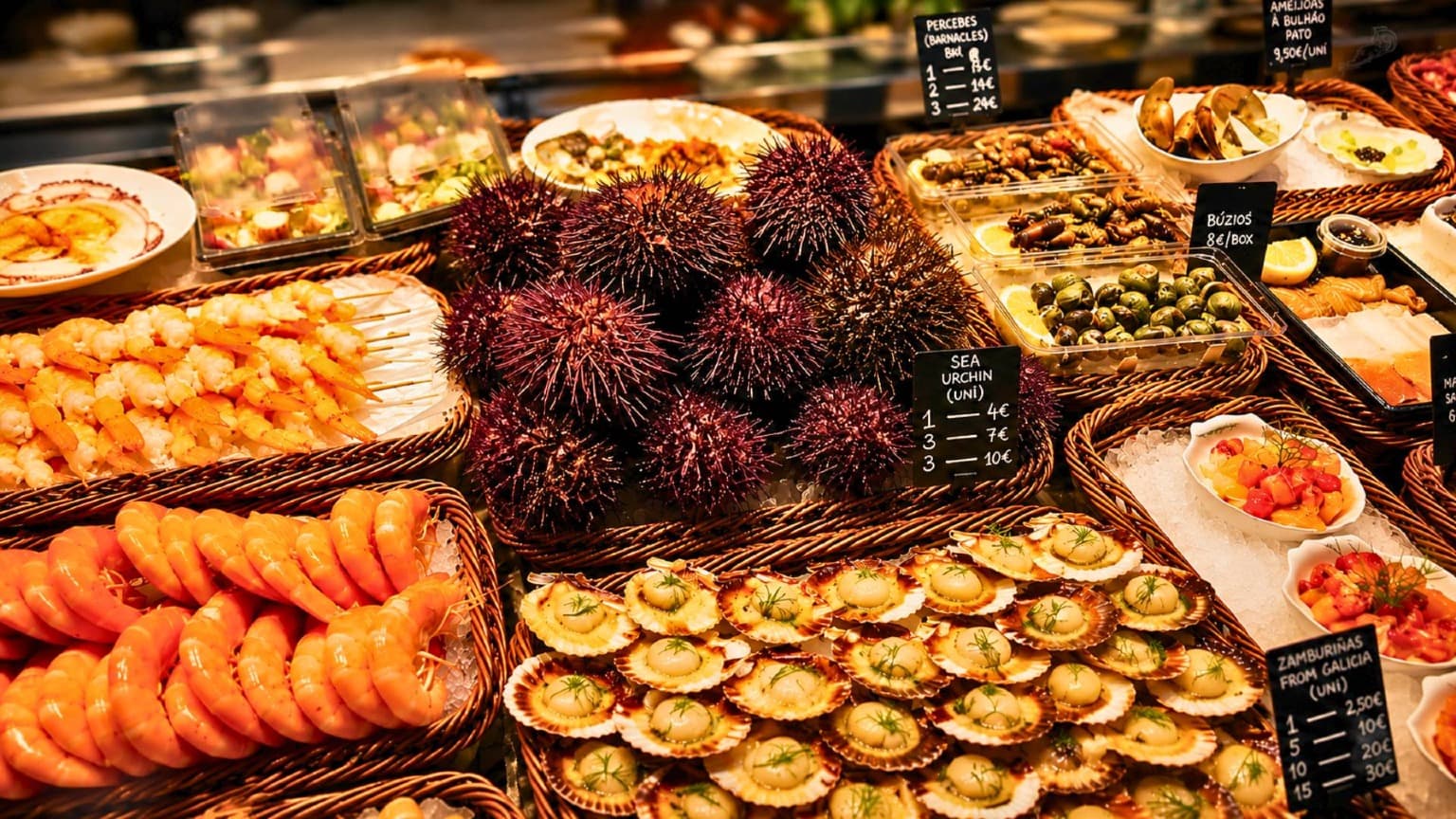
Fresh fish and seafood have shaped Portuguese cuisine for centuries, and markets such as Mercado do Bolhão continue to celebrate this rich Atlantic tradition.
Bacalhau: The Fish That Built a Nation
If Portugal had an unofficial national ingredient, it would be bacalhau (salt cod).
Curiously, Atlantic cod isn't found in Portuguese waters.
For centuries, Portuguese fishermen travelled to the cold seas around Newfoundland, Greenland and later Norway and Iceland, preserving their catch with salt so it could survive the long voyage home. Over time, what began as a practical method of preservation became a defining feature of Portuguese identity.
Today, bacalhau appears everywhere—from neighbourhood cafés serving affordable daily specials to Michelin-starred restaurants reinventing traditional recipes.
Ask a Portuguese family for the "best" bacalhau recipe and you'll probably receive three different answers before dessert.
The old saying claims there are 1001 recipes, more than one for every day of the year.
Whether that's true hardly matters.
What matters is that no other ingredient appears so consistently across Portuguese tables.
What does bacalhau taste like?
After being soaked in cold water for up to three days to remove excess salt, bacalhau develops a firm, flaky texture unlike fresh cod. The flavour is richer and more savoury, making it ideal for baking, roasting, shredding or grilling.
Best season: All year.
Although particularly associated with Christmas Eve, bacalhau is eaten throughout Portugal in every season.
Typical price: €12–25 depending on the preparation and restaurant.
Best wine pairing:
• Vinho Verde with lighter preparations
• White Douro wines
• Dão whites
• Full-bodied Douro reds for roasted versions
👉 Planning to taste bacalhau during your trip? Don’t miss our guide to the best restaurants to eat bacalhau in Portugal , and explore the deeper story behind the dish in our article Bacalhau in Portugal: History, Traditions & National Dish.
Among the hundreds of traditional preparations, a handful of recipes have become true icons of Portuguese cuisine.
Bacalhau à Brás
For many first-time visitors, this is the perfect introduction to Portuguese cooking.
Instead of serving cod as a fillet, Bacalhau à Brás transforms it into something closer to comfort food.
Salt cod is shredded into delicate flakes, then gently cooked with onions, tiny matchstick potatoes and softly scrambled eggs. Black olives and chopped parsley finish the dish, adding freshness and colour.
The result looks deceptively simple.
In reality, balance is everything.
The eggs should remain creamy rather than dry. The potatoes should retain a slight crunch. The cod should season the dish without overwhelming it.
Done well, it's one of Portugal's most satisfying meals.
Local tip: Many restaurants serve Bacalhau à Brás as part of their weekday lunch menu. It's one of the best-value traditional meals you'll find anywhere in Portugal.
Best region: Nationwide, particularly Lisbon.
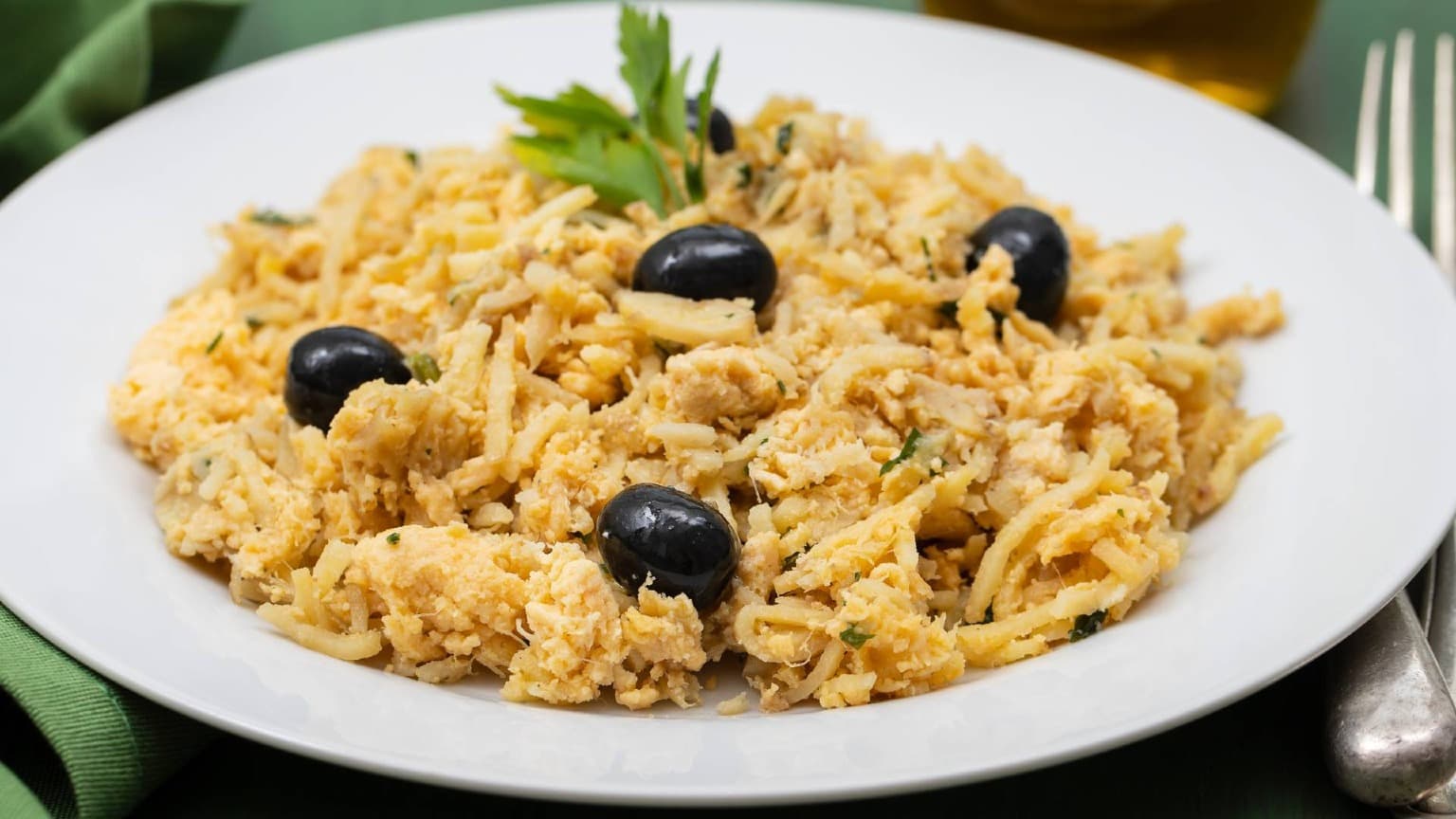
Bacalhau à Brás is one of Portugal's most beloved codfish recipes, combining shredded bacalhau, eggs, potatoes, and olives into a comforting national favourite.
Bacalhau à Gomes de Sá
If Porto has a signature cod dish, this is it.
Created in the nineteenth century by Porto merchant José Luís Gomes de Sá, it combines soaked cod with sliced potatoes, onions, garlic, olive oil and boiled eggs before baking everything together until golden.
Unlike Bacalhau à Brás, which feels homely and informal, Gomes de Sá is elegant in its simplicity.
Every ingredient keeps its identity while contributing to the whole.
It's also one of the easiest bacalhau dishes to recreate at home, which explains why it remains popular at Portuguese family gatherings.
Best region: Porto and Northern Portugal.
Perfect with: A crisp white wine from the Douro or Minho.
Bacalhau à Lagareiro
Few Portuguese dishes celebrate olive oil quite like Bacalhau à Lagareiro.
Large pieces of cod are roasted until lightly caramelised before being generously covered with extra virgin olive oil infused with garlic.
Around it sit roasted baby potatoes that have been gently crushed—known as batatas a murro, literally "punched potatoes"—allowing the olive oil to soak into every crack.
The name Lagareiro refers to workers in traditional olive mills (lagares), who historically enjoyed abundant olive oil after the harvest.
Whether the story is entirely factual or partly folklore hardly matters.
Either way, the dish demonstrates one of Portuguese cooking's defining principles:
When your ingredients are exceptional, generosity beats complexity.
Worth travelling for? Yes. Particularly in Northern Portugal.
Polvo à Lagareiro: The Dish That Changes People's Minds About Octopus
Many travellers arrive in Portugal convinced they don't like octopus.
Many leave wondering why nobody cooks it this well at home.
The secret isn't exotic seasoning.
It's patience.
Portuguese chefs first simmer the octopus until perfectly tender before roasting it at high heat to develop lightly crisp edges while keeping the inside soft and succulent.
Like its bacalhau counterpart, Polvo à Lagareiro arrives surrounded by smashed potatoes and generous olive oil.
It's rich without feeling heavy, delicate without being bland.
Local tip: The best octopus often comes from restaurants near the coast, especially around Matosinhos, Nazaré and parts of the Algarve.
Best wine pairing:
• Mineral white wines from the Douro
• Vinho Verde.
Cataplana de Marisco: The Algarve in One Dish
If Porto's culinary symbol is the francesinha, the Algarve's is undoubtedly the cataplana.
Named after the distinctive clam-shaped copper pan in which it's cooked, cataplana is both a recipe and a cooking vessel.
The tightly sealed lid traps steam, allowing shellfish, fish, vegetables, herbs and wine to cook gently together while concentrating every flavour.
Open the lid at the table and an aromatic cloud of garlic, coriander, tomatoes and seafood escapes all at once.
It's theatrical, but never gimmicky.
Traditional versions vary from restaurant to restaurant, though most include clams, prawns, mussels, white fish and occasionally chorizo.
Like many Portuguese dishes, there's no single "correct" recipe.
Every family insists theirs is.
Best region: The Algarve.
Best season: Late spring through early autumn.
Typical price: Usually €40–70 for two people.
Best wine pairing:
• A crisp Algarve white
• Vinho Verde.
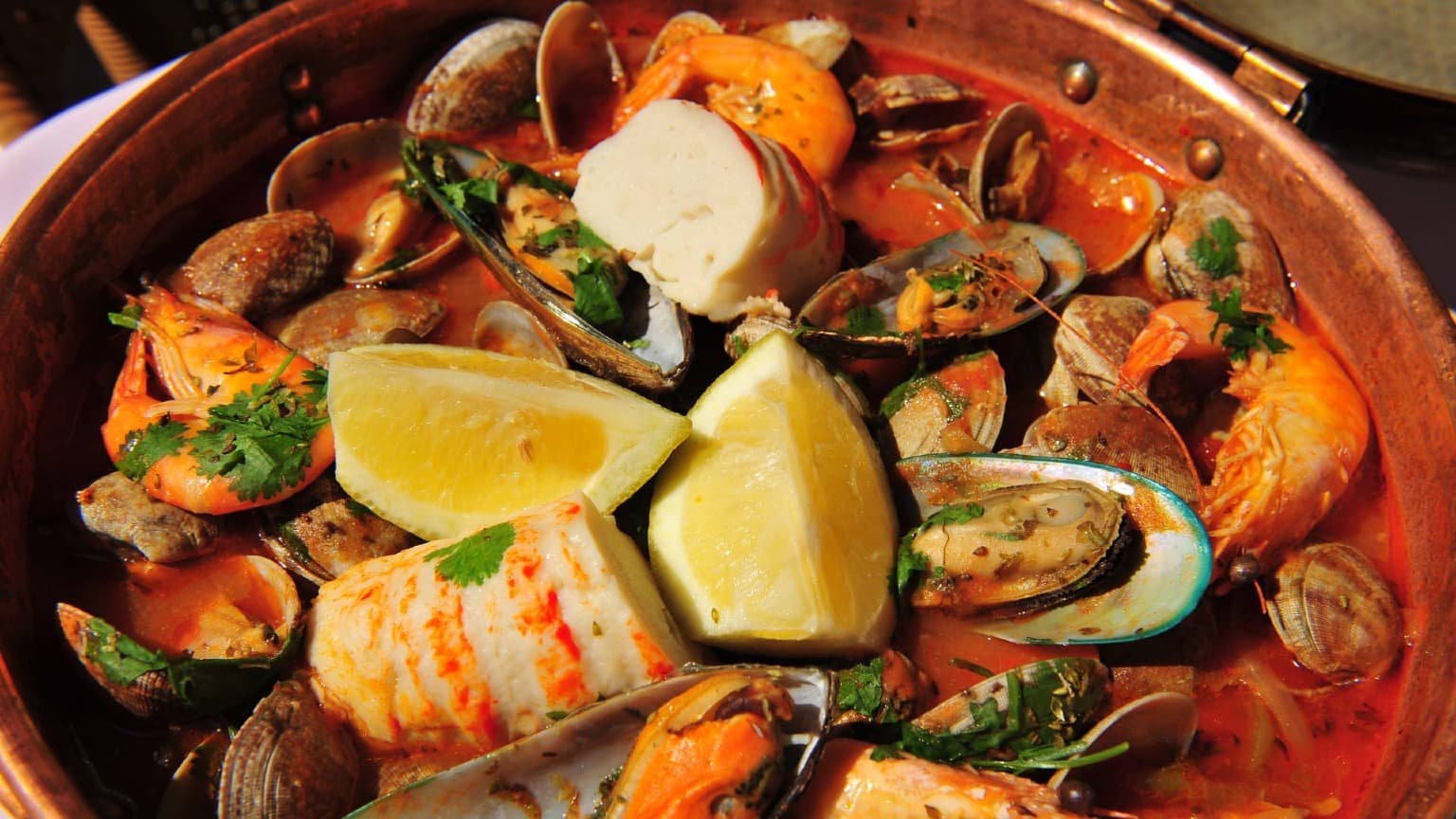
The Algarve's famous cataplana combines fresh seafood, herbs, and local flavours in one of southern Portugal's signature dishes.
Amêijoas à Bulhão Pato: Proof That Simplicity Wins
Named after the nineteenth-century Portuguese poet Raimundo António de Bulhão Pato, this dish perfectly captures the philosophy of Portuguese seafood cooking.
Fresh clams.
Garlic.
Olive oil.
White wine.
Fresh coriander.
Lemon.
That's essentially it.
No cream.
No butter-heavy sauce.
No unnecessary embellishment.
Served with crusty bread for soaking up every last drop of broth, it's one of those dishes that quietly convinces visitors Portuguese cuisine deserves far more international recognition than it receives.
Local tip: Always order extra bread. You'll need it.
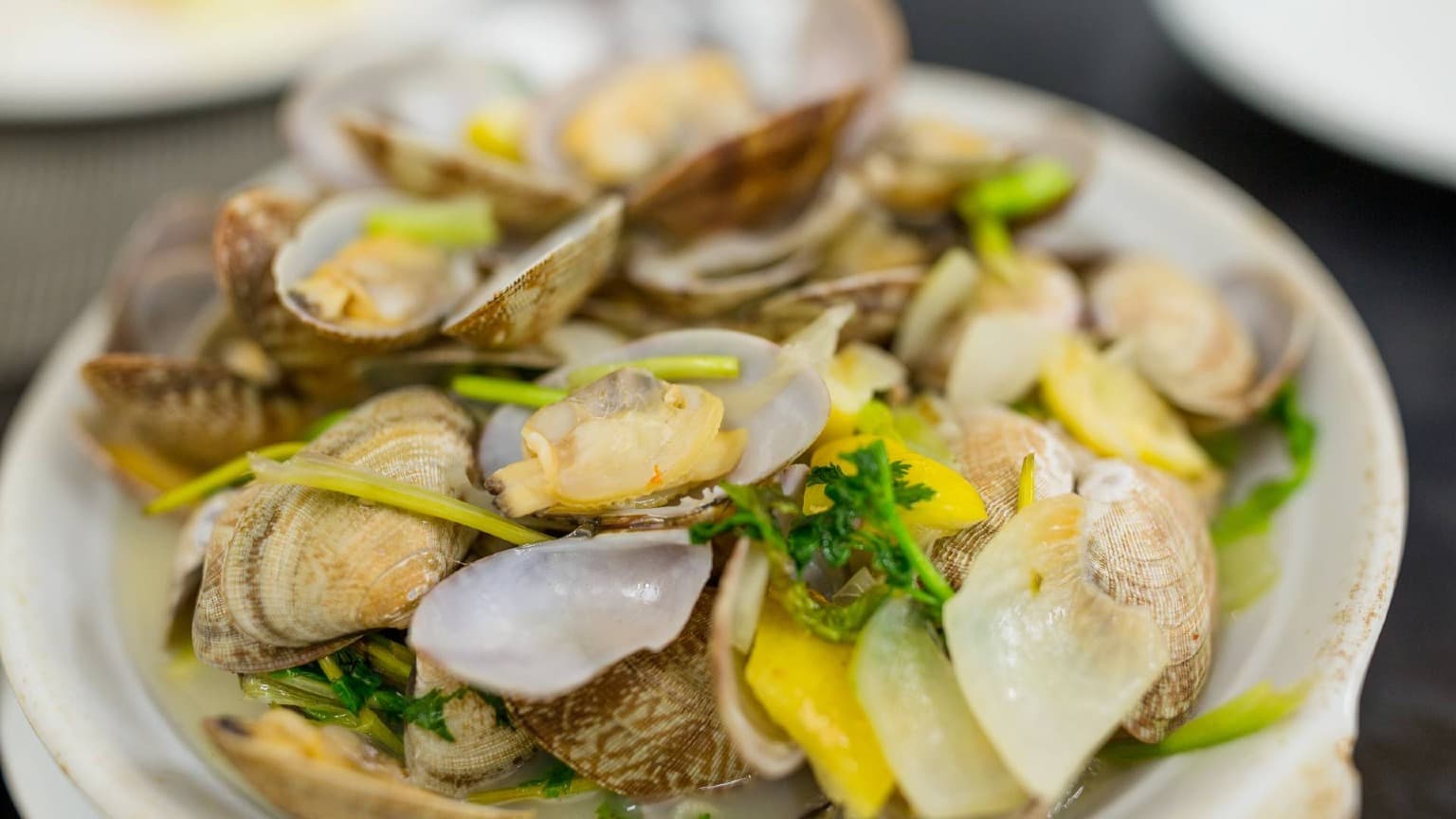
Amêijoas à Bulhão Pato is one of Portugal's finest seafood dishes, celebrating the simplicity of fresh clams, garlic, olive oil, and coriander.
Sardinhas Assadas: Portugal's Taste of Summer
If you visit Portugal in June, you'll smell the sardines before you see them.
Entire neighbourhoods transform into open-air dining rooms as charcoal grills appear outside houses, bars and temporary street stalls.
Smoke drifts through narrow streets.
Music fills the squares.
Plastic tables spill onto pavements.
Neighbours become dinner companions.
Nowhere captures this atmosphere better than Lisbon during the Santos Populares celebrations or Porto during the Festa de São João.
Despite their international reputation, Portuguese grilled sardines are one of the country's simplest and most beloved summer traditions.
Fresh sardines are sprinkled with coarse sea salt, grilled over charcoal and served with boiled potatoes, roasted peppers or thick slices of rustic bread.
Nothing more.
Nothing less.
Best season: June to August.
Outside summer, many restaurants use frozen sardines.
There's nothing wrong with that—but if you want to understand why Portuguese people become almost emotional about sardines, come in June.
Local etiquette: Don't be afraid to eat them with your hands.
Locals often do.
👉 Planning to visit Portugal in June? Discover the traditions behind Santo António in Lisbon, where grilled sardines, music, and street parties take over the city's historic neighbourhoods, or experience São João in Porto, the country's biggest midsummer celebration, famous for its fireworks, concerts, and unforgettable atmosphere.
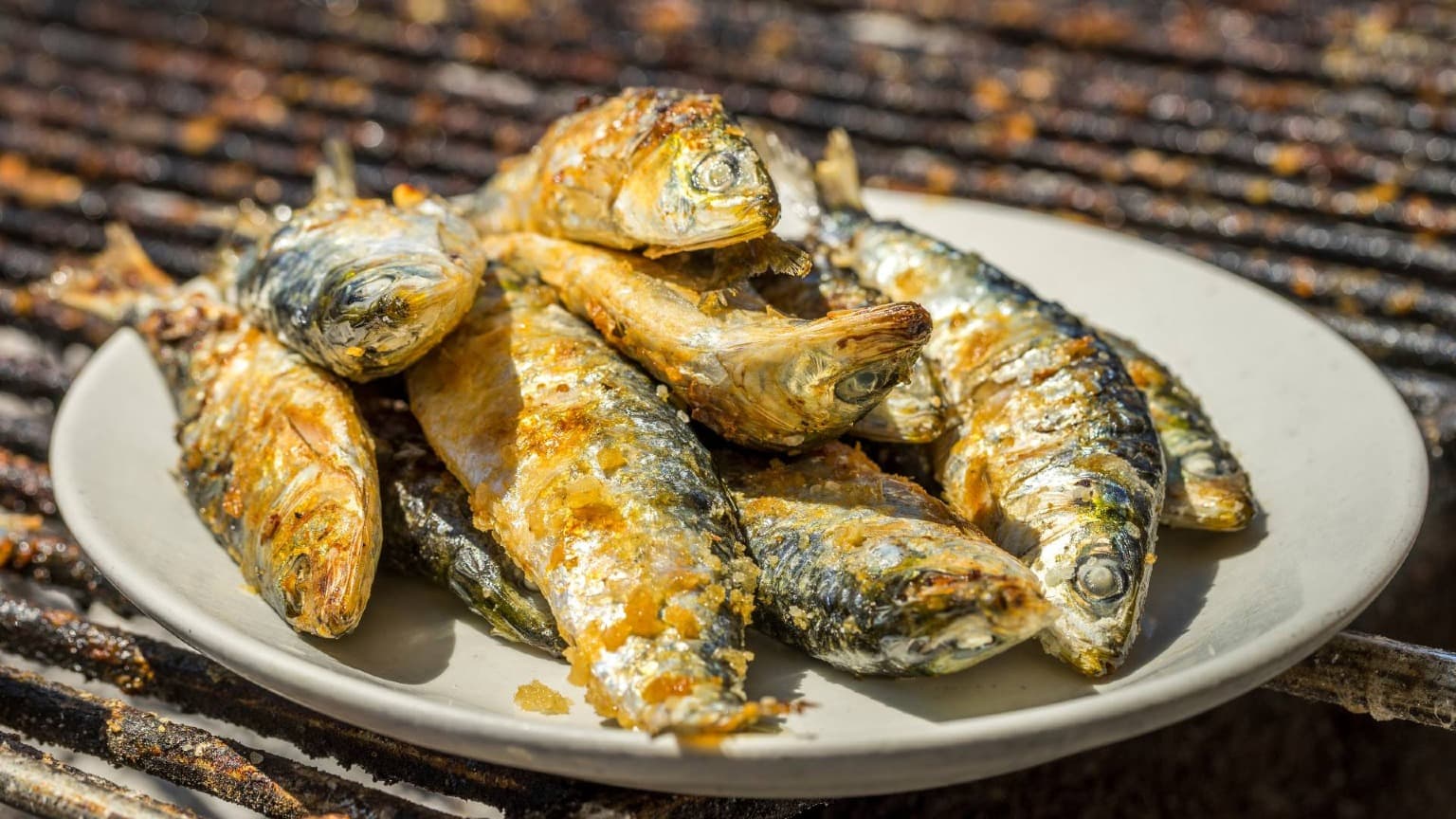
Grilled sardines are one of Portugal's defining summer traditions, especially during the popular June festivals of Lisbon and Porto.
Arroz de Marisco: Portugal's Greatest Rice Dish
Visitors often arrive expecting seafood paella.
Instead, they discover something arguably even better.
Unlike Spanish paella, Portuguese Arroz de Marisco is intentionally loose and creamy, somewhere between risotto and soup.
The rice absorbs an intensely flavoured broth made from shellfish, tomatoes, garlic, onions, herbs and white wine while remaining wonderfully silky.
Prawns, crab, mussels, clams and sometimes lobster complete the dish.
It's deeply comforting without feeling heavy.
Many Portuguese consider it the country's finest seafood recipe.
It's usually prepared for sharing, making it one of the best dishes to enjoy with family or friends.
Best region: The central coast, especially around Peniche, Nazaré and Aveiro.
Worth travelling for? Absolutely.
Fresh Grilled Fish: Portugal's Everyday Luxury
Some of Portugal's best seafood dishes don't have famous names.
Sea bream (dourada), sea bass (robalo), and many other species are simply grilled over charcoal, seasoned with coarse sea salt, and finished with excellent olive oil.
Served with boiled potatoes and seasonal vegetables, they demonstrate one of Portuguese cuisine's defining qualities.
Fresh ingredients prepared with remarkable restraint.
Ordering Seafood Like a Local
A few small habits will improve almost every seafood meal in Portugal:
• Whenever possible, choose the catch of the day. Many restaurants display it near the entrance.
• Lunch is often when fishing boats have supplied the freshest catch.
• Ask your server what arrived that morning instead of automatically ordering the most famous dish.
• Don't overlook simple grilled fish. Some of Portugal's most memorable meals consist of little more than perfectly grilled sea bass, potatoes and olive oil.
• If a seafood restaurant is full of Portuguese families on a Sunday afternoon, that's usually a very good sign.
Portuguese seafood isn't memorable because it's elaborate.
It's memorable because generations of cooks learned that extraordinary ingredients rarely need improving.
PART 3: Portugal's Heartiest Meat Dishes: Pork, Beef, Goat & Sunday Lunch
While Portugal's coastline receives much of the attention, much of the country's culinary soul lies inland.
Travel away from the Atlantic and the menu changes almost immediately. Fish gives way to pork, lamb, goat and beef. Olive groves replace fishing harbours. Winters become colder. Villages become smaller. Recipes become slower.
For centuries, families depended on preserving food through salting, smoking and curing. Annual pig slaughters weren't simply practical. They were social events that brought together neighbours and extended families to prepare enough meat, sausages and cured products to last through the year.
Many of Portugal's most celebrated meat dishes were born from that tradition.
They aren't restaurant inventions.
They're recipes that survived because generation after generation kept cooking them.
Francesinha: Porto's Most Famous Comfort Food
No dish is more closely associated with Porto than the francesinha.
At first glance, it looks almost excessive.
Slices of bread surround layers of steak, cured ham, linguiça and fresh sausage before everything is covered with melted cheese and generously smothered in a rich tomato-and-beer sauce. Many restaurants crown it with a fried egg, while a portion of crispy fries arrives alongside for soaking up the sauce.
It isn't subtle.
It isn't elegant.
It isn't trying to be.
The francesinha is unapologetically generous, much like Porto itself.
A French inspiration with unmistakably Portuguese character
The dish is generally credited to Daniel David da Silva, who returned to Porto in the late 1950s after working in France and Belgium. Inspired by the French croque-monsieur, he imagined a version better suited to northern Portuguese tastes: larger, richer and bold enough to satisfy workers after a long day's labour.
The idea caught on.
Today almost every Porto resident has a favourite restaurant, and debates over which serves the city's best francesinha can become surprisingly passionate.
The sauce remains the closely guarded secret.
Every restaurant insists theirs is different.
Most are right.
What does it taste like?
Imagine the comfort of a grilled cheese sandwich, the richness of a steak dinner and the warmth of a slow-cooked tomato sauce, all combined into one remarkably satisfying meal.
No two versions taste exactly alike because the sauce defines the dish.
Some lean towards beer.
Others towards tomato.
Some add a gentle chilli warmth.
Others remain almost sweet.
Best place to eat it: Porto.
Although francesinhas are served throughout Portugal, most locals agree they are rarely better outside their hometown.
Best time to eat: Lunch.
Many first-time visitors underestimate just how filling it is.
Locals rarely schedule another large meal afterwards.
Best drink: A cold Portuguese beer remains the traditional choice.
👉 Planning to try a Francesinha in Porto? Learn more about its origins in our guide to the history of the Francesinha and Porto’s food culture, discover how to make it at home with our authentic Francesinha recipe, and explore our guide to the best Francesinha restaurants in Porto (available soon).
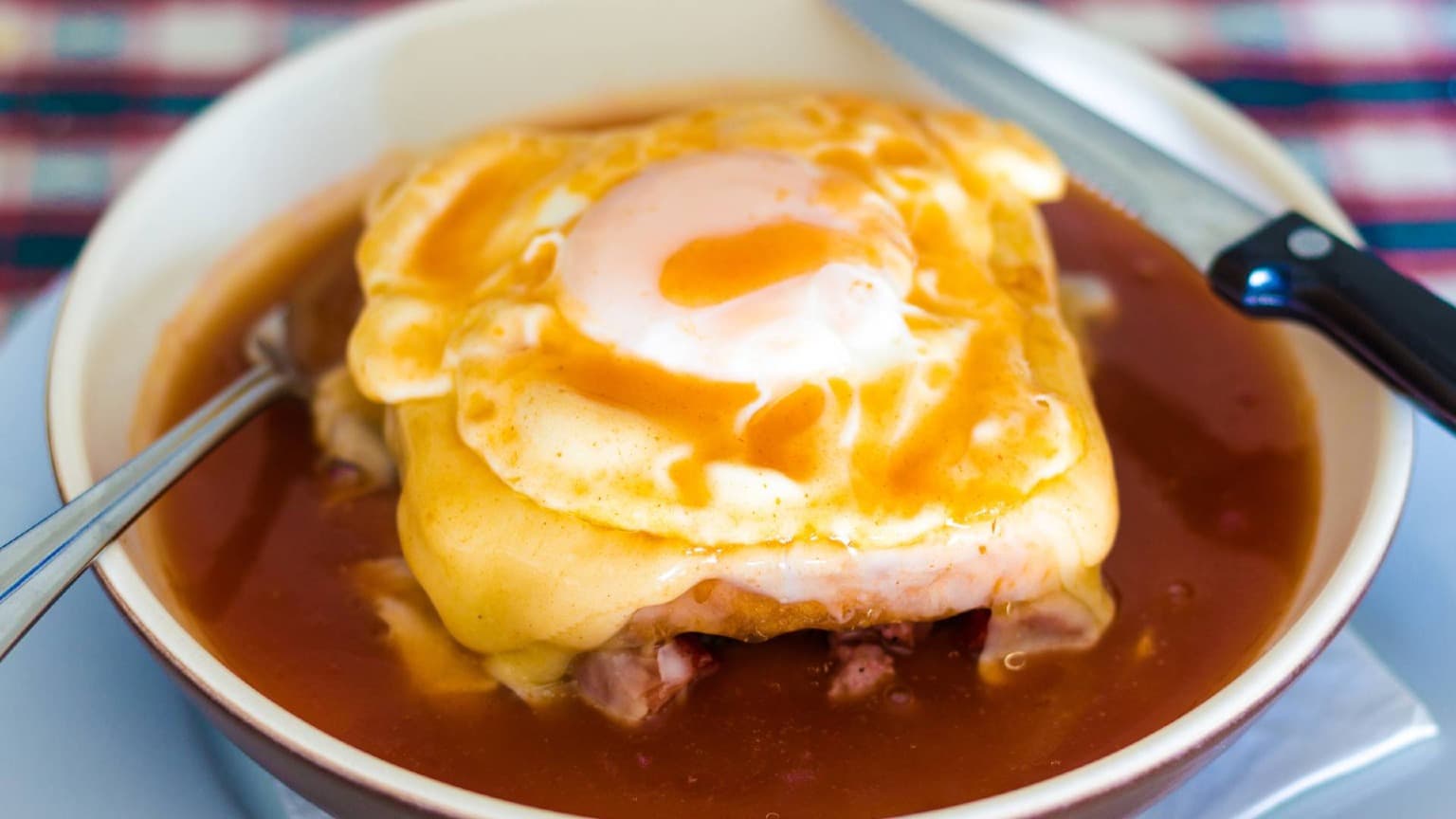
Created in Porto, the Francesinha has become one of Portugal's most famous comfort foods thanks to its rich sauce and generous layers of meat.
Tripas à Moda do Porto: The Dish That Gave Porto Its Nickname
Long before Porto became famous for Port wine or francesinhas, it was already known for tripas.
According to one of Portugal's best-loved legends, when Prince Henry the Navigator prepared his fleets for the conquest of Ceuta in 1415, the people of Porto donated the city's finest cuts of meat to supply the expedition.
Left with little more than tripe and offal, they transformed necessity into a hearty stew.
Whether the story is entirely historical or partly mythical hardly matters.
The nickname tripeiros ("tripe eaters") has remained proudly attached to Porto ever since.
Today's version combines tripe with white beans, smoked sausages, pork, carrots and aromatic spices before serving everything over rice.
It's rich, deeply savoury and surprisingly delicate compared with many European tripe dishes.
Should you order it? If you enjoy discovering genuinely local food rather than simply ticking famous dishes off a list, absolutely.
Tripas tells you far more about Porto's history than another francesinha ever could.
Leitão à Bairrada: Portugal's Perfect Roast
Few Portuguese dishes inspire as much devotion as Leitão à Bairrada.
Raised in the Bairrada region between Porto and Coimbra, young suckling pigs are seasoned simply with garlic, pepper and salt before roasting slowly in wood-fired ovens.
The goal is perfection in contrast.
The meat should remain meltingly tender.
The skin should shatter like glass.
Achieving both simultaneously requires remarkable skill, which explains why restaurants specialising in leitão often dedicate decades to refining the technique.
It's no coincidence that the dish was recognised as one of Portugal's Seven Gastronomic Wonders.
Local tip: Don't skip the sparkling wine.
Bairrada is also one of Portugal's finest sparkling wine regions, and locals almost always pair the richness of the pork with a chilled glass.
Worth travelling for? Without question.
Many Portuguese happily drive several hours simply for Sunday lunch in Mealhada.
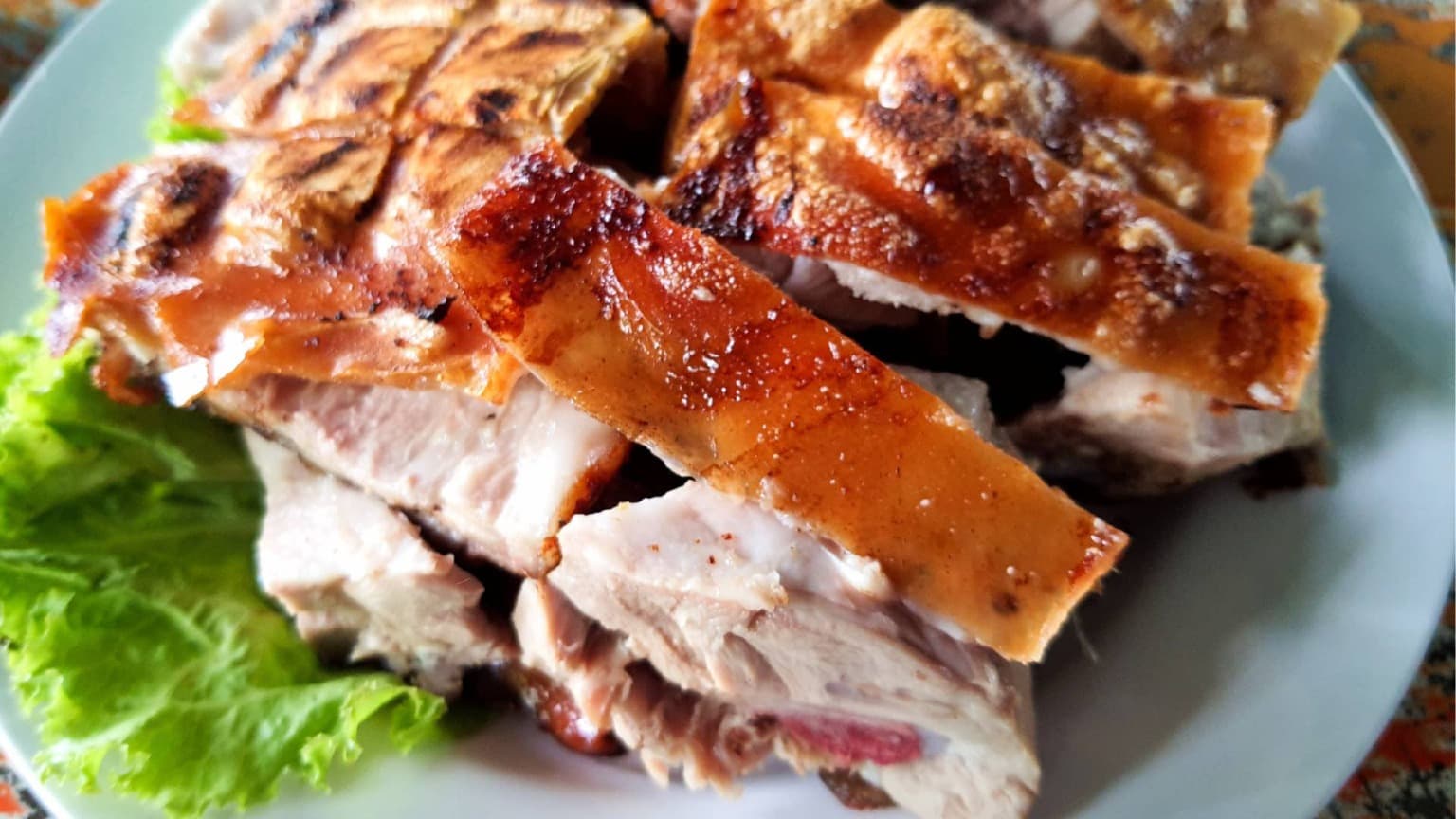
Leitão à Bairrada is celebrated for its crispy skin and tender meat, making it one of Portugal's finest regional specialties.
Carne de Porco à Alentejana: Portugal's Most Unexpected Classic
At first glance, pork and clams sound like an unlikely combination.
Then you taste them together.
The sweetness of fresh shellfish balances the richness of marinated pork so naturally that the pairing suddenly feels inevitable.
Despite its name, historians believe the recipe may actually have originated closer to the Algarve, where seafood was plentiful, before spreading across the Alentejo.
Today it remains one of Portugal's signature dishes.
The pork is marinated in garlic, white wine, paprika and bay leaves before frying until lightly caramelised. Fresh clams are added at the last moment, allowing their juices to enrich the sauce.
Fried potatoes and coriander complete the plate.
It's one of those recipes that demonstrates Portuguese cooking at its best: simple ingredients combined in unexpectedly harmonious ways.
Best wine:
• A young Alentejo white
• Light red.
Rojões à Minhota: Minho on a Plate
Northern Portugal has countless pork dishes.
Few capture the region better than Rojões à Minhota.
Large cubes of pork are marinated overnight with garlic, bay leaves and white wine before being slowly fried until beautifully browned.
What distinguishes the dish isn't just the meat.
Traditional versions arrive with roasted potatoes, chestnuts, blood sausage, liver and sometimes sarrabulho, creating a meal that reflects the old philosophy of wasting absolutely nothing.
It isn't refined.
It's honest.
Comforting.
Deeply rooted in rural tradition.
Best region: The Minho.
Especially around Braga, Guimarães and Ponte de Lima.
Chanfana: Portugal's Great Slow-Cooked Secret
Some Portuguese dishes belong to restaurants.
Others belong to families.
Chanfana belongs to both.
Made from mature goat rather than young kid, the meat is slowly braised for many hours inside black clay pots sealed before entering wood-fired ovens.
The cooking liquid is almost entirely red wine.
Garlic, bay leaves and occasionally paprika provide the only additional flavouring.
Hours later the meat becomes astonishingly tender while the wine transforms into a deeply concentrated sauce.
It isn't flashy.
It isn't common.
Outside the Beiras, genuinely excellent chanfana becomes increasingly difficult to find.
Which makes discovering it all the more rewarding.
Best season: Autumn and winter.
Worth travelling for? Absolutely.
Especially in the villages around Coimbra and Serra da Lousã.
Alheira de Mirandela: A Sausage That Tells Portugal's History
Few dishes carry a more remarkable story than the alheira.
During the Portuguese Inquisition, many Jewish families converted publicly to Christianity while secretly continuing to practise Judaism.
One way inquisitors attempted to identify those who had not converted sincerely was by looking for pork sausages hanging in their kitchens.
The solution was ingenious.
Jewish families began making sausages that looked like traditional pork sausages but contained bread, poultry, olive oil and other permitted meats instead.
Over time the disguise became one of Portugal's favourite foods.
Today's alheira often includes pork alongside other meats, but its origins remain one of Portuguese gastronomy's most powerful reminders of resilience and adaptation.
Typically served with fried potatoes, vegetables and a fried egg, it's rich without being heavy.
Posta Mirandesa: Portugal's Finest Steak?
Portugal rarely appears on lists of Europe's great beef destinations.
Perhaps it should.
In the remote northeast, around Miranda do Douro, cattle have been raised for centuries on open mountain pastures.
The result is Posta Mirandesa: an exceptionally thick steak cut from Mirandesa cattle, grilled simply over charcoal and seasoned with little more than coarse salt.
There's no elaborate sauce.
No complicated garnish.
Just excellent beef cooked with confidence.
Many Portuguese chefs consider it one of the country's greatest meat dishes.
Outside Trás-os-Montes, however, authentic versions remain surprisingly difficult to find.
Cabrito Assado: The Centrepiece of Portuguese Celebrations
Roast kid (cabrito assado) occupies a special place in Portuguese family life.
It's the dish many families reserve for Easter, Christmas or major celebrations, particularly in the mountains of northern and central Portugal.
Young goat is rubbed with garlic, white wine, olive oil and herbs before roasting slowly until the meat becomes wonderfully tender.
Roasted potatoes absorb every drop of the cooking juices.
The result is both rustic and celebratory; a meal that feels designed for long conversations around a family table.
If you're invited to eat homemade cabrito in Portugal, accept immediately.
It's one of the country's great expressions of hospitality.
Cozido à Portuguesa: The Sunday Feast
If bacalhau is Portugal's national ingredient, cozido à Portuguesa may be its national family meal.
There's no single recipe.
Every region, and often every household, prepares it differently.
At its heart, though, the idea remains the same.
Various cuts of pork, beef, chicken and smoked sausages are simmered together with potatoes, cabbage, carrots and other seasonal vegetables until every ingredient has enriched the broth.
Served on enormous platters at the centre of the table, cozido is less about presentation than togetherness.
It's food that encourages people to linger.
Sunday lunches in Portugal often stretch well into the afternoon, and few dishes suit that rhythm better.
Local tip: If you see cozido offered as the Sunday special in a traditional restaurant, that's usually the day to order it.
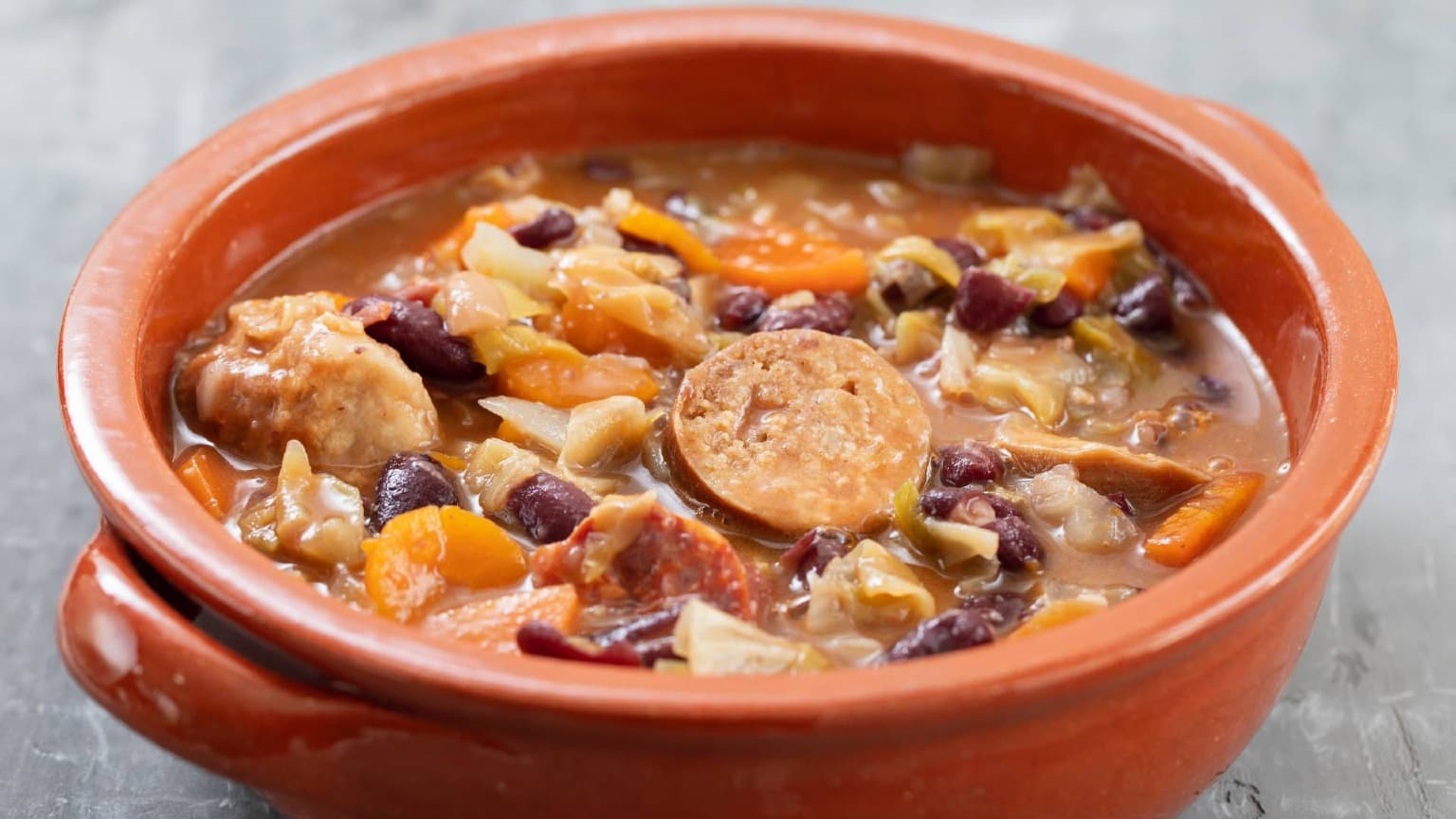
Cozido à Portuguesa is a hearty one-pot meal that reflects centuries of Portuguese rural cooking and family traditions.
Why Portuguese Meat Dishes Matter
One thing quickly becomes clear when travelling through inland Portugal.
These aren't recipes created for tourists.
They're recipes created because families needed them.
Cold winters demanded hearty stews.
Annual pig slaughters produced sausages that lasted for months.
Goats thrived where cattle struggled.
Bread stretched expensive ingredients further.
Even today, Portugal's finest meat dishes remain deeply connected to the landscapes that produced them.
To understand them is to understand rural Portugal itself.
PART 4: Everyday Portugal: Soups, Sandwiches & Petiscos Culture
If seafood represents the coast and meat represents the interior, then Portugal’s everyday food culture lives somewhere in between.
It lives in small plates shared over drinks, soups eaten at lunch counters, and sandwiches wrapped in paper eaten standing at a café bar.
This is where Portugal stops being a destination cuisine and becomes a daily rhythm.
Locals don’t always sit down for elaborate meals.
A huge part of Portuguese food culture is built around what are known as petiscos. Petiscos are small plates meant for sharing, similar in spirit to Spanish tapas, but with a distinctly Portuguese identity: simpler, heartier, and often more rustic.
This is also the world of soups and sandwiches that most visitors overlook, but which quietly form the backbone of everyday eating.
Petiscos: Portugal’s Answer to Tapas (But Not Really)
At first glance, petiscos look like tapas.
Small plates.
Shared food.
Wine or beer on the table.
But the philosophy is different.
Where tapas often consist of small individual servings, petiscos are more closely associated with home-style cooking and leisurely sharing.
They are less about variety and more about comfort.
In a typical Portuguese tasca, a table might be filled with:
• fried cuttlefish
• roasted peppers in olive oil
• chouriço flame-grilled at the table
• olives and bread
• small plates of pork, clams or cod fritters
No strict rules.
No fixed sequence.
Just food arriving as it’s ready.
Petiscos are not a course.
They are a way of eating slowly.
Bolinhos de Bacalhau (or Pastéis de Bacalhau)
If there is one snack that appears everywhere in Portugal, it is this.
Made from shredded salt cod, mashed potatoes, eggs, parsley and onion, then deep-fried until golden, bolinhos de bacalhau are one of the country’s most iconic street foods.
They are sold:
• in cafés
• in bakeries
• at train stations
• in supermarkets
• at family gatherings
• and at nearly every Portuguese party
Crispy on the outside and soft inside, they are often eaten warm but just as commonly served at room temperature.
Important distinction: In the north they are usually called bolinhos de bacalhau. In the south, pastéis de bacalhau is more common. Same dish. Different name.
Both names are widely understood throughout Portugal, so don't be surprised to see either on restaurant menus.
Where to eat them: Anywhere they are made fresh rather than reheated.
The difference is immediately noticeable.
Peixinhos da Horta: The Dish That Travelled to Japan
Long before tempura became a Japanese culinary icon, Portuguese cooks were already frying vegetables in light batter.
Peixinhos da horta (literally "little fish from the garden") are green beans dipped in flour-and-egg batter and fried until crisp.
They were traditionally eaten during Catholic fasting periods when meat was restricted.
The fascinating part of this dish is its global influence.
Many food historians believe Portuguese missionaries and traders introduced this technique to Japan in the 16th century, where it evolved over centuries into what we now know as tempura.
It’s a rare example of a Portuguese dish that quietly helped shape another national cuisine.
Pica-Pau: Portugal’s Pub Food
If petiscos represent shared dining, pica-pau is its most social expression.
The name literally means “woodpecker,” possibly referring to the way people pick at the dish.
It consists of small strips of beef or pork sautéed in garlic, white wine, mustard and pickles, often served with olives and bread for dipping.
It is intensely flavourful but never complicated.
Pica-pau is the kind of dish ordered with drinks, not as a main meal, and shared casually among friends in taverns and sports bars.
One of Portugal's favourite tavern dishes, significantly more elegant than it sounds.
Pataniscas de Bacalhau: The Crisp Side of Cod
While bolinhos de bacalhau are round and fluffy, pataniscas de bacalhau are flat, irregular fritters.
Made from shredded cod mixed into a loose batter of flour, eggs, milk and herbs, they are fried quickly until golden and slightly crisp on the edges.
They are often served with rice, salad or simply bread and olives.
Where bolinhos are structured, pataniscas are rustic.
Where bolinhos are uniform, pataniscas are irregular.
Both are essential parts of Portuguese cod culture.
Soups: The Foundation of Portuguese Cooking
In Portugal, soup is not an appetizer.
It is a daily ritual.
Many Portuguese consider a meal incomplete without it.
Most traditional restaurants still offer soup as the first course of lunch and dinner, and many Portuguese households eat soup every single day.
It is economical, nourishing and deeply embedded in the country’s food culture.
Caldo Verde: The National Soup
Few dishes are as universally Portuguese as caldo verde.
Originating in the Minho region, it is made from:
• finely shredded kale (couve galega)
• potatoes
• olive oil
• garlic
• and slices of chouriço
Despite its simplicity, it appears at weddings, birthdays, village festivals and national holidays.
It is especially associated with cold weather and festive gatherings, often served late at night during celebrations.
Why it matters: Caldo verde represents the essence of Portuguese cooking:
Simple ingredients, treated with respect, producing something far greater than the sum of its parts.
Açorda Alentejana: Bread Turned Into Comfort
In the Alentejo, nothing is wasted, especially bread.
Açorda is a traditional bread-based soup made by soaking stale bread in garlic, coriander, olive oil and boiling water or broth, then finishing it with a poached egg.
Sometimes seafood is added, especially prawns or clams.
It is rustic, humble and deeply satisfying.
Açorda is one of those dishes that reflects rural necessity rather than culinary design; yet it remains one of Portugal’s most distinctive comfort foods.
Sopa da Pedra: The “Stone Soup” of Portugal
From the town of Almeirim comes one of Portugal’s most famous stories in a bowl.
Sopa da pedra (“stone soup”) is based on a folk tale in which a wandering monk convinces villagers to contribute ingredients to a soup started with nothing but a stone.
The modern dish includes:
• beans
• pork cuts
• chouriço
• vegetables
• and sometimes blood sausage
Despite its playful origin story, it is a serious and hearty dish: rich, warming and designed for sharing.
It remains one of the best examples of Portuguese communal cooking.
Sandwich Culture: Simple, Fast, Perfect
Portugal does not have fast food in the American sense.
Instead, it has sandwiches that are treated with surprising seriousness.
Two stand above all others.
Bifana: Portugal’s Everyday Sandwich
If there is a true national street food, it is the bifana.
Thin slices of pork are marinated in garlic, white wine, paprika and spices, then simmered until tender and served inside a crusty bread roll.
It is often eaten:
• standing at café counters
• during football matches
• after a night out
• or as a quick lunch
Despite its simplicity, the bifana varies significantly by region.
In Lisbon, it is often more liquid and saucy.
In the north, it tends to be spicier and more robust.
Local tip: The best bifanas are almost always found in small, no-frills cafés rather than tourist restaurants.
Some of Portugal's most famous bifanas are found in Vendas Novas, just east of Lisbon, where the sandwich has become a local institution.
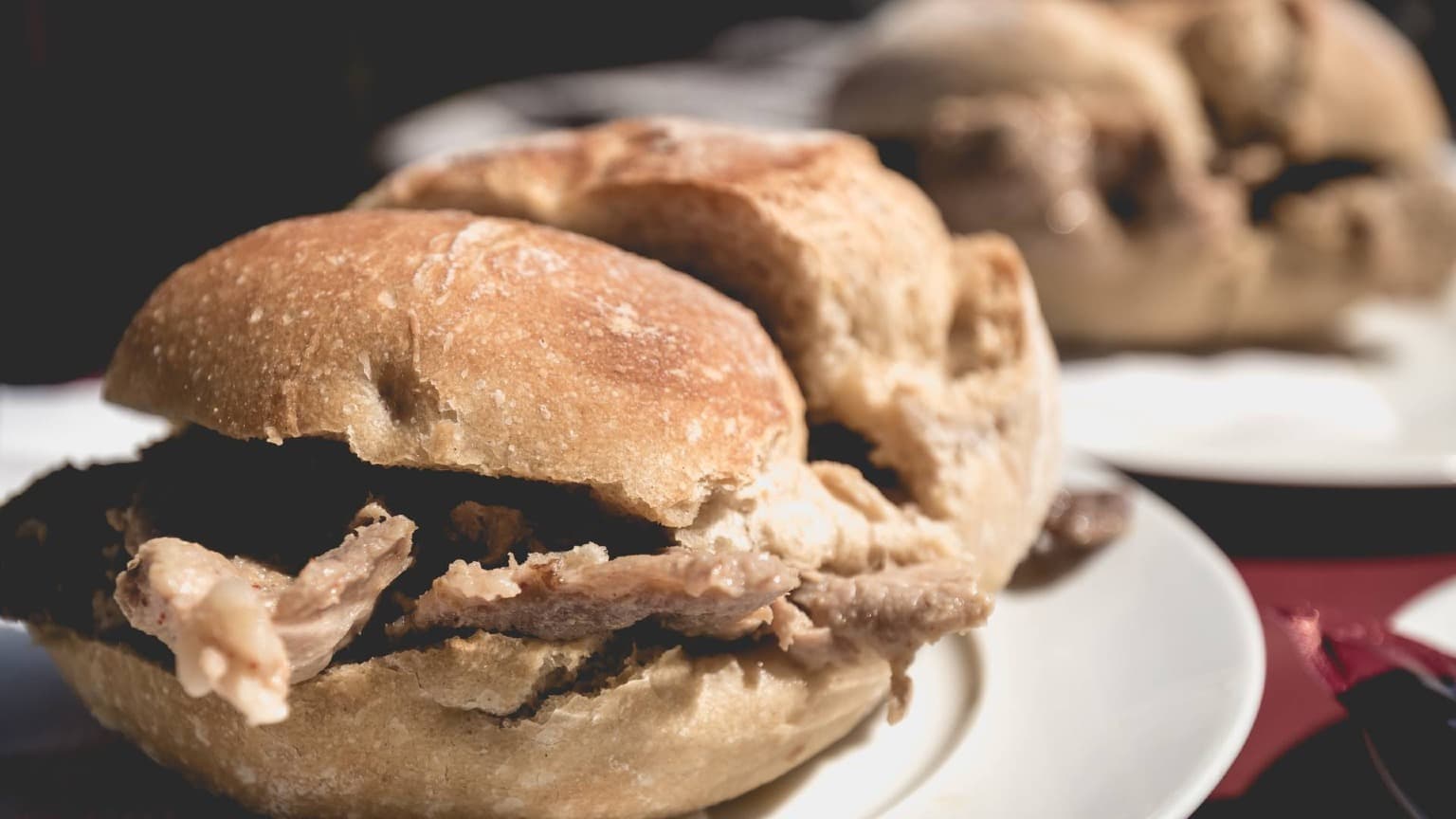
Simple, affordable, and full of flavour, the bifana is Portugal's favourite everyday sandwich.
Prego no Pão: The Steak Sandwich’s Portuguese Form
If the bifana is pork, the prego is beef.
It is typically a thin steak, seasoned with garlic and fried quickly before being placed inside a bread roll.
Despite its simplicity, it is often finished with mustard, cheese or sometimes ham.
Traditionally, it is eaten after seafood dishes, especially at marisqueiras, as a second course.
This habit surprises many visitors but is a classic Portuguese dining pattern: seafood first, meat afterwards.
Why Everyday Portuguese Food Matters
What makes petiscos, soups and sandwiches so important is not their complexity, but their frequency.
These are not “special occasion” dishes.
They are the rhythm of daily life.
A Portuguese worker might eat caldo verde for lunch, grab a bifana in the afternoon, share petiscos in the evening and finish the night with something simple and warm.
This is where Portuguese food becomes less about tradition and more about habit.
And understanding this layer is essential.
If seafood is Portugal's coastal identity and meat dishes are its rural memory, then everyday food is its living present.
PART 5: Sweet Portugal: Desserts, Cheeses & Drinks That Define a Nation
If Portuguese savoury cooking is defined by restraint and geography, then Portuguese desserts are defined by history, surplus, and invention born from necessity.
Few cuisines in Europe have such a strong tradition of sweets. And even fewer can trace that tradition so clearly to a single source: the country’s convents.
For centuries, monasteries across Portugal developed an extraordinary pastry culture built around egg yolks, sugar, almonds, and time. What began as a practical solution to surplus ingredients evolved into one of Europe's richest and most distinctive dessert traditions.
But Portuguese sweets are only part of the story.
Equally important are the country’s cheeses, shaped by mountains and shepherding traditions, and its drinks, which reflect both local agriculture and centuries of global trade.
Together, they form the final chapter of Portuguese cuisine.
Convent Sweets: Portugal’s Liquid Gold (Egg Yolks and Sugar)
Between the 16th and 19th centuries, Portuguese convents became unexpected culinary laboratories.
Nuns used egg whites to starch religious garments and clarify wine, leaving them with an excess of yolks. At the same time, sugar from Madeira and Brazil became widely available, transforming what was once a luxury ingredient into a foundation of dessert-making.
The result was a wave of intensely rich sweets unlike anything else in Europe.
Many of Portugal’s most famous desserts still come directly from this tradition.
Pastel de Nata: Portugal’s Most Famous Export
No Portuguese dessert has travelled further than the pastel de nata.
A crisp, flaky pastry shell filled with a creamy egg custard and baked at high heat until the top develops characteristic dark caramelised spots, it is deceptively simple, and extremely difficult to perfect.
The origins trace back to the Jerónimos Monastery in Belém, Lisbon, where monks produced an early version of the recipe. After the dissolution of religious orders in the 19th century, the original recipe was sold to a nearby sugar refinery, which later became the famous Pastéis de Belém bakery.
To this day, the bakery continues to use a closely guarded version of the original recipe.
👉 Planning to taste Pastéis de Nata during your trip? Don't miss our complete guide to Pastel de Nata: History, Origin, Recipe & Where to Eat, where you'll discover the fascinating story behind Portugal's most iconic pastry, how it's made, and what makes it so unique.
Pastel de Nata vs. Pastel de Belém
This is one of the most misunderstood distinctions among visitors.
• Pastel de nata = the generic name for Portugal's famous custard tart, found in bakeries throughout the country.
• Pastel de Belém = the original version, produced exclusively by the historic Pastéis de Belém bakery in the Belém district of Lisbon, using its closely guarded recipe.
They may look similar, but many Portuguese insist they are not the same.
How to eat it like a local: Enjoy it warm, ideally fresh from the oven. Sprinkle with cinnamon (optional but common) and pair it with a bica (espresso).
Where to try it: You'll find excellent pastéis de nata throughout Portugal, but no visit to Lisbon is complete without trying the original Pastel de Belém at the famous Pastéis de Belém bakery.
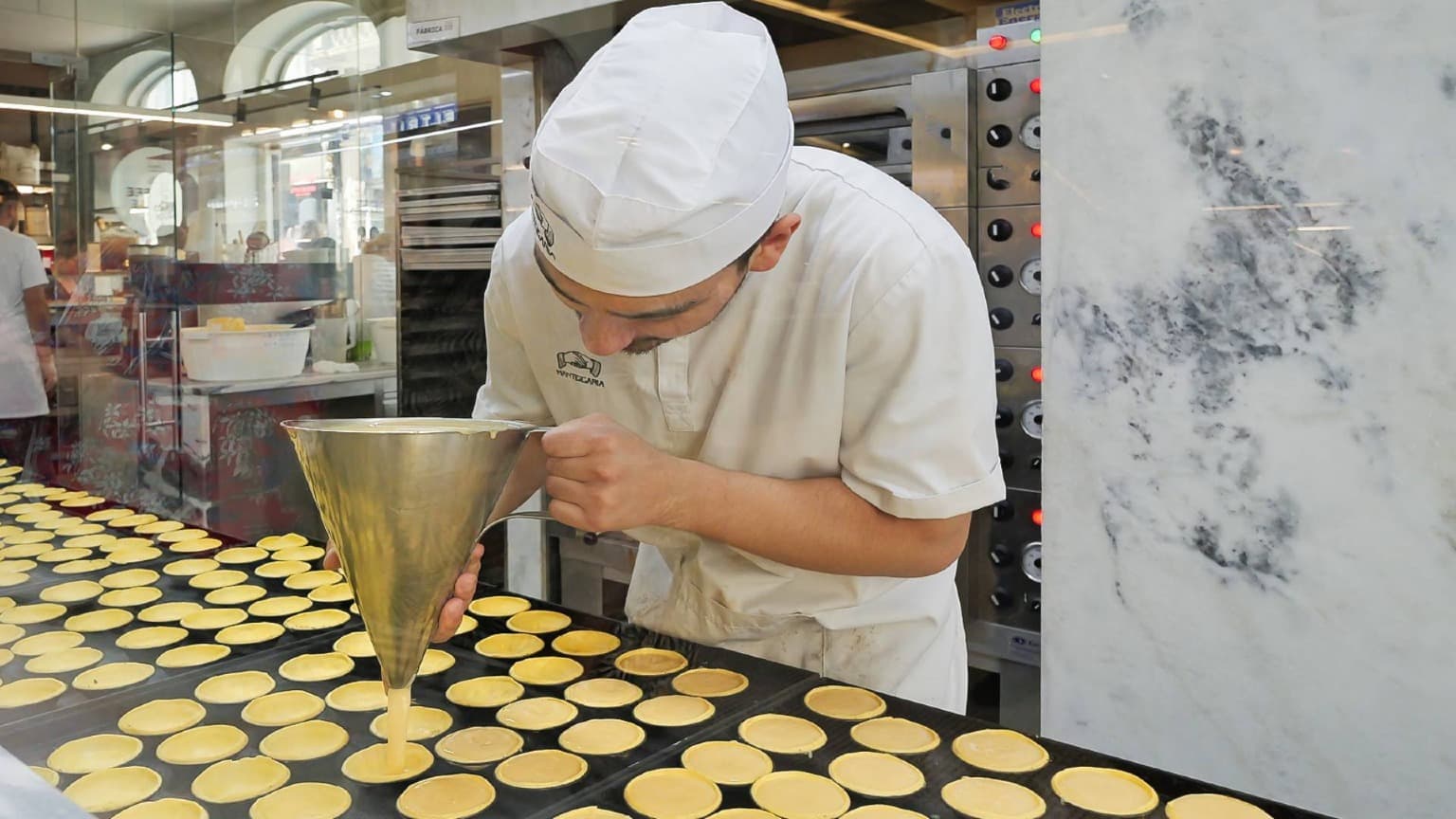
Portugal's iconic Pastéis de Nata are still handcrafted daily in bakeries across the country using techniques perfected over generations.
Ovos Moles de Aveiro: Silk in a Wafer Shell
From the coastal city of Aveiro comes one of Portugal’s most delicate sweets: ovos moles.
Made from egg yolks and sugar syrup, the filling is soft, smooth and intensely rich, often encased in thin wafer shells shaped like shells, fish or nautical motifs; a reflection of Aveiro’s maritime identity.
The recipe originates from convent traditions but evolved into a regional speciality protected by geographical indication status.
Taste profile: Sweet, creamy, almost custard-like but denser.
Why it matters: Ovos moles demonstrate how Portuguese convent sweets adapted to local geography. In this case, a coastal city with strong maritime symbolism.
Pão de Ló: Portugal’s Ancient Sponge Cake
Pão de ló is one of Portugal’s oldest cakes, predating many modern dessert traditions.
At its simplest, it is made from eggs, sugar and flour, baked into a sponge that can range from dry and airy to almost liquid in the centre depending on regional style.
Famous variations include:
• Pão de Ló de Ovar (slightly underbaked, soft centre)
• Pão de Ló de Alfeizerão (almost custard-like interior)
It is often associated with Easter celebrations and family gatherings.
Different regions proudly defend their own version, making pão de ló one of Portugal's most diverse traditional cakes.
Travesseiros de Sintra: The Pillow Pastry
In the misty town of Sintra, near Lisbon, lies one of Portugal’s most famous pastries: travesseiros (“pillows”).
These rectangular puff pastries are filled with almond and egg cream, dusted lightly with sugar, and served warm.
They are produced almost exclusively by Casa Piriquita, a historic bakery that has become a pilgrimage site for pastry lovers.
Taste profile: Flaky, creamy, almond-rich, lightly sweet.
Best enjoyed: Fresh from the oven with a coffee while exploring Sintra’s palaces.
Arroz Doce: Portugal’s Comfort Dessert
Arroz doce (rice pudding) is a staple of Portuguese home cooking.
Made with rice slowly cooked in milk, sugar, lemon zest and cinnamon, it is often served in decorative patterns using cinnamon sprinkled across the surface.
Unlike many convent sweets, arroz doce is not overly rich, instead, it reflects everyday Portuguese home cooking.
It is especially common at Christmas and family celebrations.
Pastéis de Tentúgal: The Art of Thin Pastry
From the town of Tentúgal comes one of Portugal’s most technically impressive pastries.
Pastéis de Tentúgal are made by stretching dough until it becomes almost paper-thin, then wrapping it around a sweet egg yolk filling before baking.
The result is a crisp, delicate pastry with a rich interior, a combination that reflects both convent ingenuity and regional craftsmanship.
Portuguese Cheeses: Mountains, Milk and Tradition
Portugal is not often associated with cheese internationally, yet it has a long and diverse cheese-making tradition shaped by its geography.
Mountain regions favour sheep and goat milk.
Coastal and northern areas produce firmer, aged cheeses.
Many Portuguese cheeses remain artisanal and carry Protected Designation of Origin (PDO) status, recognising centuries-old production methods and regional traditions.
Queijo da Serra da Estrela: Portugal’s Greatest Cheese
Perhaps the most famous Portuguese cheese is Queijo da Serra da Estrela, produced in the highest mountain range in mainland Portugal.
Made from sheep’s milk and coagulated using thistle flower rather than rennet, it has a soft, almost spoonable interior and a rich, slightly tangy flavour.
Traditionally, the top is cut off and the interior is scooped out with a spoon.
Taste profile: Buttery, earthy, intensely creamy.
Best pairing: Rustic bread and a full-bodied red wine from the Dão region.
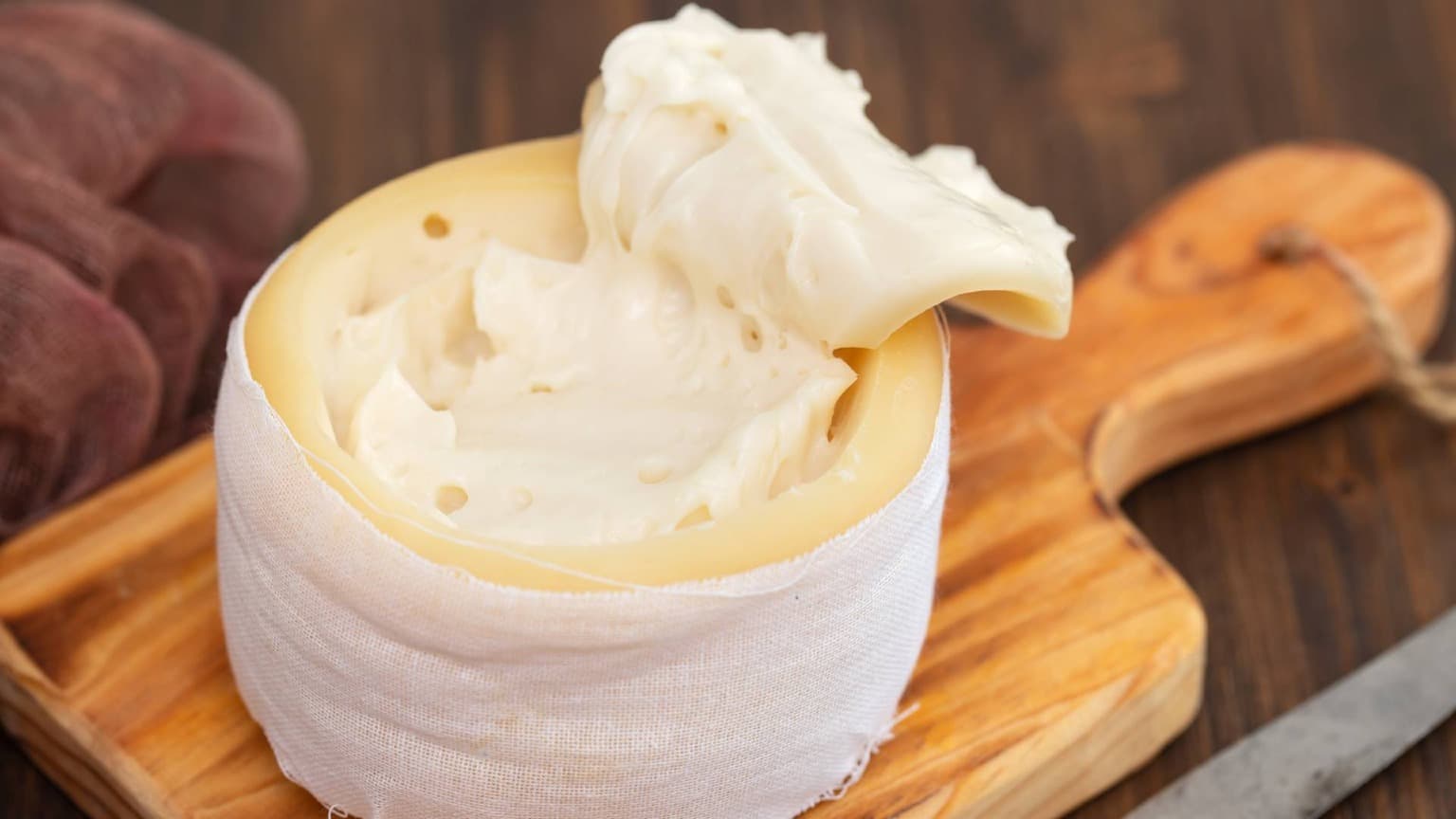
Made from raw sheep's milk in Portugal's highest mountains, Serra da Estrela is widely regarded as the country's finest traditional cheese.
Queijo de Azeitão: The Creamy Rival
From the Arrábida region near Lisbon comes Queijo de Azeitão, another sheep’s milk cheese but with a slightly sharper, more acidic profile.
It is also made using thistle as a coagulant, resulting in a soft, almost runny interior.
Smaller than Serra da Estrela but equally prized.
São Jorge Cheese: The Azores Contribution
Produced on the volcanic island of São Jorge in the Azores, this firm, aged cow's milk cheese has a slightly spicy, nutty flavour.
It reflects the Atlantic island environment where cattle farming is central to agriculture.
Portuguese Drinks: Wine, Spirits and Everyday Rituals
Portuguese drinking culture is deeply connected to food.
Wine is not an accessory, it is part of the meal structure itself.
And beyond wine, Portugal has a rich tradition of fortified and fruit-based spirits that reflect regional agriculture.
Port Wine: The Douro’s Global Legacy
Perhaps Portugal's most internationally recognised wine, Port wine originates in the Douro Valley.
Made by fortifying wine with grape spirit during fermentation, it results in a sweet, rich wine traditionally aged in Vila Nova de Gaia, opposite Porto.
The five main styles are:
• Ruby Port (fruity, young)
• Tawny Port (aged, nutty)
• Vintage Port (rare, aged in bottle)
• White Port (dry to sweet, ideal as an aperitif)
• Rosé Port (fresh, fruity)
When to drink it: Traditionally after meals, often with cheese or desserts.
👉 Want to explore the world of Port wine? Join our Douro Valley Wine Tour from Porto to visit family-owned wineries, enjoy guided tastings, and experience the region where Port wine is produced. You can also learn more in our Complete Guide to Port Wine or discover the best Port wine cellars in Porto before your visit.
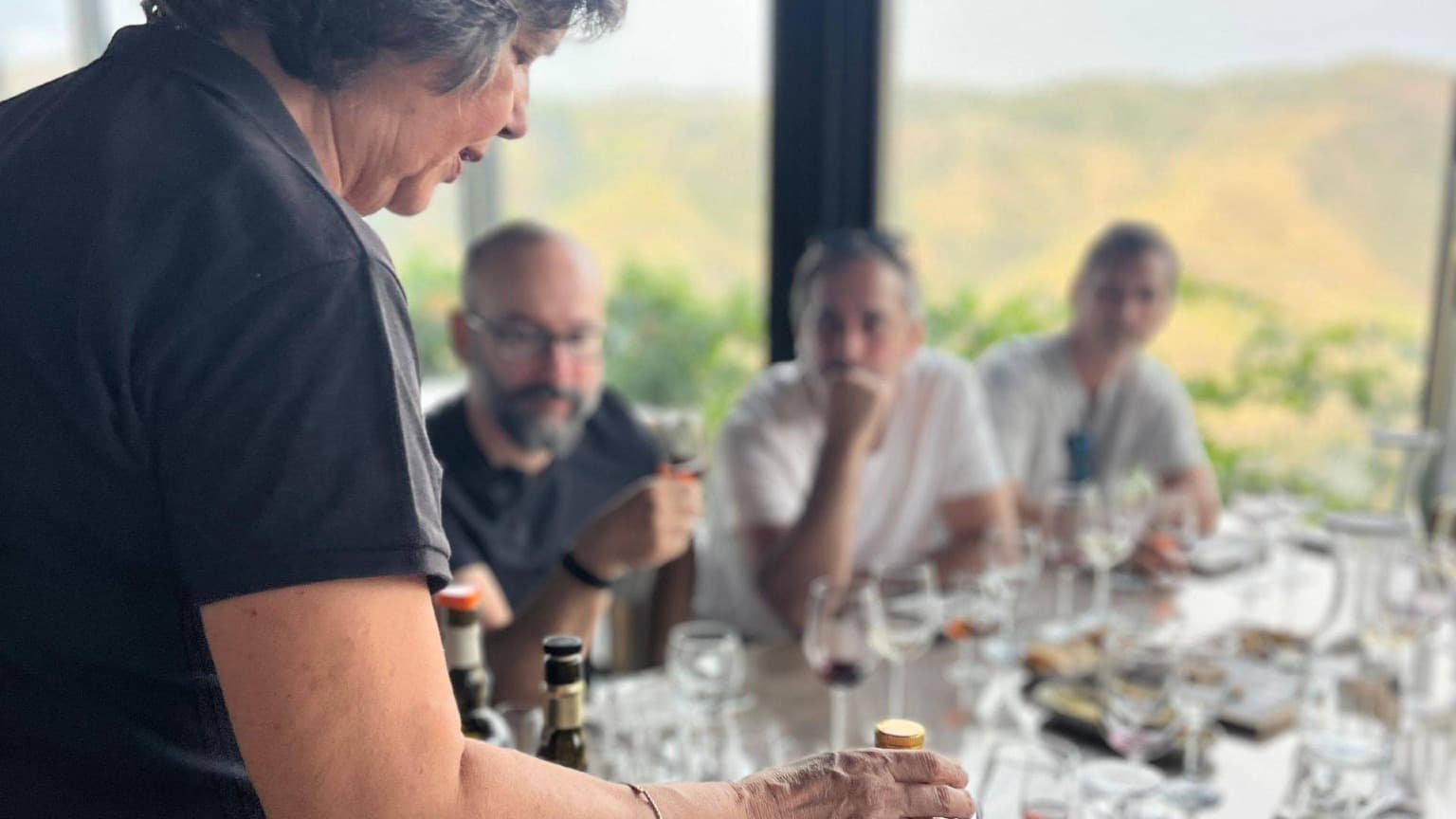
A guided Port wine tasting in the Douro Valley introduces visitors to the rich history, distinctive styles, and centuries-old traditions behind Portugal's world-famous fortified wine.
Vinho Verde: Portugal’s Freshest Wine
Produced in the lush Minho region of northern Portugal, Vinho Verde is one of the country's most distinctive wine styles. Light, refreshing, and naturally high in acidity, it is designed to be enjoyed young. Some styles display a light natural spritz, making them especially refreshing in warm weather.
The three main styles are:
• White Vinho Verde (fresh, citrusy, and the most widely produced)
• Red Vinho Verde (full-bodied, rustic)
• Rosé Vinho Verde (fruity, refreshing)
Despite the name, Vinho Verde is not a green-coloured wine. The meaning is rooted in the region’s history, traditional production, and early consumption, rather than in the colour of the wine itself.
It pairs beautifully with grilled fish, seafood, salads, and many of Portugal's lighter summer dishes.
👉 Curious to discover Vinho Verde at its source? Join our Private Vinho Verde Wine Tour to explore one of Portugal's oldest wine regions, visit local wineries, and taste the fresh, distinctive wines that have made the region famous. To learn more before your visit, read our Complete Guide to Vinho Verde, covering its history, grape varieties, styles, and unique winemaking traditions.
Ginjinha: Lisbon’s Cherry Ritual
Ginjinha (or Ginja) is a sour cherry liqueur typically served in small bars in Lisbon and Óbidos.
Traditionally enjoyed standing at the counter of tiny bars, it is often served in a small glass, sometimes with a cherry left inside, and occasionally in edible chocolate cups.
It is sweet, slightly tart and deceptively strong.
Moscatel de Setúbal: Portugal’s Hidden Dessert Wine
From the Setúbal Peninsula comes Moscatel de Setúbal, a rich, aromatic fortified wine with notes of orange peel, honey and raisins.
It is often served chilled after meals.
Madeira Wine: The Island That Defied Time
Produced on the volcanic island of Madeira, Madeira wine is one of the world's most distinctive fortified wines.
Its unique ageing process, known as estufagem or canteiro, exposes the wine to heat and oxygen, creating remarkable complexity and allowing bottles to age for decades or even centuries.
Madeira wines range from dry to intensely sweet, making Madeira wine equally suited to aperitifs, desserts, and even cooking.
Taste profile: Caramel, dried fruit, roasted nuts, citrus peel, and remarkable freshness.
Licor Beirão: The Everyday Spirit
Unlike many regional spirits, Licor Beirão has become a national icon.
Made from herbs and spices, it is typically consumed as a digestif or mixed with tonic or ice.
It is one of the most commonly found spirits in Portuguese households.
Why Desserts, Cheeses and Drinks Matter
Desserts, cheeses and drinks reveal something important about Portuguese cuisine:
It is not just a savoury tradition.
It is a complete culinary ecosystem, shaped by monasteries, mountains, and maritime trade routes.
Convents created sweets from surplus egg yolks.
Portugal's mountain landscapes produced some of Europe's richest cheeses.
Trade routes brought sugar, spices and fortified wine traditions.
Daily life turned wine into a cultural ritual rather than a luxury.
Together, they complete the story of Portuguese food.
Not as a list of dishes.
But as a living culinary identity.
PART 6: How to Eat in Portugal: Seasons, Local Customs & Essential Tips
By now, one thing should be clear: Portuguese food is not a list of dishes.
It’s a system shaped by geography, seasonality, and habit.
Understanding what to eat is useful.
But understanding when, where, and how to eat it is what turns a trip into a real food experience.
This final section brings everything together into a practical guide you can actually use on the ground.
The Portuguese Food Calendar: What to Eat and When
Portugal’s cuisine is deeply seasonal, not in a trendy restaurant sense, but in a traditional, agricultural sense that still shapes menus today.
If you time your trip well, you don’t just eat Portuguese food. You catch it at its best.
Spring (March–May): Fresh, Green and Light
Spring in Portugal is about renewal.
Markets fill with fresh vegetables, herbs, and early seafood.
What to eat:
• Caldo verde (lighter, early season version)
• Grilled fish (especially sea bream and sea bass)
• Amêijoas à Bulhão Pato
• Queijo fresco and young cheeses
• Early Vinho Verde
Why it matters: This is the best season for lighter eating and coastal travel without summer crowds.
👉 Spring is also an important season for religious and family traditions. If you're visiting during this period, read our guide to Easter food traditions in Portugal.
Summer (June–August): Festivals, Sardines & Street Food
Summer is Portugal at full volume.
Cities smell like charcoal grills.
Street festivals take over entire neighbourhoods.
Eating becomes outdoors and social.
What to eat:
• Sardinhas assadas (peak season)
• Bifanas at festivals and street stalls
• Pica-pau with beer in tascas
• Cold Vinho Verde
• Ginjinha in Lisbon evenings
Cultural highlight:
👉 Festas de Santo António (Lisbon)
This is the most atmospheric food season in Portugal.
Autumn (September–November): Harvest Season
Autumn is when Portugal becomes slow, rich and deeply flavourful.
Wine harvest begins in the Douro.
Mushrooms, chestnuts and game return to menus.
What to eat:
• Chanfana
• Cabrito assado
• Cozido à Portuguesa
• Roasted chestnut dishes
• Douro wines and young reds
Why it matters: This is arguably the most underrated food season in Portugal.
Winter (December–February): Stews, Comfort & Tradition
Winter is the season of long meals and heavier dishes.
Families gather.
Restaurants lean into tradition.
Everything slows down.
What to eat:
• Cozido à Portuguesa
• Tripas à moda do Porto
• Caldo verde (rich winter version)
• Serra da Estrela cheese at peak ripeness
• Port wine and desserts
Best experience: Long Sunday lunches in rural taverns.
👉 Winter is also when some of Portugal's most meaningful family meals take place. Learn more in our guide to Christmas food traditions in Portugal.
How to Order Food in Portugal Like a Local
Portuguese dining culture has its own rhythm, and once you understand it, everything becomes easier.
1. Lunch is the main meal
Unlike many countries, lunch in Portugal is often more important than dinner.
Expect:
• larger portions
• daily specials (prato do dia)
• full meals with soup, main, drink, and coffee
If you want the best value and authenticity, eat at lunch.
2. Soup comes first (always)
Even in simple restaurants, soup is standard.
It’s not optional in traditional dining culture, it’s part of the structure of a meal.
3. “Prato do dia” is your best friend
The daily dish is usually:
• freshest
• cheapest
• most traditional
It often reflects what locals are eating that day.
4. Bread, olives and cheese are not free
Unlike some countries, these are often brought to the table and charged if consumed.
You can refuse them politely if you don’t want them.
5. Water, tap or bottled?
Tap water is safe to drink throughout Portugal, but bottled water is still the most common choice in restaurants. If you prefer tap water, simply ask for "água da torneira."
6. Sharing is normal, especially with petiscos
In casual dining, dishes are often shared rather than individually ordered.
This is especially true in tascas and wine bars.
7. Coffee is non-negotiable
For many Portuguese, every meal ends with an espresso (café or bica). It's more than a drink, it's the traditional way to finish a meal.
Regional Eating Guide: Where to Focus Your Trip
If you understand regions, you understand Portugal’s food identity.
Porto & the North: Comfort, Pork & Bold Flavours
Signature dishes:
• francesinha
• tripas
• rojões
• caldo verde
• strong, hearty flavours
Best experience: Small tascas away from Ribeira tourist areas.
Lisbon & Central Coast: Balance & Variety
Signature dishes:
• bifanas
• petiscos culture
• seafood grills
• convent sweets
Best experience: Markets, riverside taverns, and traditional cafés in older districts.
Algarve: Seafood & Coastal Simplicity
Signature dishes:
• cataplana
• grilled sardines
• clams and shellfish
• coastal stews
Best experience: Small fishing towns rather than resort strips.
Douro & Inland North: Wine & Meat Culture
What defines it:
• roast meats
• smoked sausages
• cabrito
• port wine pairings
Best experience: Vineyard lunches overlooking the river.
Alentejo: Bread, Olive Oil & Slow Cooking
Signature dishes:
• açorda
• carne de porco à alentejana
• migas
• rustic stews
Best experience: Long, slow meals in countryside taverns.
If You Only Try 10 Foods in Portugal
For travellers short on time, this is the essential list that captures the country:
• Bacalhau à Brás
• Francesinha (Porto)
• Caldo verde
• Sardinhas assadas
• Bifana
• Polvo à lagareiro
• Cataplana de marisco
• Leitão à Bairrada
• Pastel de nata
• Queijo da Serra da Estrela
This list isn’t about popularity.
It’s about coverage: coast, interior, tradition, street food, and dessert.
Common Mistakes Visitors Make
Even food-focused travellers often miss the point in Portugal. One of the biggest surprises is how much the cuisine changes from region to region. A traditional restaurant in Porto, Évora, or the Algarve may have completely different specialties, so don't expect the same menu everywhere.
Here are the most common mistakes:
1. Eating only in tourist streets
Restaurants with multilingual menus, photo boards, and staff inviting customers inside are rarely where locals choose to eat.
Walk 5–10 minutes away and the quality changes dramatically.
2. Treating cod as a single dish
Bacalhau is not one recipe, it is an entire culinary category.
Ordering just “cod” misses the point entirely.
3. Skipping soups and small dishes
Soups and petiscos are not side notes, they are essential to understanding Portuguese food culture.
4. Eating too late
Many traditional restaurants close early or shift into lighter evening service.
Lunch is where the real cooking happens.
5. Underestimating portion sizes
Portuguese portions are generous.
Ordering too much is the most common first-time mistake.
Final Perspective: What Makes Portuguese Food Unique
Portuguese cuisine does not try to impress through complexity.
It impresses through:
• geography
• repetition
• preservation
• and memory
It is a cuisine built on survival, trade, monasteries, and coastlines.
And yet it produces some of Europe’s most memorable dishes.
From a simple bifana eaten standing at a café counter to a slow-cooked chanfana in a mountain village to a pastel de nata eaten warm in Lisbon to a glass of Port overlooking the Douro.
Portugal doesn't just serve food. It serves history, identity, and a way of life.
👉 Want to experience Portuguese cuisine beyond the menu? Join our Porto Food Tour to discover local flavors, stories, and traditions with an expert guide, or explore our food experiences across Portugal, from Lisbon and the Algarve to Madeira and the Azores. If you're passionate about Portuguese wine, don't miss our Douro Valley wine experiences, where vineyard visits, regional cuisine, and world-class wines come together in one unforgettable journey.
From Porto's market culture to the Douro Valley's vineyard kitchens, much of what defines Portuguese cuisine is still tied to people, places, and traditions that are easy to miss without local guidance.
Frequently Asked Questions About Portuguese Food
Written by Gonçalo Castanho, founder of Cooltour Oporto and a Porto-based tourism entrepreneur with over 20 years of experience creating immersive and responsible travel experiences across Portugal.