Pastel de Nata: The Real History Behind Portugal's Most Famous Pastry
July 15, 2026
Most articles about the Pastel de Nata tell the same short story: monks at Lisbon's Jerónimos Monastery had leftover egg yolks, so they invented a custard tart. It's not wrong, exactly, but it skips almost everything interesting.
The real story spans three centuries, a royal recipe book, a national political upheaval that nearly erased it, and a family bakery that still guards its version like a state secret. Here's the fuller story many guides overlook, plus how to make a very good traditional Portuguese dessert at home.
Today, Pastéis de Nata are one of Portugal's greatest culinary ambassadors, found in bakeries across Europe, Asia, North America, Australia and beyond.
Quick Answer: A Pastel de Nata is a Portuguese custard tart made with laminated puff pastry and egg custard. It evolved from centuries of Portuguese convent baking traditions before being first sold commercially in Belém, Lisbon, in 1837.
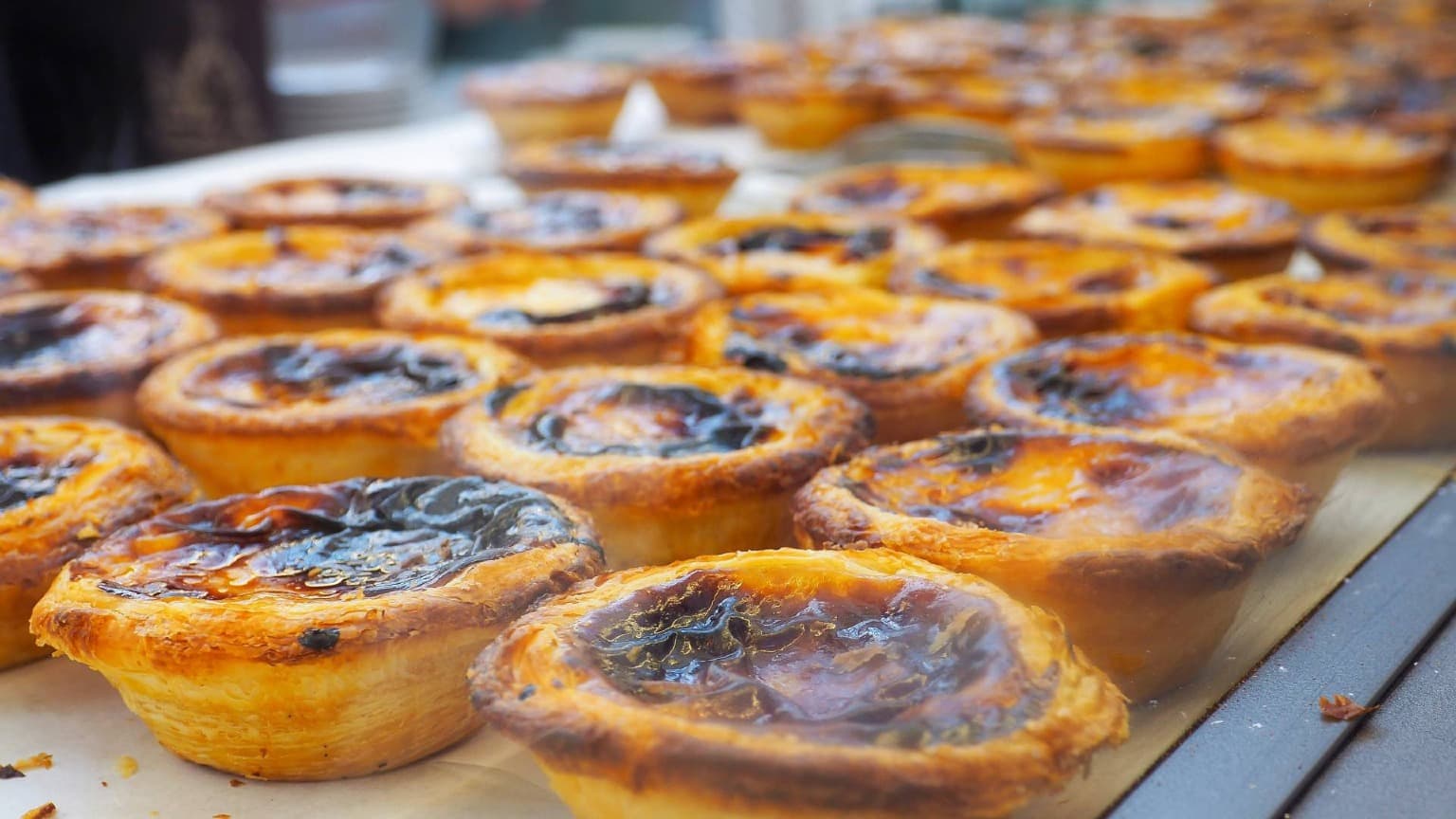
Fresh from the oven with crisp, flaky pastry and a creamy custard filling, the Pastel de Nata has become Portugal's most iconic pastry and a symbol of the country's rich culinary heritage.
What Is a Pastel de Nata?
A Pastel de Nata is a traditional Portuguese custard tart made with laminated puff pastry and an egg custard flavoured with cinnamon and lemon peel, baked at very high heat until the top caramelises into dark, blistered spots. Those spots aren't a mistake, they're the mark of a properly baked tart, and their absence is usually a sign of an underpowered oven.
The custard itself is simple (milk, egg yolks, sugar, a little flour, lemon peel, cinnamon) but the ratios and heat are unforgiving. Too cool, and the custard won't set right; too hot too fast, and the yolks scramble. Portuguese bakers eat them fresh, dusted with cinnamon, alongside an espresso (a bica in Lisbon, a cimbalino in Porto).
Why Is It Called "Pastel de Nata"?
The name is surprisingly straightforward. In Portuguese, pastel refers to a small pastry, while nata means cream. Although the filling is made primarily with egg yolks, milk and sugar (and, in many traditional recipes, no cream at all), its smooth, creamy texture inspired the name by which the pastry is still known today.
Outside Portugal, the pastry is often called a Portuguese custard tart, but in Portugal it is simply known as a Pastel de Nata.
Where Did Pastel de Nata Originate?
The short answer: the origin of Pastel de Nata lies in Portugal's convent kitchens, through roughly 300 years of culinary refinement before it was commercialised in Belém in 1837.
Long Before Belém: Portugal's Convent Kitchens
To understand where the Pastel de Nata came from, you have to start almost 300 years before it existed, in Portugal's monasteries.
Between the 15th and 18th centuries, convents functioned as self-sufficient communities that produced their own bread, wine, preserves, and sweets. Their kitchens became genuine centres of culinary experimentation, and they left behind Portugal's entire tradition of doces conventuais like Ovos Moles de Aveiro, Pastel de Tentúgal, Toucinho do Céu, Pudim Abade de Priscos, and dozens more.
👉 Curious about Portugal's rich tradition of convent sweets? Our Portuguese Food Guide explores many of the country's most iconic desserts, regional specialities, and the centuries-old culinary traditions that continue to shape Portuguese gastronomy today.
Why so many egg yolks? Convents used egg whites constantly to starch religious linen, to clarify wine, in bookbinding, which left kitchens with a steady surplus of yolks. Rather than waste them, nuns and monks folded them into custards and cakes, producing a style of dessert unlike anything else in Europe.
Sugar changed what was possible. Portugal's maritime expansion brought cheap sugar from Madeira and later Brazil, and sugar did more than sweeten, it preserved. Custards and syrups could now survive longer, be transported, and be experimented with more freely.
By the 16th century, this had already produced something very close to what we'd recognise today. One of Portugal's oldest surviving culinary manuscripts, compiled for Infanta D. Maria of Portugal and carried with her to Parma when she married in 1565, includes a section of milk-based dishes whose custard fillings food historians consider ancestral to the modern tart, though encased, at the time, in a denser, less laminated dough. By the 17th century, versions closer still, using laminated pastry, appear in the cookbook of the royal chef serving King Philip II of Spain (Philip I of Portugal).
In other words: the Pastel de Nata wasn't invented once. It was refined for 300 years before it ever reached Belém.
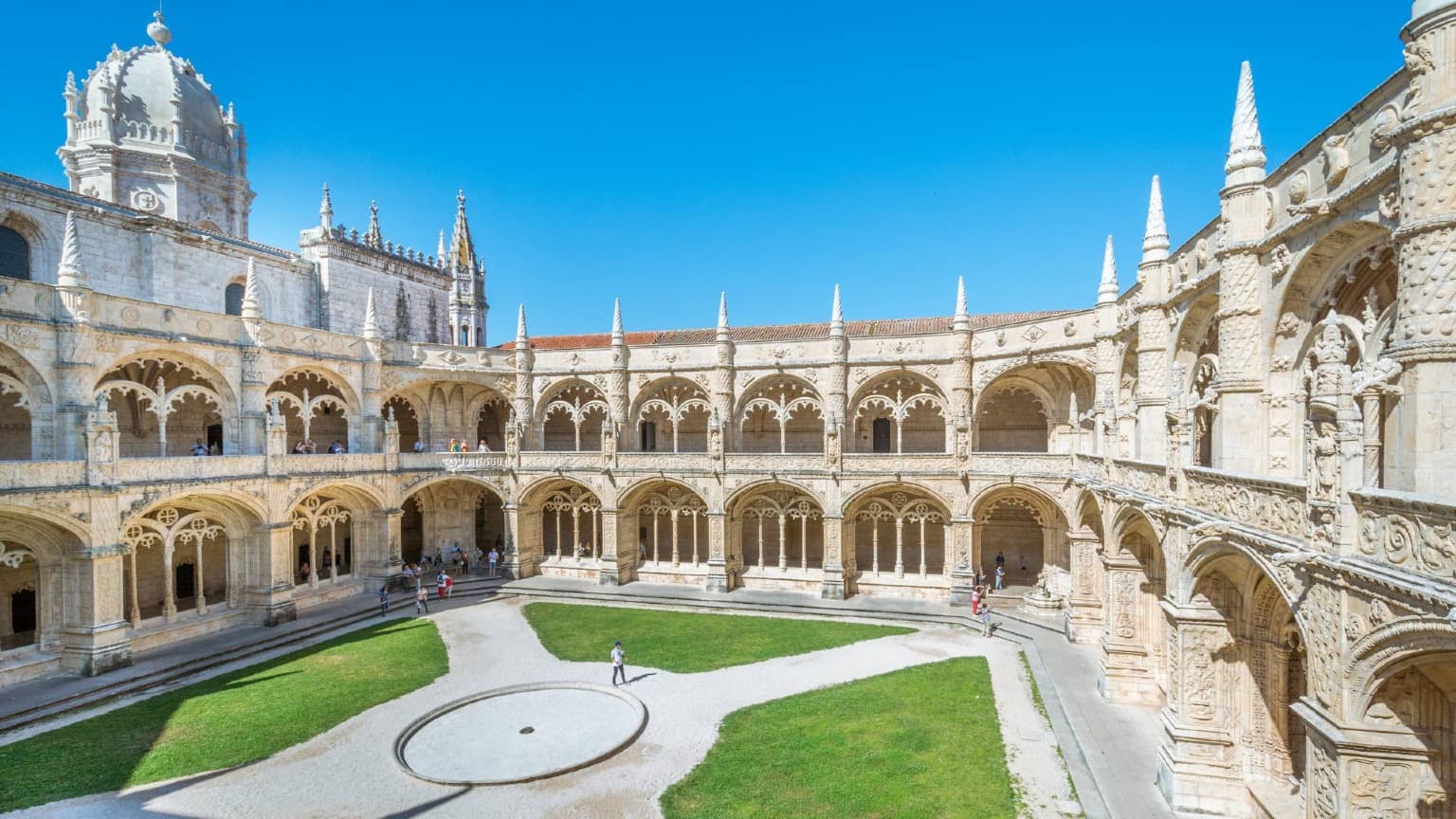
The Jerónimos Monastery in Belém is closely connected to the nineteenth-century history of Pastéis de Belém, when a recipe linked to the former monastery began to be produced commercially nearby.
A quick timeline:
Late 15th to early 16th century: A landmark Portuguese culinary manuscript is compiled for Infanta D. Maria, containing recipes considered ancestral to the modern tart.
1565: Infanta D. Maria carries the manuscript to Parma; it survives today in Naples.
17th century: Laminated-pastry custard recipes appear in royal court cookbooks.
1834: Portugal's Liberal Revolution dissolves the country's male religious orders.
1837: Pastéis de Belém opens beside the Jerónimos Monastery in buildings linked to a former sugar refinery.
20th century: Portuguese emigrants spread the tart internationally.
1834: The Revolution That Nearly Erased It
Here's the part almost every other article skips entirely.
In 1834, Portugal's Liberal Revolution dissolved the country's male religious orders. Monasteries across Portugal were closed, and with them went the institutions that had quietly preserved centuries of recipes. Many monks suddenly found themselves without a home or a source of income.
Some, including at least one former monk connected to the Jerónimos Monastery near Belém, began selling pastries made from old convent recipes to support themselves. In 1837, a bakery opened next to Jerónimos, in buildings tied to a former sugar refinery, and began selling those custard tarts commercially. That bakery still operates today under the name Pastéis de Belém.
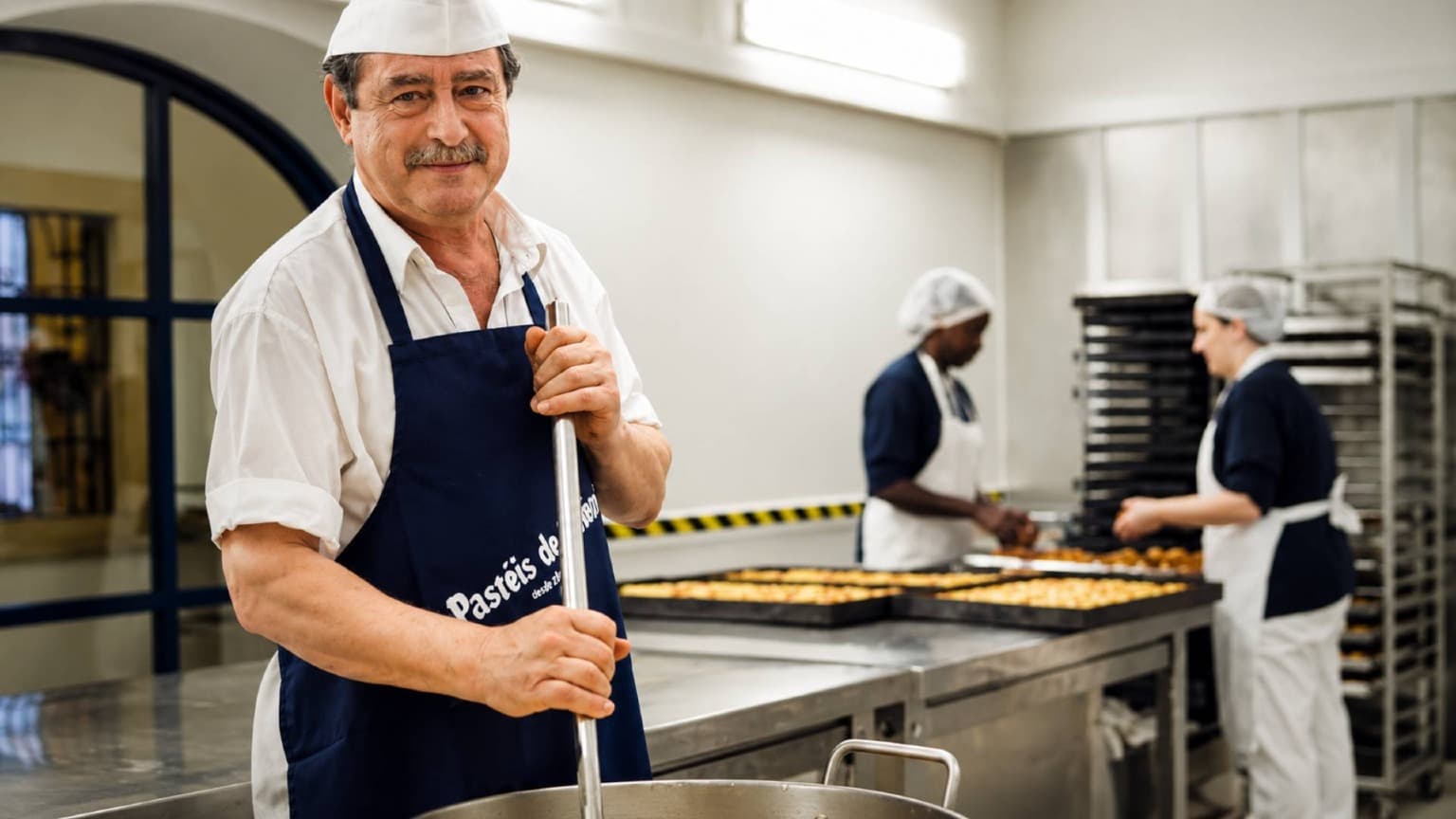
For nearly two centuries, the historic Pastéis de Belém bakery has continued producing Portugal's most famous custard tarts using its closely guarded traditional recipe.
Without the 1834 revolution, there's a real chance this recipe stays locked inside a monastery and never reaches the public at all.
Pastéis de Belém vs. Pastéis de Nata
This is the single most-asked question about the pastry, and the answer is straightforward:
Pastéis de Belém are made only at the original bakery in Belém, Lisbon, using a proprietary recipe guarded since 1837. The name is legally protected. Pastéis de Nata is the generic name for the pastry, made by any bakery in Portugal or worldwide, with recipes that vary from one bakery to the next.
Every Pastel de Belém is a Pastel de Nata. Not every Pastel de Nata is a Pastel de Belém. Fans debate whether Belém's version is lighter or crisper than the rest; in practice, the difference is subtle, and Portugal has excellent versions everywhere.
Pastel de Nata or Pastéis de Nata?
The difference is simply grammatical.
Pastel de Nata refers to a single Portuguese custard tart.
Pastéis de Nata is the plural form, used when talking about two or more pastries.
You'll see both names used online, but they don't describe different recipes. Whether you order one Pastel de Nata or a box of Pastéis de Nata, you're enjoying the same traditional Portuguese pastry.
How It's Made: The Two Parts That Matter
The pastry is laminated puff pastry, not shortcrust, dough folded repeatedly around butter, then rolled into a tight spiral and sliced into rounds before being pressed into moulds by hand. That's where the signature swirl pattern comes from.
The custard relies on precise temperature control more than a long ingredient list: milk infused with cinnamon and lemon peel, thickened with sugar and a little flour, then combined with egg yolks at exactly the right temperature. Hot enough to set properly, not so hot the yolks scramble.
The oven is the real secret. Portuguese bakeries bake at 300°C+ (570°F+), far beyond most home ovens. That heat is what caramelises the custard's surface into its dark, blistered top; a genuine hallmark of doneness, not overbaking.
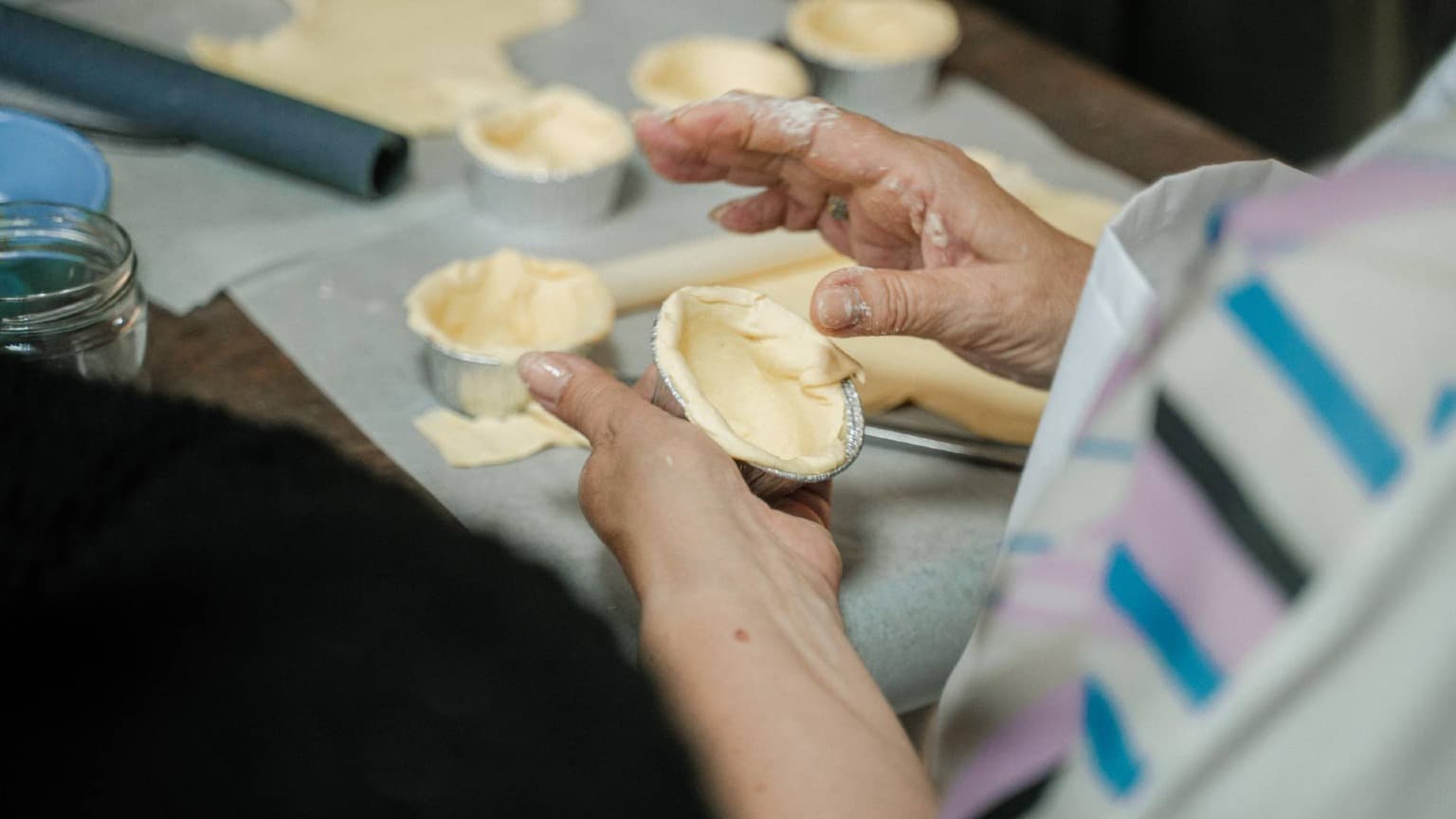
Preparing the custard filling is one of the most important steps in creating authentic Pastéis de Nata with their distinctive creamy texture.
Where to Eat the Best Pastéis de Nata
Where to try the best Pastéis de Nata in Lisbon:
Ask locals where to find the best Pastel de Nata in Lisbon and you'll get a different answer every time. These are the names that come up most:
• Pastéis de Belém: the original, operating since 1837, a short walk from Jerónimos Monastery.
• Manteigaria: baked continuously in an open kitchen; the closest thing to a rival to Belém among locals.
• Pastelaria Aloma: running since the 1940s, multiple award-winning batches.
• Confeitaria Nacional: Lisbon's oldest pastry shop, open since 1829.
👉 Want to taste Pastéis de Nata as part of a broader culinary experience? Our Lisbon Food Tour includes one of Portugal's most iconic pastries alongside traditional petiscos, local wines, and the stories behind Lisbon's rich food culture.
Where to try the best Pastéis de Nata in Porto:
• Castro: born in Porto in 2019, now also in Lisbon; deeply caramelised tops.
• Manteigaria Porto: same fresh-batch model as the Lisbon original.
• Confeitaria do Bolhão: a classic Porto café experience near the Bolhão Market.
• Padaria Ribeiro: serving Porto since the late 19th century.
👉 Visiting Porto? Our Porto Food Tour finishes with a freshly baked Pastel de Nata, giving you the chance to discover Portugal's most famous pastry alongside local specialities, regional wines, and authentic Porto gastronomy.
A Condensed Homemade Recipe
You won't hit 300°C at home, so don't expect bakery-level blistering, but this gets close.
Prep time: 40 min.
Rest time: 45 min.
Cook time: 15 min.
Difficulty: Intermediate.
Equipment: 12-cup muffin tin or tart moulds, rolling pin, saucepan, whisk.
Storage: Airtight container, up to 2 days; freezes well after baking (reheat in the oven, not a microwave).
Makes 12 Pastéis de Nata
Pastry:
• 185g plain flour
• 2g fine salt
• 100ml cold water
• 125g high-fat European-style butter (82%+)
Custard:
• 250ml whole milk
• 10g unsalted butter
• 100g sugar
• 10g cornflour
• 10g plain flour
• 2 egg yolks
• 1 cinnamon stick
• Peel of 1 lemon
Steps:
1. Make a laminated dough by folding butter into the flour/salt/water dough in several turns; chill, roll into a log, slice, and press into tart moulds.
2. Heat milk with butter, cinnamon, and lemon peel until just simmering; remove the aromatics.
3. Whisk sugar, flour, and cornflour into the hot milk until slightly thickened.
4. Gradually whisk the hot mixture into the egg yolks until smooth.
5. Fill each pastry shell three-quarters full.
6. Bake at 260°C (500°F) or your oven's max for 12–15 minutes, until the pastry is golden and the custard shows dark spots.
7. Cool a few minutes and serve warm with a dusting of cinnamon.
Tip: preheat thoroughly and use the highest rack. Heat, more than any ingredient, is what makes this pastry.
👉 Rather learn from local bakers instead of making them at home? Join our Pastel de Nata Workshop in Funchal (Madeira) and discover how to prepare Portugal's most famous pastry from scratch before enjoying your freshly baked creations.
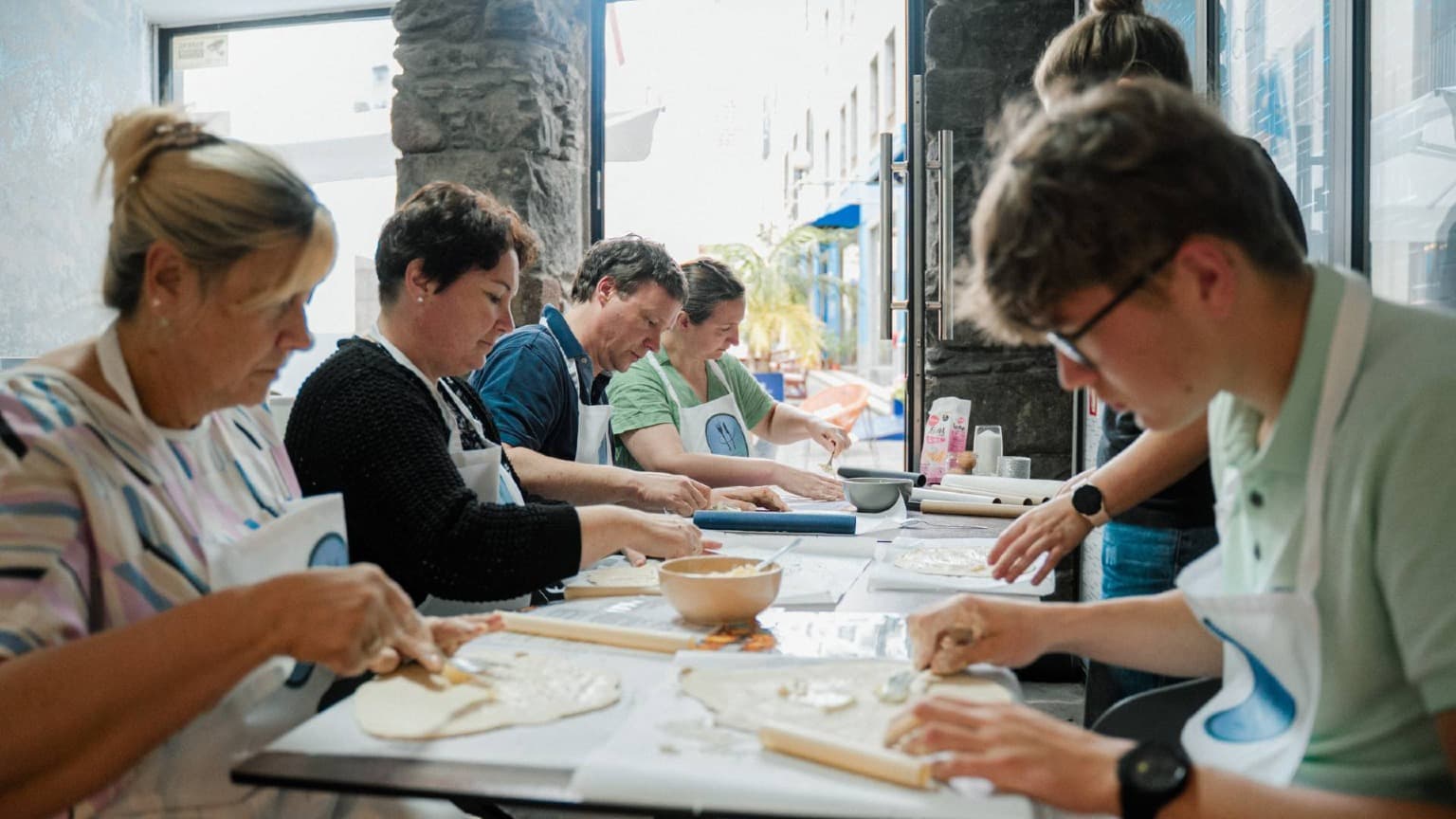
A hands-on Pastel de Nata workshop in Funchal offers visitors the opportunity to learn traditional baking techniques from local experts before enjoying their freshly baked pastries.
The Bite That Carries 300 Years
The Pastel de Nata isn't the product of one invention, it's the survivor of a 300-year refinement process that very nearly ended in 1834. Every bakery version today, from the guarded recipe in Belém to a neighbourhood spot in Porto, is one more chapter in a story that started in a royal kitchen and was saved, almost by accident, by a political revolution.
More than Portugal's most famous pastry, the Pastel de Nata is one of Europe's oldest continuously evolving desserts, shaped by royal kitchens, convent traditions, and the political upheaval that carried it from monastery walls to bakery counters around the world.
Next time you're in Portugal, don't settle for one bakery. Compare a few, taste them fresh from the oven, and if you have the opportunity, learn how they're made from local bakers. The differences are small, but they're the whole point.
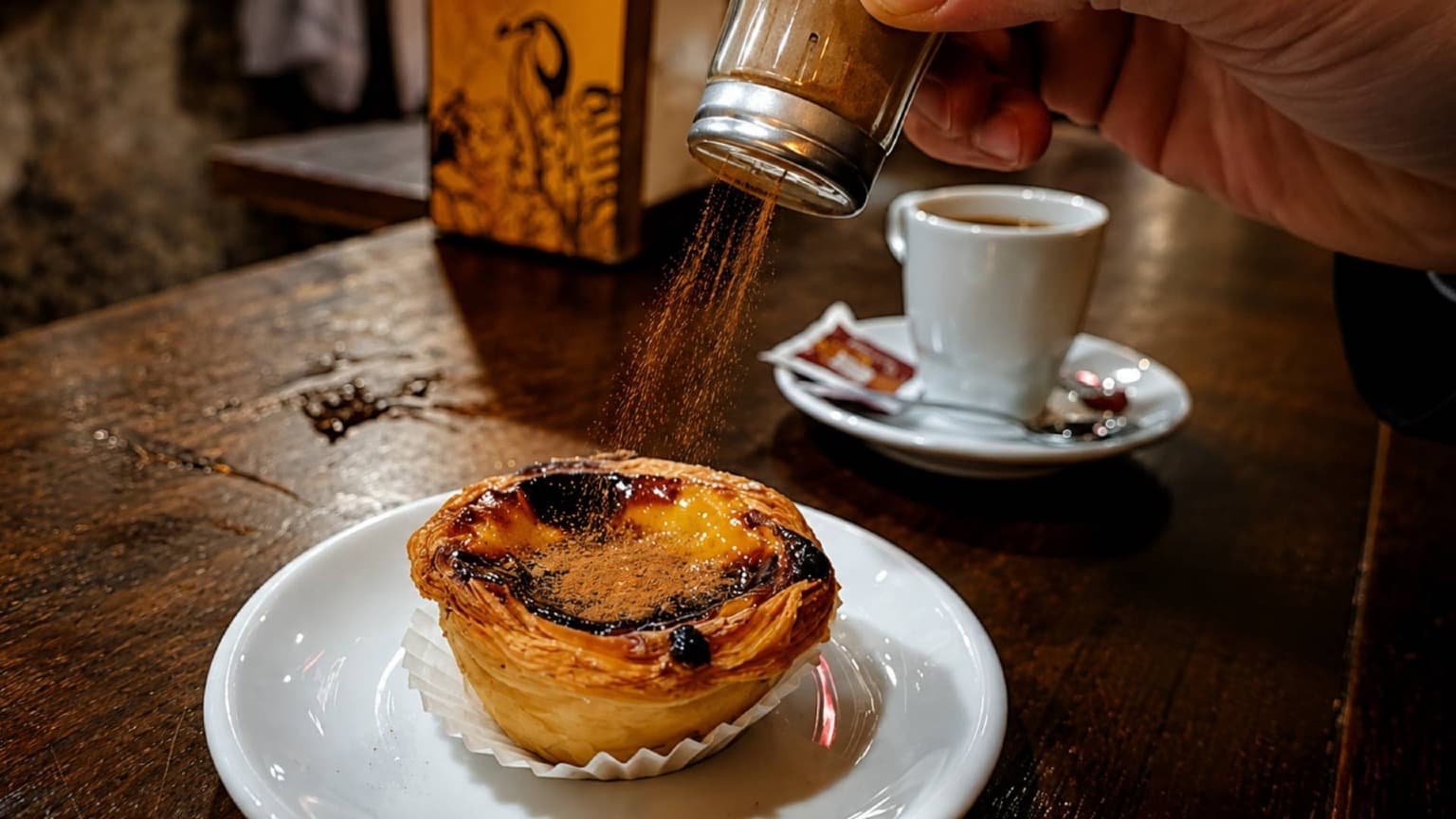
Many Portuguese enjoy a warm Pastel de Nata with a bica (espresso), a simple ritual that perfectly captures the country's everyday café culture.
Continue Exploring Portuguese Gastronomy
If this article has inspired you to discover more of Portugal's remarkable food culture, these guides and experiences are the perfect next step.
👉 Want to explore Portugal's most iconic dishes beyond its famous custard tart? Read our Complete Guide to Portuguese Food, where you'll discover regional specialities, traditional recipes, wines, desserts, and the stories behind Portugal's rich culinary heritage.
👉 Visiting Lisbon? Our Lisbon Food Tour includes a freshly baked Pastel de Nata, along with traditional petiscos, Portuguese wines, and the fascinating history behind the capital's most authentic flavours.
👉 Planning to visit Porto? Finish our Porto Food Tour with a warm Pastel de Nata while discovering the city's best local specialities, family-run eateries, and Portuguese gastronomy beyond the typical tourist trail.
👉 Prefer a hands-on experience? Join our Pastel de Nata Workshop in Funchal (Madeira) and learn how to prepare Portugal's most famous pastry from scratch under the guidance of local bakers before enjoying your freshly baked creations.
Frequently Asked Questions
Written by Gonçalo Castanho, founder of Cooltour Oporto and a Porto-based tourism entrepreneur with over 20 years of experience creating immersive and responsible travel experiences across Portugal.