Santo António Festival in Lisbon: Traditions, Sardines & 2026 Celebrations
June 2, 2025
Updated for 2026: refreshed annually with the latest programme and visitor information
Every June, Lisbon transforms into one enormous street party during the Festas de Santo António, Portugal's most famous Popular Saints celebration. Colourful decorations fill the historic neighbourhoods, grilled sardines perfume the air, and music echoes through the city until dawn. More than a festival, Santo António is one of Lisbon's deepest expressions of identity, community, and tradition.
What makes Santo António remarkable is not its scale alone, but the fact that the celebration still genuinely belongs to the city itself. The arraiais are organised by neighbourhoods. Families gather in the streets. Music spills from tiny squares and staircases. The atmosphere feels spontaneous, authentic, and deeply human.
👉 Planning your visit? Discover more in our complete Lisbon travel guide.
Santo António Festival Lisbon 2026: Quick Facts
• Main celebration: Night of June 12
• Public holiday in Lisbon: June 13
• Main parade: Marchas Populares on Avenida da Liberdade, from 21h00
• Best neighbourhoods: Alfama, Graça, Mouraria, Bica
• Typical foods: Sardines, bifanas, caldo verde, ginjinha
• Cost: Most arraiais are free to attend
• Best time to visit: June 7 to 13
• Atmosphere: Street parties, live music, dancing, grilled food, local traditions
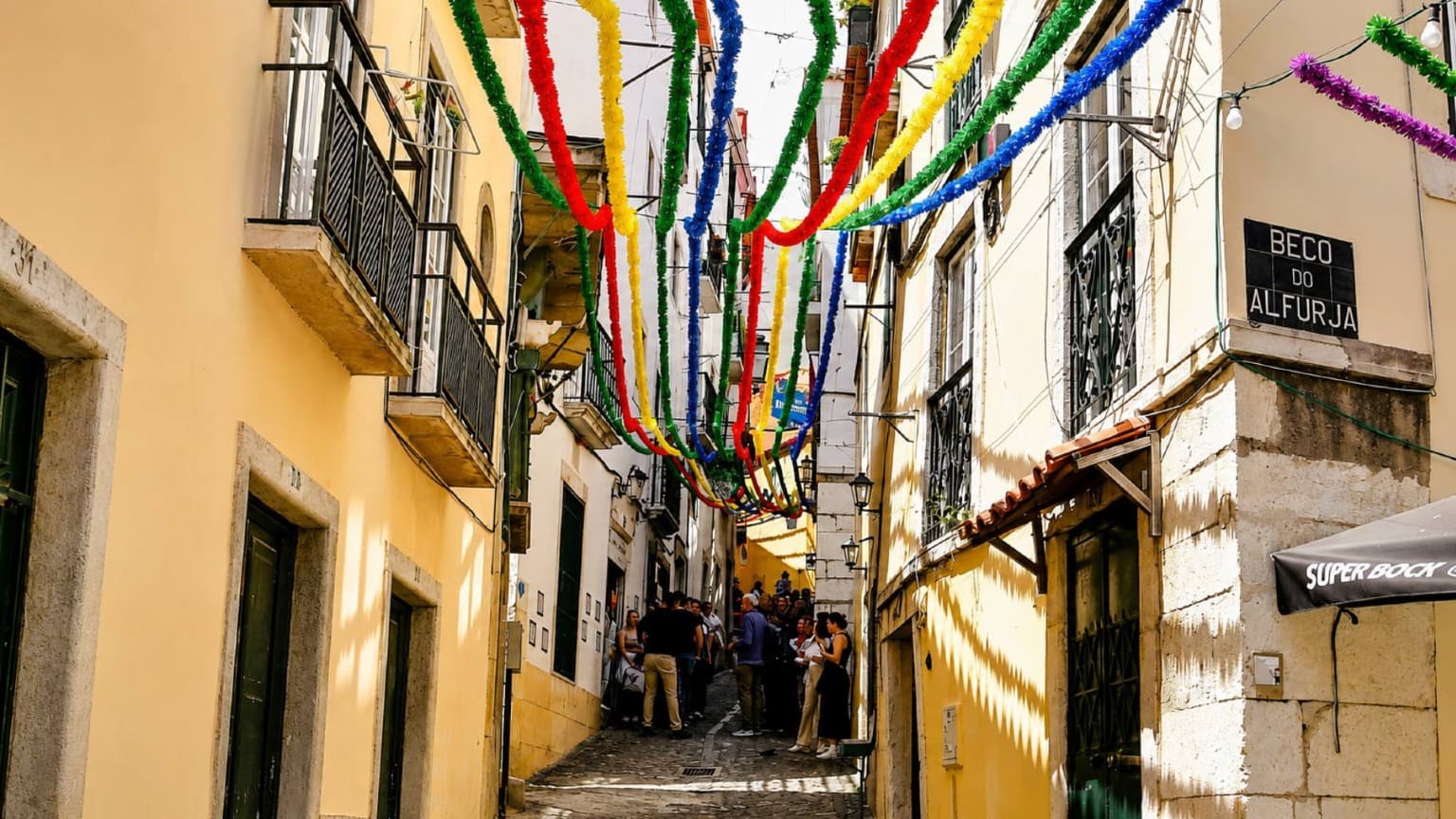
Traditional Santo António decorations in Alfama, one of Lisbon’s most atmospheric neighbourhoods during the June celebrations
What Are the Festas de Santo António?
The Festas de Santo António celebrate Saint Anthony, Lisbon's patron saint, and are the city's most important popular festivities. Held throughout June and reaching their peak on the night of June 12 to 13, the celebrations combine religion, music, food, neighbourhood traditions, and street parties in a way few European cities still preserve today.
Although Saint Anthony is known internationally as the patron saint of lost things and the matchmaker saint, in Lisbon he is much more than that. Born in the city around 1195, Santo António remains deeply connected to Lisbon's identity and everyday life. June 13 is a municipal public holiday in Lisbon, a day when the city genuinely stops and celebrates.
The festival blends several traditions together:
• Catholic devotion to Saint Anthony
• Popular street parties known as arraiais
• The Marchas Populares neighbourhood parade
• Collective outdoor dining with sardines, bifanas, and caldo verde
• Neighbourhood identity, rivalry, and community pride
• Traditional music, fado, and dancing
• The Casamentos de Santo António collective wedding ceremonies
• Manjericos, the traditional basil plants decorated with romantic poems
• Tronos, small altars dedicated to the saint traditionally made by children
For many Lisboetas, Santo António is not simply an event to attend, but part of childhood memory and neighbourhood culture passed down through generations.
Who Was Saint Anthony?
Saint Anthony was born in Lisbon around 1195 as Fernando de Bulhões. He began his religious life in Lisbon before moving to Coimbra, where he joined the Franciscan Order and took the name Anthony. His reputation as a gifted preacher led him to Italy, where he passed away near Padua on June 13, 1231. He was canonised less than a year later and is today one of the most venerated Catholic saints in the world.
His connection to Lisbon is intimate and personal. The Igreja de Santo António, one of the focal points of the June celebrations, was built on the site where he is believed to have been born, next to the city's cathedral. Lisboetas have always celebrated him not as a distant religious figure but as one of their own.
Why Santo António Is So Important in Lisbon
Unlike many large European festivals that have become primarily touristic, the Festas de Santo António still feel deeply local. Much of the celebration revolves around Lisbon's historic neighbourhoods (Alfama, Graça, Mouraria, Bica, Madragoa, and Castelo) where residents have celebrated these traditions for generations.
The celebrations date back to the 13th century, blending Catholic devotion with older folk traditions. Some researchers suggest the Festas de Lisboa evolved partly from ancient rituals connected to the summer solstice and the harvest season. Devotion to the saint grew significantly after his relics arrived in Lisbon in the 15th century, sparking grand citywide festivities in his honour that have continued, in evolving forms, ever since.
When to Visit Lisbon for Santo António
The Santo António celebrations officially run throughout June, but different periods offer very different experiences.
Best overall dates: June 7 to 13, for the full festival atmosphere across the city.
Best for smaller crowds: The first week of June. Many arraiais are already active but the city is far less crowded.
Best for maximum atmosphere: The night of June 12, when the Marchas Populares parade takes place and Lisbon's historic neighbourhoods stay awake until sunrise.
Best for families: Daytime visits and early evening arraiais offer a calmer, more manageable experience for all ages.
Santo António Festival 2026: This Year's Celebrations
The 2026 Festas de Santo António once again transform Lisbon throughout June, with the main celebrations concentrated on the night of June 12 and the public holiday on June 13.
The city's historic neighbourhoods host dozens of arraiais with live music, grilled sardines, bifanas, caldo verde, and open-air dancing late into the night. Lisbon's atmosphere during Santo António is festive, chaotic, authentic, and unmistakably local.
Marchas Populares 2026: "Somos Lisboa, Somos Europa"
Lisbon's most iconic Santo António tradition returns to Avenida da Liberdade on the evening of June 12. In 2026, the theme of the Marchas Populares is "Somos Lisboa, Somos Europa", a tribute to the Treaty of Lisbon marking Portugal's 40 years within the European project.
Twenty neighbourhood groups compete, each having spent months preparing choreographies, costumes, and original music. Three additional non-competing groups also take part. The parade begins at 21h00 and is free to attend along the avenue. Arrive before 20h00 to secure a good viewing spot.
For visitors who prefer seated viewing, the Marchas also perform at Altice Arena on May 29, 30, and 31 before the main parade. Tickets for the Arena editions are paid; check arena.meo.pt for 2026 pricing when available.
📍 Avenida da Liberdade
🕐 June 12 from 21h00
💶 Free
🚇 Metro: Marquês de Pombal, Avenida, or Restauradores (Blue Line)
Casamentos de Santo António: Collective Wedding Ceremonies
One of Lisbon's most unique traditions, the Casamentos de Santo António sees dozens of local couples married collectively in ceremonies supported by Lisbon City Hall. The tradition began in 1958, originally intended to help couples with limited means fulfil their dream of getting married. Lisbon City Hall organises the ceremony, which includes religious or civil vows, a wedding lunch, and gifts from partner organisations.
The procession and ceremony take place around the Igreja de Santo António and the Sé de Lisboa. Attendance is free and open to everyone; it is one of the most genuinely moving moments of the entire festival.
📍 Igreja de Santo António / Sé de Lisboa, Alfama
🕐 June 12, 2026 (exact time to be confirmed by Lisbon City Hall)
Religious Celebrations and the Saint Anthony Procession
On June 13, the public holiday, the Saint Anthony Procession takes place in the streets of Alfama. Beginning at the Igreja de Santo António, hundreds of devotees walk through the neighbourhood singing and praying, continuing a tradition that goes back centuries.
Masses and other religious ceremonies also take place across Lisbon throughout the month, offering a quieter and more contemplative dimension to the festivities.
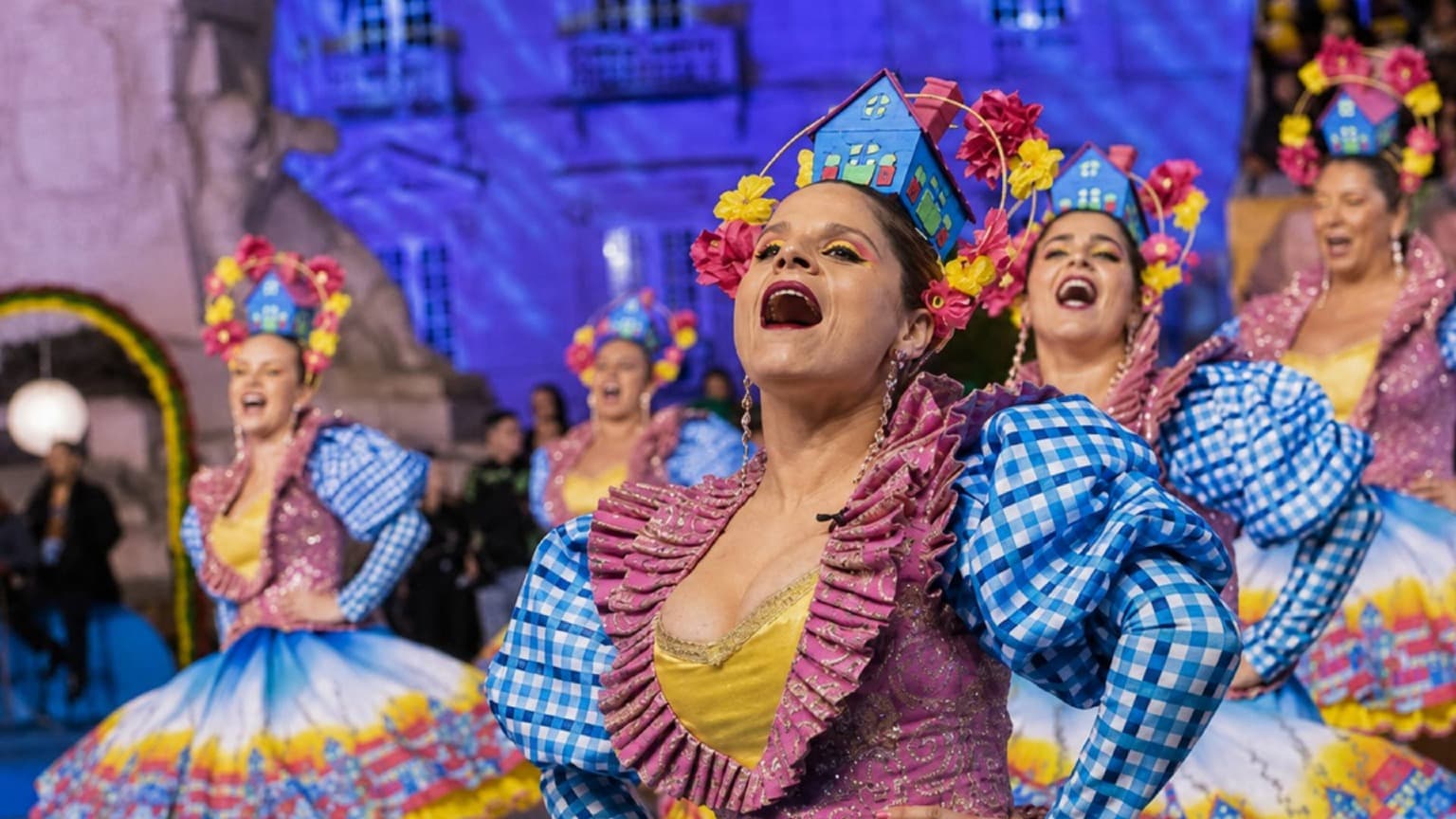
Traditional Marchas Populares performers during Lisbon’s annual Santo António celebrations. Photo: Ginásio Alto do Pina
Best Arraiais in Lisbon: Neighbourhoods to Visit
The arraiais are the true soul of Santo António. These open-air neighbourhood festivals combine live music, sardines, beer stands, dancing, and long communal dinners continuing into the early hours.
Alfama: The Spiritual Heart of Santo António
Alfama is the neighbourhood most associated with Santo António in Lisbon. Narrow streets, flower-decorated balconies, strings of lights, and sardines grilling on every corner create the atmosphere that defines the festival. Largo de São Miguel is the central gathering point, with live music most evenings from late May until the end of June.
The night of June 12 in Alfama is unforgettable, but also the busiest and most crowded. Keep bags in front and valuables in inner pockets, particularly around the main squares and concert areas.
Typical prices:
• Sardines: 1.50 to 2€ each
• Bifanas: 2.50 to 4€
• Caldo verde: 1.50 to 3€
• Beer: 1.50 to 2€
📍 Largo de São Miguel and surrounding streets, Alfama
🕐 Late May to June 29
💶 Free entry
🚇 Metro Santa Apolónia (Blue) + 10 min walk
🚋 Tram 28 (Sé stop)
Graça: Lisbon's Most Photogenic Arraial
The Vila Berta arraial in Graça takes place in a private early-20th-century residential street that is among the most beautiful in Lisbon. During June, it transforms into a neighbourhood party with live popular music, sardines, and a genuinely local atmosphere. On the night of June 12, the party runs until around 4am.
Arrive before 21h00 if you want a table; otherwise simply walk the street and enjoy the spectacle.
📍 Vila Berta (entrance via Rua da Graça or Calçada do Monte), Graça
💶 Free
🚌 Bus 734 or 736 (Graça stop)
🚋 Tram 28 (Graça stop)
Mouraria: Multicultural Santo António
The Arraial da Mouraria at Largo da Rosa, organised by the association Renovar a Mouraria, is one of the city's most culturally distinctive arraiais. Rather than the typical pimba music lineup, it features a multicultural programme with musicians from Angola, Cape Verde, Brazil, and Portugal. Free entry, vegetarian food options, and an inclusive atmosphere make it a standout.
📍 Largo da Rosa, Mouraria
🕐 Usually held during the first half of June
💶 Free
🚇 Metro Martim Moniz (Green), 5 min walk
Bairro Alto & Misericórdia: Views, Concerts, and City Panoramas
The Arraial da Misericórdia takes place at Miradouro de São Pedro de Alcântara, one of Lisbon's finest viewpoints, with the castle and Baixa spread out below. The programme typically includes well-known Portuguese artists and runs from late May through most of June. Check the official Festas de Lisboa programme closer to the date for the confirmed 2026 lineup.
📍 Miradouro de São Pedro de Alcântara, Bairro Alto
💶 Free
🚇 Metro Baixa-Chiado (Green/Blue) + Elevador da Glória or 10 min walk
Bica: A Classic Lisbon Atmosphere
Bica's steep streets and historic stairways create one of the most atmospheric settings during Santo António. Decorations hang overhead while locals and visitors gather around improvised grills and music stages late into the night. Compared to Alfama, Bica feels slightly less overwhelming while still preserving the same festive energy.
Madragoa: A More Local Alternative
Madragoa offers a quieter and more residential atmosphere, ideal for visitors who want to experience Santo António without the densest crowds. Expect local families, traditional music, and a slower rhythm that feels very different from central Alfama.
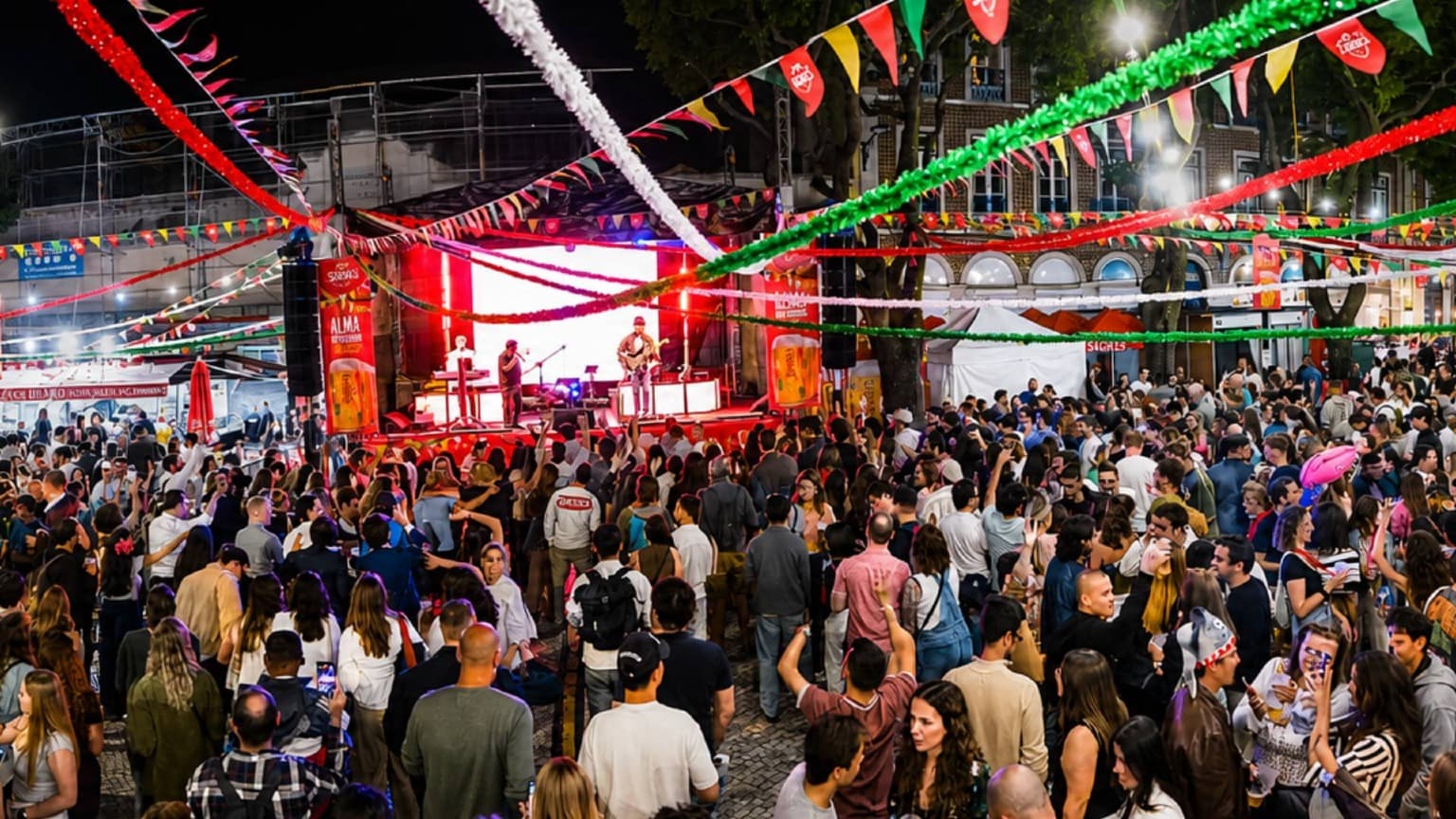
Night celebrations at one of Lisbon’s traditional Santo António arraiais in the Graça and São Vicente area. Photo: Arraiais de São Vicente
Living Traditions of Santo António
Beyond the parade and the arraiais, Santo António is kept alive through a set of traditions that connect the modern festival to its much older roots.
Manjericos: Small basil plants sold throughout June, traditionally given as a token of affection and placed in clay pots decorated with a paper flag bearing a romantic or humorous verse. The manjerico is one of the most recognisable symbols of the festival.
Tronos: Small altars dedicated to Saint Anthony, often made and displayed by children, who ask passers-by for a coin for Saint Anthony. The tradition keeps the saint present at a neighbourhood level throughout the month.
Bonfires: In some neighbourhoods, bonfires are still lit during the June festivities, with people jumping over the flames for luck and protection, a custom connected to older midsummer rituals that predate the Christian celebrations.
Popular Saints in Portugal: Santo António is part of a broader June tradition across Portugal. Lisbon celebrates Saint Anthony, Porto celebrates Saint John (June 23 to 24), and other cities honour Saint Peter. Together these are known as the Santos Populares, the Popular Saints festivals, which represent the most festive month in the Portuguese calendar.
What to Eat During Santo António
Food is inseparable from Lisbon's June festivities. Sardine season traditionally begins in June, which is why grilled sardines became the symbolic dish of Santo António. The smell of charcoal and sardines drifting through the streets has become one of the defining sensory memories of the festival.
Essential foods to try:
• Grilled sardines on bread with roasted peppers: 1.50 to 2€ each in neighbourhood arraiais; up to 4€ in more touristic areas
• Bifanas, pork loin in bread with optional mustard: 2.50 to 4€
• Caldo verde, kale and potato soup with chouriço: 1.50 to 3€
• Caracóis, seasonal snails cooked in herbs: 2 to 4€ per portion
• Ginjinha, sour cherry liqueur in a small glass or chocolate cup: 1 to 2€
• Portuguese beer (imperial): 1.50 to 2€ at neighbourhood stalls
A practical tip: the best sardine stalls are usually the busiest ones. Constant grilling generally means fresher fish. A sardine sitting cold on a plastic tray is a sardine to avoid.
👉 Explore more Portuguese food experiences and local tours in Lisbon.
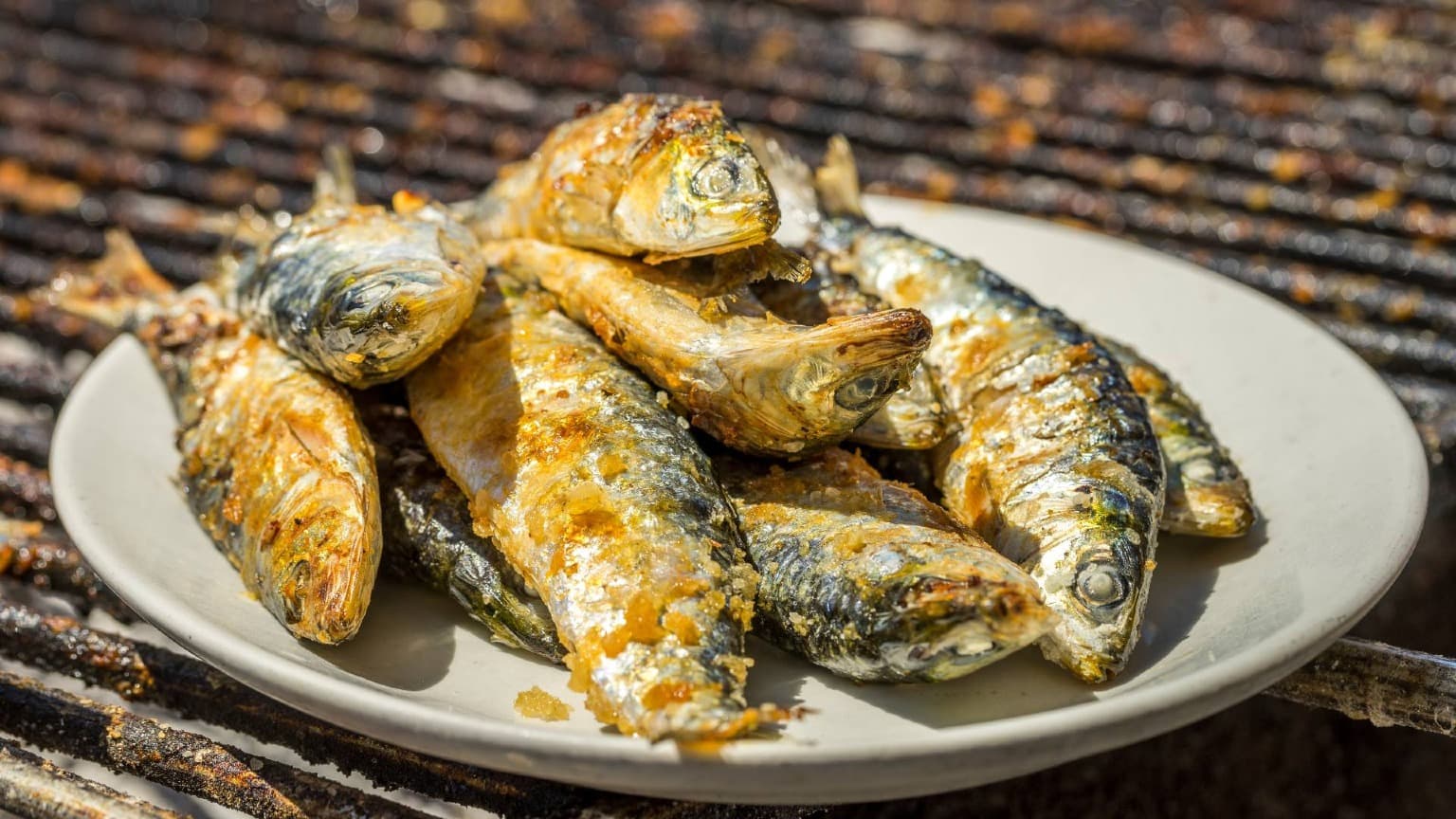
Grilled sardines are one of the most iconic foods of Lisbon’s Santo António celebrations
How to Experience Santo António Like a Local
Many visitors experience Santo António only superficially. Locals approach it differently.
• Smaller arraiais often feel more authentic than the largest tourist areas
• Early June evenings offer a better balance between atmosphere and crowds
• Don't plan too much; wandering is part of the experience
• Carry cash for neighbourhood food stalls
• Avoid restaurants with aggressively tourist-focused sardine menus
• Expect noise, smoke, crowds, and spontaneity; that's part of the charm
Santo António is not polished or curated. That is precisely what makes it memorable.
How to Plan Your Night of June 12
The night of June 12 has its own rhythm. Understanding it makes the difference between a frustrating crowd experience and one of the best nights you will have in Portugal.
21h00 to 23h00: Be on Avenida da Liberdade for the Marchas Populares parade. Arrive by 20h00 for a good viewing spot. Bring water and comfortable shoes.
23h00 to 01h00: Head into Alfama, Mouraria, or Bica while the atmosphere is still manageable. This is the best window for sardines, walking, and finding genuine atmosphere.
01h00 onwards: The city reaches maximum intensity. Some visitors love the chaos; others prefer to leave earlier with the experience intact. Either is a valid choice.
Before June 12: Many arraiais begin in late May and continue through June. Visiting during evenings in early June, particularly around June 7 to 9, offers the same sardines, the same music, and the same atmosphere with a fraction of the June 12 crowd.
Lisbon Transport During Santo António
Transport during Santo António can become chaotic, especially on June 12.
• The metro usually operates extended hours on the night of June 12; check metrolisboa.pt for confirmed schedules before the festival
• Walking is often faster than Uber or taxis near midnight
• Tram 28 becomes extremely crowded during festival nights
• Expect road closures near Avenida da Liberdade and Alfama
• Tuk-tuks are generally not practical during peak hours
Comfortable shoes are essential. Lisbon's hills and cobbled streets become physically demanding during long festival nights.
Best Areas to Stay During Santo António
Choosing the right neighbourhood can completely change your festival experience.
Alfama: Best for atmosphere and authenticity, but also the loudest and most crowded.
Graça: A more local experience with excellent viewpoints and easy access to arraiais.
Baixa and Chiado: Central and practical, particularly good for first-time visitors.
Avenida da Liberdade / Marquês de Pombal: Quieter at night while remaining well connected to the main celebrations.
Book accommodation early. Prices rise significantly throughout June and historic neighbourhood hotels sell out months in advance.
👉 See our recommendations for where to stay in Lisbon.
Practical Tips for Visiting During Santo António
• Arrive early for the Marchas Populares parade, by 20h00 at the latest
• Use public transportation whenever possible
• Wear comfortable walking shoes
• Carry cash for food and drinks at neighbourhood stalls
• Keep valuables secure in crowded areas, particularly in Alfama
• Book accommodation well in advance
• Expect large crowds on June 12
• June 13 is a municipal public holiday in Lisbon; some shops and services will be closed
Experience Lisbon with Cooltour Oporto's Trusted Partners
Our Lisbon tours and experiences help travellers discover the city beyond the tourist routes, combining gastronomy, history, culture, and authentic local neighbourhoods. Visiting Lisbon during Santo António offers one of the most memorable cultural experiences in Portugal.
👉 Explore Lisbon tours and experiences.
Why Santo António Is One of Europe's Most Authentic Festivals
Many European cities host summer festivals. Santo António feels different because it still genuinely belongs to the neighbourhoods that celebrate it.
The celebration was not designed for visitors. It grew from generations decorating streets together, neighbourhood rivalry, handwritten poems attached to basil plants, children building tronos in doorways, and the specific sound of Lisbon at 2am in June, when several arraiais happen simultaneously within earshot of one another.
For travellers looking to experience Lisbon beyond monuments and viewpoints, few moments reveal the city's personality more clearly than Santo António.
Frequently Asked Questions
Written by the Cooltour Oporto team