Pedro and Inês: Portugal's Most Tragic Love Story
September 9, 2026
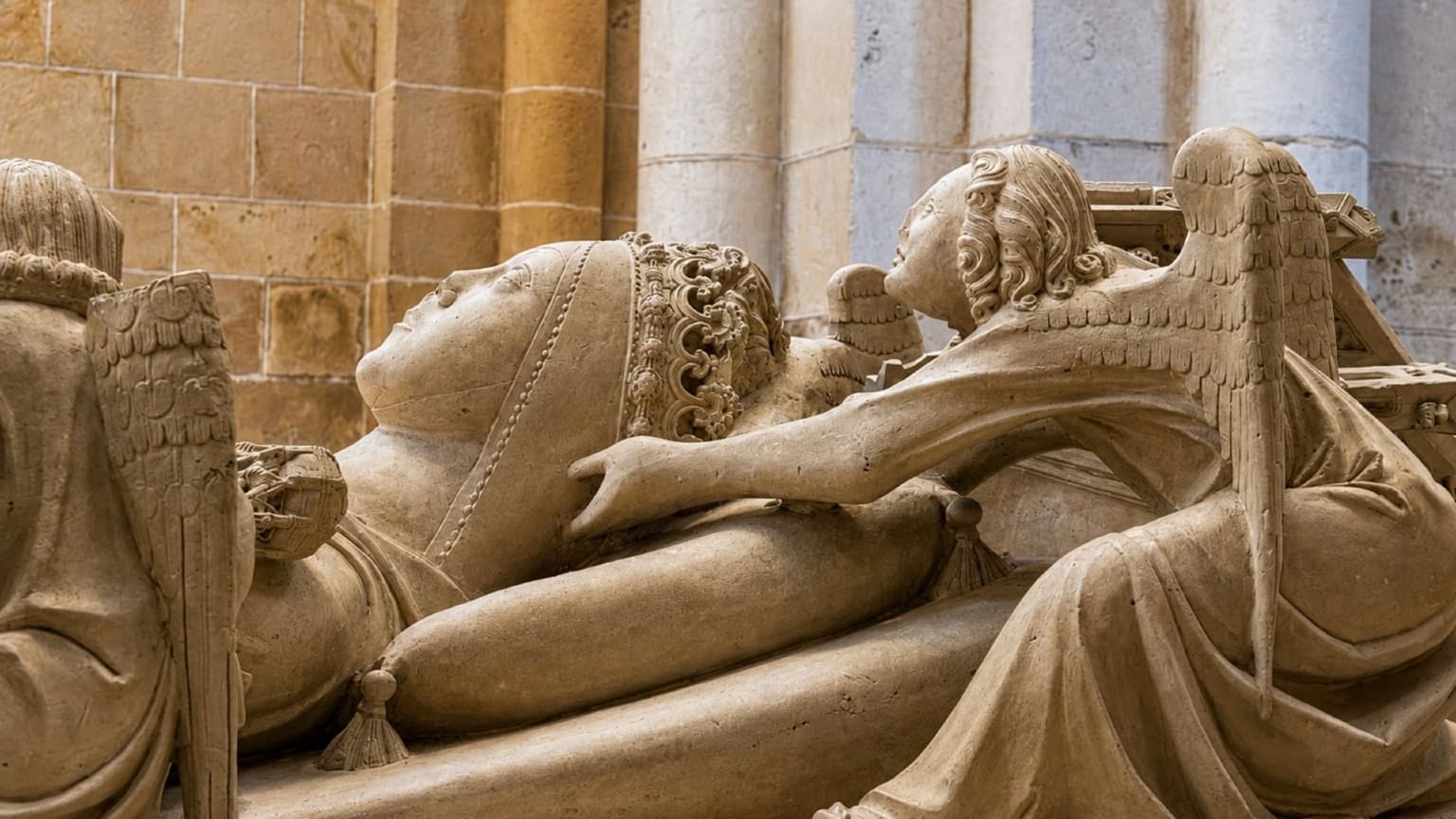
The monumental Gothic tomb of Inês de Castro at the Monastery of Alcobaça preserves the memory of one of Portugal's most famous tragic love stories.
Few love stories have left such a deep mark on Portuguese history as that of Pedro I of Portugal and Inês de Castro.
Their story has everything that has allowed it to survive for almost seven centuries: a prince caught between love and royal duty, a woman connected to one of the most powerful families of medieval Iberia, political intrigue, murder, revenge and two extraordinary tombs created to preserve their memory in stone. Separating history from legend is part of what makes it so fascinating.
Pedro and Inês were real, and their relationship was real. Inês was killed in 1355 on the orders of Pedro's father, King Afonso IV of Portugal. Pedro later became king, pursued those involved in her death and declared that he had secretly married her. Other details, including the famous story that the dead Inês was placed on a throne and the Portuguese nobility forced to kiss her hand, belong largely to the legend that developed around them.
Nowhere is their story more deeply felt than in Coimbra, the city where history, memory and legend continue to meet.
👉 Visiting Coimbra? Explore our complete Coimbra Travel Guide, including the University of Coimbra, medieval centre, Fado, museums, the Mondego riverfront and practical tips for discovering the city.
Portugal in the 14th Century: When Marriage Was Politics
To understand Pedro and Inês, it helps to forget the modern idea of royal marriage as a personal choice. In 14th-century Europe, marriages between members of ruling families were instruments of diplomacy, succession and political power.
Portugal was still a relatively young kingdom, and its relationship with neighbouring Castile was particularly important. Alliances between aristocratic families on both sides of the border could influence the balance of power around the Portuguese throne, which meant Pedro's marriage, as heir to King Afonso IV, was never simply a family matter.
In 1336, Pedro married Constança Manuel, a Castilian noblewoman whose union with the Portuguese prince formed part of this complicated political world. Among the women who accompanied Constança to Portugal was a Galician noblewoman named Inês de Castro, whose presence would change Pedro's life.
Who Were Pedro and Inês?
Pedro: The Future King of Portugal
Pedro was born in Coimbra in 1320, the son of King Afonso IV and Beatriz of Castile. As heir to the Portuguese throne, his life was shaped from childhood by the expectations of monarchy, and his marriage, political relationships and eventual succession were matters of state rather than simply personal decisions.
Yet Pedro became famous not primarily for diplomacy or government, but for the intensity with which he pursued both love and justice. When he eventually became King Pedro I in 1357, he earned the epithet O Justiceiro, usually translated as the Just or the Justiciar, reflecting the reputation for justice that became associated with his reign. His relationship with Inês, however, would ultimately overshadow almost everything else.
Inês de Castro: The Woman Behind the Legend
Inês belonged to the powerful Castro family of Galicia and came to Portugal in the entourage of Pedro's wife, Constança Manuel. Her family connections mattered enormously.
This was not simply the story of a prince falling in love with someone he was not supposed to love. Inês belonged to a politically influential aristocratic network with close connections to Castile, which meant that when Pedro and Inês began a relationship and eventually had four children together, three of whom survived childhood, what might have begun as a court romance had become something much more consequential: love, family, succession and international politics, all bound together.
A Forbidden Relationship
Pedro's relationship with Inês became increasingly problematic for the Portuguese court. As long as Constança lived, Pedro was married to another woman, but after her death in 1345, the relationship with Inês continued rather than ending. Pedro did not abandon her for a more politically convenient match; instead, the couple remained together and raised their children.
For Pedro, Inês appears to have become a permanent companion. For his father and advisers, however, her presence created a political problem, not necessarily because of Inês herself, but because of the influence of the Castro family around Pedro and the possible consequences for the future Portuguese monarchy.
The children Pedro had with Inês added another sensitive question: succession. In the politics of a medieval royal court, the possibility that their descendants might one day challenge Pedro's legitimate heir was no abstract concern.
Eventually, Afonso IV and his advisers reached a devastating conclusion: Inês had to be removed.
The Murder of Inês de Castro
In January 1355, while Pedro was away, Inês de Castro was killed on the orders of King Afonso IV. Three men became permanently associated with her death: Pêro Coelho, Álvaro Gonçalves and Diogo Lopes Pacheco.
The political reasoning behind the decision was tied to fears surrounding the Castro family, Castilian influence and the future stability of the Portuguese succession.
But history would remember the event very differently, as the murder of a woman because she loved the wrong prince, and Coimbra became the emotional landscape of the tragedy.
Quinta das Lágrimas: Where History Meets Legend
Few places in Coimbra are as closely associated with Pedro and Inês as Quinta das Lágrimas.
Today, its gardens lie on the Santa Clara side of the Mondego, not far from the historic centre, and for generations, tradition has identified the estate with the couple's love and the death of Inês.

Quinta das Lágrimas in Coimbra is closely associated with the story of Pedro and Inês, where history, landscape and centuries of legend come together.
The most famous place in the gardens is the Fonte das Lágrimas, or Fountain of Tears. According to legend, the water represents the tears shed for Inês, while reddish marks on the stone became associated in popular imagination with her blood.
The gardens are also home to the Fonte dos Amores, a different fountain connected with another romantic tradition. According to legend, Pedro and Inês exchanged secret love letters in small paper boats carried by the water along the Cano dos Amores, the historic channel associated with the fountain.
These traditions are powerful, but they should not be presented as established historical fact.
The exact circumstances and location of Inês's death have accumulated layers of tradition over the centuries, and historical references also connect her final period with the Paços de Santa Clara.
That uncertainty makes Quinta das Lágrimas more interesting rather than less. Visitors are not simply standing at the scene of a medieval event; they are standing in a landscape where history was gradually transformed into national memory and legend.
💡 Traveller's tip: If the Pedro and Inês story interests you, don't simply photograph Quinta das Lágrimas from outside. Allow time for the gardens, where the landscape and the traditional sites associated with the story give much more context to the legend.
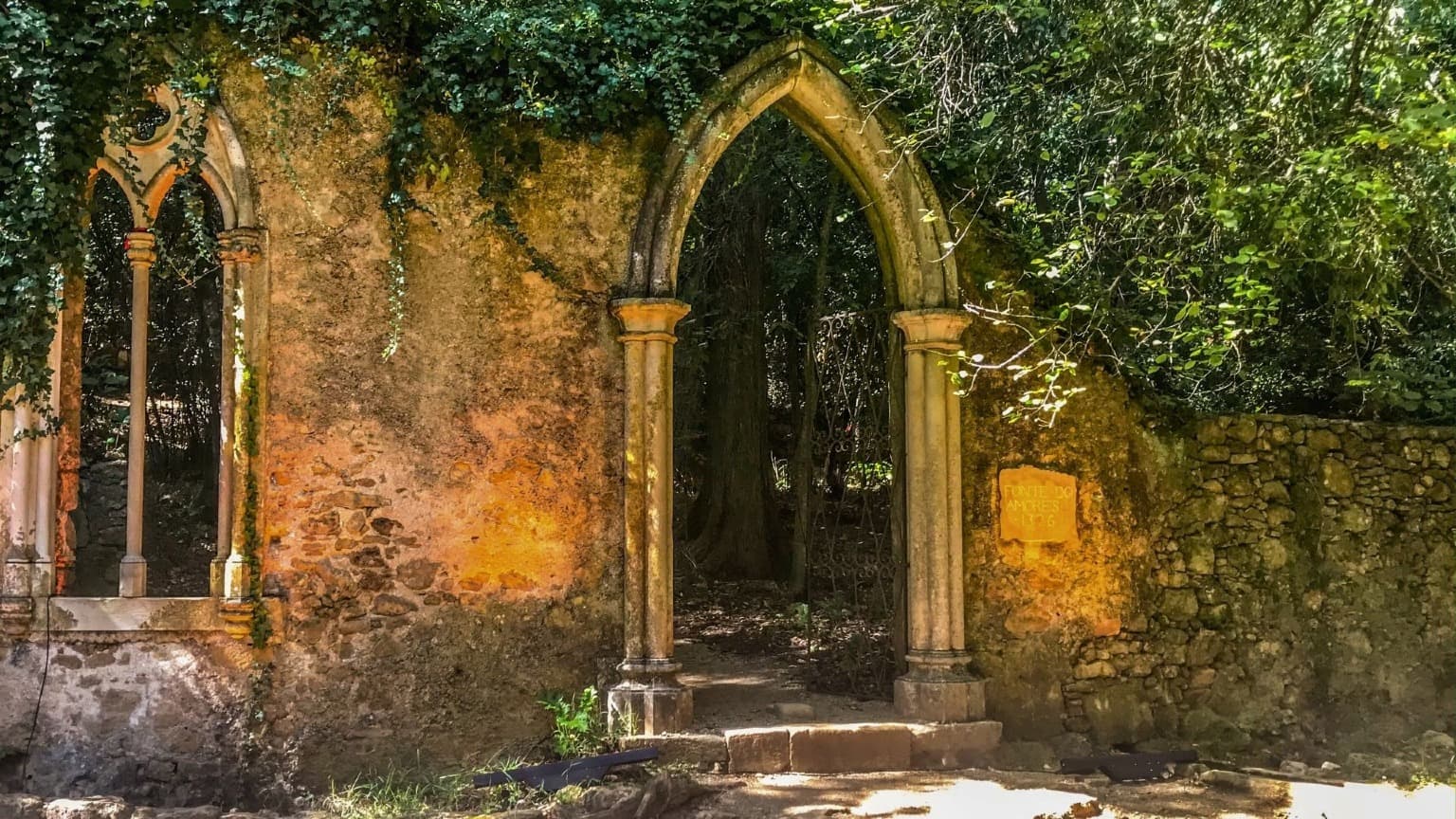
According to legend, Pedro and Inês exchanged secret love letters in small paper boats carried along the Cano dos Amores, beside the Fonte dos Amores at Quinta das Lágrimas.
What Happened After Inês Was Killed?
The murder did not end the political conflict. Pedro rebelled against his father, and the confrontation between them brought the kingdom close to further instability before an agreement was eventually reached.
Afonso IV died in 1357. Pedro was now King of Portugal, and he had not forgotten what had happened to Inês.
Pedro the Justiciar and His Revenge
Once on the throne, Pedro pursued the men associated with Inês's murder.
Two, Pêro Coelho and Álvaro Gonçalves, were eventually captured, and their executions became among the most notorious episodes associated with Pedro's reign. Later accounts describe an extraordinarily brutal punishment involving the removal of their hearts, an act traditionally interpreted as Pedro's revenge against the men who had broken his own.
The third man, Diogo Lopes Pacheco, escaped.
This darker part of the story is important because it complicates the romantic image of Pedro. The man remembered for extraordinary devotion to Inês was also a medieval king capable of extraordinary violence, and love, power, justice and vengeance are almost impossible to separate in his story.
Was Inês de Castro Really Queen of Portugal?
This is where history becomes particularly fascinating.
After becoming king, Pedro declared that he and Inês had married secretly before her death. If the marriage was valid, Inês had been his legitimate wife, which meant she could retrospectively be regarded as Queen of Portugal.
The claim became part of one of the most famous expressions in Portuguese cultural memory: Inês as the woman who "after being dead was queen."
The phrase is closely associated with Luís de Camões, whose treatment of the tragedy in Os Lusíadas helped immortalise Inês centuries after her death.
Was Inês Crowned After Her Death?
According to legend, Pedro had Inês's body exhumed, dressed her as a queen, placed her on a throne and forced members of the Portuguese court to kiss the hand of their dead queen.
It is an extraordinary image, and also one of the details we should treat as legend rather than securely documented history. There is no solid contemporary evidence establishing that this macabre coronation ceremony happened as later stories describe it.
Yet its survival tells us something important. By then, Pedro and Inês were no longer merely historical figures. They had become symbols.
Pedro and Inês in Coimbra
One of the best ways to understand their story is to follow the geography of Coimbra itself.
Quinta das Lágrimas is the place most strongly associated with their romance and tragedy in popular tradition. Its gardens and Fonte das Lágrimas transformed the story into a physical landscape visitors can still experience today.
Santa Clara and the Mondego are fundamental to the story. The medieval Mosteiro de Santa Clara-a-Velha, the former royal landscapes around Santa Clara and the Mondego place visitors in the part of the city most closely connected with the final chapter of Inês's life. The river itself later became part of Coimbra's romantic imagery, appearing again and again in literature, music and representations of the city.
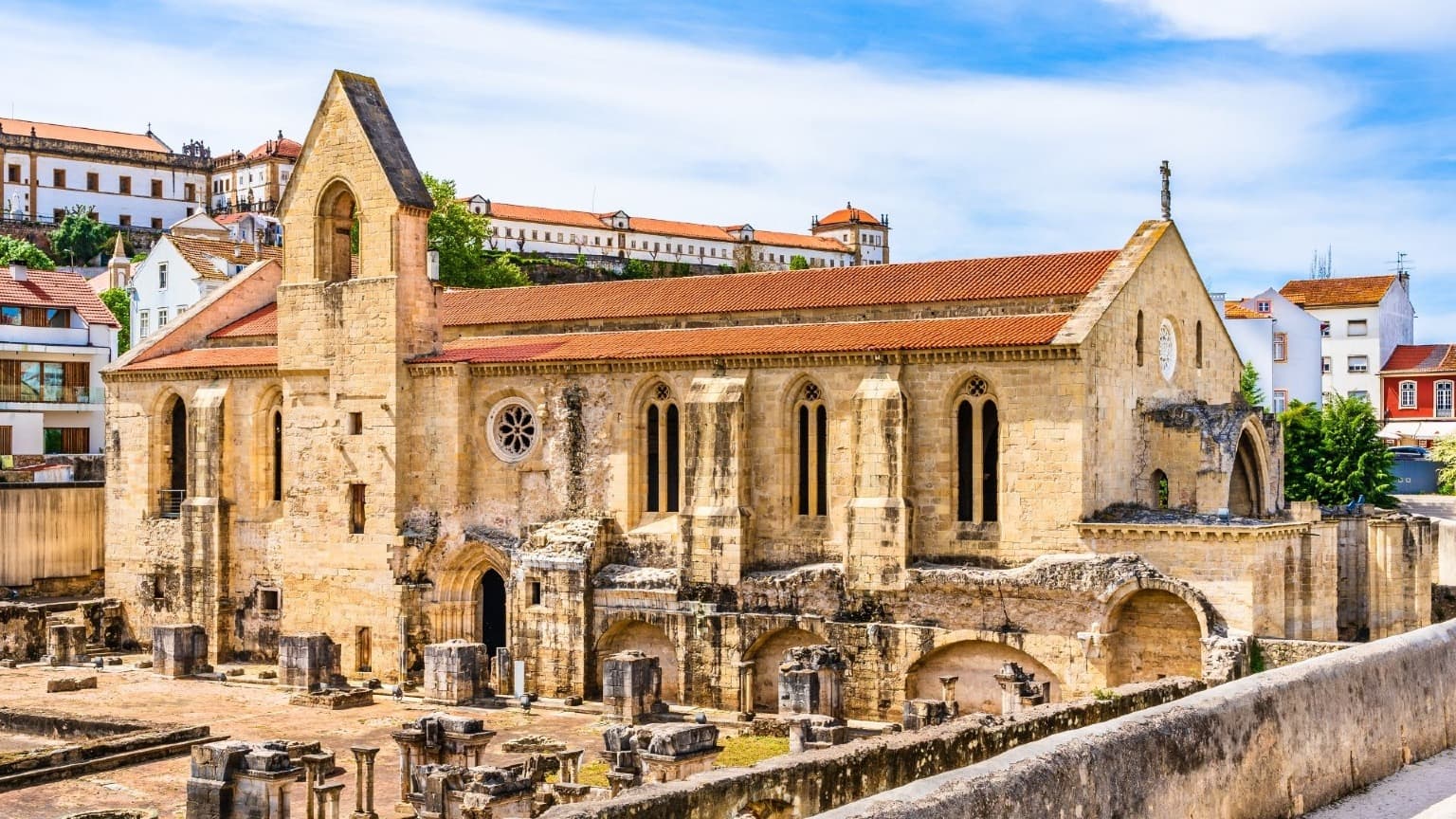
Santa Clara-a-Velha stands on the Mondego's left bank, within the area of Coimbra closely connected with the final chapter of Inês de Castro's life.
Across the river and high above the city stands another reminder of medieval royal Coimbra: the Paço Real de Coimbra. The former Royal Palace, today at the heart of the University of Coimbra's Paço das Escolas, was one of the great centres of Portuguese royal power before becoming permanently associated with university life.
Pedro's story therefore belongs to a Coimbra that existed long before the city became internationally famous for its students.
👉 Want to discover how Coimbra's Royal Palace became the heart of one of Europe's oldest universities? Explore our complete University of Coimbra Guide, including its history, architecture and most important spaces.
Exploring Coimbra through its medieval streets, royal heritage and university helps place Pedro and Inês within the wider history of the city, rather than seeing their story as an isolated legend.
👉 Want to discover medieval Coimbra with a local guide? Our Private Coimbra Walking Tour, offered by one of our trusted local partners, explores the historic centre, University of Coimbra and Biblioteca Joanina, bringing you closer to the royal and medieval city that forms the historical backdrop to Pedro and Inês's story.
From Coimbra to Alcobaça: Love Preserved in Stone
The story does not end in Coimbra.
Its most extraordinary physical legacy lies approximately halfway between Coimbra and Lisbon, inside the Monastery of Alcobaça.
Founded in the 12th century under Portugal's first king, Afonso Henriques, Alcobaça became one of the country's great Cistercian monasteries and is today recognised as a UNESCO World Heritage Site.
Inside its vast Gothic church are the monumental tombs of Pedro and Inês, which rank among the great masterpieces of Portuguese medieval funerary sculpture.
Their elaborate stone decoration transformed a royal burial into something much more powerful: a permanent visual narrative of death, faith, memory and eternity.
Pedro died in 1367 and was buried at Alcobaça, completing the final geographical chapter of a story that had begun decades earlier in the royal world of Coimbra.
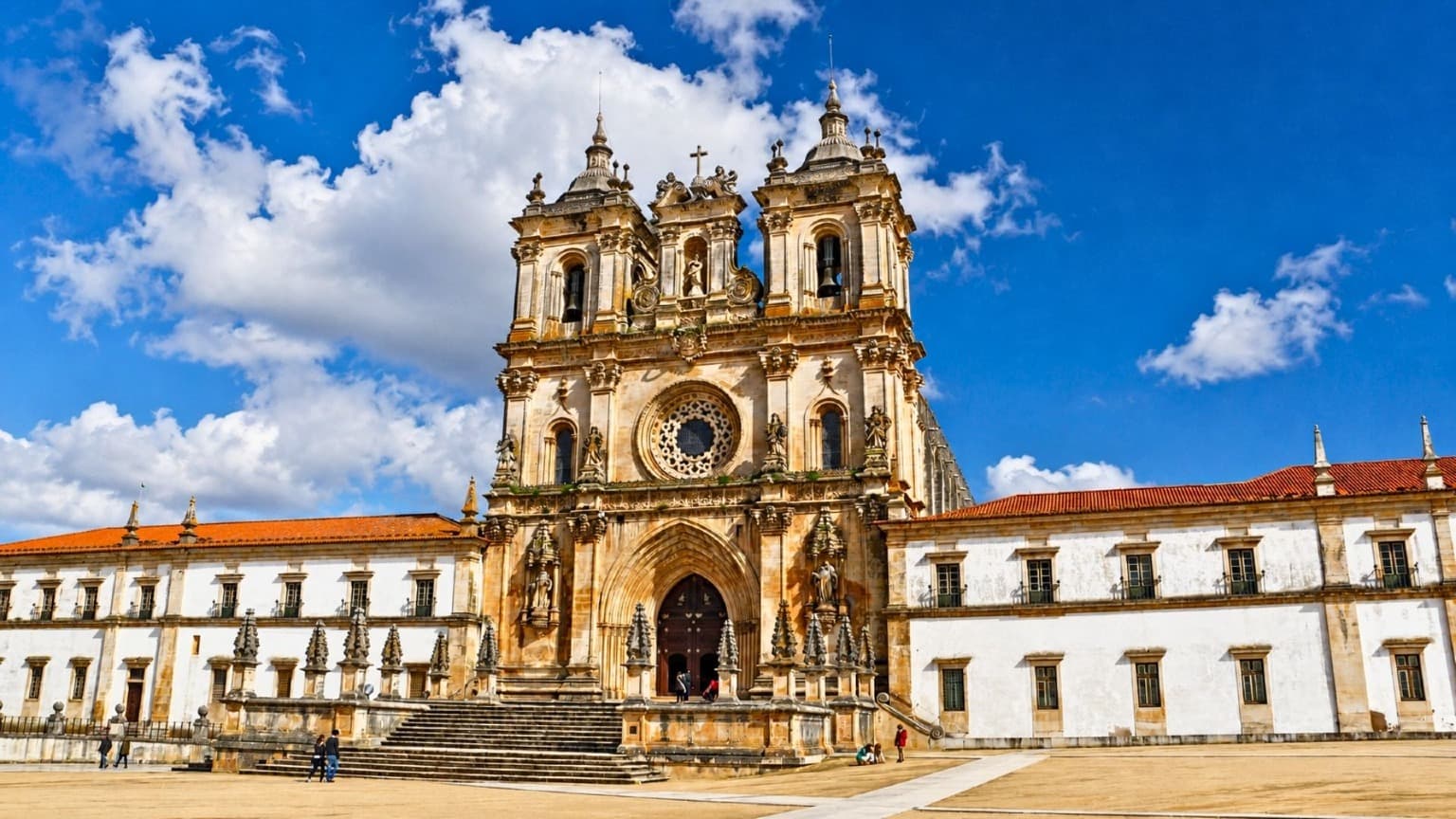
The Monastery of Alcobaça, a UNESCO World Heritage Site, is home to the monumental tombs of Pedro I and Inês de Castro.
The Tombs of Pedro and Inês
Look closely at the tombs rather than treating them simply as two monuments.
The tomb of Inês contains elaborate religious imagery, including representations connected with the Last Judgement, while Pedro's tomb carries its own complex sculptural programme, and both figures are represented lying above them.
One of the most persistent traditions says Pedro deliberately had the tombs positioned so that, when the dead rose on the Day of Judgement, Pedro and Inês would awaken facing one another.
It is a beautiful interpretation, but it should be distinguished from what can be demonstrated with certainty. In fact, the tombs were originally placed side by side and only rearranged to face one another centuries after both had died, a detail that doesn't diminish the story so much as reveal how thoroughly later generations continued to shape it.
What is beyond doubt is the message Pedro left in stone. Their tombs turned a politically disastrous relationship into one of the most enduring monuments to love in Portuguese history.
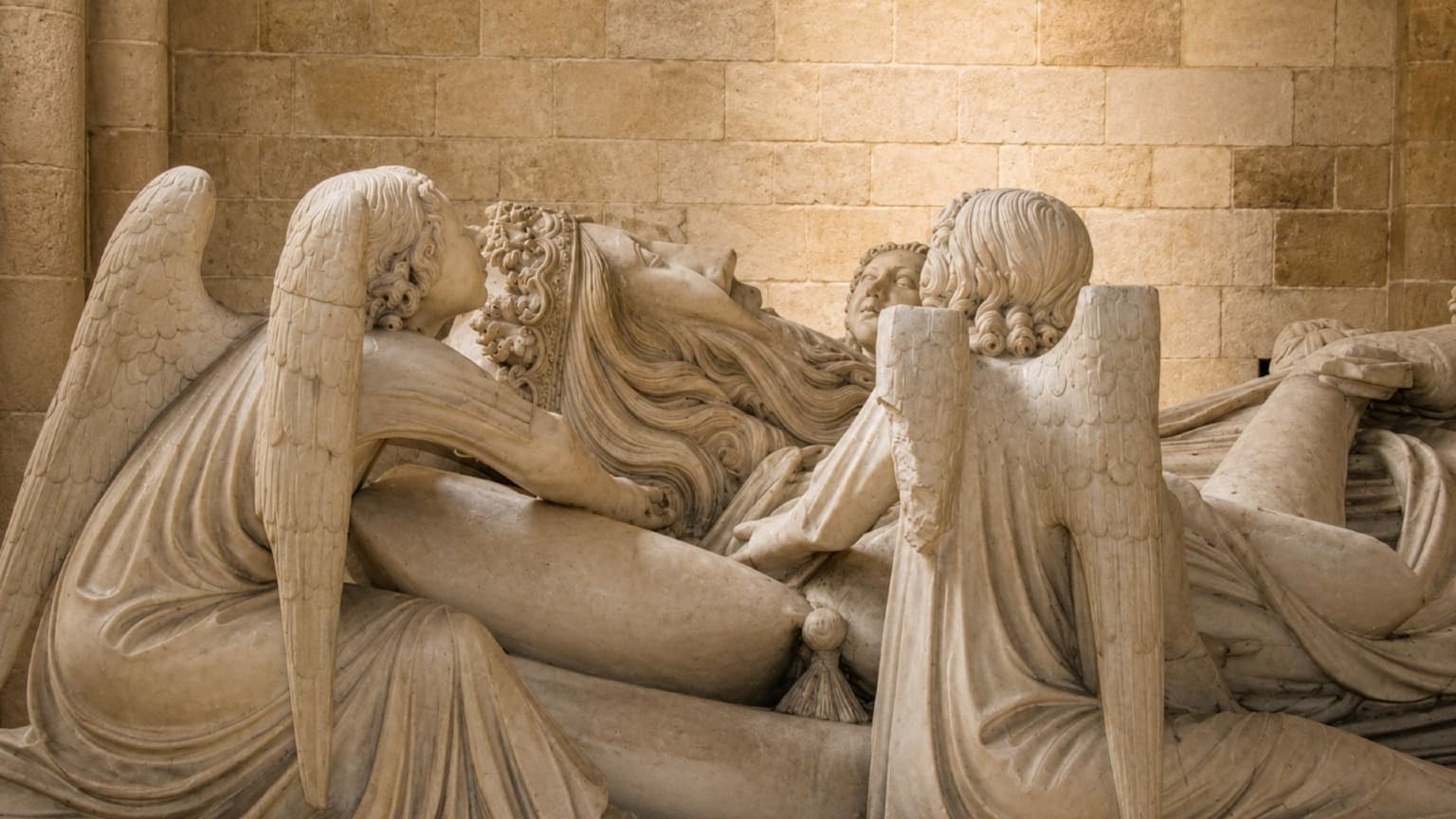
The Gothic tomb of King Pedro I at Alcobaça forms the monumental counterpart to the tomb of Inês de Castro.
"Até ao Fim do Mundo": Until the End of the World
D. Pedro's tomb is also carved with words that perfectly capture how later generations came to understand Pedro and Inês: Até ao fim do mundo. Until the end of the world.
Whether visitors arrive knowing the entire history or only the legend, Alcobaça gives the story an ending that Coimbra cannot.
Coimbra contains the relationship, conflict and tragedy; Alcobaça contains its memory.
Together, the two destinations tell the complete story.
👉 Want to continue the story of Pedro and Inês in Alcobaça? Our Private Alcobaça Monastery Tour, offered by one of our trusted local partners, takes you inside this UNESCO World Heritage monastery to see their remarkable tombs up close and discover the history and symbolism behind them.
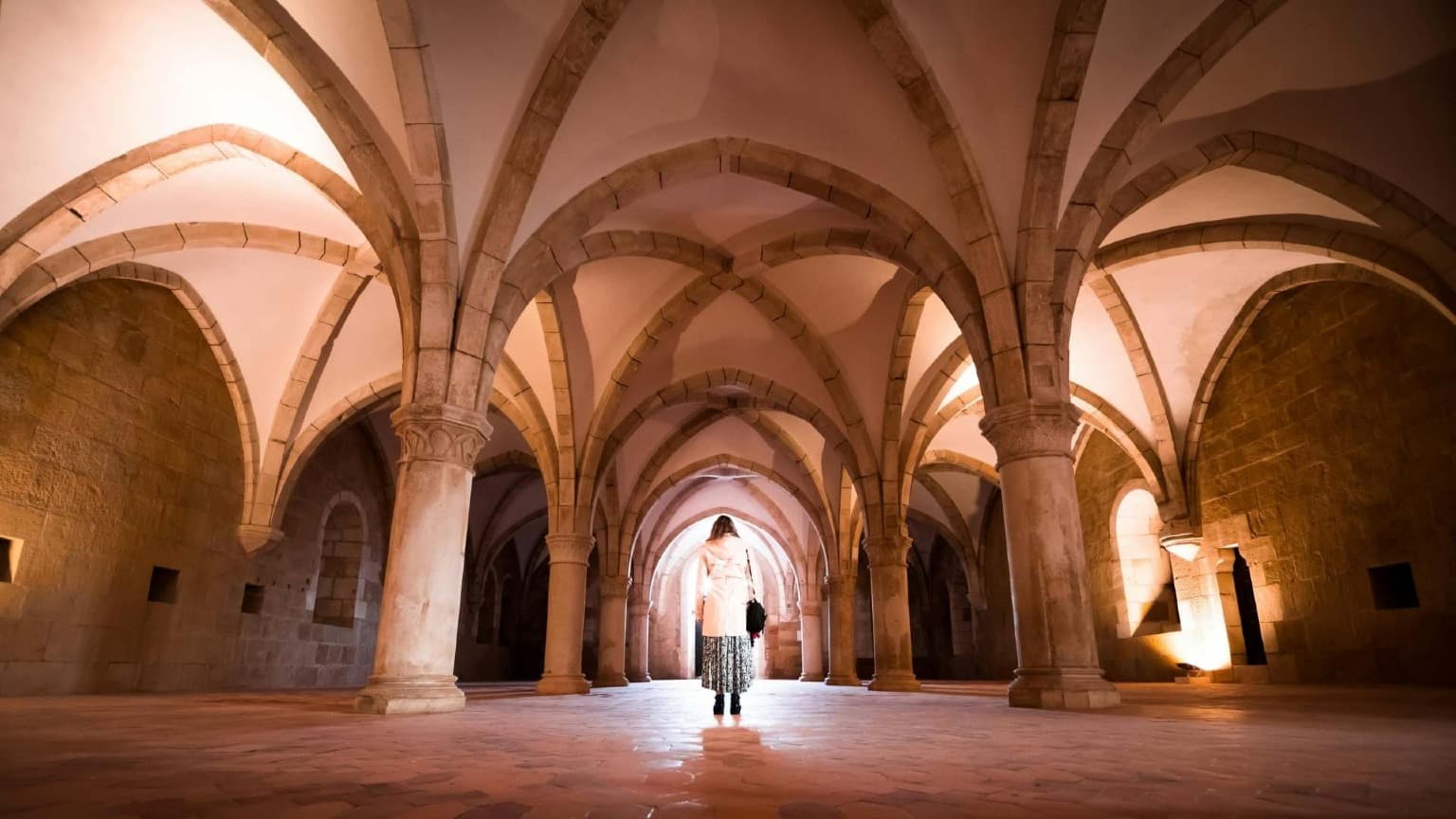
The monumental Gothic interior of Alcobaça Monastery provides the setting for the tombs of Pedro I and Inês de Castro.
From History to Portuguese Cultural Memory
Pedro and Inês did not remain confined to medieval chronicles. Their story became part of Portuguese literature, theatre, painting, music and collective memory.
The most influential literary retelling appears in Camões's Os Lusíadas, where Inês becomes one of the great tragic figures of Portuguese literature. His famous opening, "Estavas, linda Inês, posta em sossego...", helped transform a 14th-century political killing into a timeless story of innocent love destroyed by power, and over the centuries, writers and artists continued reinventing Pedro and Inês. That distinction matters.
The story we know today is made from several layers. Historical events were recorded and retold through medieval and later chronicles, before literature, oral tradition and romantic legend gradually shaped the way Pedro and Inês would be remembered.
Understanding those layers does not weaken the story. It explains why it became immortal.
Pedro and Inês: History or Legend?
Both. At the centre are documented historical events: Pedro and Inês existed, they had a long relationship and children, Afonso IV ordered Inês's death, Pedro later became king, pursued those responsible and declared that he had married Inês.
Around those events grew some of Portugal's most powerful legends: the blood-stained stones of the Fonte das Lágrimas, the dead queen seated upon her throne, the nobles kissing her hand, the lovers arranged to see one another at the resurrection.
Some may preserve echoes of older traditions; others developed as generations of writers and storytellers transformed history into something larger.
For travellers, knowing the difference makes visiting the places associated with Pedro and Inês much richer, letting you appreciate both what happened and what Portugal chose to remember.
Following the Story of Pedro and Inês Today
Almost seven centuries later, Pedro and Inês remain inseparable from Portugal's cultural memory.
In Coimbra, their story survives through Quinta das Lágrimas, Santa Clara, the Mondego and the city's medieval royal landscape. In Alcobaça, it becomes permanent: two extraordinary Gothic tombs preserving the memory of a relationship that began as a political problem and eventually became Portugal's most famous love story.
Following their story through these places also reveals something broader about Central Portugal, where royal palaces, medieval monasteries, historic cities and landscapes preserve some of the country's most important stories. Pedro and Inês are therefore particularly rewarding to discover as part of a journey through the region rather than as an isolated historical anecdote.
Perhaps that is why Pedro and Inês continue to fascinate. Not because every detail of the legend is true, but because beneath the legends were two real people whose relationship collided with the political realities of their time, ended violently and was remembered for centuries afterwards.
History gave Portugal Pedro and Inês. Literature and legend made them eternal.
👉 Planning to discover the places behind the story? Explore our Coimbra Travel Guide and Central Portugal Travel Guide to continue through Coimbra, Alcobaça and the historic landscapes that shaped some of Portugal's most remarkable stories.
Visiting from Porto? Our Private Aveiro & Coimbra Tour offers a full-day journey to Coimbra combined with Aveiro, including time to discover the University of Coimbra and the city's historic centre.

Coimbra's historic centre and university rise above the Mondego, one of the highlights of our Private Aveiro & Coimbra Tour from Porto.
FAQ: Pedro and Inês
Written by Gonçalo Castanho, founder of Cooltour Oporto and a Porto-based tourism entrepreneur with over 20 years of experience creating immersive and responsible travel experiences across Portugal.