D. Afonso Henriques
June 21, 2023
Updated February 2026
The First King of Portugal and the Birth of a Nation
To understand Portugal, you must understand D. Afonso Henriques, and to understand him, you must begin in Guimarães. He was the military and political leader who transformed the Portucalense County into the Kingdom of Portugal in the 12th century.
More than a ruler or historical figure, D. Afonso Henriques embodies the turning point when a frontier territory became an independent nation, a legacy still visible in the landscapes, castles, and battlefields of Northern Portugal today.
Guimarães and the Origins of Portugal
D. Afonso Henriques was most likely born in 1109 within the walls of Guimarães Castle, a fortress that remains one of Portugal’s most powerful national symbols.
At the time, the region formed part of the Portucalense County, a frontier territory under the Kingdom of León and Castile. Guimarães served as its political and military heart — a role that would soon place it at the centre of a historic transformation.
Walking through Guimarães today is not simply sightseeing; it is stepping into the geographical cradle of Portuguese sovereignty, where the first steps toward independence were taken.
👉 For full context on the city itself, see our Visit Guimarães travel guide.
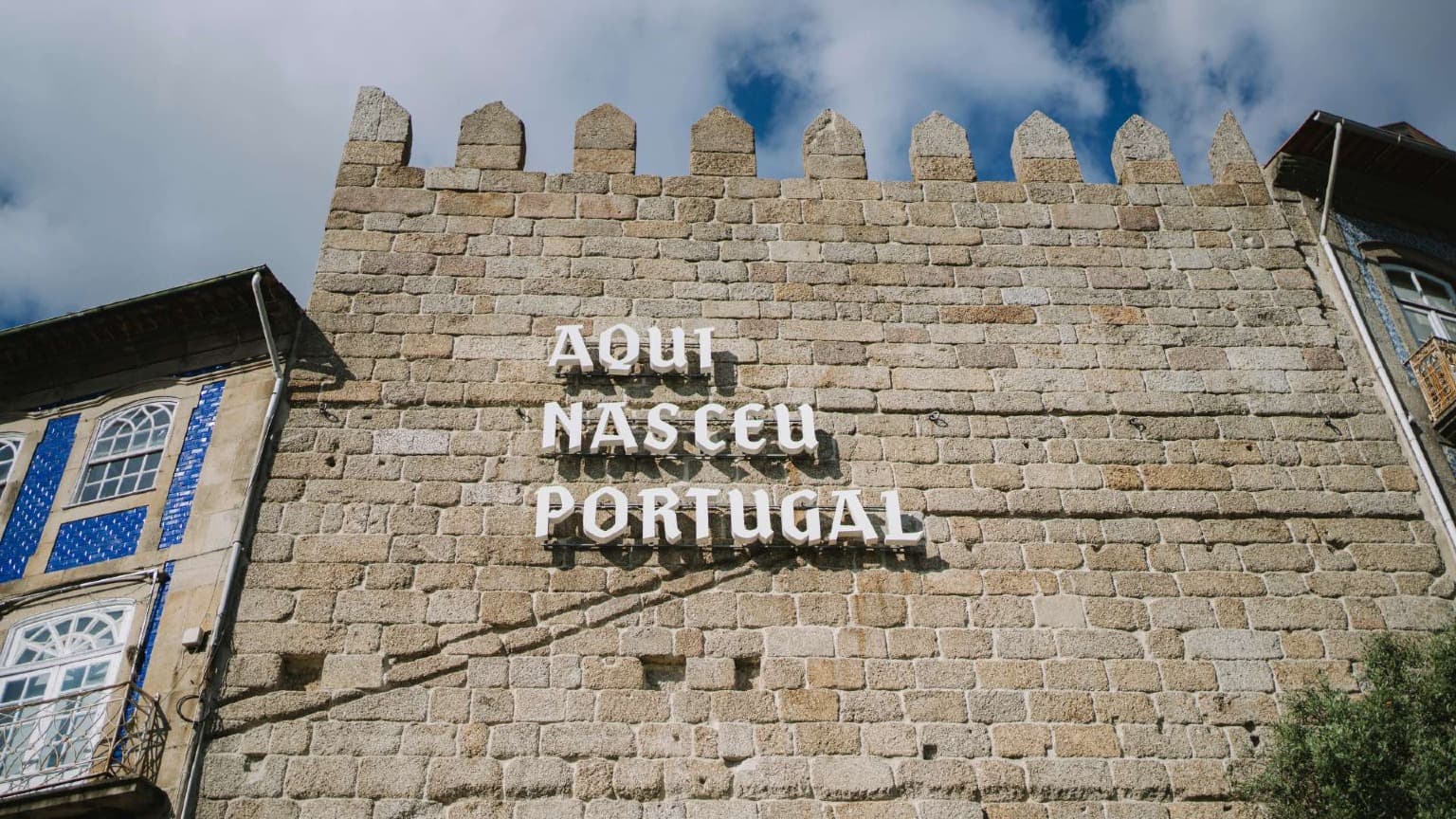
Guimarães, the Cradle of the Nation, where the political foundations of Portugal were formed in the 12th century.
Family, Education, and Early Leadership
Afonso was the son of Count Henry of Burgundy and Teresa of León. After his father’s death, he was raised under the guidance of Egas Moniz, a respected nobleman and military tutor, who shaped his education, discipline, and sense of honour.
Knighted at just 16 years old, Afonso quickly emerged as a determined leader, driven by a clear goal: political autonomy for the territory he governed.
The Battle of São Mamede: A Turning Point
In 1128, near Guimarães, Afonso Henriques confronted his mother’s forces at the Battle of São Mamede.
This confrontation marked the first decisive step toward independence. Although it was not a formal declaration of a kingdom, it established Afonso as the uncontested ruler of the county, setting Portugal on a path separate from Galicia and León.
Portuguese historiography often regards this day as the symbolic birth of the nation.
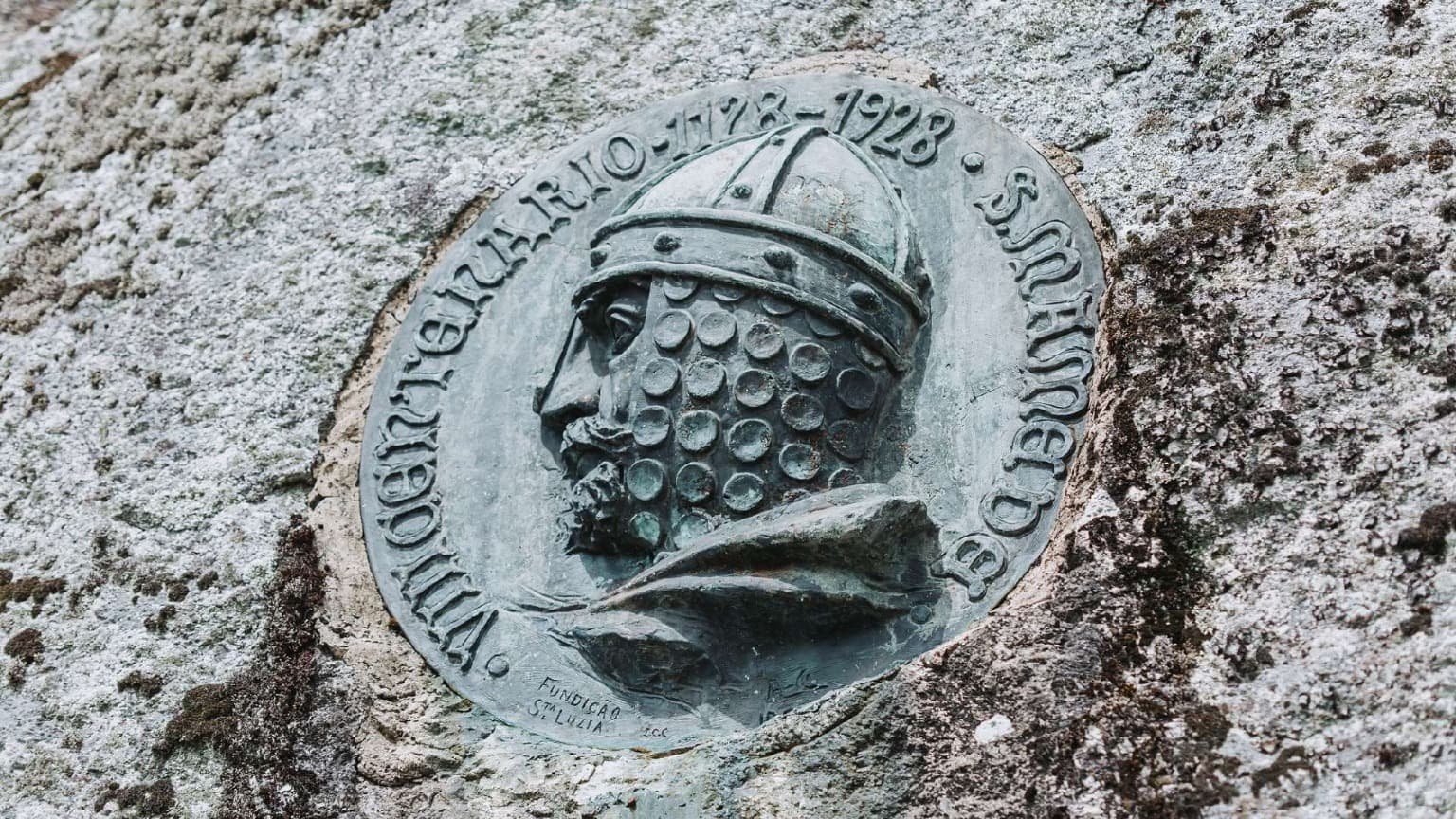
Medieval relief of D. Afonso Henriques recalling the Battle of São Mamede in 1128, a turning point in Portugal’s path to independence.
From County to Kingdom
Following São Mamede, Afonso Henriques moved the political centre south to Coimbra, from where he led campaigns to expand the territory and consolidate borders.
In 1139, after a decisive victory, he assumed the title King of Portugal. Over the following decades, he advanced southward, capturing key cities such as Santarém and Lisbon, laying the foundations of a stable kingdom.
His reign lasted 46 years, one of the longest in Portuguese history, and firmly established Portugal as an independent state.
Legacy Beyond Battles
D. Afonso Henriques was not only a warrior. During his reign, he:
• Granted charters to encourage settlement and urban development
• Strengthened religious and administrative institutions
• Secured international recognition for Portugal’s sovereignty
He died in 1185 and was laid to rest in Coimbra, but his presence remains deeply felt in Guimarães — in its castle, streets, and collective memory.
Since 1987, he has been the official patron of the Portuguese Army, reinforcing his lasting symbolic role in the nation’s identity.
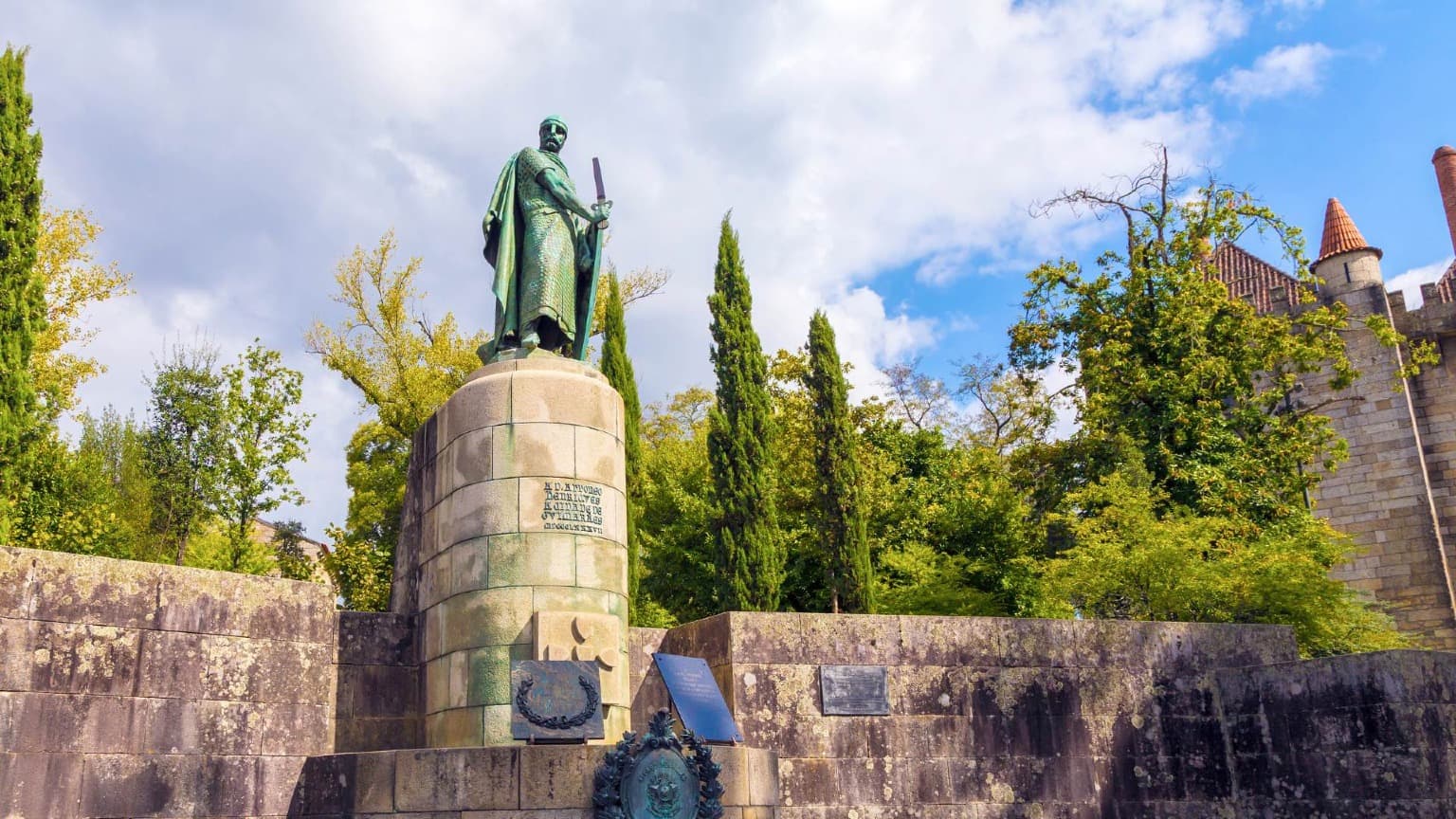
Statue of D. Afonso Henriques in Guimarães, symbol of the city where the foundations of Portugal were laid
Visiting Guimarães Through the Lens of D. Afonso Henriques
Understanding D. Afonso Henriques adds a powerful layer to any visit to Guimarães. The castle, the surrounding hills, and nearby fields are not abstract monuments — they are the physical stage where Portugal began.
Many travellers choose to explore Guimarães as part of a wider Northern Portugal itinerary, often combined with Braga and Bom Jesus do Monte.
👉 Experience these sites with local insight on our Braga & Guimarães tour, designed to connect history, place, and storytelling.
Frequently Asked Questions about D. Afonso Henriques
Written by Gonçalo Castanho, founder of Cooltour Oporto and a Porto-based tourism entrepreneur with over 20 years of experience creating immersive and responsible travel experiences across Portugal.