Visit Guimarães
August 7, 2023
Updated February 2026
The Cradle of Portugal, Where History and Everyday Life Meet
Touring Northern Portugal is never complete without visiting Guimarães, one of the country’s most historically significant and best-preserved cities. Located near Porto and Braga, Guimarães offers travellers a rare balance between deep-rooted heritage and a vibrant, lived-in atmosphere.
Known as “Aqui Nasceu Portugal” — “Here Portugal Was Born” — the city invites you to walk through nearly a thousand years of history, from medieval foundations to contemporary urban life that has retained its authentic character.
Guimarães sits in the Minho region of Northern Portugal, a territory renowned for green landscapes, traditional villages, and rich gastronomy. The city is the perfect introduction to the region, combining historical depth with a lively, local atmosphere.
Why Guimarães Matters in Portuguese History
Guimarães is widely regarded as the Cradle of the Nation, the birthplace of Portugal’s first king, Afonso Henriques, and the site where the foundations of Portuguese independence were laid in the 12th century.
This historical significance earned the Guimarães Historic Centre UNESCO World Heritage status in 2001, recognised for its exceptional preservation and continuity. Unlike many historic towns, Guimarães is not a museum city; it is a living city where residents inhabit streets, squares, and houses shaped by centuries of architecture.
Walking through Guimarães is not about ticking monuments off a list; it is about understanding how a city evolves without erasing its past. The city’s history is closely intertwined with the life of D. Afonso Henriques, whose early life, battles, and political vision defined the Portuguese nation.
Remarkably for a 12th-century ruler, D. Afonso Henriques is believed to have lived to around 76 years of age, making him one of the longest-lived medieval kings of his time.
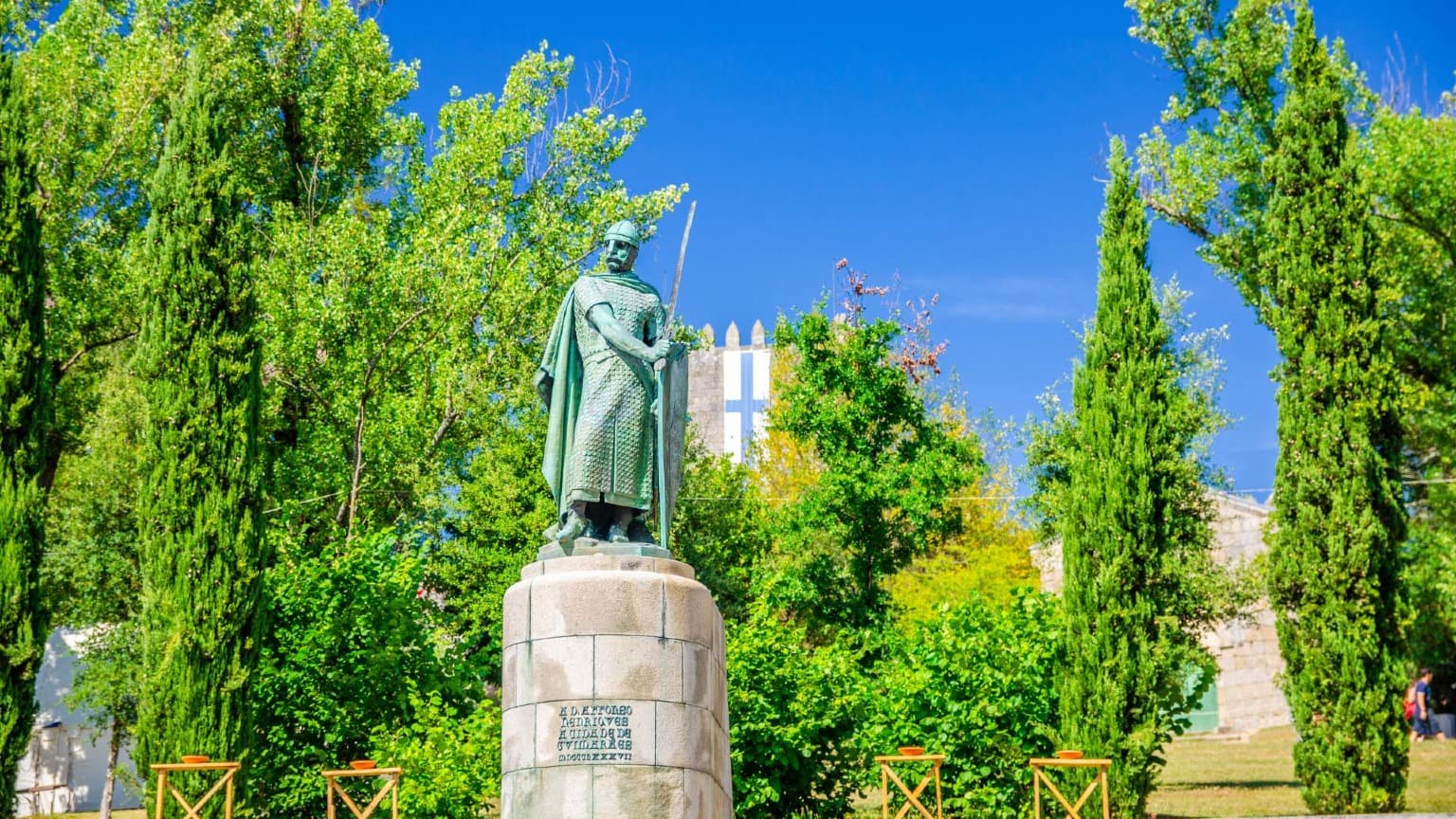
Statue of D. Afonso Henriques, the first King of Portugal, symbol of Guimarães as the Cradle of the Nation.
The Historic Centre of Guimarães
The Historic Centre is the heart of the city and the ideal place to begin any visit. Its narrow streets, granite façades, wooden balconies, and intimate squares reveal how Portuguese urban architecture developed from the 15th to 19th centuries.
Key highlights include:
• Largo da Oliveira, the social and architectural heart of the old town
• Padrão do Salado, a Gothic monument commemorating a medieval battle
• Praça de Santiago, one of Guimarães’ most atmospheric squares, historically linked to medieval pilgrims and today a lively meeting point
• The Leather Area (Zona de Couros), a former medieval industrial quarter where tanneries once operated, now carefully revitalised as a creative and cultural district
• Traditional houses still inhabited by local families and artisans
The area remains lively throughout the day, with cafés, small shops, and cultural spaces blending naturally into daily life, providing a true sense of local rhythm.
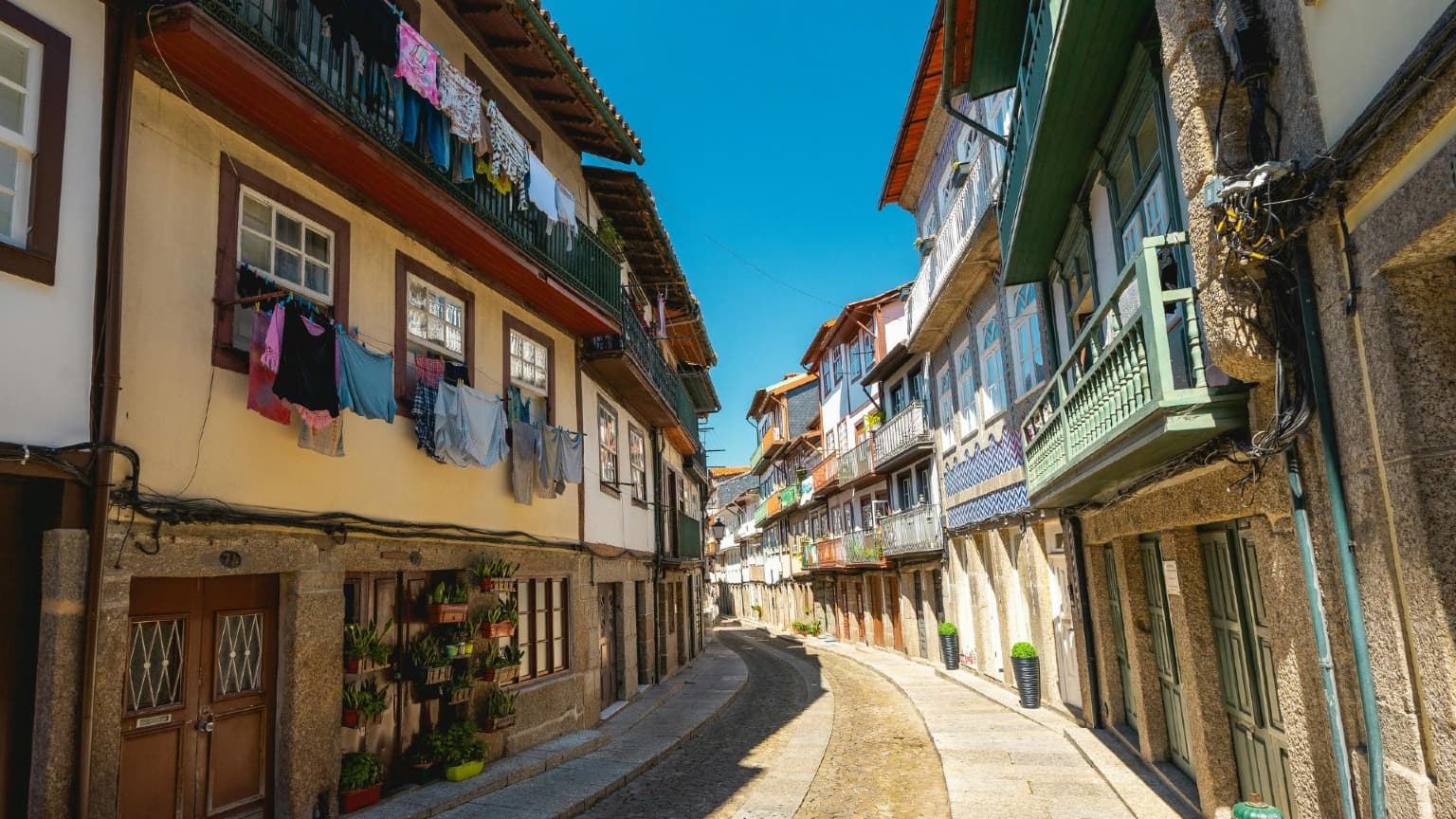
Guimarães historic centre, a UNESCO World Heritage Site known for its medieval streets and preserved architecture.
Guimarães Castle: Where Portugal Took Shape
One of the city’s most iconic landmarks, Guimarães Castle, dates back to the 10th century. Originally built under Countess Mumadona Dias as a defensive structure, it later became closely associated with the birth of the Portuguese nation.
Rebuilt and reinforced by Count Henry and Teresa of León, the castle is traditionally linked to the birthplace and baptism of Afonso Henriques. Today, its imposing towers and walls dominate the skyline, offering insight into medieval military architecture in Northern Portugal.
Standing at the castle walls, visitors can easily understand why Guimarães holds such a central place in Portugal’s national narrative.
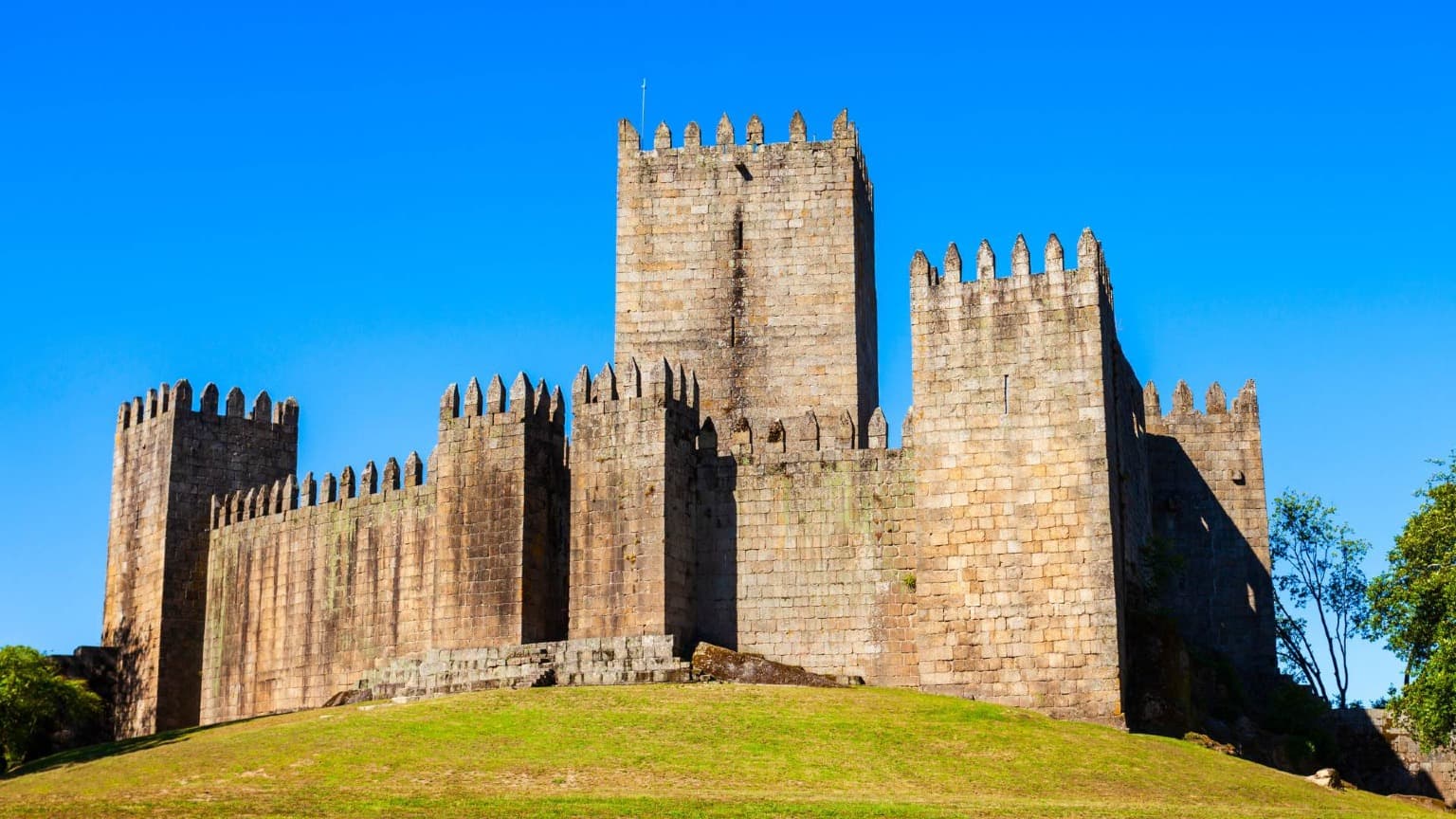
Guimarães Castle, one of Portugal’s most important medieval monuments and symbol of national origins.
Igreja de São Miguel do Castelo
Located between Guimarães Castle and the Palace of the Dukes of Braganza, the small Igreja de São Miguel do Castelo plays a quietly significant role in Portugal’s founding narrative.
According to tradition, D. Afonso Henriques was baptised here by Geraldo, Archbishop of Braga. Inside the church, a baptismal stone bears an inscription in archaic Portuguese referring to the year 1106, a detail that has fuelled historical debate about the exact year of Afonso Henriques’ birth, commonly cited as 1109, but sometimes dated to 1106 or 1111.
Though modest in size, the church represents the spiritual dimension of Portugal’s origins, linking faith, legitimacy, and the early identity of the nation.
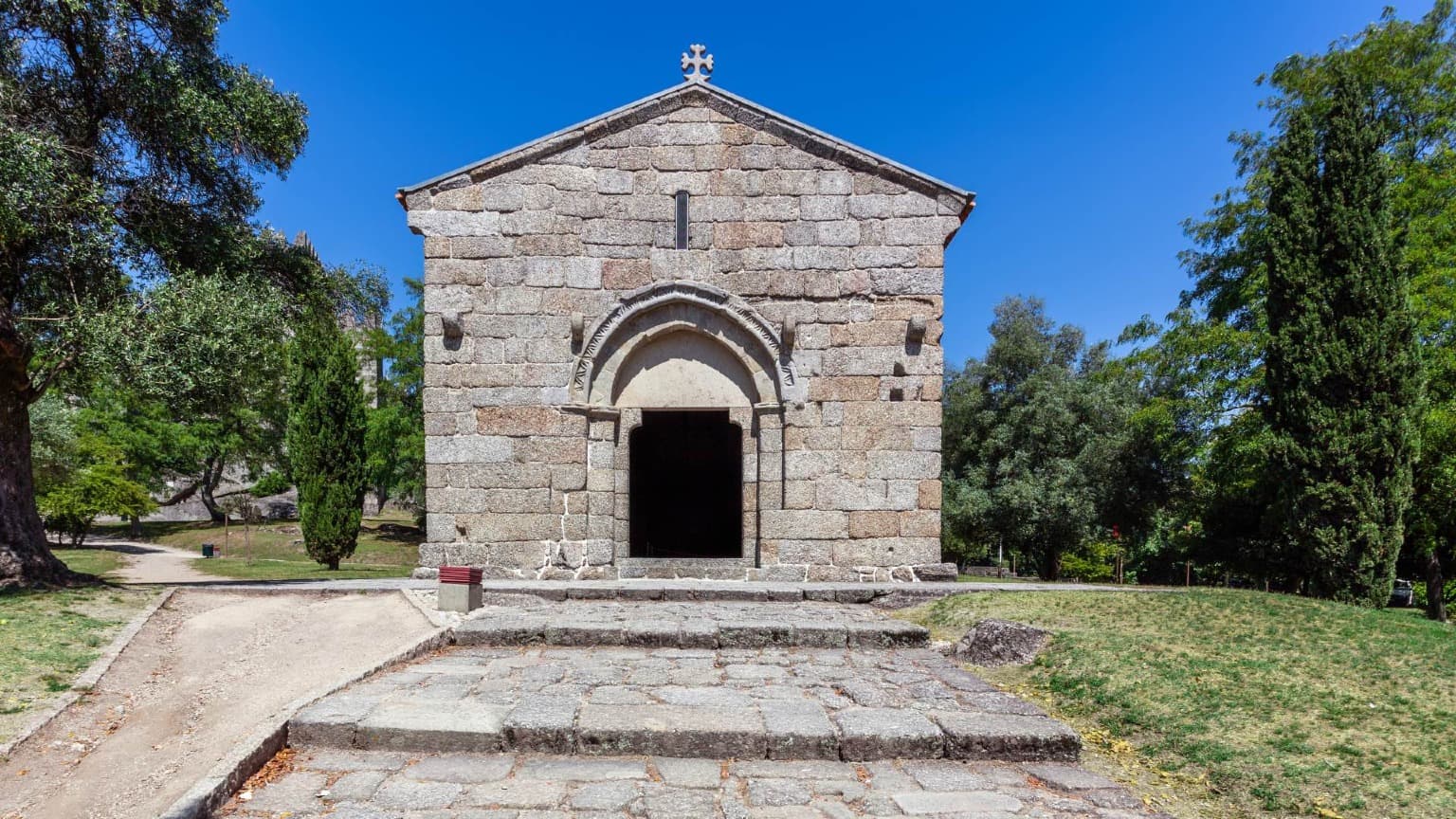
Igreja de São Miguel do Castelo, traditionally linked to the baptism of D. Afonso Henriques.
Palace of the Dukes of Braganza
Just a short walk from the castle lies the Palace of the Dukes of Braganza, one of Portugal’s most impressive examples of 15th-century manor architecture.
Built by Afonso, the first Duke of Braganza, the palace reflects the wealth and influence of one of the country’s most powerful noble families. After serving various functions over the centuries, including military quarters, it was carefully restored and transformed into a museum, preserving its architectural and historical significance.
Inside, visitors will find:
• Flemish tapestries, some depicting scenes linked to Portugal’s early expansion and North African conquests
• Period furniture reflecting aristocratic life in the late Middle Ages
• Decorative arts and royal collections associated with the formation of the Portuguese state
The palace also serves as an official residence of the Portuguese President during visits to the region.
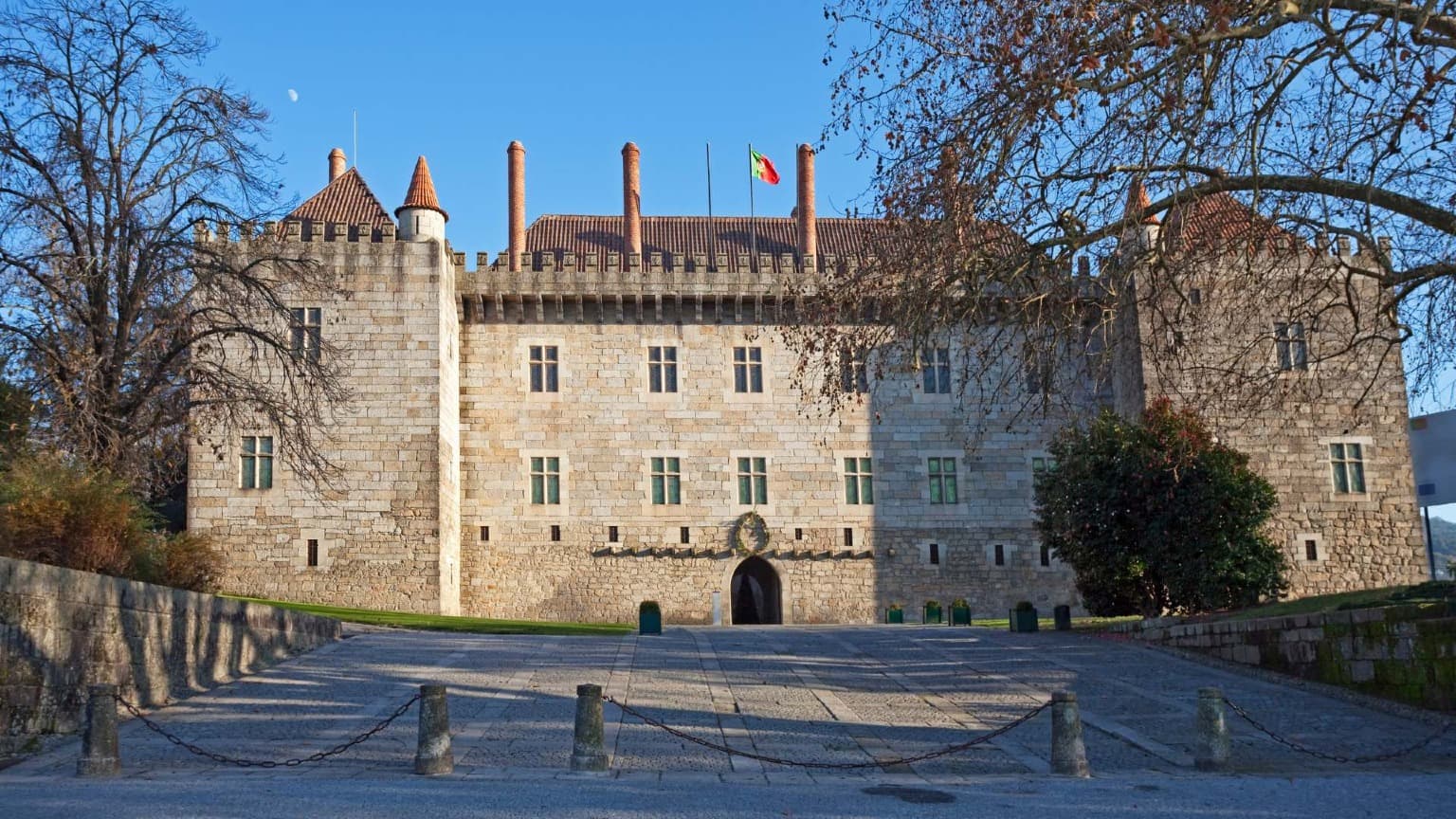
The Palace of the Dukes of Braganza, a landmark of noble power and 15th-century architecture in Guimarães.
Monte da Penha: Nature Above the City
Rising 617 metres above sea level, Monte da Penha offers a completely different perspective on Guimarães. Covering around 60 hectares, this granite mountain is both a natural refuge and a spiritual landmark.
At the summit, the Sanctuary of Nossa Senhora da Penha blends seamlessly into the rocky landscape. Surrounding it are:
• Forest paths and walking trails
• Natural viewpoints and picnic areas
• Caves, boulders, and quiet corners for reflection
The Guimarães cable car, the first of its kind in Portugal, connects the city to Penha Mountain, providing panoramic views stretching across the Minho region, and on clear days, toward the Atlantic Ocean.
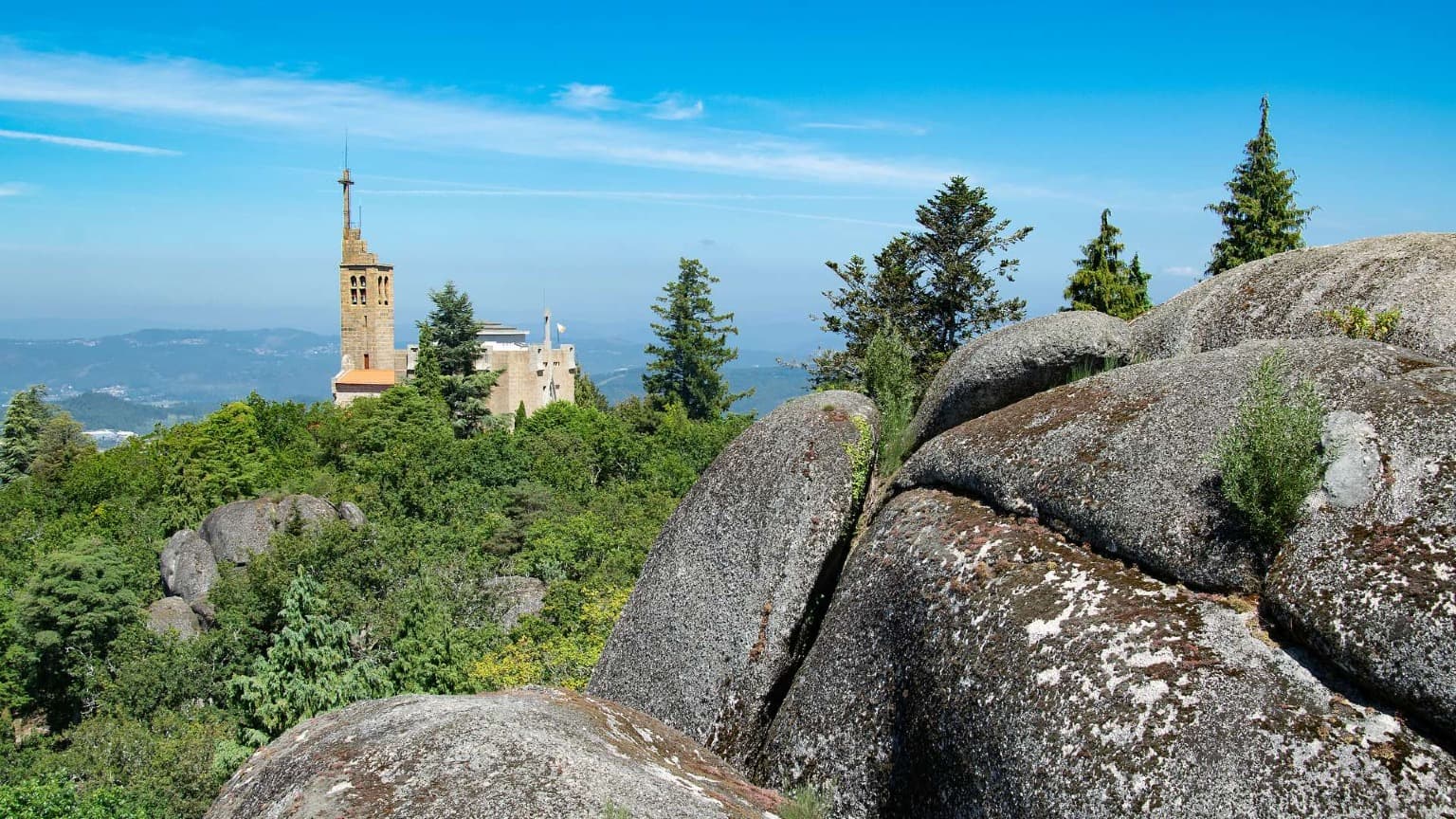
Monte da Penha, a natural and spiritual landmark offering panoramic views over Guimarães.
A City Best Explored Slowly
Guimarães rewards travellers who slow down. Its compact size makes it ideal for walking, spontaneous detours, and unplanned stops for coffee or petiscos (Portuguese tapas).
The city’s rhythm is shaped by local life rather than tourism schedules, which is precisely what makes it special. Whether you are drawn by history, architecture, gastronomy, or simply the atmosphere of a well-preserved Portuguese city, Guimarães offers depth without pretension.
This balance between history, daily life, and human-scale experiences is exactly what defines Northern Portugal at its best.
Where to Eat in Guimarães
Guimarães’ food scene reflects the city itself: deeply rooted in tradition, yet confidently contemporary. From Michelin-starred dining to relaxed local favourites, these restaurants offer a well-rounded taste of the city.
• A Cozinha por António Loureiro
A Michelin-starred restaurant widely recognised as Europe’s first Zero Waste fine-dining restaurant. Rooted in Portuguese gastronomy, it is a must-visit for food lovers seeking high-end cuisine guided by strong sustainability principles.
• Norma
Located in the heart of Guimarães, Norma offers modern cuisine through a refined seven-course menu with excellent value for its quality. Its rooftop terrace adds beautiful views to an already polished dining experience.
• Restaurante 34
Situated in the historic centre, Restaurante 34 combines contemporary décor with friendly service and internationally inspired dishes. It’s a relaxed yet refined option for those looking beyond traditional Portuguese cuisine.
• Le Babachris
A comfortable restaurant serving modern European cuisine with French influences. Its carefully designed menus and relaxed atmosphere make it ideal for an unhurried evening meal.
• Casa Amarela
An iconic restaurant in Guimarães’ historic centre, known for its high-quality Portuguese cuisine. It is a reliable choice for travellers wanting classic regional flavours in a traditional setting.
Visiting Guimarães from Porto
Guimarães is easily accessible from Porto by train or car, making it an excellent day trip or overnight stop when exploring Northern Portugal. Trains depart regularly from Porto São Bento and Campanhã stations, with journey times around one hour.
For travellers seeking context and storytelling, guided experiences provide a richer understanding of the city’s historical significance and connections to nearby destinations such as Braga and Bom Jesus do Monte.
Guimarães is also best experienced as part of a wider journey through the Minho region, where history, religion, wine, and landscape intertwine.
👉 For travellers seeking deeper historical context and local storytelling, locally led experiences such as our Guimarães & Braga Small-Group Tour or Private Braga & Guimarães Tour offer a richer understanding of the region.
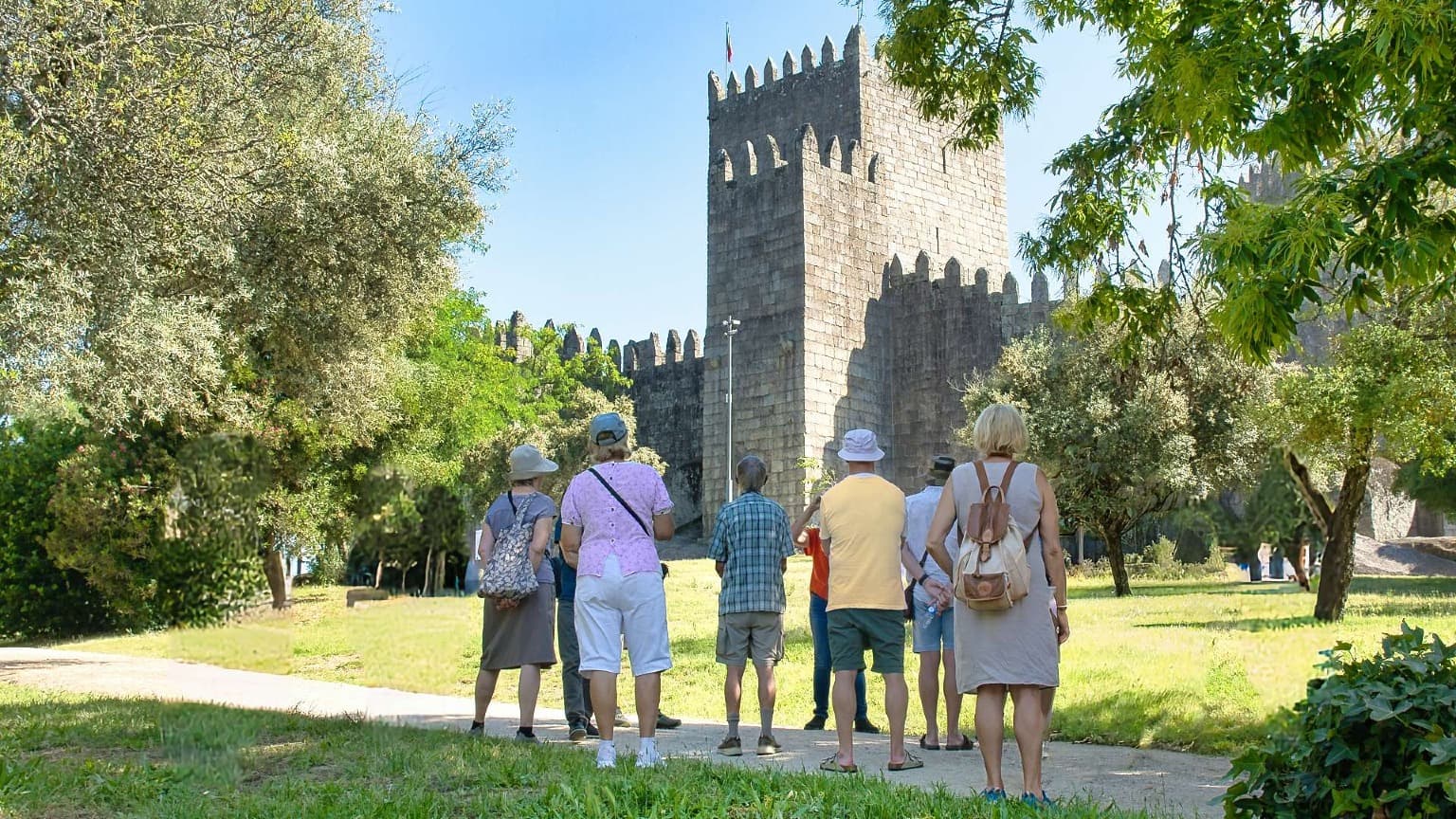
Exploring Guimarães with a local guide, connecting history, architecture, and everyday life.
Why Guimarães Belongs on Your Portugal Itinerary
Guimarães is not about spectacle, it’s about meaning. It offers:
• One of Portugal’s most authentic historic centres
• A strong sense of local identity
• Walkable streets and human-scale urban life
• Easy access from Porto and Braga
• A rare continuity between past and present
To visit Guimarães is to understand Portugal at its roots, quietly, honestly, and without shortcuts.
👉 Guimarães is often best experienced as part of a wider journey through the Minho region. For a broader perspective, explore our North of Portugal travel guide, covering cities, landscapes, gastronomy, and cultural routes across the region.
Frequently Asked Questions about Visiting Guimarães
Written by the Cooltour Oporto team