University of Coimbra: What to See & Visitor Guide
August 26, 2026
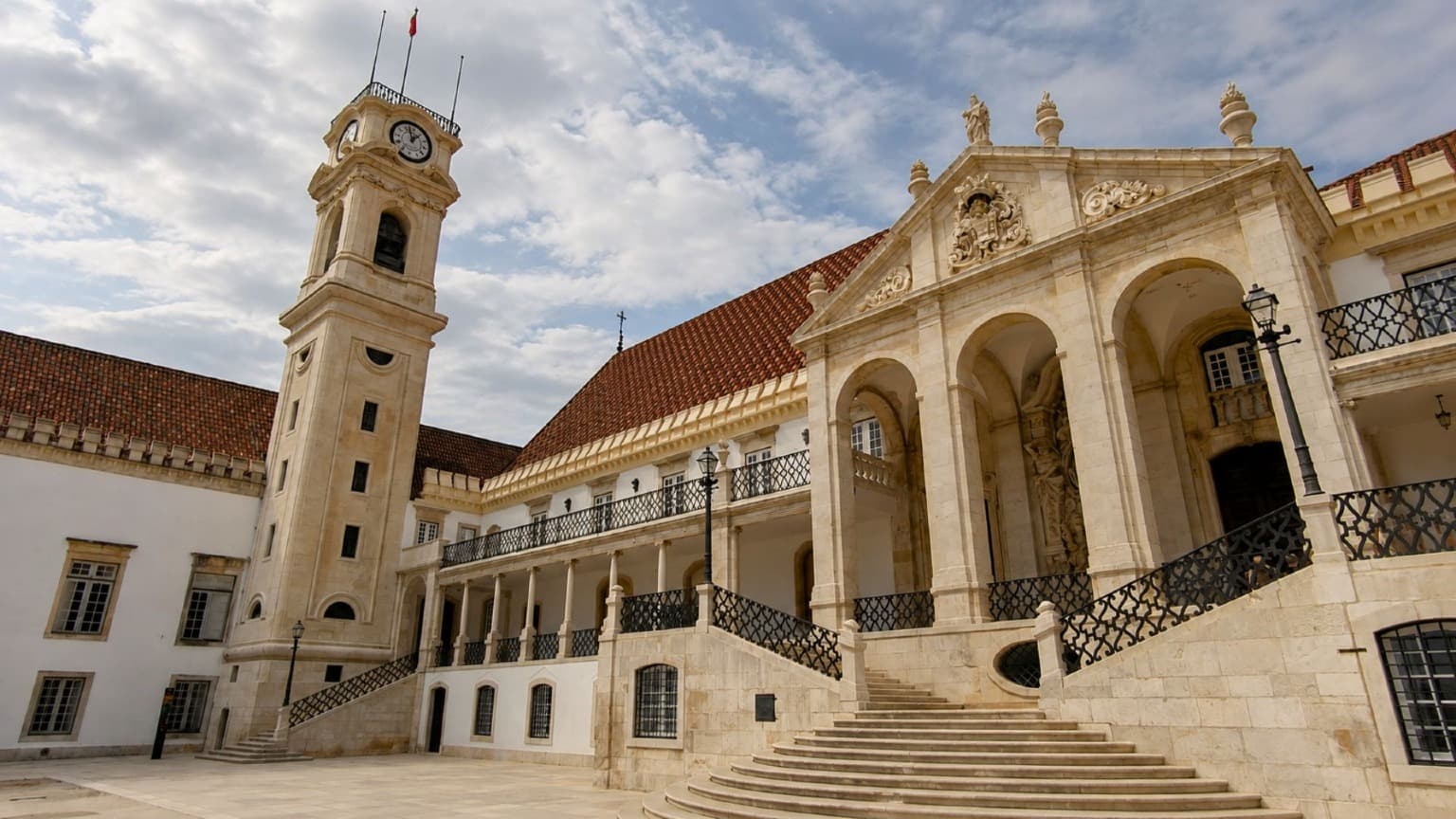
Founded in 1290, the University of Coimbra is Portugal's oldest university and part of a UNESCO World Heritage Site.
Few places have shaped a Portuguese city as profoundly as the University of Coimbra.
Founded in 1290 by King Dinis, it is the oldest university in Portugal and one of the oldest in Europe. For centuries, its students, professors, traditions and buildings have influenced the identity of Coimbra, transforming the city into one of Europe's great historic university centres.
Today, the University is also one of Portugal's most important cultural landmarks. Its historic buildings form part of the University of Coimbra – Alta and Sofia, classified as a UNESCO World Heritage Site in 2013.
But visiting the University of Coimbra can initially be confusing.
The University is not a single monument, and everything worth seeing is not contained within the famous Paço das Escolas. The visitor experience extends across several locations in Coimbra's upper university district, from the Joanina Library and former Royal Palace to historic scientific collections, the Botanical Garden and other spaces that are easy to miss if you do not understand how they fit together.
That's why we've created this guide differently.
Below, we'll first help you understand where the main University attractions are located and what you can actually visit. Then we'll explore more than seven centuries of history, step inside its most remarkable buildings, explain what UNESCO's mysterious-sounding "Alta and Sofia" designation actually means, and uncover some of the traditions and stories that make Coimbra unlike any other university city in Portugal.
Quick Facts
• Founded: 1290
• Founder: King Dinis of Portugal
• Location: Coimbra, Central Portugal
• Historic heart: Paço das Escolas
• UNESCO: University of Coimbra – Alta and Sofia, World Heritage Site since 2013
• Must-see: Joanina Library, Royal Palace and São Miguel Chapel
• Also worth visiting: Science Museum, Botanical Garden and historic University collections
• Recommended time: Around 3 hours for the principal University circuit; longer if exploring the Botanical Garden and additional sites
• Tickets: Required for the main visitor circuit
• Best for: History, architecture, libraries, science, Portuguese culture and academic traditions
Understanding the University of Coimbra: What Can You Visit?
One of the most confusing things about planning a visit to the University of Coimbra is understanding where everything actually is.
Most photographs show the monumental Paço das Escolas, and it is easy to assume that this is the entire University visitor experience.
It isn't.
The places visitors can explore are distributed across different areas of Coimbra, although most are concentrated in the Alta Universitária, the historic upper part of the city.
To make this easier to understand, we created the map below showing the principal University locations and how they relate geographically.
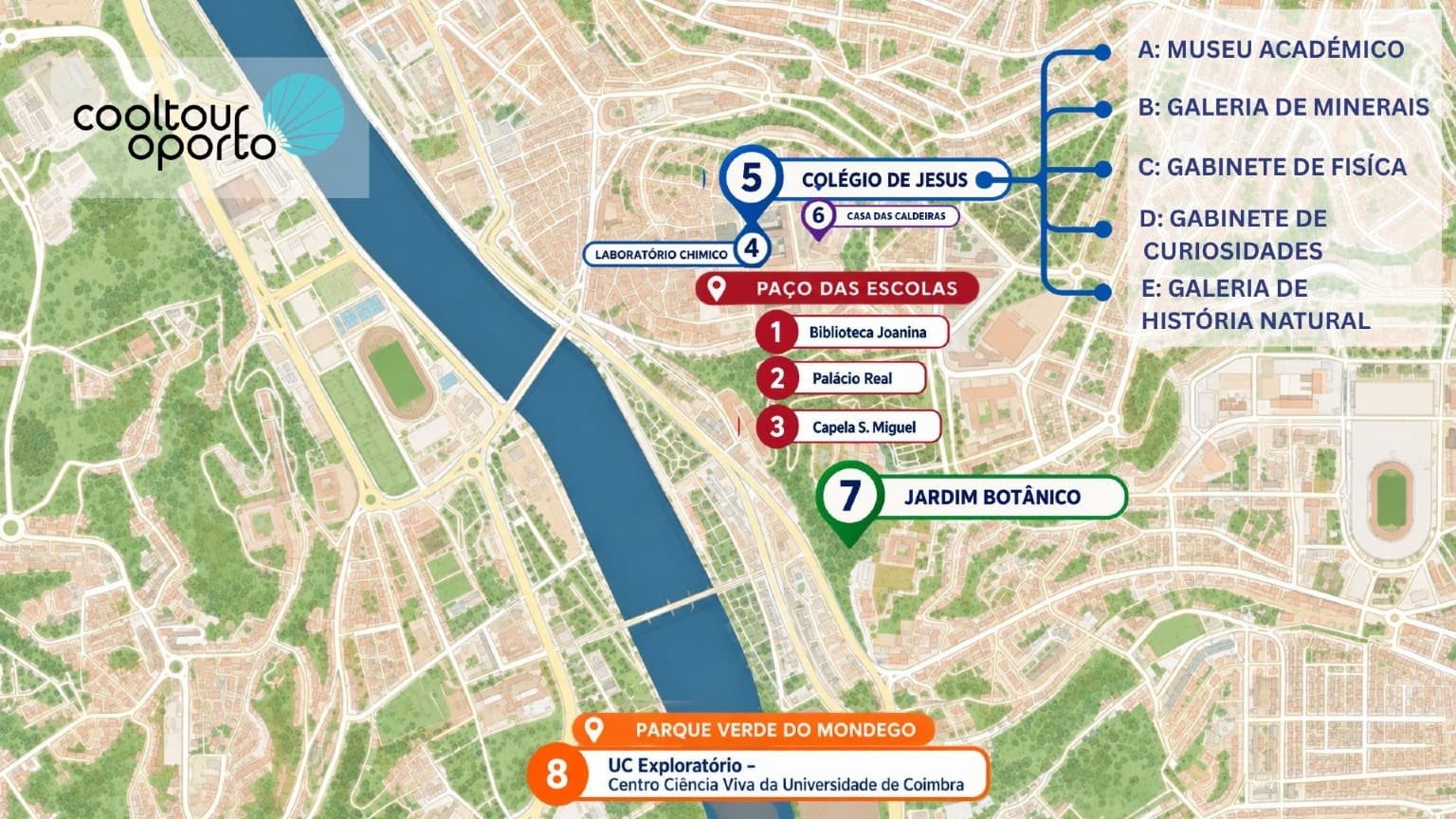
Cooltour Oporto's map shows how the University of Coimbra's main visitor attractions are distributed across Paço das Escolas, the Alta Universitária, Botanical Garden and Parque Verde do Mondego.
The easiest way to understand the map is to divide your visit into four areas.
Paço das Escolas: The Historic Heart of the University
This is the monumental courtyard most visitors picture when they think of the University of Coimbra.
Here you'll find three of its most important attractions:
1. Joanina Library (Biblioteca Joanina)
The magnificent eighteenth-century Baroque library commissioned during the reign of King João V and one of the University's most celebrated spaces.
2. Royal Palace (Palácio Real)
The former Royal Palace of Coimbra, later transformed into the historic centre of the University. Its ceremonial rooms remain closely connected to academic life today.
3. São Miguel Chapel (Capela de São Miguel)
A richly decorated historic chapel known for its colourful azulejos, painted ceiling and impressive Baroque organ.
If you have limited time in Coimbra, these three spaces should be your priority.
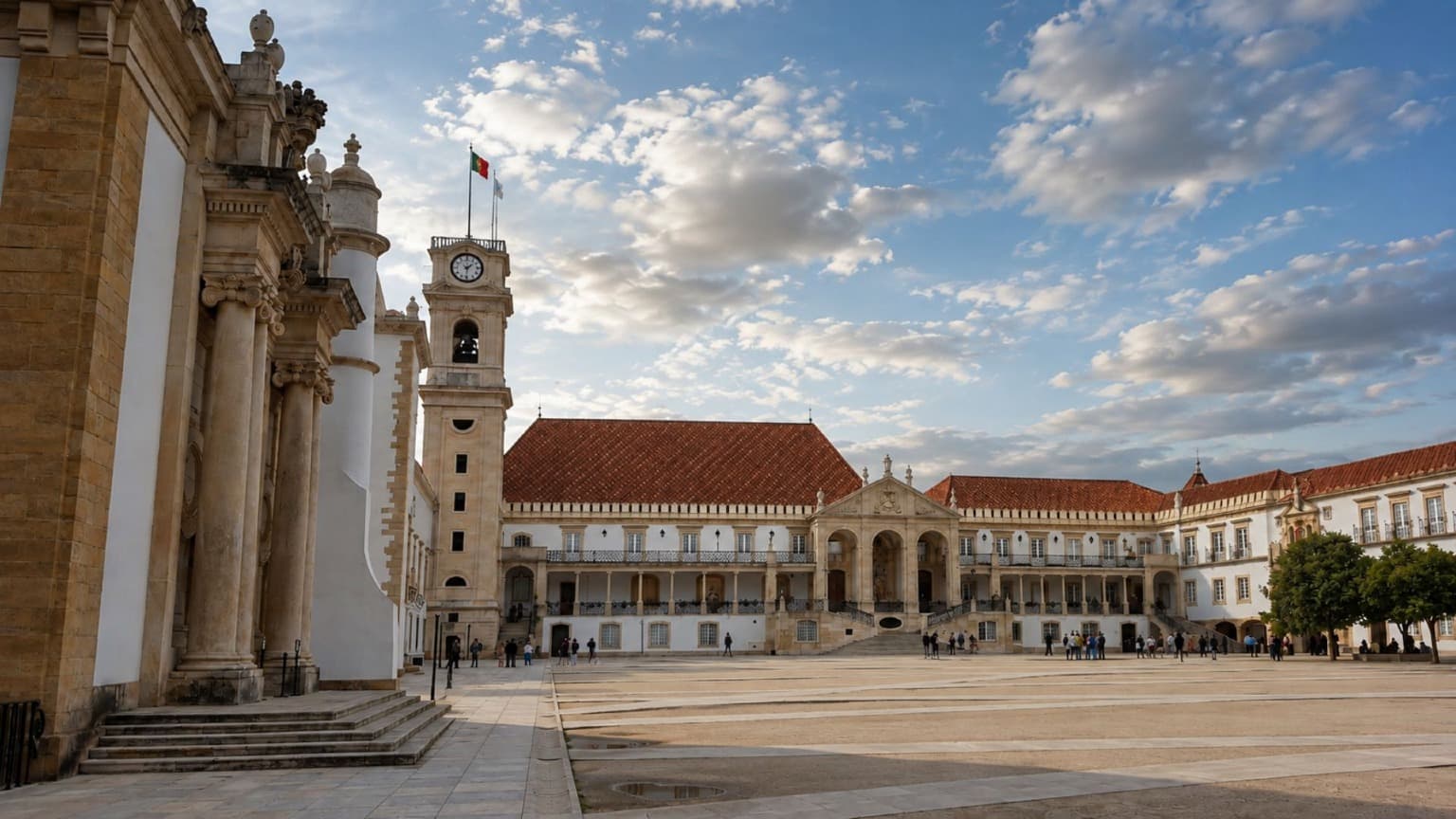
Paço das Escolas is the historic heart of the University of Coimbra and home to the Joanina Library, Royal Palace and São Miguel Chapel.
Alta Universitária: Science, Collections and Academic Heritage
Just beyond Paço das Escolas, the University continues through Coimbra's upper town.
This area contains several important scientific and academic sites that many visitors overlook.
4. Laboratório Chimico
An eighteenth-century chemistry laboratory associated with the major scientific reforms introduced at the University in 1772.
5. Colégio de Jesus
One of the key buildings connected with the University's scientific collections. Around this location you'll find several distinct visitor spaces:
• A. Museu Académico
• B. Galeria de Minerais
• C. Gabinete de Física
• D. Gabinete de Curiosidades
• E. Galeria de História Natural
There is one important detail for visitors in 2026: the Galeria de História Natural is currently closed, while the Museu Académico, Galeria de Minerais, Gabinete de Física and Gabinete de Curiosidades form part of the visitable scientific circuit.
6. Casa das Caldeiras
Another University space located in the Alta, dedicated to Canção de Coimbra, the musical tradition more commonly known as Coimbra Fado. Performances here are separate from the standard University tourist circuit.
Jardim Botânico: A Different Side of the University
7. Botanical Garden of the University of Coimbra
Descending from the Alta, the University's Botanical Garden provides a very different experience from the monumental architecture above.
Created in the eighteenth century in connection with the University's scientific reforms, it became an important place for botanical research and teaching and today offers visitors a peaceful green space in the centre of Coimbra.
The garden also includes the Tropical Greenhouse, which can be visited through dedicated guided programmes.
Because the Botanical Garden occupies a substantial area of the hillside, don't think of it simply as another room on the University circuit. If you want to explore it properly, allow additional time.
Parque Verde do Mondego: UC Exploratório
The final location on our map is geographically separate from the historic University complex.
8. UC Exploratório – Centro Ciência Viva da Universidade de Coimbra
Located beside the Mondego River in Parque Verde do Mondego, UC Exploratório is a hands-on science centre with interactive exhibitions and activities particularly suited to families and younger visitors. The University currently offers a combined Science Museum + UC Exploratório ticket, although this programme does not include Paço das Escolas.
For most first-time visitors interested primarily in the historic University, UC Exploratório isn't essential. For families spending more time in Coimbra, however, it can be an excellent addition.
Which University of Coimbra Ticket Should You Buy?
This is another area where the options can look more complicated than they need to be.
For most first-time visitors, our recommendation is straightforward:
Joanina Library + University + Science Museum
At the time of our latest update in 2026, the adult ticket costs €16.50 and includes:
• Joanina Library
• Royal Palace
• São Miguel Chapel
• Laboratório Chimico
• Museu Académico
• Gabinete de Curiosidades
• Galeria de Minerais
The University recommends approximately 3 hours for this programme.
There's also a €12.50 University + Science Museum ticket, but it doesn't include the Joanina Library. For a difference of €4, we would recommend the complete ticket to most first-time visitors. The Joanina Library is one of the defining spaces of the University and one of the principal reasons to visit.
Visitors particularly interested in science, or families planning to visit UC Exploratório, can instead consider the Science Museum + UC Exploratório programme, priced at €16 at the time of our 2026 update, but this does not include the Joanina Library, Royal Palace or São Miguel Chapel.
👉 For current prices, available programmes and tickets, check the official University of Coimbra visitor website.
Ticket prices above were checked at the time of our latest update and may change.
A University Founded in 1290
The story of the University of Coimbra stretches back more than seven centuries.
It was founded in 1290 by King Dinis, who established a Studium Generale in Lisbon with faculties dedicated to Arts, Canon Law, Civil Law and Medicine. Later that same year, Pope Nicholas IV formally recognised the institution.
But the University did not immediately find its permanent home in Coimbra.
During the following centuries, it moved several times between Lisbon and Coimbra, reflecting political decisions, practical considerations and the changing needs of the institution. Coimbra gradually became increasingly important to academic life, but it was only in 1537, during the reign of King João III, that the University was permanently transferred to the city, a decision that would profoundly influence Coimbra's development and identity over the centuries that followed.
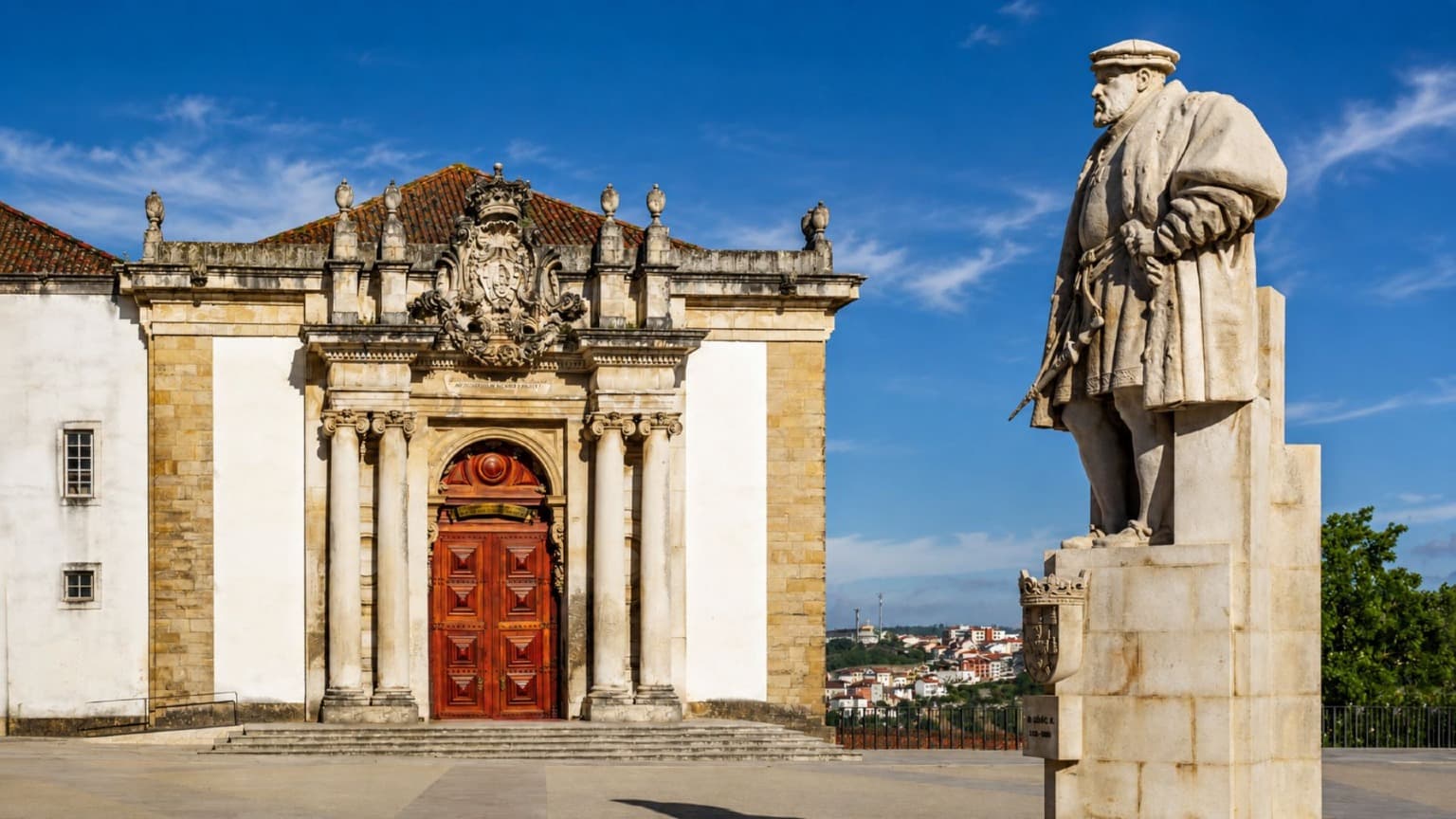
King João III permanently transferred the University to Coimbra in 1537, a decision that would transform the city for centuries.
The University initially occupied different buildings, including colleges established across the city. In 1544, the former Royal Palace of Coimbra became the University's principal home, placing academic life within a site that had previously been closely associated with the Portuguese monarchy.
This helps explain something visitors immediately notice at Paço das Escolas: the historic heart of the University does not resemble a conventional university campus because it was never designed as one.
Palace rooms became ceremonial academic spaces. A royal chapel became the University's chapel. New structures were added over the centuries, while older buildings were adapted to the changing needs of teaching and university life.
Another decisive moment arrived in 1772, when the Marquis of Pombal introduced major reforms during the reign of King José I. Teaching was modernised, scientific disciplines gained greater importance, and new facilities were created for experimental science, medicine and natural history.
The Laboratório Chimico, Botanical Garden and scientific collections visitors can explore today are closely connected with this transformation.
By then, the University was no longer simply an institution located in Coimbra; it had become part of the city's identity. Its colleges, ceremonies, student traditions, academic dress and architecture gradually shaped the streets around it, leaving a cultural legacy that remains visible throughout Coimbra today.
What to See at Paço das Escolas
If you only have time to visit one part of the University of Coimbra, make it Paço das Escolas.
Entering its monumental courtyard brings together several layers of Portuguese history in a remarkably compact space. The former Royal Palace surrounds part of the square, the University Tower rises above it, and the Joanina Library and São Miguel Chapel reveal very different periods of the University's architectural development.
This is also where three of the University's most important visitor attractions are located.
1. Biblioteca Joanina: Coimbra's Extraordinary Baroque Library
The Joanina Library (Biblioteca Joanina) is perhaps the most famous interior at the University of Coimbra.
Built between 1717 and 1728 during the reign of King João V, the library reflects a period when Portugal's monarchy invested heavily in monumental architecture, supported by wealth flowing into the kingdom from Brazil.
Its exterior is relatively restrained. Step inside, however, and the atmosphere changes completely.

Built during the reign of King João V, the Joanina Library combines magnificent Baroque decoration with a collection of around 60,000 historic volumes.
Three richly decorated rooms are lined with imposing wooden bookcases, gilded ornamentation and painted motifs, while elaborate ceilings rise above thousands of historic volumes. The result feels as much like a Baroque palace as a university library.
Its collection contains approximately 60,000 volumes, many dating from the sixteenth to eighteenth centuries and covering subjects ranging from theology and law to philosophy, medicine and science.
Yet one of the library's most fascinating features is alive.
The Bats of the Joanina Library
For generations, small colonies of bats have lived inside the Joanina Library.
Far from being treated simply as unwanted visitors, the bats play an unexpected role in helping protect the historic collection. At night, they feed on insects that could otherwise damage the books.
Their presence creates an unusual preservation challenge of its own. Traditionally, the library's valuable wooden tables are protected overnight and cleaned in the morning because of droppings left by the bats.
It is one of those stories that sounds almost too good to be true, yet the relationship between the bats and the library has become part of the Joanina's remarkable history.
They are, in a very literal sense, nocturnal guardians of one of Portugal's greatest collections of books.
There's Also an Academic Prison
The Joanina Library holds another surprise below its magnificent Baroque rooms.
Its lower levels include the remains of the University's Academic Prison.
For centuries, the University enjoyed its own judicial privileges, meaning members of the academic community could be subject to university jurisdiction rather than the ordinary civil authorities for certain offences.
Students who broke university rules could therefore find themselves imprisoned within the University itself.
The Academic Prison remained in use until 1834, when the University's judicial privileges were abolished. Its austere cells provide a striking contrast with the splendour of the Baroque library above. Together, the two spaces reveal just how self-contained the historic University once was, with its own teaching, ceremonies, traditions, rules and disciplinary system.
2. Palácio Real: From Royal Residence to University
Long before students walked through its halls, the Royal Palace of Coimbra (Palácio Real) was connected with the Portuguese monarchy.
The site developed from an earlier Islamic fortress and later became a royal residence following the Christian conquest of Coimbra. Several Portuguese monarchs were associated with the palace, and its history reaches back to the formative centuries of the Portuguese kingdom.
After the University's permanent move to Coimbra in 1537, the palace gradually became the centre of academic life.
Today, visitors can walk through ceremonial rooms that still retain an important role within the University.
The most impressive is the Sala dos Atos Grandes (Great Hall of Acts), also widely known as the Sala dos Capelos.
Once a royal throne room, it later became the University's principal ceremonial hall. Doctoral ceremonies, formal academic events and other important occasions have taken place here for centuries.
Its name refers to the capelo, part of the traditional academic insignia associated with doctoral degrees.
Nearby, the Sala do Exame Privado recalls another aspect of historic university life. As its name suggests, this room was once associated with private academic examinations and today preserves portraits and decoration connected with the University's long institutional history.
Walking through these rooms makes one aspect of Coimbra particularly clear: the University did not simply replace the palace; it inherited its spaces and gave them new meaning.
The University Tower and the Famous Cabra
Rising above Paço das Escolas, the University Tower is one of Coimbra's most recognisable landmarks.
The present tower was constructed in the eighteenth century and has long served both a practical and symbolic role in university life.
Its bells regulated the academic day, announcing the beginning of classes and marking the rhythms of a community that, for centuries, lived largely according to the University's own calendar and traditions.
The most famous bell became known as a Cabra, meaning "the Goat."
For generations of Coimbra students, the sound of the Cabra was closely associated with academic discipline. It called students to their obligations and became so embedded in university culture that stories about the bell eventually became part of Coimbra's student folklore.
Students did not always appreciate the bell's authority, and one particularly memorable episode took place on 21 February 1933, when students stole the Cabra's clapper in an attempt to prevent it from ringing and force a holiday. Their plan failed: another bell, known as the Cabrão, was rung instead, and classes went ahead.
Stories like this reveal the playful and sometimes rebellious relationship generations of Coimbra students developed with the bells that regulated their academic lives.
The tower is also connected with another Coimbra peculiarity that visitors may notice today.
Why Does Coimbra Have an "Academic Quarter-Hour"?
If an academic event in Coimbra begins fifteen minutes after the stated hour, it may not be running late at all.
The famous academic quarter-hour allows a traditional fifteen-minute tolerance before certain university activities begin.
The tradition is generally linked to the University's historic system of independent timekeeping, formalised in its seventeenth-century statutes, which distinguished the University's own clock and bell signals from those of the city. Over time, this developed into the fifteen-minute tolerance now known as the academic quarter-hour.
Today, the tradition remains part of Coimbra's academic life, with students able to invoke the quarter-hour and University ceremonies traditionally respecting it.
3. Capela de São Miguel: A Chapel Full of Colour
A few steps from the Royal Palace stands one of the most beautiful interiors at the University: the São Miguel Chapel (Capela de São Miguel).
Its history is older than much of what visitors see today. A chapel existed within the former royal complex for centuries, while the present building largely reflects work carried out during the early sixteenth century under King Manuel I.
Inside, the restrained stone exterior gives way to an explosion of colour.
The walls are covered with richly patterned azulejos, while the painted wooden ceiling is filled with intricate decorative motifs. Together, they create an intimate interior very different from the monumental scale of the neighbouring palace.
One feature immediately commands attention: the magnificent Baroque organ, dating from 1737.
Originally commissioned for a considerably larger church, the organ appears almost oversized within the intimate dimensions of São Miguel Chapel. Its richly decorated case rises dramatically above the interior, making it one of the chapel's most distinctive features. The organ remains associated with musical performances and the ceremonial life of the University.
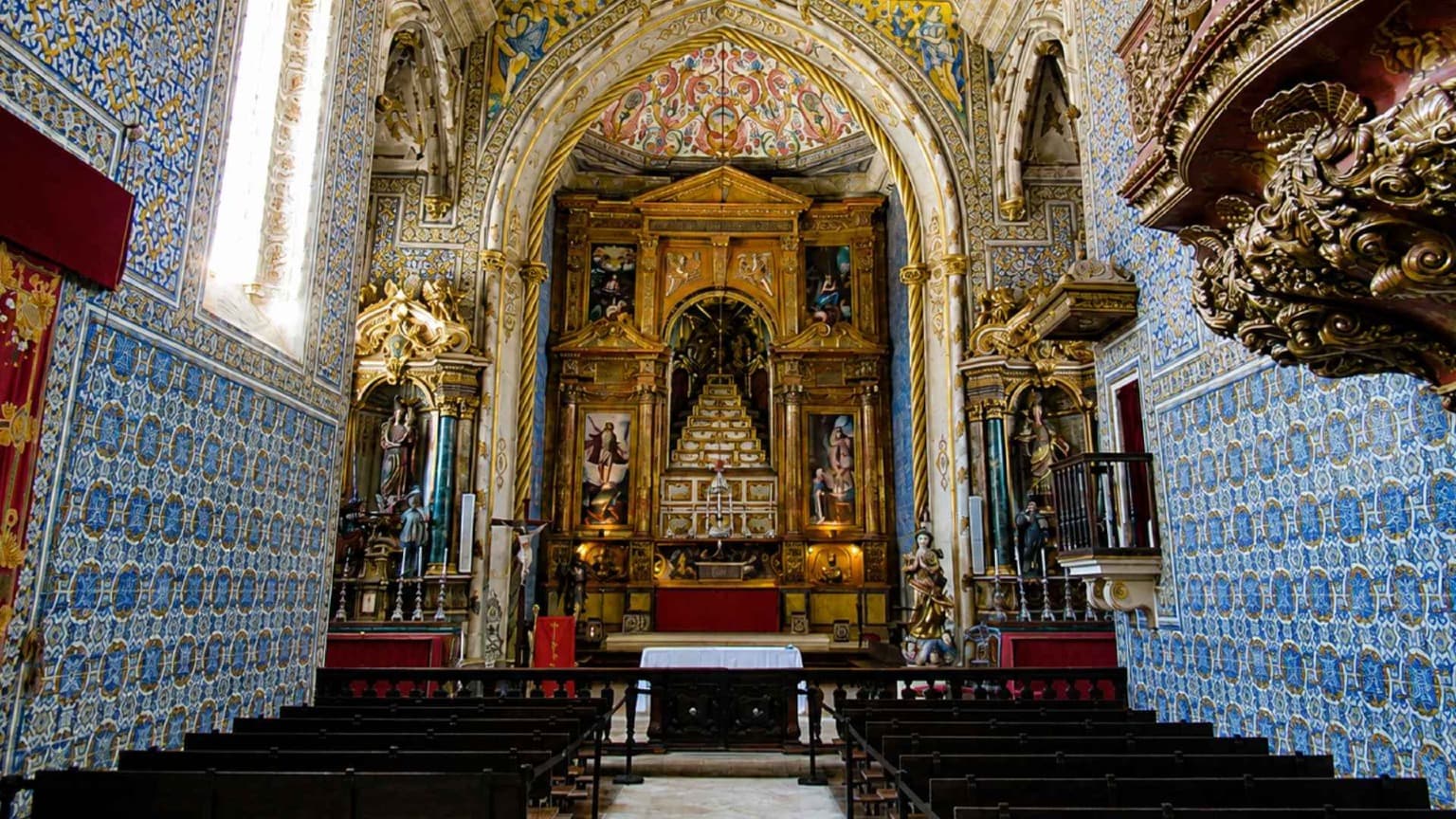
Colourful azulejos, a painted ceiling and an imposing Baroque organ make São Miguel Chapel one of the University's most remarkable interiors.
The chapel also preserves a fascinating connection with the Portuguese monarchy. Following the restoration of Portuguese independence in 1640, King João IV proclaimed Our Lady of the Conception patroness of Portugal and symbolically offered her the Portuguese crown. From then on, Portuguese monarchs no longer wore the crown themselves. A plaque inside São Miguel Chapel commemorates this remarkable episode in the country's history.
São Miguel Chapel is not simply another historic church included in a tourist circuit. It remains part of a university whose religious, royal and academic histories have been intertwined for centuries.
And that is ultimately what makes Paço das Escolas so interesting.
Within a single courtyard, you can move from a former royal palace to an extraordinary Baroque library, descend into an academic prison, enter a richly decorated chapel and stand beneath a tower whose bells once regulated the lives of generations of students.
Few university campuses tell their history quite so visibly.
Beyond Paço das Escolas: Science and Discovery in the Alta Universitária
The monumental buildings of Paço das Escolas tell only part of the University's story.
A short walk away, other historic buildings reveal a very different chapter in Coimbra's academic history: the transformation of scientific education during the eighteenth century.
The turning point came with the Pombaline Reform of 1772, introduced during the reign of King José I. The reforms modernised teaching at the University and placed greater emphasis on experimental science, observation and practical learning.
New scientific facilities and collections were developed, leaving a legacy that visitors can still explore today.
4. Laboratório Chimico: Where Science Entered the Classroom
The Laboratório Chimico is one of the clearest expressions of this transformation.
Created as part of the eighteenth-century reforms, the building was designed for the practical teaching of chemistry at a time when experimental science was gaining a much more prominent role within European universities.
This represented an important change in how students learned.
Science was no longer approached solely through books and theoretical study. Experimentation, observation and laboratory work became increasingly important parts of university education.
Today, the Laboratório Chimico forms part of the Science Museum of the University of Coimbra, bringing together scientific instruments, collections and exhibitions that help visitors understand how scientific knowledge developed and was taught over the centuries.
The quality of the museum has also received international recognition. In 2008, the Science Museum received the Micheletti Award, which recognises outstanding museums dedicated to science, technology and industry in Europe.
For travellers interested in the history of science, it provides an interesting counterpoint to the ceremonial splendour of Paço das Escolas.
5. Colégio de Jesus and the University's Scientific Collections
Opposite the Laboratório Chimico stands the Colégio de Jesus, another important part of Coimbra's academic landscape.
Originally established by the Jesuits in the sixteenth century, the college became closely connected with the University following the expulsion of the Society of Jesus from Portugal in 1759 and the subsequent educational reforms.
Today, the building and the surrounding scientific circuit contain several collections that reveal different sides of academic life and scientific discovery.
Museu Académico
The Academic Museum (Museu Académico) preserves objects and documents associated with the history of the University and its community.
Its collections provide another perspective on an institution often experienced primarily through architecture. Here, the focus shifts toward the people, practices and material culture that shaped university life across generations.
Galeria de Minerais
The Mineral Gallery (Galeria de Minerais) reflects the importance natural sciences acquired following the eighteenth-century reforms.
Its specimens are part of a much broader tradition of collecting, classifying and studying the natural world that became fundamental to scientific education.
Gabinete de Física
The Physics Cabinet (Gabinete de Física) is particularly interesting because of its historic scientific instruments.
Rather than simply reading about physical phenomena, students and professors could use instruments to demonstrate and investigate principles involving mechanics, optics, electricity and other branches of physics.
The collection therefore offers a glimpse into the way experimental science was taught before modern laboratories and digital technology transformed scientific education.
Its historical importance extends beyond Coimbra. In 2016, the Gabinete de Física was designated a Historic Site by the European Physical Society, recognising its significance in the history and teaching of physics.
Gabinete de Curiosidades
Perhaps the most unusual of these spaces is the Cabinet of Curiosities (Gabinete de Curiosidades).
Cabinets of curiosities were predecessors of the modern museum: collections where natural specimens, unusual objects, scientific material and artefacts from different parts of the world could be brought together for study and display.
Seen today, such collections also tell us something about how Europeans of earlier centuries attempted to classify and understand a world that was rapidly becoming more connected.
The University's Gabinete de Curiosidades recreates that sense of discovery, bringing together objects whose value lies not only in what they are, but in the stories of collecting and knowledge behind them.
Galeria de História Natural
The Natural History Gallery (Galeria de História Natural) forms another part of this scientific heritage.
However, there is an important practical distinction for current visitors: the gallery is presently closed to the public. It remains identified on our map because it helps explain the organisation of the University's historic scientific collections, but it should not currently be included when planning your visit.
6. Casa das Caldeiras
Close to the University's scientific buildings, Casa das Caldeiras introduces visitors to a very different part of Coimbra's academic identity: its music.
The space is dedicated to Canção de Coimbra, the musical tradition more commonly known as Coimbra Fado. Closely connected with generations of university students, this distinctive style developed its own repertoire, performance traditions and relationship with the city's academic culture.
Visitors can experience Coimbra Fado here through a dedicated programme combining music with the atmosphere and traditions of the University. Admission is separate from the standard University tourist circuit.
We'll return to Coimbra Fado later in this guide, because understanding its relationship with students, the academic cape and university life helps explain why this music is so closely identified with Coimbra.
7. The Botanical Garden of the University of Coimbra
After palaces, libraries, laboratories and scientific collections, the Botanical Garden reveals yet another side of the University.
Created in 1772 as part of the Pombaline reforms, the Botanical Garden developed with the involvement of Italian naturalists Domenico Vandelli and Dalla Bella. It was conceived as a place for scientific study and the teaching of botany and medicine, reflecting the University's growing emphasis on observation and experimental science. Over time, it expanded down the hillside below the University, developing into one of Coimbra's most important green spaces.
Today, visitors can walk among collections of plants from different parts of the world, explore shaded paths and discover a surprisingly peaceful environment only a short distance from the busy streets of the Alta. Part of the garden's appeal comes from this contrast: above lies the monumental University, shaped by centuries of royal, religious and academic history, while inside the garden stone architecture gradually gives way to trees, plants and paths descending towards the lower city.
The Tropical Greenhouse (Estufa Tropical) adds another dimension to the visit. This elegant nineteenth-century iron-and-glass structure houses tropical and subtropical species requiring controlled climatic conditions and was carefully restored as part of the Botanical Garden's rehabilitation. Access and guided visits can operate separately from the main University tourist circuit, so check the current programme if you particularly want to see its interior.
The Botanical Garden is especially worthwhile if you have half a day or longer for the University. Visitors working with a tighter schedule should prioritise Paço das Escolas before adding the garden.
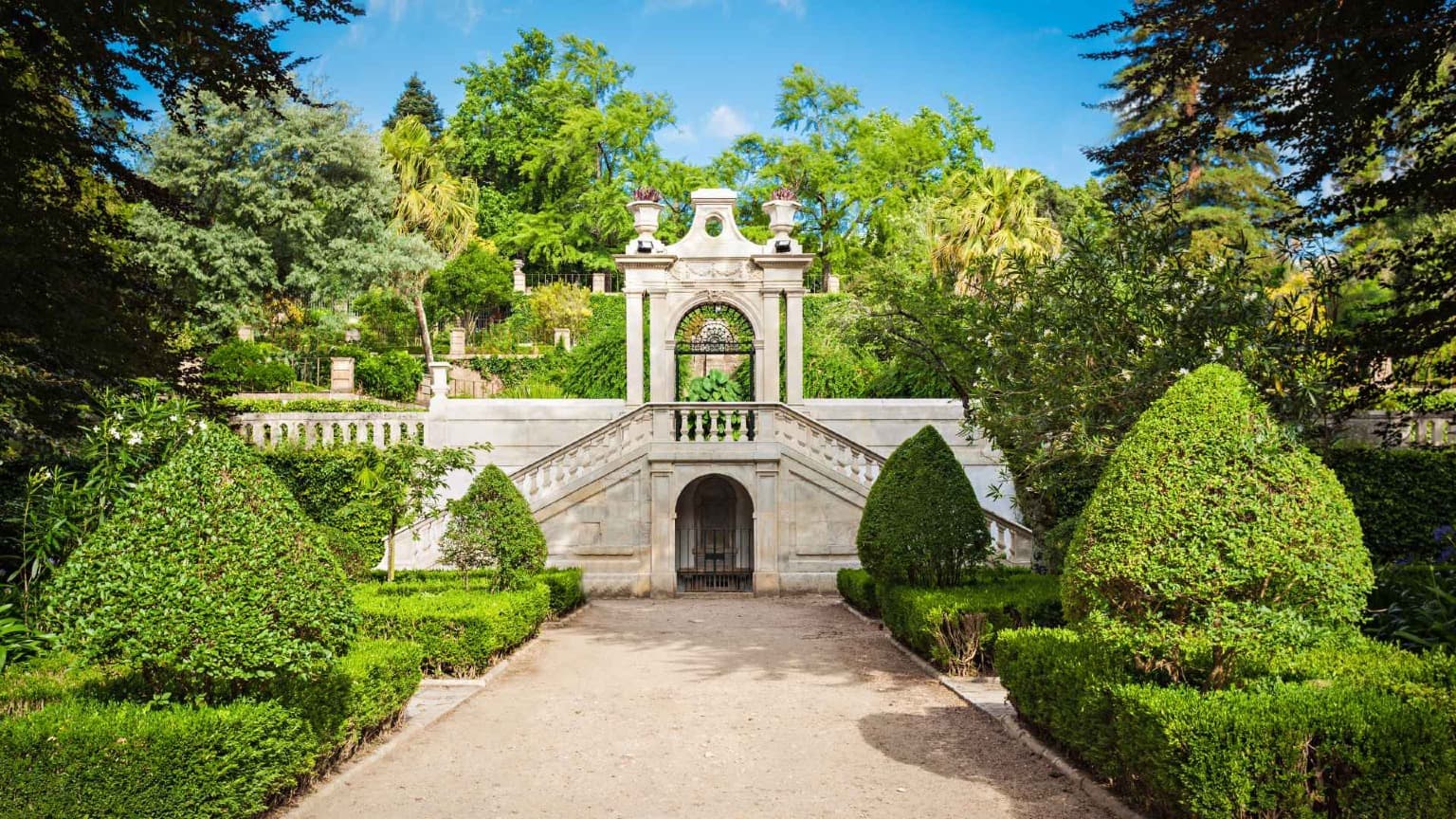
Created during the scientific reforms of 1772, the Botanical Garden reveals a greener and quieter side of the University of Coimbra.
8. UC Exploratório: Science for Curious Minds
Our map includes one final University attraction, but you'll need to leave the Alta to find it.
The UC Exploratório – Centro Ciência Viva da Universidade de Coimbra is located beside the Mondego River in Parque Verde do Mondego.
Unlike the historic collections in the Alta, UC Exploratório approaches science through contemporary, interactive experiences. Opened in 1995 as Portugal's first interactive science centre, it was created to make scientific discovery accessible through experimentation and participation.
Today, its exhibitions encourage visitors to investigate, test ideas and learn through experience. The centre also includes the Hemispherium, a 360-degree planetarium that takes visitors beyond Coimbra and into astronomy and space.
This hands-on approach makes UC Exploratório particularly appealing to families travelling with children.
Its location also explains why we have separated it visually on our map.
You shouldn't plan UC Exploratório as if it were simply the next room after the Science Museum. It sits in a completely different part of Coimbra and requires additional travel time.
For most travellers visiting Coimbra for the first time, Paço das Escolas remains the priority. Families or visitors with a particular interest in science can combine the historic Science Museum with UC Exploratório through a dedicated University programme.
University of Coimbra – Alta and Sofia: What Does the UNESCO Name Mean?
In 2013, UNESCO inscribed the University of Coimbra – Alta and Sofia on the World Heritage List. For visitors unfamiliar with Coimbra, the name isn't immediately self-explanatory: what exactly are the Alta and Sofia, and why does a World Heritage Site associated with the University extend beyond Paço das Escolas?
The answer lies in the extraordinary relationship between the University and the city that grew around it.
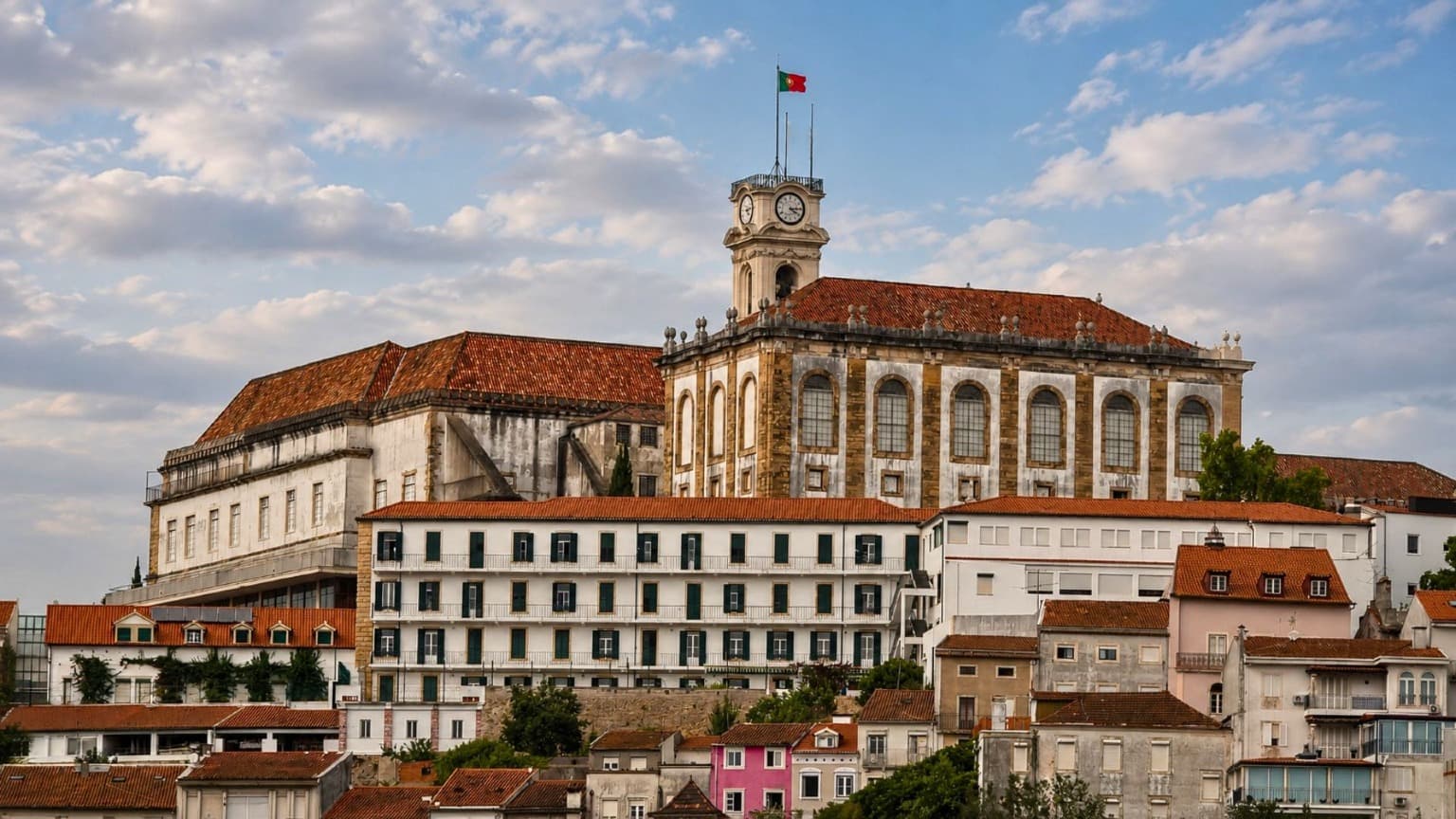
The historic University dominates Coimbra's Alta, the upper academic district that forms part of the UNESCO-listed University of Coimbra – Alta and Sofia.
The Alta: Coimbra's Upper University District
The Alta is the upper part of Coimbra dominated by the historic University.
Paço das Escolas stands at its heart, but the UNESCO designation encompasses a broader academic landscape shaped over centuries by colleges, teaching buildings, religious spaces and the University's expansion through the upper city.
This is the Coimbra most visitors immediately associate with university life: monumental buildings crowning the hill, students moving through the surrounding streets and the University Tower visible from different parts of the city.
But the UNESCO story has another, much less obvious chapter.
Rua da Sofia: The Other Side of Coimbra's University History
Walk downhill towards Coimbra's lower city and you'll encounter Rua da Sofia, a surprisingly understated street considering its importance to the UNESCO World Heritage designation. Visitors expecting another monumental university square may even walk along it without realising why it belongs to the same World Heritage Site as the famous buildings above.
Its importance is historical rather than immediately spectacular.
When King João III permanently transferred the University to Coimbra in 1537, the development of higher education extended beyond the former Royal Palace. A remarkable group of university colleges was established along and around Rua da Sofia, creating an urban area closely connected with teaching and religious orders.
The name itself reflects that intellectual ambition: Sofia derives from the Greek word for wisdom.
These colleges helped make Coimbra an important centre of education during the sixteenth century and represented a different model from the monumental University that later consolidated around the Alta.
Over time, the focus of university life shifted increasingly uphill and Rua da Sofia lost some of the academic prominence it once possessed, but the street still preserves an essential chapter in the University's evolution.
Why UNESCO Protects Alta and Sofia Together
This is what makes the UNESCO designation particularly interesting.
UNESCO is not recognising only an impressive collection of historic University buildings.
Alta and Sofia represent different stages in the development of Coimbra as a university city.
Rua da Sofia reflects the expansion of colleges and education through the lower city during the sixteenth century. The Alta illustrates the University's subsequent consolidation around the former Royal Palace and the development of the academic quarter that continues to dominate Coimbra today.
Together, they show how a university founded in the Middle Ages gradually transformed the architecture, urban structure, traditions and identity of an entire city. Coimbra's academic influence also extended far beyond Portugal.
For centuries, the University played an important role in the Portuguese-speaking world, transmitting academic traditions, institutional models and knowledge to territories across several continents.
That broader cultural influence is one of the reasons Coimbra's heritage matters internationally.
The UNESCO title therefore makes much more sense once you stop thinking of the University as one monument at the top of a hill.
It recognises a university city that has been evolving for centuries.
Academic Traditions That Still Shape Coimbra
The University of Coimbra is not defined only by its age or its monuments.
More than seven centuries of academic life have created traditions, ceremonies and rituals that continue to influence the identity of the city. Walk through Coimbra during the academic year and you'll see students in traditional dress, hear Fado associated with university life and encounter customs that have been passed from one generation of students to another.
Some have changed considerably over time, and others can be controversial, but together they help explain why the relationship between Coimbra and its University remains so distinctive.
The Black Academic Cape
One of the most recognisable symbols of Coimbra's students is the traditional black academic dress, known as the traje académico.
Its most distinctive element is the long black cape, which has become inseparable from the visual identity of the University.
For students, academic dress can represent belonging, tradition and connection with generations who studied in Coimbra before them. The cape also appears prominently during major academic ceremonies and in one of Coimbra's most important musical traditions: Fado de Coimbra.
Visitors sometimes assume that students wearing black are performers dressed for tourists, but the academic dress is a genuine part of Coimbra's university culture. During the academic year, seeing students in traditional dress around the Alta remains part of everyday life in the city.
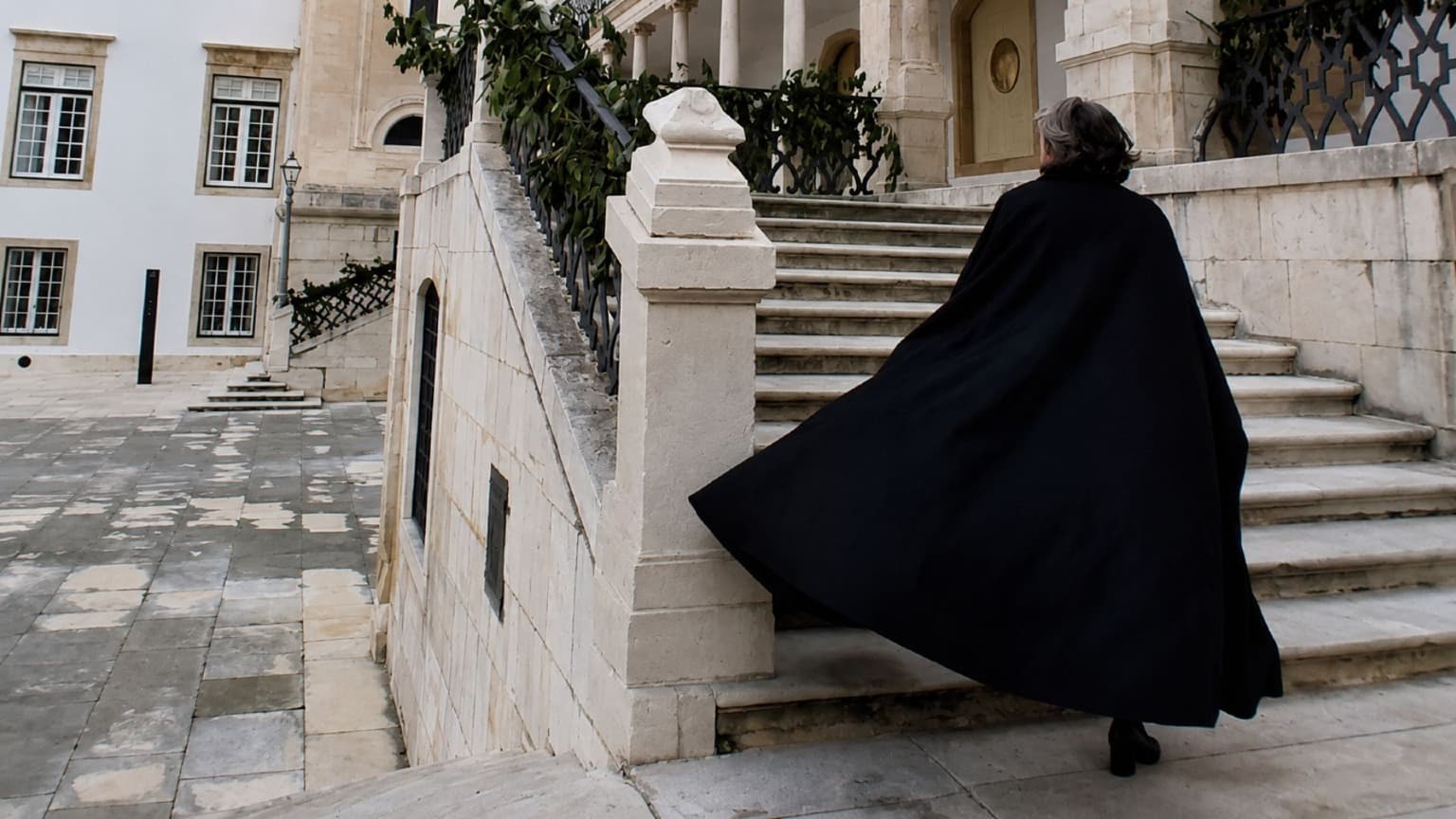
The black academic cape remains one of the most recognisable symbols of Coimbra's centuries-old student traditions.
Praxe Académica
Another deeply rooted element of student culture is the Praxe Académica, a collection of academic customs and rituals traditionally associated with welcoming and integrating new students into university life.
Its origins and practices have evolved considerably over time, and modern Praxe is not without debate. Some students embrace it as an important expression of community and academic tradition, while others choose not to participate.
For visitors, the important point is not to treat Praxe as a tourist attraction. It belongs to the student community and is one expression of a much wider academic culture that has developed in Coimbra over generations.
Queima das Fitas: When Coimbra Celebrates Its Students
Few moments reveal Coimbra's university identity as clearly as the Queima das Fitas.
Held traditionally in May, this major academic celebration marks an important moment in the university calendar, particularly for students approaching the end of their studies.
What began as an academic tradition has developed into one of Coimbra's largest annual celebrations, with ceremonies, music, festivities and events taking place across the city.
The coloured ribbons associated with different faculties are among its most recognisable symbols.
One of the celebration's most atmospheric moments comes through music, during the Serenata Monumental, traditionally associated with the beginning of Queima das Fitas.
Coimbra Fado and the Monumental Serenade
Fado de Coimbra developed in close connection with the University's student culture.
Unlike the better-known Fado tradition of Lisbon, Coimbra Fado historically became associated with male university students and is traditionally performed wearing the black academic cape. Its sound, setting and repertoire developed their own character, closely linked to student life, love, longing and the experience of living and studying in Coimbra.
Historically, students sang beneath windows and balconies, in university courtyards and through the city's streets at night.
That connection survives most powerfully in the Serenata Monumental, traditionally associated with the beginning of Queima das Fitas.
Held at the steps of Coimbra's Sé Velha, the Old Cathedral, the serenade brings together students and spectators in one of the city's most symbolic settings. Academic capes, silence and the sound of Coimbra Fado create an atmosphere that is difficult to understand simply by describing it as a concert.
It is part music, part ceremony and part farewell.
For graduating students in particular, these traditions can carry a strong emotional meaning, marking the approaching end of their years at the University.
This is one reason Coimbra Fado cannot really be separated from the University itself. The music grew alongside its academic culture and remains one of the clearest expressions of the relationship between students and the city.
👉 Interested in the story behind Portugal's most famous musical tradition? Read our complete guide to Fado in Portugal, including the distinctive traditions of Lisbon and Coimbra.
Planning Your Visit to the University of Coimbra
Understanding how the University is organised makes planning your visit considerably easier.
For most first-time visitors, Paço das Escolas should be the priority, particularly the Joanina Library, Royal Palace and São Miguel Chapel.
If you have more time, extend your visit through the Science Museum and the wider Alta before exploring the Botanical Garden.
Here is how we would approach it:
If You Have Around 2 Hours
Concentrate on Paço das Escolas.
Visit the Joanina Library, Royal Palace and São Miguel Chapel and allow some time to appreciate the courtyard itself and the views over Coimbra.
This is the best option if the University forms part of a wider day exploring the city.
If You Have Around 3 Hours
Choose the complete Joanina Library + University + Science Museum circuit.
This allows you to experience the monumental University and then understand how scientific teaching developed through spaces such as the Laboratório Chimico and historic collections.
The University itself currently estimates approximately three hours for this programme.
If You Have Half a Day
Add the Botanical Garden.
This creates a much more complete picture of the University, moving from royal and academic history through science and finally into the botanical collections established as part of the University's educational development.
Families can alternatively consider combining the Science Museum with UC Exploratório, particularly if travelling with younger children.
Opening Hours and Current Visitor Information
The University's main visitor attractions are generally open daily, although opening hours vary between Paço das Escolas, the Science Museum and Botanical Garden and may change seasonally.
The Botanical Garden also operates longer hours during the spring and summer months than during autumn and winter.
The University Tower is normally closed to visitors, although special programmes occasionally provide access. In summer 2026, for example, the UC By Night programme includes the tower on selected dates.
Because opening hours, last admission times and special programmes can change throughout the year, we recommend checking the University's official visitor information before your visit.
👉 For current tickets, opening hours and visitor programmes, consult the official University of Coimbra visitor website.
A Few Practical Tips Before You Go
Coimbra is a city of hills, and the University sits at the top of one of them. Comfortable shoes make a noticeable difference, particularly if you plan to combine the Alta with the historic centre or Botanical Garden.
The Joanina Library operates with controlled visitor access, so pay attention to the time allocated to your visit when purchasing your ticket.
If possible, don't rush immediately from one interior to another. Paço das Escolas itself deserves time. Walk around the courtyard, look back towards the University Tower and take in the views from the surrounding terraces.
And remember that the University remains a functioning academic institution.
Students study, work and attend ceremonies here. Part of the pleasure of visiting Coimbra comes precisely from seeing centuries-old spaces continue to fulfil their original academic purpose.
Is the University of Coimbra Worth Visiting?
Yes. Even travellers with little interest in universities will find much more here than lecture halls and academic history.
The University of Coimbra brings together a former royal palace, one of Europe's remarkable Baroque libraries, a richly decorated chapel, historic scientific laboratories and collections, centuries of student traditions and panoramic views across the city.
But its greatest appeal is perhaps something less tangible: the University and Coimbra grew together. Its students changed the city's music and traditions, its colleges reshaped entire streets, and scientific reforms created gardens, laboratories and collections. Bells determined the rhythm of academic life, while ceremonies developed traditions that continue centuries later.
That relationship is why visiting the University is essential to understanding Coimbra itself.
Continue Exploring Coimbra
The University may be Coimbra's most famous landmark, but the city has much more to discover.
Below the Alta, medieval streets descend towards the historic centre, where the Sé Velha, Santa Cruz Monastery, Praça do Comércio and the banks of the Mondego reveal other chapters of Coimbra's history.
Across the river, the monasteries of Santa Clara recall the city's close connection with Portuguese royalty, while Quinta das Lágrimas leads into one of the most extraordinary stories in Portuguese history: the tragic relationship between King Pedro I and Inês de Castro.
And then there is Rua da Sofia, Coimbra Fado, local gastronomy, gardens and viewpoints that are easily missed by visitors who come only for the University.
👉 Planning more than a few hours in the city? Our complete Coimbra Travel Guide explores what to see, where to go and how to make the most of your visit. (Available soon)
👉 Discover the extraordinary true story behind Pedro and Inês, Portugal's most tragic love story.
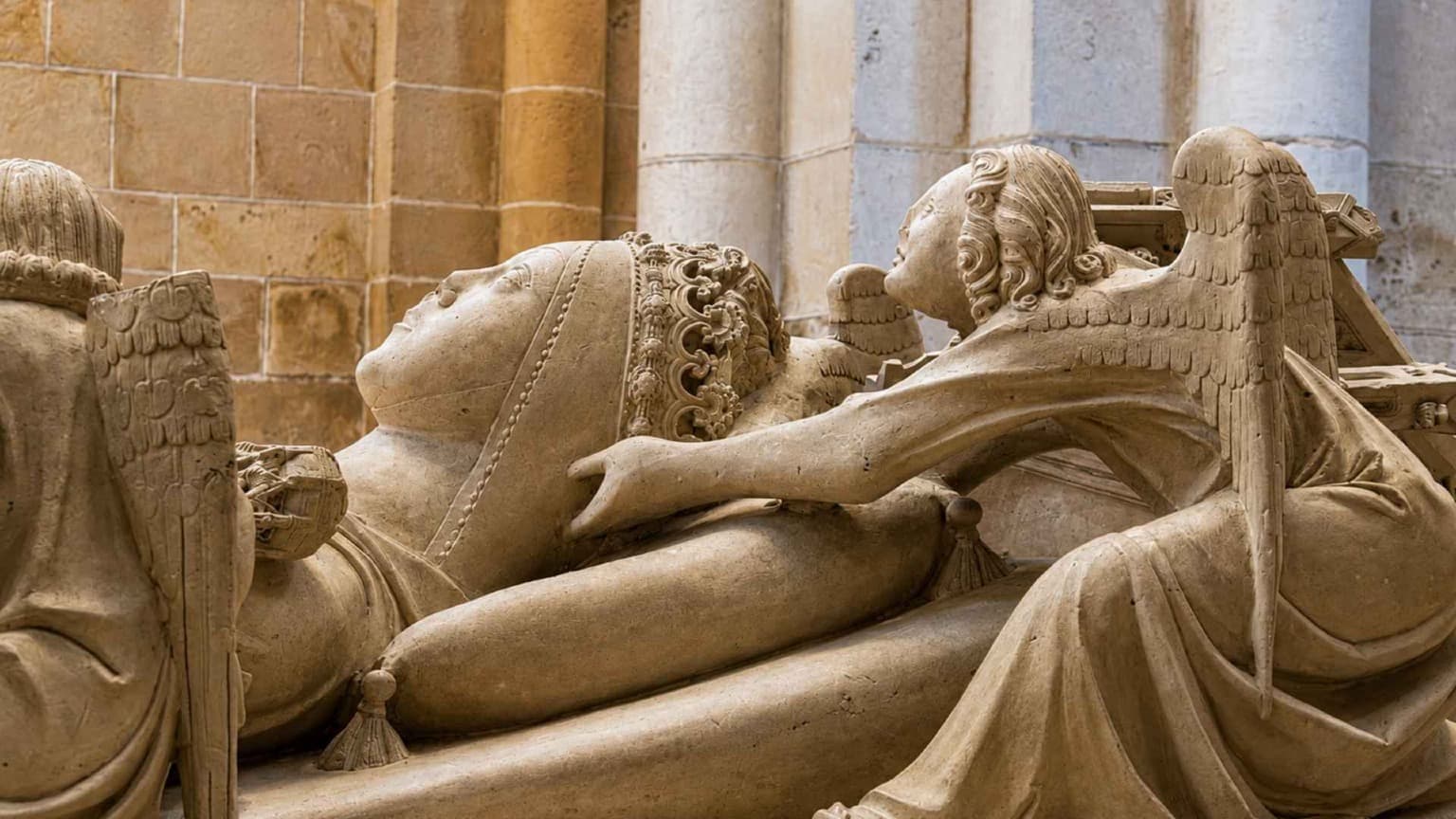
Pedro and Inês were eventually reunited in death at Alcobaça Monastery, their magnificent tombs preserving the memory of one of Portugal's most extraordinary love stories, forever associated with Coimbra.
Discover Coimbra with Cooltour Oporto
Coimbra lies roughly halfway between Porto and Lisbon, making it possible to explore the city as part of a journey through Central Portugal.
For travellers departing from Porto who prefer the flexibility of a private experience, Cooltour Oporto's Private Aveiro & Coimbra Tour combines two very different Portuguese cities in one day.
In Coimbra, the experience focuses on understanding the city's history, university heritage and most important landmarks with the context of a local guide. The day also includes Aveiro, known for its canals, colourful moliceiro boats, Art Nouveau architecture and traditional ovos moles.
It is a very different experience from visiting Coimbra independently, particularly for travellers who want to understand the stories behind the places they see without worrying about transport and logistics.
👉 Discover our Private Aveiro & Coimbra Tour from Porto.
More Ways to Discover Coimbra and Central Portugal
Already staying in Coimbra or planning to explore more of Central Portugal? Through our network of trusted local partners, you can also discover carefully selected private experiences in Coimbra and Central Portugal.
For a closer look at the city, the Private Coimbra Walking Tour explores Coimbra's historic centre and university heritage with a dedicated local guide.
Travellers interested in continuing the story of Pedro and Inês can also visit Alcobaça Monastery, where their magnificent tombs stand opposite one another. The Private Alcobaça Monastery Tour offers a deeper introduction to this UNESCO World Heritage Site and one of the most remarkable chapters of Portuguese history.
👉 Explore the Private Coimbra Walking Tour with our trusted local partner.
👉 Discover the Private Alcobaça Monastery Tour with our trusted local partner.
Frequently Asked Questions
Written by the Cooltour Oporto team