Visiting Aveiro: Canals, Salt Pans, and the Atlantic Ocean
September 17, 2026
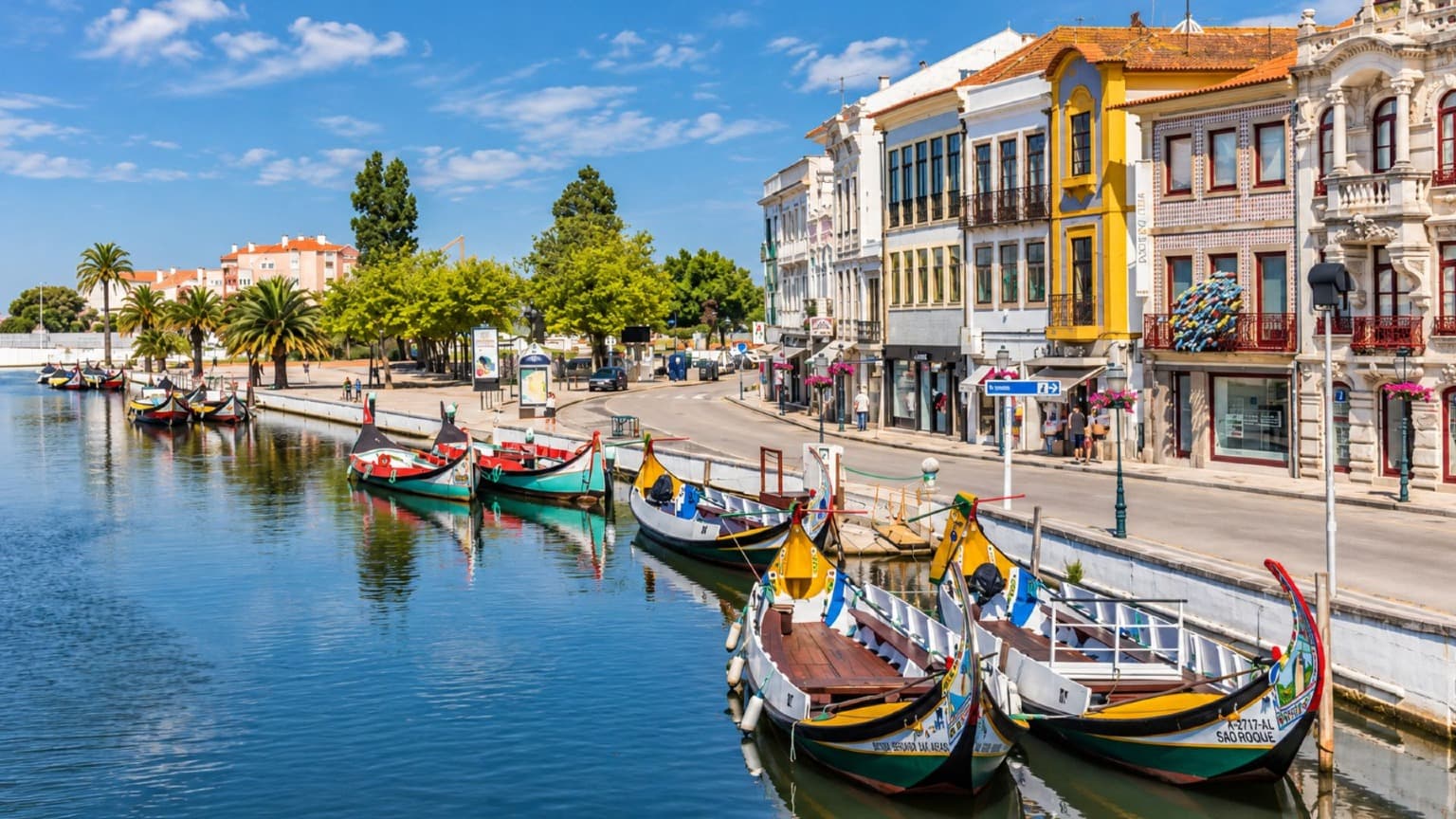
Water shapes Aveiro's identity, from its urban canals to the much wider landscapes of the Ria de Aveiro.
Aveiro is a lagoon city in central Portugal, known for its colourful moliceiro boats, Art Nouveau architecture, and its proximity to the neighbouring municipality of Ílhavo and the coastal village of Costa Nova. The city sits along a network of canals connected to the wider Ria de Aveiro, which in turn meets the Atlantic through a single artificial channel a few kilometres away, giving the whole region a rhythm and character shaped by water.
At the heart of it all is the Ria de Aveiro, a vast lagoon system stretching along the coastline, where salt production, fishing and maritime traditions have shaped local life for centuries. Within the Ria, the Salinas de Aveiro, traditional salt pans still in operation, offer visitors a rare look at an industry that contributed to the region's prosperity for centuries, long before tourism arrived. The white mounds of salt against the still water make for one of the most striking sights in the area.
Just south of the city, in the neighbouring municipality of Ílhavo, a different chapter of the region's story unfolds: one of fishing and the sea. Once home to a fleet that sailed as far as Newfoundland for cod, Ílhavo's maritime museum and working port reveal the deep connection between this area and the ocean.
A short drive further brings you to Costa Nova, famous for its striped wooden houses, the palheiros, lined up along the lagoon's edge, just steps from a wide sandy Atlantic beach. Originally associated with the local fishing community and used to store nets and fishing equipment, many were later adapted as seasonal seaside homes. Their colourful striped façades have since become one of the most photographed sights in the region.
Together, the city of Aveiro, its lagoon, the municipality of Ílhavo, and the village of Costa Nova form a compact but richly varied destination: canals and colour, salt and sea, tradition and coastline, all within easy reach of one another.
Aveiro at a Glance
Best for: Canals, Art Nouveau, maritime heritage, local food and Atlantic landscapes
Don't miss: A moliceiro ride, the historic Beira-Mar neighbourhood, Museu de Aveiro/Santa Joana, the salt pans and Costa Nova
Local speciality: Ovos Moles de Aveiro
Allow: One full day for Aveiro itself, or two days if you want to explore Ílhavo, Costa Nova, Barra and the Ria
Good to know: Aveiro is largely flat and compact, making the historic centre particularly easy to explore on foot.
Ria de Aveiro: Understanding the Landscape Before Exploring the City
To understand Aveiro, begin with the water.
The Ria de Aveiro is much more than the canals visitors see in the city centre. It is an extensive coastal lagoon of channels, mudflats, marshes, salt pans and islands stretching along this part of Portugal's Atlantic coast.
Its brackish waters are shaped by the meeting of freshwater from several rivers, particularly the Vouga, with the influence of the Atlantic Ocean. Over centuries, this constantly changing landscape supported fishing, salt production, agriculture, seaweed harvesting and maritime trade.
Aveiro's urban canals are essentially one small part of this much larger landscape.
This distinction matters because it changes the way you experience the region. The colourful boats in the centre, the salt pans just outside it, Ílhavo's cod-fishing heritage and the striped houses of Costa Nova are not unrelated attractions. They are different expressions of the same relationship between people, lagoon and sea.
Moliceiro Boats: From Working Boats to Aveiro's Symbol
Few images are more closely associated with Aveiro than the colourful barcos moliceiros moving through its canals.
Their elegant shape and brightly painted bows make them immediately recognisable, but these were originally working vessels rather than tourist boats. Moliceiros were traditionally used on the Ria to collect moliço, aquatic vegetation that was used as an agricultural fertiliser.
Today, they have largely taken on a new role carrying visitors through Aveiro's urban waterways.
A moliceiro trip is therefore worth seeing as more than a scenic boat ride. It offers another perspective on the city while preserving the visual identity of a vessel closely connected with traditional life on the Ria.
Take a moment to look at the painted panels on the boats as well. Their colourful scenes form part of the moliceiro tradition and range from representations of everyday life and local customs to humorous and sometimes irreverent subjects.
💡 Traveller's tip: Take the boat trip early in your visit rather than leaving it until the end. Seeing Aveiro from the canals first makes it easier to understand how the different neighbourhoods and waterways fit together when you later explore them on foot.
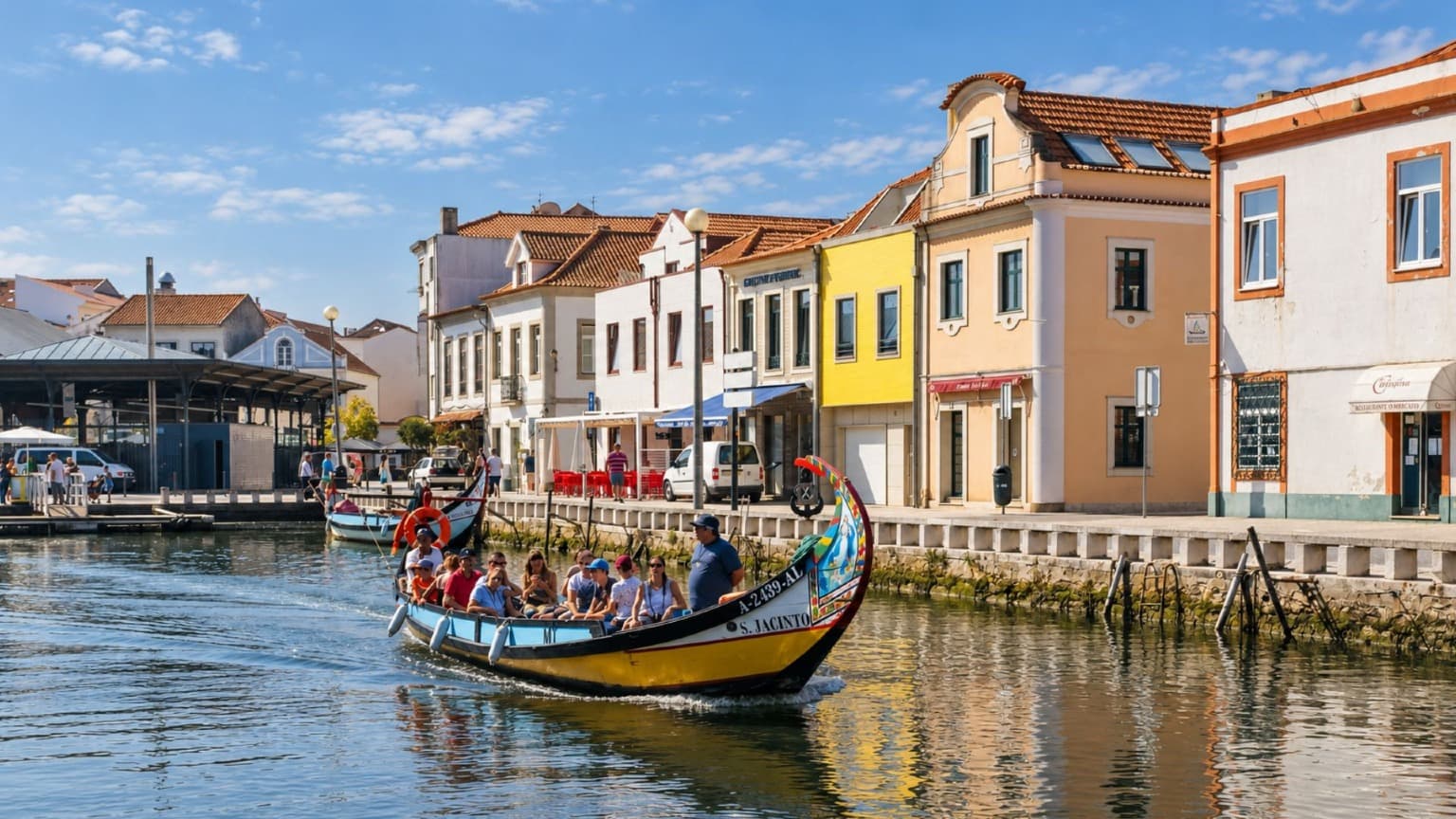
Once used to collect moliço from the Ria, Aveiro's colourful moliceiro boats now offer visitors another perspective on the city.
Aveiro's Canals & the Beira-Mar Neighbourhood
After seeing the city from the water, explore the same landscape on foot.
The Canal Central forms the most recognisable image of Aveiro, passing through the centre beside Art Nouveau façades, gardens and colourful moliceiros.
Around Praça General Humberto Delgado, several waterways and important streets meet, making this one of the easiest places from which to understand Aveiro's urban layout. Look out for the four statues on the bridge, representing figures and traditional activities associated with the region.
Nearby, the former Capitania do Porto de Aveiro, also known as Casa dos Arcos, has had several lives over the centuries. The building was once associated with a tidal mill, later became connected with the early history of Vista Alegre and subsequently housed a School of Industrial Design. Today, it is home to Aveiro's Municipal Assembly.
But Aveiro becomes more interesting when you leave the most photographed part of the Canal Central and enter Beira-Mar.
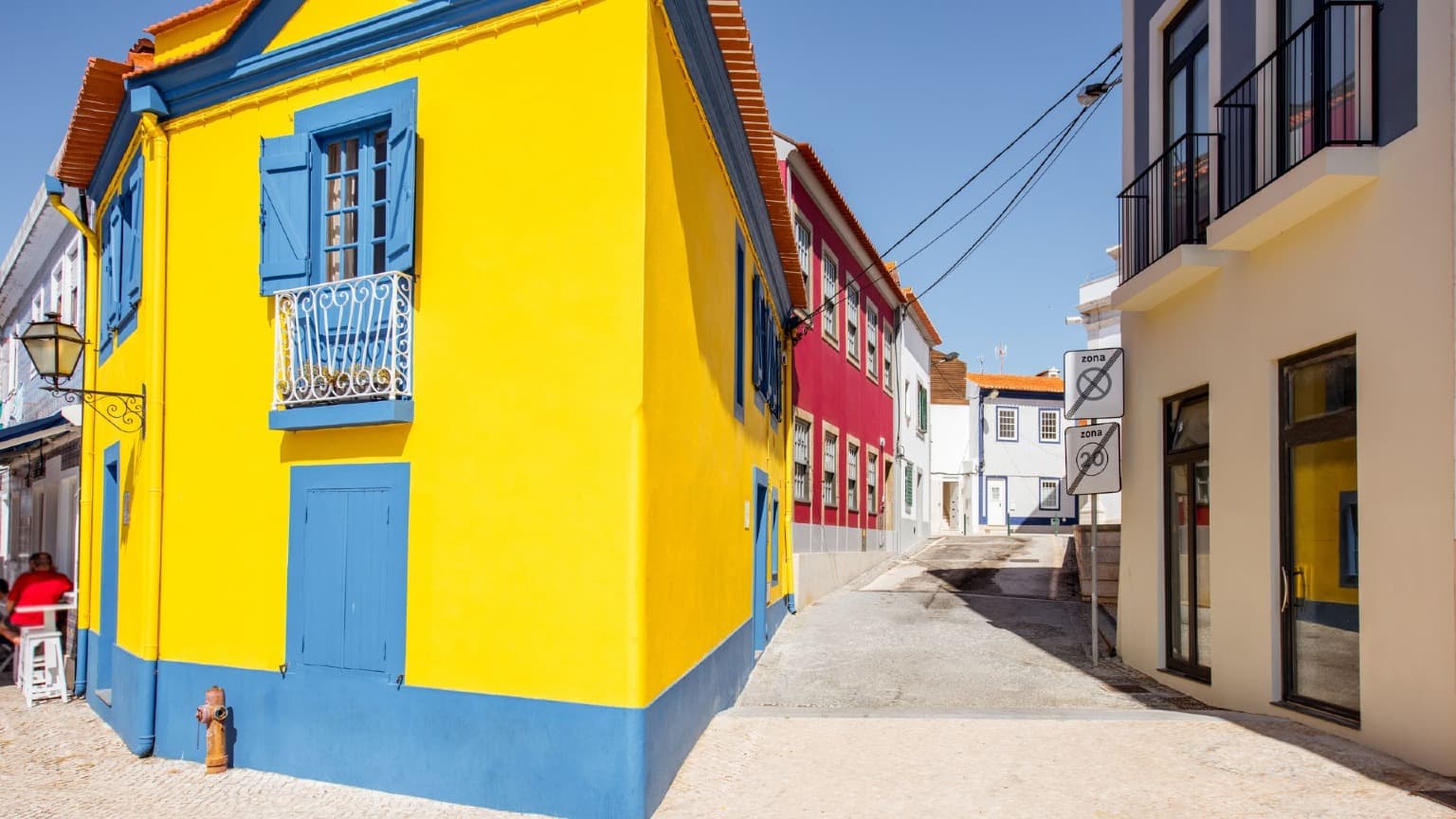
The streets of Beira-Mar preserve the colourful character of a neighbourhood historically connected with fishermen, marnotos and the Ria.
Beira-Mar, Mercado do Peixe & Canal dos Botirões
Traditionally associated with fishermen, marnotos and communities connected with the Ria, Beira-Mar retains a character distinct from the more monumental area south of the Canal Central.
Its narrow streets lead between traditional houses, restaurants, small squares and waterways before reaching the Mercado do Peixe, officially known as Mercado José Estevão.
Nearby, the Canal dos Botirões is much smaller than the Canal Central, but that is precisely part of its charm. Its colourful surroundings and connection with the Canal de São Roque make this one of the most pleasant corners of Beira-Mar to explore on foot.
This is also where Aveiro begins to feel less like a collection of landmarks and more like a lived-in city.
💡 Traveller's tip: If you want to see the Mercado do Peixe as a working market rather than simply appreciate its architecture and surrounding square, visit in the morning.
Canal de São Roque & Aveiro's Bridges
Continue towards the Canal de São Roque, where the city gradually begins to open towards the salt pans.
The traditional Ponte de Carcavelos, one of Aveiro's characteristic older bridges, offers attractive views along the canal and towards houses historically associated with fishermen and salt workers.
Where the Canal de São Roque and Canal dos Botirões meet, the modern circular pedestrian bridge provides a striking contrast. Elsewhere in the centre, the Ponte dos Laços de Amizade has developed its own colourful identity through the ribbons left by residents and visitors.
There's no need to seek out every bridge individually. Let them become part of the walk instead. Aveiro is at its best when canals, bridges and neighbourhoods are experienced together.
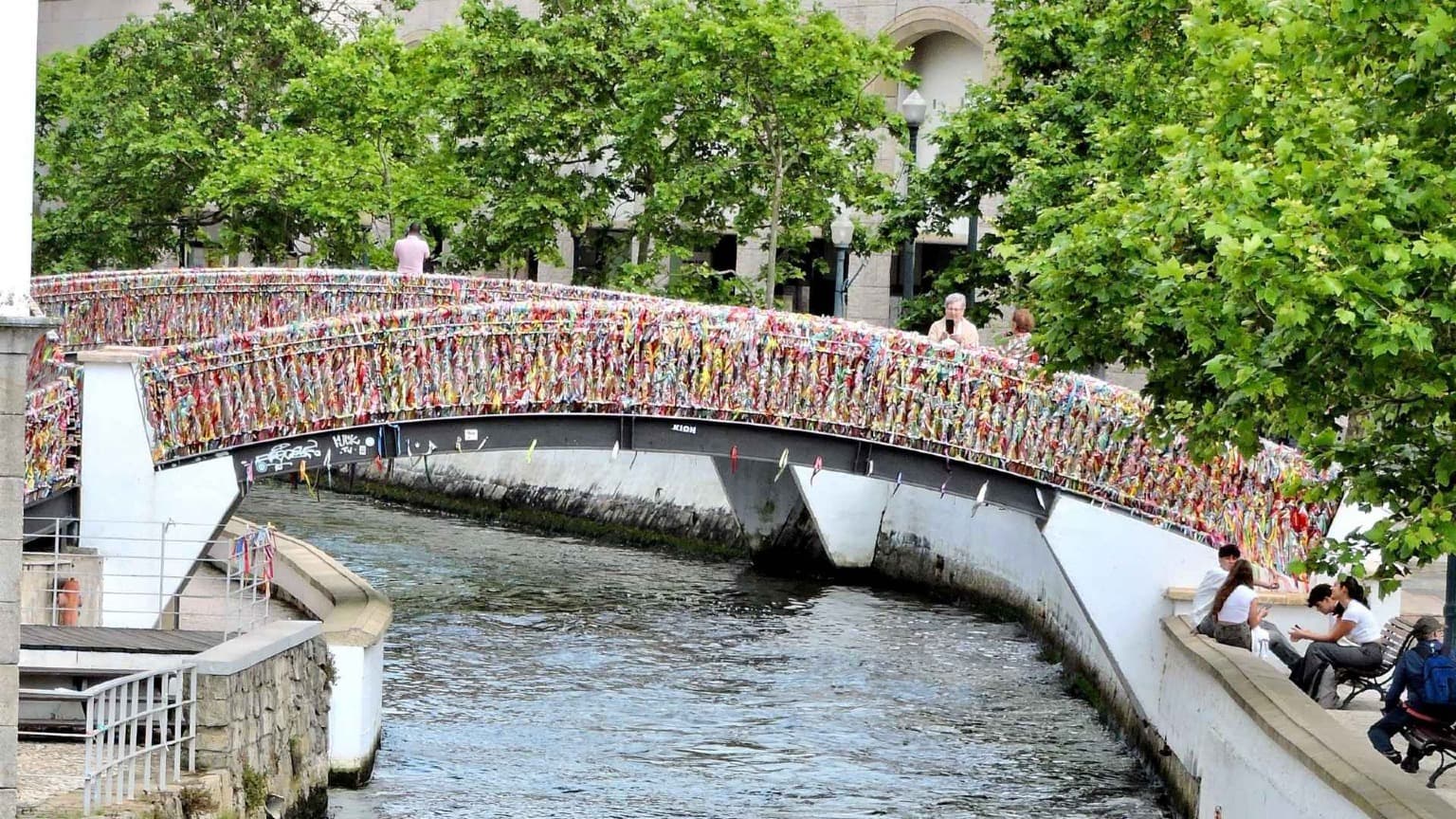
Thousands of colourful ribbons have transformed the Ponte dos Laços de Amizade into one of Aveiro's most distinctive pedestrian bridges.
The Salt Pans of Aveiro: A Landscape That Built the City
Salt shaped Aveiro long before moliceiro tours and colourful façades became part of its visitor identity.
Salt production in the area has very old roots, with references predating the formation of the lagoon as we know it today. By the 16th century, Aveiro had become an important centre for the export of salt.
The industry's fortunes were closely connected with the changing conditions of the Ria and its access to the sea. The construction of a new channel to the Atlantic at the beginning of the 19th century helped establish the Barra in the location where it remains today.
The scale of salt production was once remarkable. Municipal records counted 256 salt pans in the 1950s; by 2017, only nine remained.
Those that survive preserve much more than a traditional industry. They provide a visible connection with an activity that helped shape Aveiro's economy and communities for centuries.
Production follows the rhythms of nature. Water passes through a sequence of shallow ponds, while the sun and wind gradually evaporate it and increase its salt concentration. Eventually, crystals form and can be collected using techniques that still preserve traditional knowledge associated with the marnoto, the salt worker.
The resulting landscape is strikingly simple: geometric pools of shallow water, white mounds of salt and open skies, with birdlife adding another dimension to this working environment.
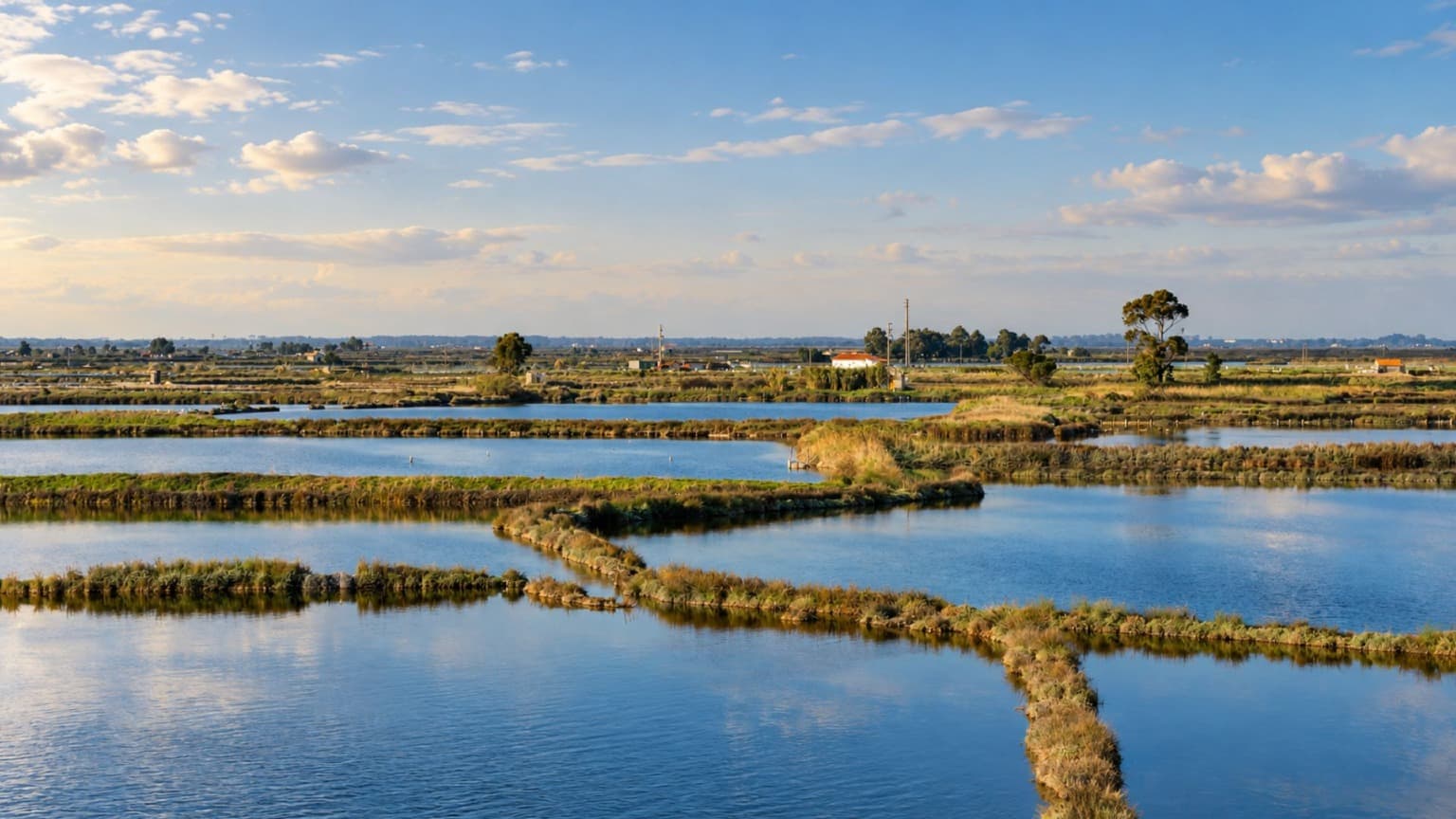
Aveiro's salt pans preserve a centuries-old activity that once played an important role in the economy of the Ria.
Ecomuseu Marinha da Troncalhada
For an accessible introduction to this heritage, visit the Ecomuseu Marinha da Troncalhada, part of the municipal Museums of Aveiro network.
Here, the museum is the landscape itself, with a traditional salt pan preserved in its original setting. Visitors can observe the different areas involved in salt production while learning about the techniques, environment, fauna and flora associated with this centuries-old activity.
It is a good reminder that Aveiro's salt pans are not simply beautiful places to photograph. They represent a form of knowledge passed between generations and a traditional activity that remains part of the Ria today.
💡 Traveller's tip: Visit the salt pans towards the end of the afternoon if you can. As the sun drops, the shallow pools reflect the changing light and the white salt mounds stand out against the water, making this one of the most atmospheric places in Aveiro for sunset.
Museu de Aveiro / Santa Joana: Aveiro Beyond the Canals
Aveiro's history is not only maritime.
The Museu de Aveiro / Santa Joana occupies the former Convento de Jesus, a Dominican convent founded in 1458 and one of the city's most important historic buildings.
Its story is inseparable from Princess Joana, daughter of King Afonso V, who entered the convent during the 15th century despite her royal status. Her life became so closely associated with Aveiro that she remains one of the city's defining historical figures.
The convent is also closely associated with the origins of Aveiro's tradition of Ovos Moles, a story that survives today in the city's most famous sweet.
Today, visitors can explore the former convent while discovering an important collection of religious art, including painting, sculpture, gilded woodwork, tiles and precious metalwork.
Among its most remarkable spaces are the cloister, Igreja de Jesus and the choir, where the monumental polychrome marble tomb of Princess Saint Joana is one of the museum's highlights.
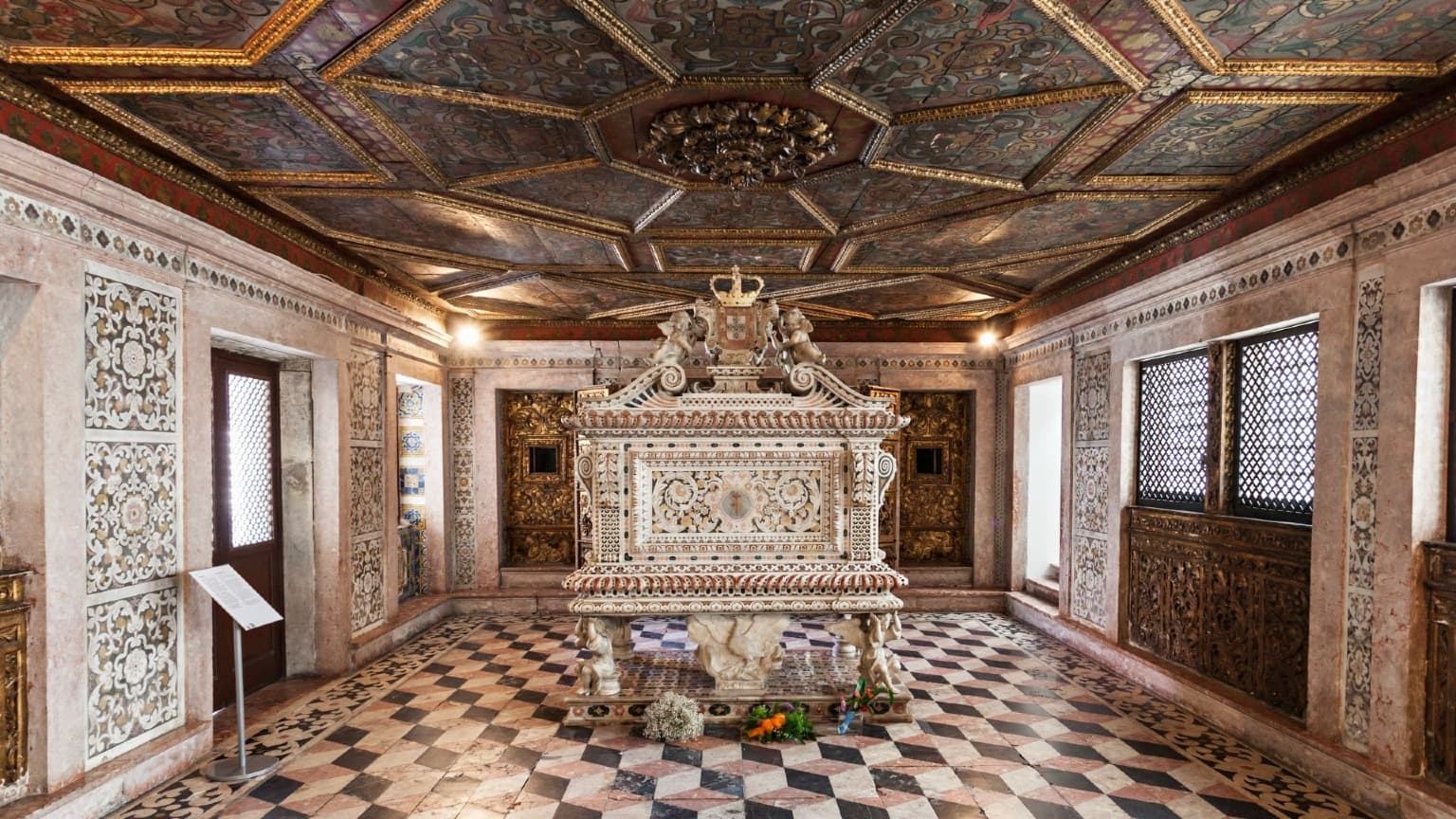
The monumental polychrome marble tomb of Princess Saint Joana is one of the highlights of the former Convento de Jesus, today the Museu de Aveiro / Santa Joana.
The combination of elaborate gilded woodwork and blue-and-white Portuguese azulejos is particularly impressive and creates a striking contrast with the comparatively restrained convent spaces around it.
Within only a short walk, Aveiro moves from moliceiros and maritime traditions to royal history, convent life and Portuguese religious art.
Aveiro Cathedral
Almost beside the museum stands the Sé de Aveiro, or Cathedral of Aveiro.
Its history is connected with the former Dominican Convent of São Domingos, and the building reflects several architectural periods and later transformations.
Look for its Baroque portal and the Cruzeiro de São Domingos, an important Manueline work. A replica stands outside, while the original is preserved inside the cathedral.
Because the cathedral and Museu de Aveiro are so close together, it makes sense to visit them as part of the same walk rather than treating them as separate parts of the city.
Art Nouveau in Aveiro
One of Aveiro's most distinctive architectural layers appeared much later.
At the turn of the 20th century, Art Nouveau influenced a remarkable group of buildings around the city. Decorative façades, floral motifs, curved lines, wrought iron and colourful tiles gave Aveiro a visual identity very different from Portugal's medieval cities.
The city's official Art Nouveau Route brings together 28 architectural points of interest, effectively turning Aveiro's streets into an open-air extension of the museum.
Many examples are concentrated around the Canal Central, Rua João Mendonça and Rossio, although others are scattered across the city.
As you walk, remember to look upwards. Windows, balconies, tiles, stonework and decorative details are often what make these buildings interesting.
Museu Arte Nova
The best place to understand this architectural movement is the Museu Arte Nova, housed in the striking Casa Major Pessoa.
The museum introduces visitors to Art Nouveau in Aveiro while also providing a natural starting point for exploring the architectural route through the surrounding streets.
Museu da Cidade de Aveiro
Nearby, the Museu da Cidade de Aveiro provides a broader introduction to the history, identity and development of the city.
Together with Museu de Aveiro / Santa Joana, Museu Arte Nova and the Ecomuseu Marinha da Troncalhada, it forms part of the municipal museum network.
💡 Traveller's tip: If you plan to visit several museums, check the Bilhete Único dos Museus de Aveiro, which combines access to Museu de Aveiro / Santa Joana, Museu da Cidade de Aveiro, Museu Arte Nova and Ecomuseu Marinha da Troncalhada.
👉 Planning to explore Aveiro's museums? Check the official Museus de Aveiro website for current opening times, prices and combined-ticket conditions before your visit.
Azulejos, Aveiro Railway Station & Urban Art
Aveiro's visual identity is not defined by Art Nouveau alone.
Azulejos appear across the city on houses, churches, civic buildings and decorative panels, creating another architectural thread worth looking for as you explore.
One of the finest examples greets many visitors before they even reach the historic centre.
The old Aveiro Railway Station is covered with blue-and-white azulejo panels depicting regional landscapes, traditions and scenes of everyday life. Even if you arrive by car, it is worth seeing the historic station façade.
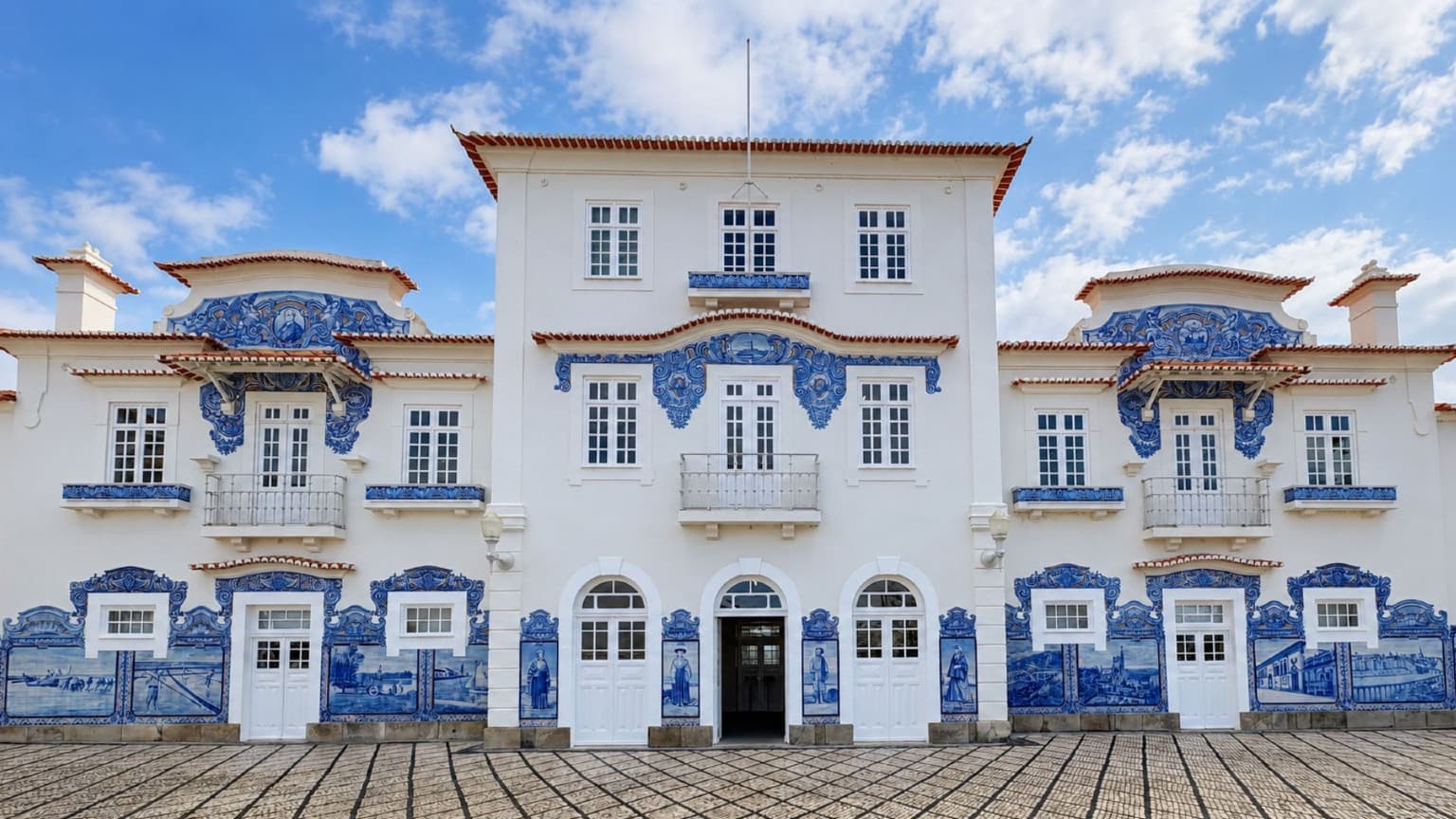
The historic Aveiro Railway Station is covered with azulejo panels depicting regional landscapes, traditions and scenes of everyday life.
Tiles also appear elsewhere around the city, including Praça da República, Jardim Infante D. Pedro and numerous façades and decorative panels.
Together, Aveiro's azulejos and Art Nouveau architecture reveal different periods in the city's development, but the visual story doesn't stop there.
Aveiro's Contemporary Urban Art
Contemporary artists have added another layer to the city's streets.
Murals and urban interventions appear in different parts of Aveiro, including works associated with Portuguese artists such as Vhils, while colourful installations and places such as the “I Love Aveiro” staircase on Rua Gustavo Silva have become part of the city's evolving streetscape.
The contrast is one of the pleasures of exploring Aveiro on foot: traditional azulejos, early-20th-century Art Nouveau and contemporary urban art coexist within a relatively compact city.
Churches, Chapels & Local Traditions
Beyond the Cathedral and Convento de Jesus, several smaller religious buildings reveal different aspects of Aveiro's history.
Igreja da Vera Cruz
In the Beira-Mar area, the Igreja da Vera Cruz, also known as Igreja de Nossa Senhora da Apresentação, provides another connection with the religious history of the neighbourhood.
Its tiled façade and richly decorated interior contrast with the relatively modest scale of the surrounding streets.
Capela de São Gonçalinho
The small Capela de São Gonçalinho is particularly important to local identity.
Every January, it becomes the centre of one of Aveiro's most unusual traditions. During the festivities honouring São Gonçalinho, people fulfil promises made to the saint by throwing hard, sweet cavacas from the top of the chapel towards the crowd below.
Catching them is part of the fun. Umbrellas turned upside down, nets and other improvised methods all become part of the scene.
It is exactly the kind of small landmark worth including because it reveals something about Aveiro that a photograph of the canals alone cannot.
Igreja das Carmelitas
The Igreja das Carmelitas, in Praça Marquês de Pombal, introduces another remarkable religious interior.
Part of the former Convento de São João Evangelista, the church combines gilded woodwork, blue-and-white azulejos and richly coloured ceiling and wall paintings.
If churches are not a major interest, you don't need to visit every one. Museu de Aveiro / Santa Joana and the Cathedral should take priority, while these smaller churches can be incorporated naturally as you walk through the city.
Igreja da Misericórdia
Close to Praça da República, the Igreja da Misericórdia immediately stands out for its tiled façade.
Its architecture and richly decorated interior make it one of the most interesting religious buildings in central Aveiro, and its location makes it easy to incorporate into a walk between Praça da República and the canals.
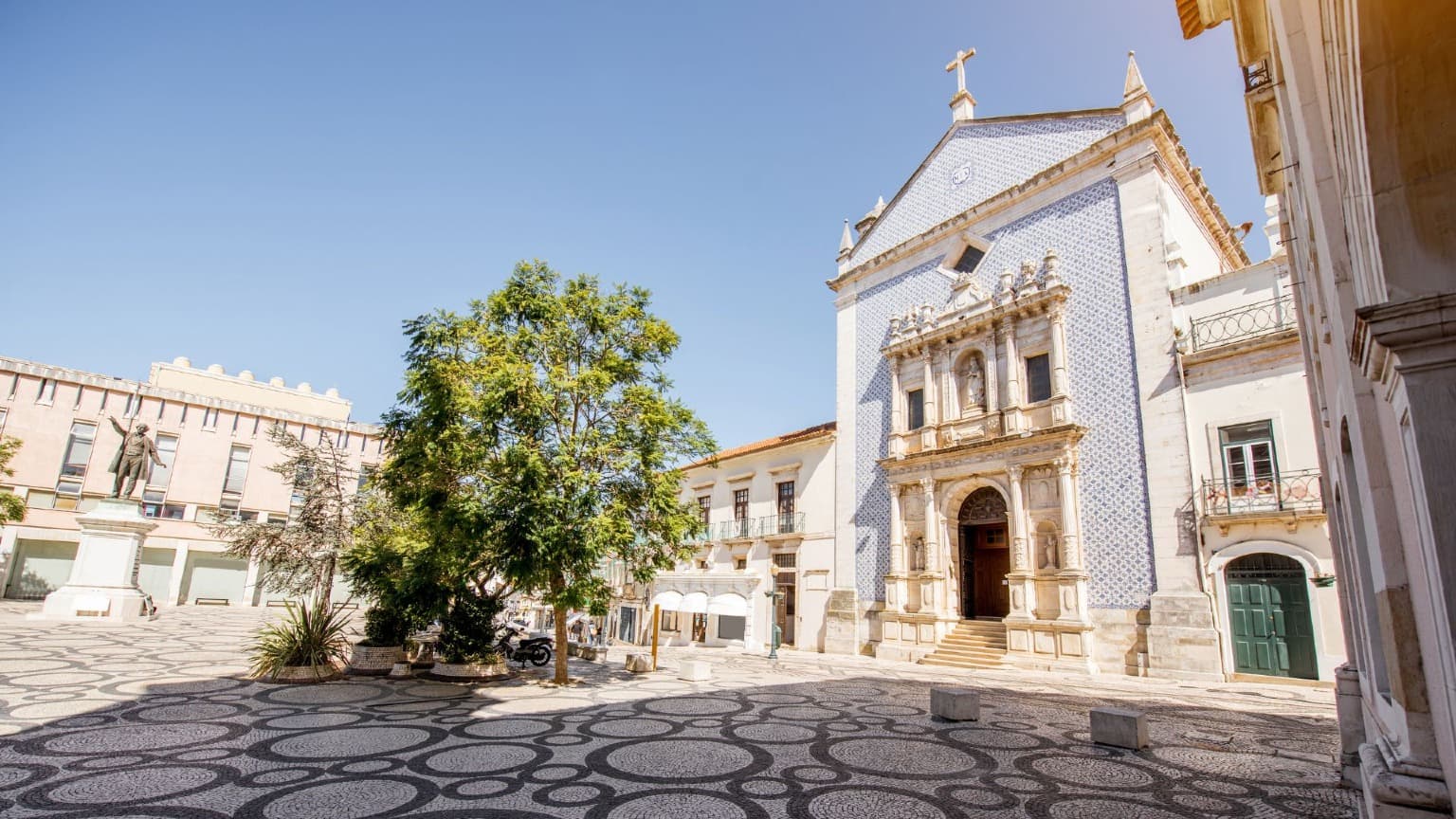
The tiled façade of Igreja da Misericórdia adds another remarkable example of Aveiro's rich azulejo heritage.
From Historic Aveiro to Fonte Nova
Around Praça da República, Aveiro's civic and religious heritage comes together, with the Câmara Municipal, Teatro Aveirense and Igreja da Misericórdia all within a compact area of the city centre.
Follow the waterways east and the city gradually becomes more contemporary. The Canal do Cojo leads towards Fonte Nova, a pleasant waterside area where gardens, modern buildings and the movement of moliceiros create a different atmosphere from Beira-Mar.
Nearby, the Aveiro Congress Centre occupies part of the former Jerónimo Pereira Campos ceramics factory, an example of the city's industrial heritage adapted to a new purpose.
This part of Aveiro isn't about ticking off major monuments. It is worth exploring for the walk itself and for seeing how the historic canal city transitions into modern Aveiro.
Walking & Cycling Beyond the Historic Centre
Aveiro's flat landscape makes walking and cycling particularly attractive ways to explore.
The Passadiços de Aveiro extend the experience beyond the urban canals into the natural landscapes of the Ria.
One of the most appealing stretches begins around Cais da Ribeira de Esgueira and continues towards Vilarinho, following the Ria for a little over 5 km. Much of the route uses wooden boardwalks and the terrain is predominantly flat, making it suitable for an easy walk or a longer outing in nature.
Wetlands, waterways, vegetation and birdlife replace the architecture and busy canals of central Aveiro.
It is a very different experience from walking around the Canal Central.
If central Aveiro shows how the city adapted to water, the paths around the Ria reveal the natural landscape that surrounds it.
Ílhavo: Cod Fishing, Maritime Heritage & Porcelain
Just south of Aveiro lies Ílhavo, a separate municipality whose history is deeply connected with the Ria and the sea.
For generations, local sailors participated in Portugal's long-distance cod-fishing campaigns in the North Atlantic, particularly in the waters around Newfoundland and Greenland.
Understanding this history adds an important dimension to a visit to Aveiro. Cod may be one of Portugal's most familiar foods today, but behind it lies a remarkable history of ships, crews and communities shaped by voyages that kept crews at sea for months at a time.
👉 Want to discover why cod became so important to Portugal? Explore the story behind the country's most iconic fish in our article about Bacalhau in Portugal: History, Traditions & National Dish.
Museu Marítimo de Ílhavo
The Museu Marítimo de Ílhavo is one of the best places to discover this heritage.
Its collections explore the cod-fishing campaigns, traditional activities of the Ria and the maritime communities of Ílhavo.
One of its most distinctive spaces is the Aquário dos Bacalhaus, dedicated to Atlantic cod (Gadus morhua). Seeing the species itself adds an unusual dimension to the historical displays about the fishermen who crossed the Atlantic in search of it.
Navio-Museu Santo André
The story continues aboard the Navio-Museu Santo André, a former cod-fishing trawler built in 1948.
The ship belongs to the Museu Marítimo de Ílhavo but is located separately, at Jardim Oudinot, near the port.
Walking through the vessel provides a much more tangible sense of the working environment and conditions experienced by crews during Portugal's North Atlantic cod-fishing campaigns.
Vista Alegre: Two Centuries of Portuguese Porcelain
Ílhavo is also home to another important Portuguese story: Vista Alegre.
Founded in 1824 by José Ferreira Pinto Basto, Vista Alegre developed into one of Portugal's most celebrated porcelain manufacturers.
The historic complex grew into more than simply a factory. A workers' neighbourhood, family residence, gardens and the Capela de Nossa Senhora da Penha de França formed part of the community that developed around porcelain production.
Today, the Museu Vista Alegre traces the company's history and the evolution of Portuguese porcelain through finished pieces, designs and material connected with the manufacturing process.
Visitors can also discover the craftsmanship behind the objects, including the delicate process of hand-painting porcelain.
For travellers interested in Portuguese design, craftsmanship and industrial heritage, Vista Alegre is one of the most rewarding additions to an Aveiro itinerary.
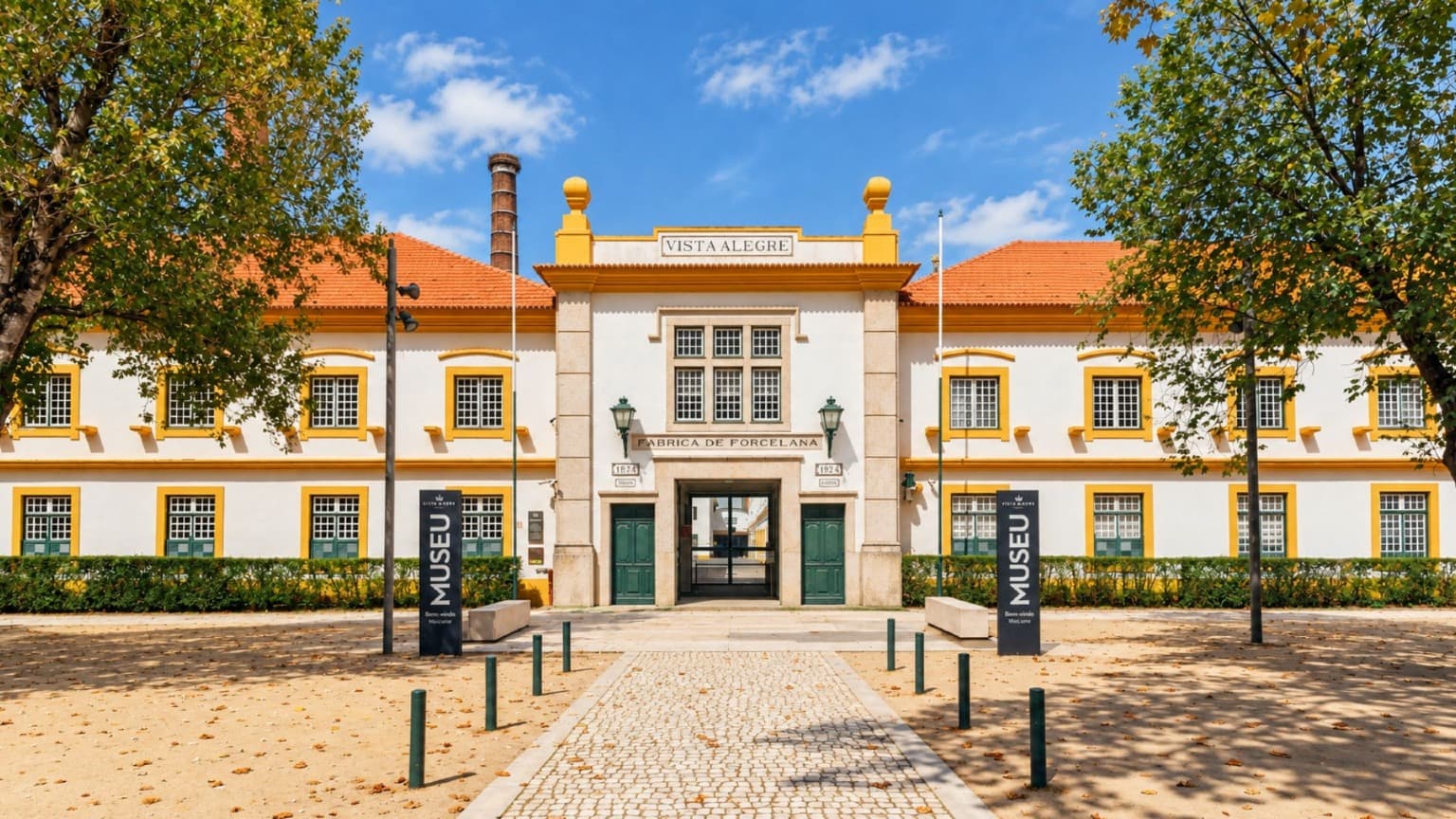
Founded in 1824, Vista Alegre developed around porcelain production into a community with its own factory, residences and cultural heritage.
From the Ria to the Atlantic: Barra & Costa Nova
Continue west from Ílhavo and the landscape eventually reaches the Atlantic.
Praia da Barra & Farol da Barra
At Barra, the relationship between the lagoon and the ocean becomes particularly clear.
The Farol da Barra, the tallest lighthouse in Portugal, dominates the coastline, while the long Atlantic beach introduces a completely different landscape from Aveiro's protected canals and lagoon waters.
This is where the connection between the Ria and the open ocean becomes visible: sheltered waterways lie behind the coast, while the Atlantic stretches away on the other side.
Costa Nova & the Palheiros
A little further south lies Costa Nova, famous for the brightly striped houses known as palheiros.
Their history is more interesting than their colourful façades might initially suggest.
The palheiros were originally associated with the local fishing community and used to store nets and other fishing equipment. Early examples did not display today's colourful appearance, instead using darker tones such as red ochre and black.
From the second half of the 19th century, many were gradually adapted as seasonal seaside homes as Costa Nova developed as a bathing destination. Their façades evolved too, creating the colourful striped houses that have become inseparable from the village's identity.
Walk along the lagoon side to see the best-known rows of palheiros, but don't stop there.
Cross the narrow settlement and within a few minutes you reach a completely different landscape: dunes and a broad sandy beach facing the Atlantic.
That contrast between Ria and ocean within only a short walk is one of the things that makes Costa Nova particularly interesting.
💡 Traveller's tip: Combine Costa Nova with Ílhavo rather than treating it simply as a photo stop. The Maritime Museum, Santo André, Vista Alegre, Barra and Costa Nova together tell a much richer story about fishing, craftsmanship, the Atlantic and the communities surrounding the Ria.
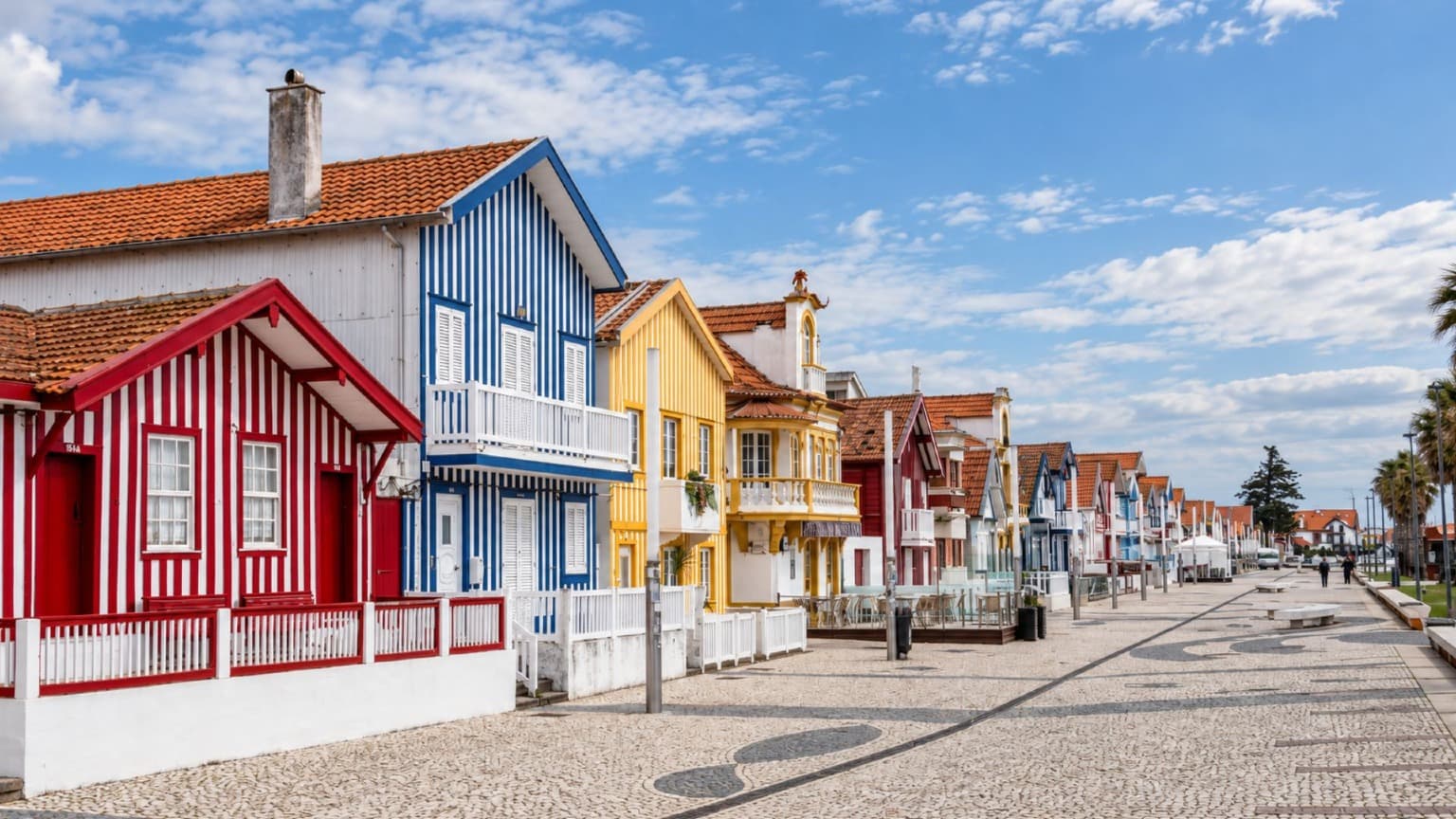
Costa Nova's striped palheiros evolved from buildings associated with the fishing community into one of the region's most recognisable coastal landscapes.
Ovos Moles: Aveiro's Most Famous Sweet
You shouldn't leave Aveiro without understanding why Ovos Moles de Aveiro are so closely connected with the city.
Made primarily from egg yolks and sugar, Ovos Moles belong to Portugal's tradition of convent sweets and are historically associated with Aveiro's female religious communities, particularly the former Convento de Jesus.
Today, Ovos Moles de Aveiro have IGP (Protected Geographical Indication) status and were the first Portuguese confectionery product to receive this European recognition.
Their creamy filling is traditionally presented inside delicate wafer shells, often shaped like fish, shells, barrels and other motifs inspired by Aveiro's relationship with the Ria and the sea.
The result is more than a local dessert. Ovos Moles connect Aveiro's convent heritage with the visual world of its maritime traditions.
Where to Try Ovos Moles
Confeitaria Peixinho is one of the historic names of Aveiro's confectionery tradition and continues to produce Ovos Moles according to the original recipe. It is a natural place to taste the city's best-known sweet while exploring the centre.
For visitors who want to understand how Ovos Moles are actually made, Oficina do Doce offers a more interactive introduction to their history and preparation, including workshops.
And don't limit yourself to Ovos Moles alone.
Aveiro's traditional doçaria also includes raivas, broas, biscoitos almendrados, amores de cúria and other sweets, while tripas de Aveiro offer a very different, more contemporary indulgence.
💡 Traveller's tip: If you want to go beyond Ovos Moles, TêZero is a good stop for discovering another side of Aveiro's sweet traditions, particularly its popular tripas.
👉 Curious about what else to taste in Portugal? Explore traditional dishes, regional specialities and some of the flavours that define the country in our Portuguese Food Guide.
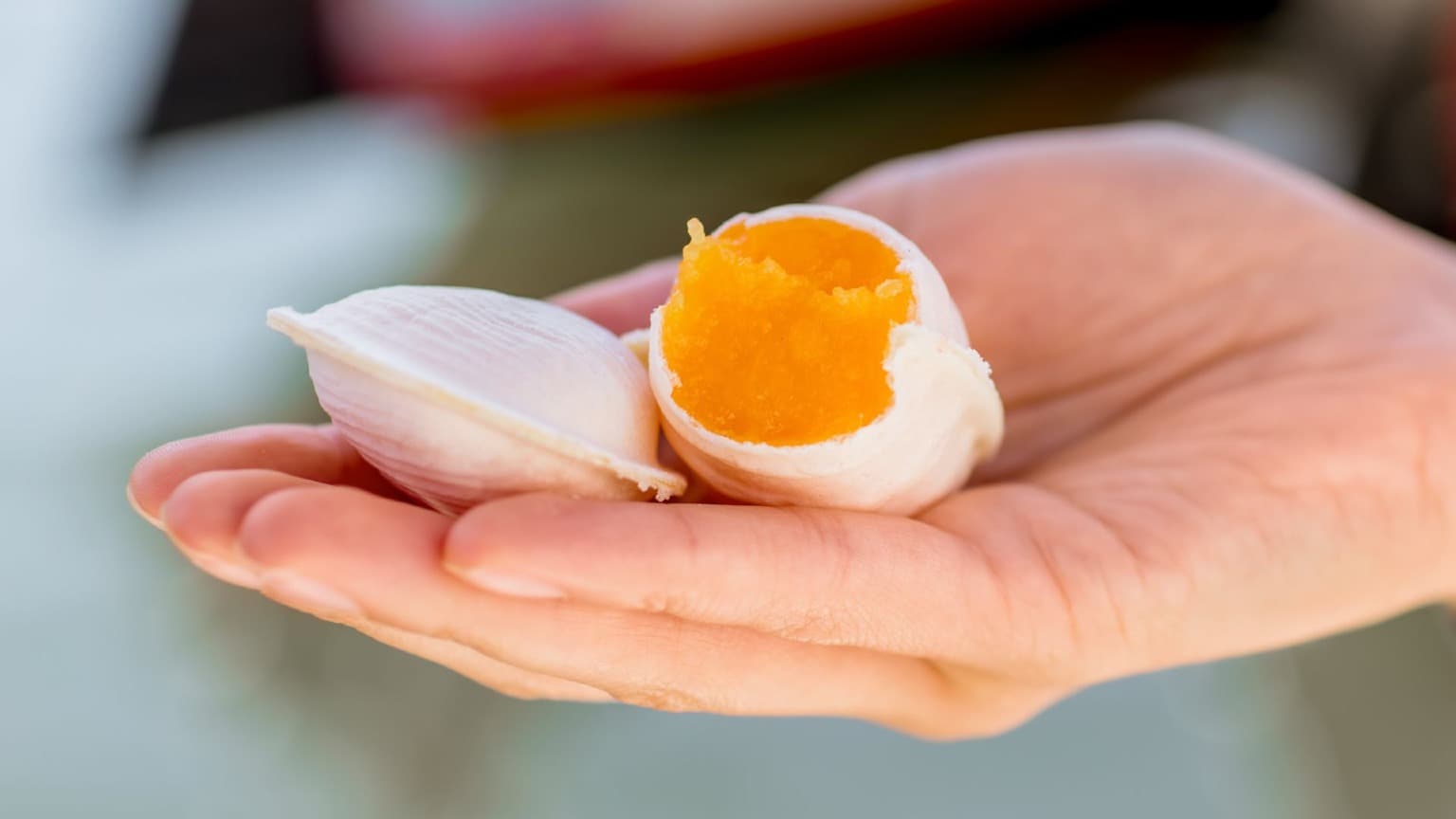
Ovos Moles de Aveiro connect the city's convent-sweet tradition with maritime-inspired wafer shapes.
How Many Days Do You Need in Aveiro?
Aveiro is compact, and one full day is enough to discover the city's essential sights, particularly if you're visiting as a day trip from Porto.
You can explore the canals and Beira-Mar neighbourhood, take a moliceiro ride, discover some of the city's Art Nouveau and azulejos, visit one major museum, taste Ovos Moles and walk towards the salt pans.
But two days provide a much more complete experience of Aveiro and its surrounding region.
With a second day, you can explore Ílhavo, Vista Alegre, Barra and Costa Nova, connecting the city's canals with the cod-fishing traditions, craftsmanship and Atlantic landscapes that form such an important part of the wider destination.
Travellers particularly interested in nature could stay longer and explore the Passadiços de Aveiro, the wider landscapes of the Ria or nearby BioRia in Estarreja.
💡 Traveller's tip: If you're visiting Aveiro for only one day, don't try to see everything. Focus on the historic city, canals and Beira-Mar, then choose between the salt pans or a trip towards Costa Nova according to what interests you most.
Best Time to Visit Aveiro
Aveiro can be visited throughout the year, but spring and early autumn are particularly pleasant, with generally comfortable conditions for walking, exploring the canals and spending time around the Ria and Atlantic coast.
Summer brings warmer weather and is especially appealing if you want to combine the city with Costa Nova and Praia da Barra. It is also one of the liveliest periods along the coast, although popular areas naturally become busier.
Autumn can bring beautiful light to the lagoon and salt pans, while cooler days remain well suited to museums, food experiences and exploring the historic centre.
Winter is quieter and gives Aveiro a different atmosphere. Rain, wind and Atlantic weather are more likely to affect outdoor plans, but the city's museums, churches, cafés and restaurants make it easy to combine indoor and outdoor experiences.
The landscape itself also changes throughout the year. Salt production, birdlife, vegetation and the light across the Ria follow their own seasonal rhythms, meaning Aveiro rarely looks exactly the same from one visit to another.
💡 Traveller's tip: Whatever the season, keep some flexibility if you're heading to the coast. Conditions beside the Atlantic at Costa Nova and Barra can feel very different from those in central Aveiro on the same day.
Where to Eat in Aveiro
Aveiro's food scene is closely connected to the Ria de Aveiro and the Atlantic coast, with seafood, fish and traditional Portuguese flavours featuring prominently on local menus. From traditional restaurants and relaxed seafood spots to more refined interpretations of regional cuisine, these are some of the places worth considering when eating in and around Aveiro.
Maradentro
Located in Ílhavo, Maradentro celebrates the town's strong maritime heritage and traditions of local cuisine. Cod is one of its main specialities, with dishes inspired by the region's historic fishing traditions and gastronomia de bordo. It is a good choice for travellers looking to explore the culinary heritage of Ílhavo beyond Aveiro's city centre.
Bronze Seafood & Lounge Bar
Located at Praia da Costa Nova, Bronze combines seafood with a relaxed beach atmosphere. Its location close to the Atlantic makes it a natural choice for travellers looking to enjoy fresh fish and seafood while exploring the coast around Aveiro, particularly as part of a visit to Costa Nova.
O Bairro
Located in the heart of Aveiro's historic Beira-Mar neighbourhood, O Bairro sits beside the traditional fish market and Canal dos Botirões. Its cuisine combines Portuguese traditions with a contemporary approach, with fish and seafood playing an important role on the menu. The setting also makes it a good option for experiencing the lively atmosphere of one of the city's most characteristic areas.
Maré Cheia
A well-established seafood restaurant in Aveiro, Maré Cheia is a good choice for travellers wanting to focus on fish and seafood. Its traditional approach and central location make it an appealing option for a straightforward local meal while exploring the city.
Salpoente
Set in two former salt warehouses at Cais de São Roque, Salpoente offers a more refined interpretation of Aveiro's culinary traditions. Its cuisine pays tribute to the Ria de Aveiro and local produce while combining traditional flavours with contemporary techniques. It is one of the city's strongest choices for travellers looking for a more sophisticated gastronomic experience.
Visiting Aveiro from Porto
Aveiro is easily accessible from Porto by train or car, making it one of the most convenient day trips from the city. The city can also be combined with Coimbra, allowing travellers to experience two very different sides of the region in a single journey.
For travellers interested in culture, architecture and local traditions, Aveiro offers much more than its picturesque canals. Known for its colourful moliceiro boats, Art Nouveau buildings, salt-producing heritage and the traditional sweet Ovos Moles, the city has a distinctive character shaped by its close relationship with the lagoon and the sea.
While Aveiro can be explored independently, a locally guided experience can add valuable context to its history, architecture and traditions. Combining Aveiro with Coimbra also makes it possible to discover the contrast between the colourful canals and maritime character of Aveiro and Coimbra's historic university, medieval streets and centuries-old academic traditions.
👉 Want to visit Aveiro from Porto? Our Private Aveiro & Coimbra Tour combines a full day of private guiding with Aveiro's canals and historic centre, a scenic boat tour, a traditional Portuguese lunch and Coimbra's historic centre and University, offering a comfortable and personalised way to experience both cities in one day.
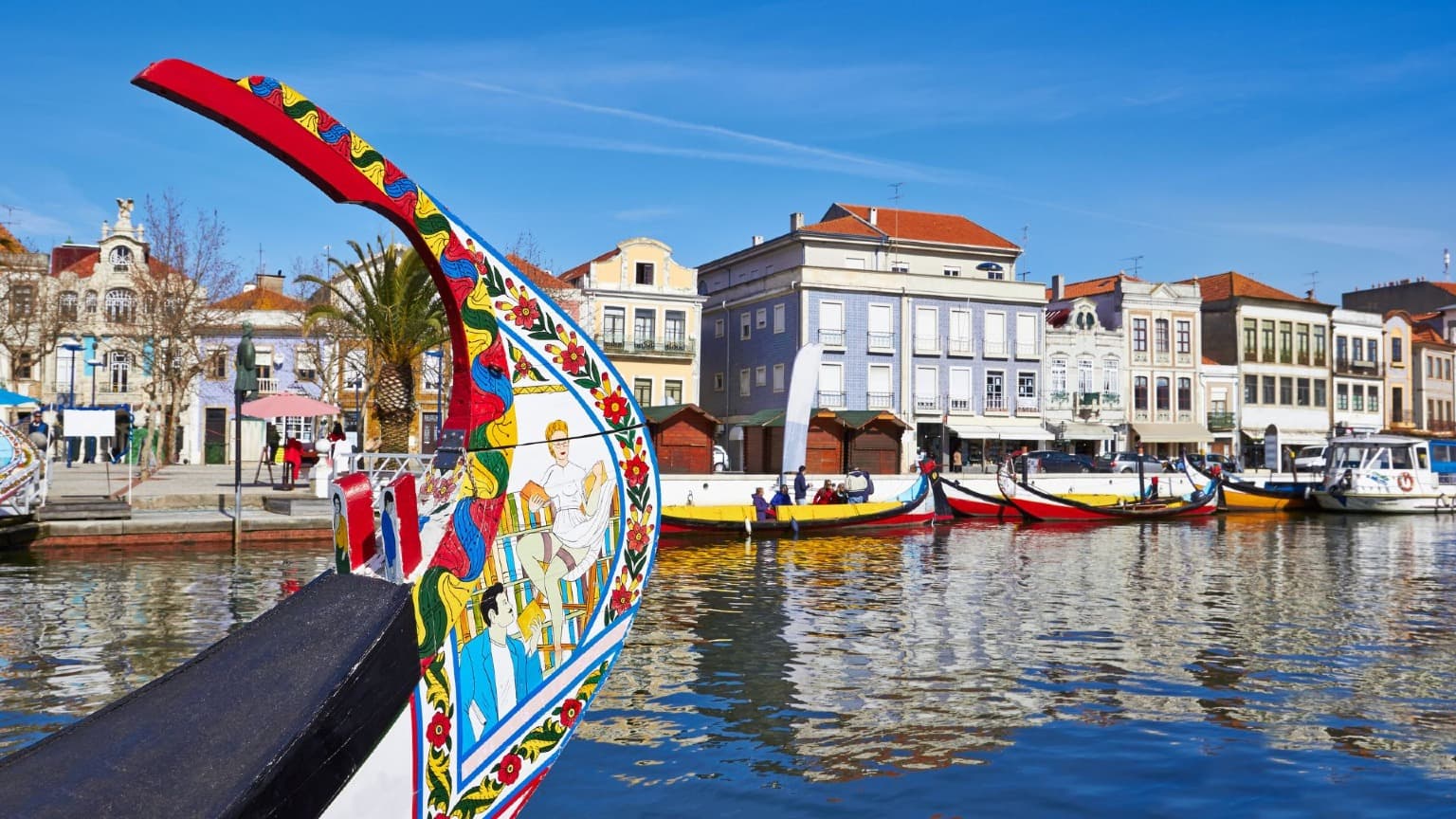
Aveiro's compact historic centre, canals and moliceiros make the city an easy cultural day trip from Porto.
Beyond Aveiro: Best Day Trips & Places Nearby
Aveiro's location between the Atlantic coast, the Ria de Aveiro and the landscapes of Central Portugal makes it a good base for exploring the surrounding region. Beyond its canals and historic centre, travellers can discover colourful coastal towns, traditional Portuguese heritage, forest landscapes and some of the region's most important natural habitats.
Ovar
North of Aveiro, Ovar is known for its distinctive azulejo-covered façades, traditional architecture and strong connection to local crafts and food.
The town is sometimes described as a living museum of Portuguese tiles, with colourful façades dating mainly from the 19th and 20th centuries. It is also home to Pão-de-Ló de Ovar, one of Portugal's best-known traditional cakes, making a visit particularly interesting for travellers who enjoy combining cultural heritage with local gastronomy. The nearby Praia do Furadouro adds an Atlantic coastal dimension to the trip, with its long sandy beach and fishing traditions.
Águeda
East of Aveiro, Águeda has become known for its colourful streets, public art and creative atmosphere.
The town's famous umbrella installations are part of its colourful urban identity, while street art and other temporary artistic projects have transformed parts of the historic centre into an open-air gallery. Águeda is a good choice for travellers looking for something more contemporary and creative, offering a striking contrast with Aveiro's traditional canals and Art Nouveau architecture.
Buçaco Forest
Further south, the extraordinary Buçaco Forest offers a complete change of scenery.
This historic woodland combines ancient trees, walking paths and religious heritage, with the magnificent Buçaco Palace at its centre. The forest is particularly appealing to travellers looking for a quieter day surrounded by nature, while its architecture and history make it more than simply a place for walking.
BioRia, Estarreja
North-east of Aveiro, the BioRia nature reserve provides an opportunity to explore the wetlands and rural landscapes of the Ria de Aveiro away from the city's urban canals.
The network of walking and cycling trails passes through a mosaic of rice fields, salt marshes, reed beds, canals and other habitats, supporting a remarkable diversity of bird and wildlife species. The Salreu trail is one of the best-known routes, covering around 8 km on an easy circular path, while other trails explore the Rio Antuã, Rio Jardim and surrounding waterways.
💡 Have an extra day? Choose Ovar for azulejos, local traditions and the Atlantic coast, Águeda for art and contemporary culture, Buçaco for forests and heritage, or BioRia for wetlands, wildlife and the landscapes of the Ria de Aveiro.
👉 Planning to explore more of the region? Discover our Central Portugal Travel Guide for more ideas on places to visit, landscapes, historic towns and experiences beyond Aveiro.
Frequently Asked Questions About Aveiro
Written by the Cooltour Oporto team