Visiting Belém in Lisbon: What to See, Things to Do & How to Plan Your Day
October 15, 2026
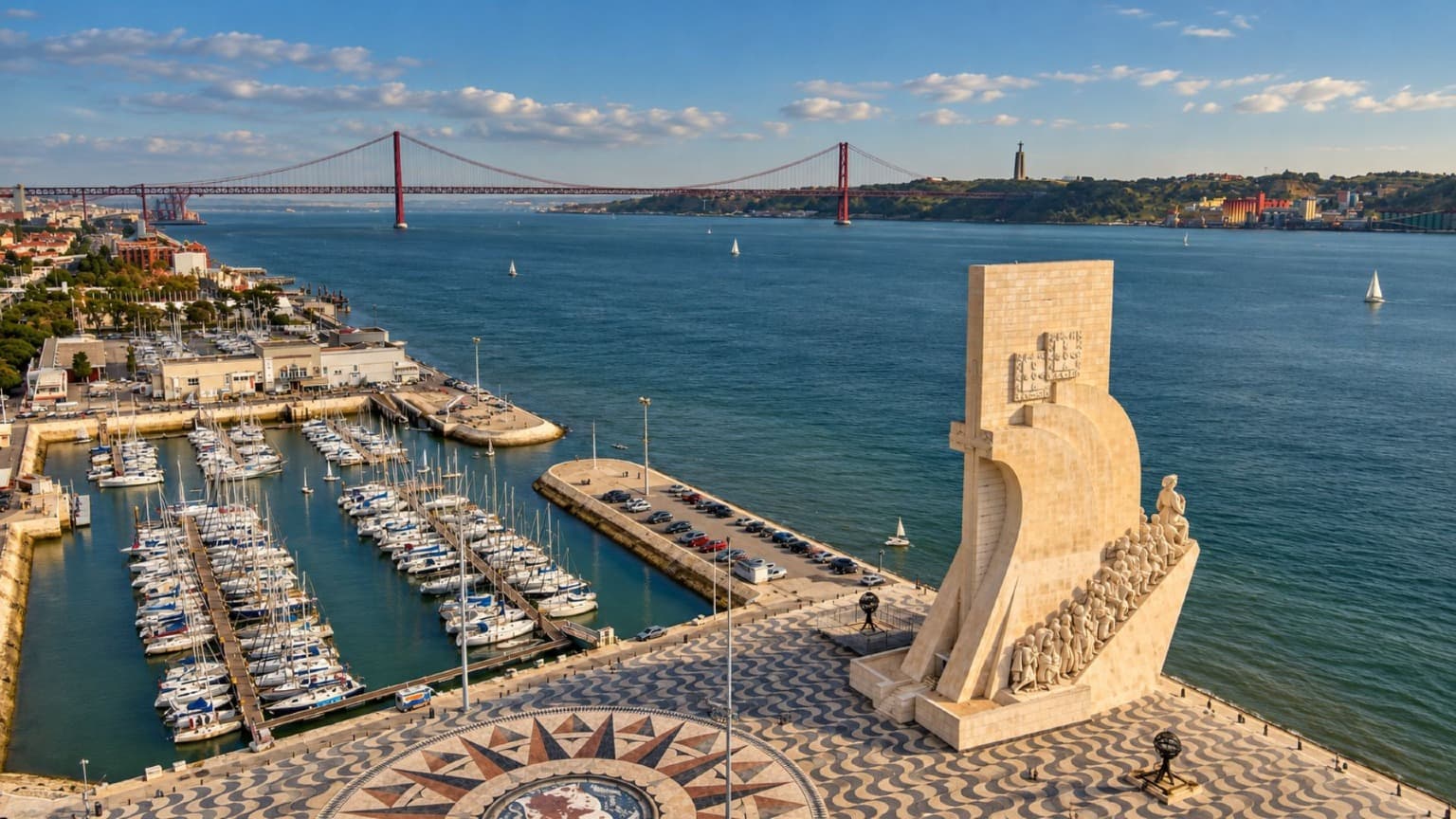
Belém's monuments, riverside spaces and the Tagus are closely connected, making the neighbourhood one of Lisbon's most rewarding areas to explore on foot.
Belém is Lisbon's historic riverside district, home to Jerónimos Monastery, Belém Tower, the Monument to the Discoveries, and the original Pastéis de Belém. Most first-time visitors should allow half a day to a full day to explore it properly
Belém brings together some of Portugal's most important monuments with museums, gardens, contemporary architecture and long stretches of the Tagus River.
For many travellers, history is the main reason to visit. The Jerónimos Monastery and Belém Tower form a single UNESCO World Heritage property closely connected with Portugal's maritime expansion, while the Padrão dos Descobrimentos tells another, much later chapter in how that history came to be remembered.
Beyond the monuments, you can taste the famous Pastéis de Belém, explore royal carriages and maritime collections, discover contemporary art, walk through tropical gardens or simply enjoy the waterfront with the Tagus beside you.
For a first visit, allow at least half a day. A full day is worthwhile if you want to enter the main monuments, visit a museum, stop for a proper meal and experience Belém without rushing.
This guide will help you decide what to see, how long to stay and how to put everything together into a day that makes sense.
Visiting Belém at a Glance
Location: Western Lisbon, beside the Tagus River
Time needed: Half a day for the essentials; a full day for a more complete visit
Best for: History, architecture, museums, Portuguese food, art and riverside walks
Essential sights: Jerónimos Monastery, Belém Tower and Padrão dos Descobrimentos
Don't miss: Pastéis de Belém and the Rosa dos Ventos
Getting there: Train, tram, bus or taxi/rideshare from central Lisbon
Getting around: Mostly on foot
Good to know: Several major monuments and museums close on Mondays, so check individual opening days before planning your visit
Is Belém Worth Visiting?
For most first-time visitors to Lisbon, yes.
Few areas of the city bring together so many different chapters of Portuguese history within such a walkable area. In Belém, you can explore the architecture of Manuel I's reign, stand beside the Tagus from which ships once departed, examine how Portugal later commemorated its maritime past, and move into museums and cultural spaces covering everything from royal transport to contemporary art.
The atmosphere is also very different from central Lisbon. Belém opens onto broad gardens, monumental spaces and the river, creating a contrast with the narrow streets and hills of areas such as Alfama or Bairro Alto.
The main consideration is time. Belém lies west of Lisbon's historic centre, and visiting the interiors of its most popular monuments can take several hours. If you only have a very short stay in Lisbon, you'll need to decide how highly history and monuments rank among your priorities.
With three or more days in Lisbon, we would certainly make room for it.
How Much Time Do You Need in Belém?
A half-day is enough to see the essential sights, especially if you plan your route beforehand and don't intend to visit every interior.
Allow more time if you want to explore both Jerónimos Monastery and Belém Tower inside. Queues, timed admissions and visitor controls can make these monuments take considerably longer than their size might suggest.
A full day gives Belém more breathing room. You can visit the historic monuments, stop for lunch, choose a museum that genuinely interests you, spend time in the gardens and enjoy the Tagus waterfront without constantly watching the clock.
There is no need to visit every museum simply because it is there. Start with the historic core, then use the rest of your time according to your interests.
The Perfect Half-Day Belém Itinerary
For a first visit, we recommend concentrating on the historic route between Jerónimos Monastery and Belém Tower.
👉 If you want to know more about these monuments, explore our complete Belém Tower & Jerónimos Monastery guide, where we cover their history, architecture, UNESCO status, what to see inside and practical visiting advice.
1. Start at Jerónimos Monastery
Begin at the Jerónimos Monastery, with enough time to appreciate the church and, if you're entering the paid area, its remarkable two-level cloister.
The monastery is one of the great expressions of Manueline architecture and one half of the UNESCO World Heritage property it shares with Belém Tower.
Its story deserves considerably more than a few paragraphs, so we have kept the history brief here.
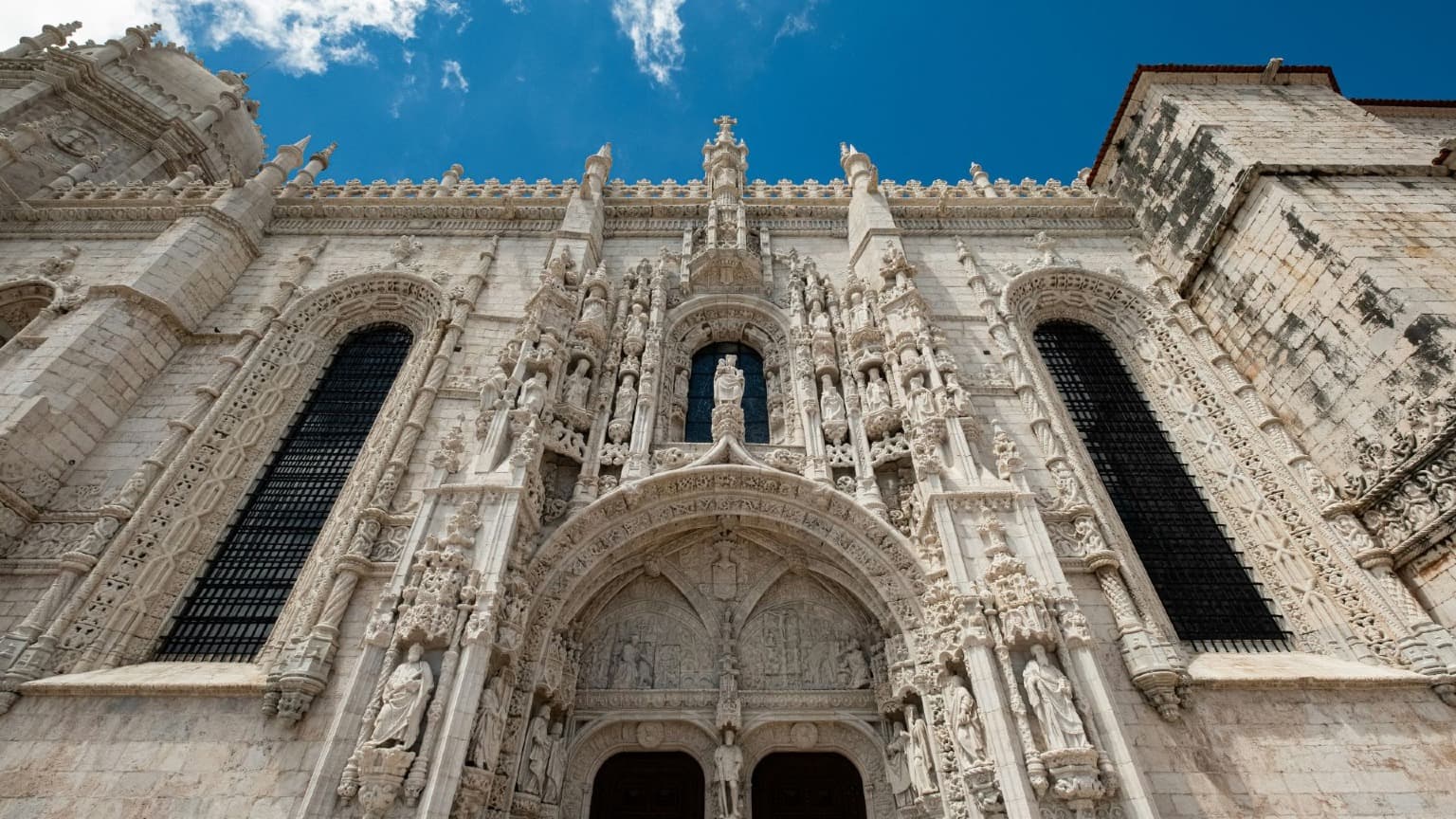
The elaborate stonework of Jerónimos Monastery reflects the artistic ambition of Manuel I's reign and Portugal's maritime expansion.
2. Stop at Pastéis de Belém
From Jerónimos, walk towards Pastéis de Belém. The story of Belém's famous custard tarts is closely connected with the monastery next door.
Pastéis de Belém has been making its pastries here since 1837, using a recipe whose exact composition remains a closely guarded secret.
Sitting inside lets you discover the succession of tiled rooms hidden behind the relatively modest storefront.
Order the pastry warm and add cinnamon and powdered sugar according to taste.
💡 Tip: The takeaway queue and the queue for a table are separate. If the line outside looks long, check which queue you're actually joining before deciding whether to wait.
👉 Curious about the story behind Portugal's most famous pastry? Discover our complete Pastel de Nata article, including its history, origins, traditions and where to eat it.

At Pastéis de Belém, pastry-making remains part of a tradition dating back to 1837, with the original recipe still kept secret.
3. Continue towards the Padrão dos Descobrimentos
On the way, the gardens of Praça do Império provide a pleasant break between attractions, but they also introduce another period in Belém's history.
Much of the landscape visitors associate with this part of the neighbourhood today was reshaped during the 20th century, particularly around the Portuguese World Exhibition of 1940, a historical context that becomes especially relevant at your next stop.
Standing beside the Tagus, the Padrão dos Descobrimentos, or Monument to the Discoveries, is one of Belém's most recognisable landmarks.
It belongs to a very different period from Jerónimos Monastery and Belém Tower.
The monument was designed by architect Cottinelli Telmo and sculptor Leopoldo de Almeida and first erected as a temporary structure for the Portuguese World Exhibition of 1940. The version standing today was reconstructed in 1960 to mark 500 years since the death of Infante D. Henrique, Henry the Navigator.
Its form evokes the prow of a ship, with Infante D. Henrique at the front and figures associated with Portuguese maritime expansion arranged behind him.
Understanding when the monument was created adds another layer to what you see. The original Padrão formed part of the Estado Novo's 1940 exhibition and its nationalist and imperial narrative. Its history therefore tells us as much about how 20th-century Portugal represented its past as it does about the maritime expansion the monument commemorates.
You can also enter the Padrão and reach its viewpoint, with panoramic views over Belém, the Tagus and the monumental compass rose below.
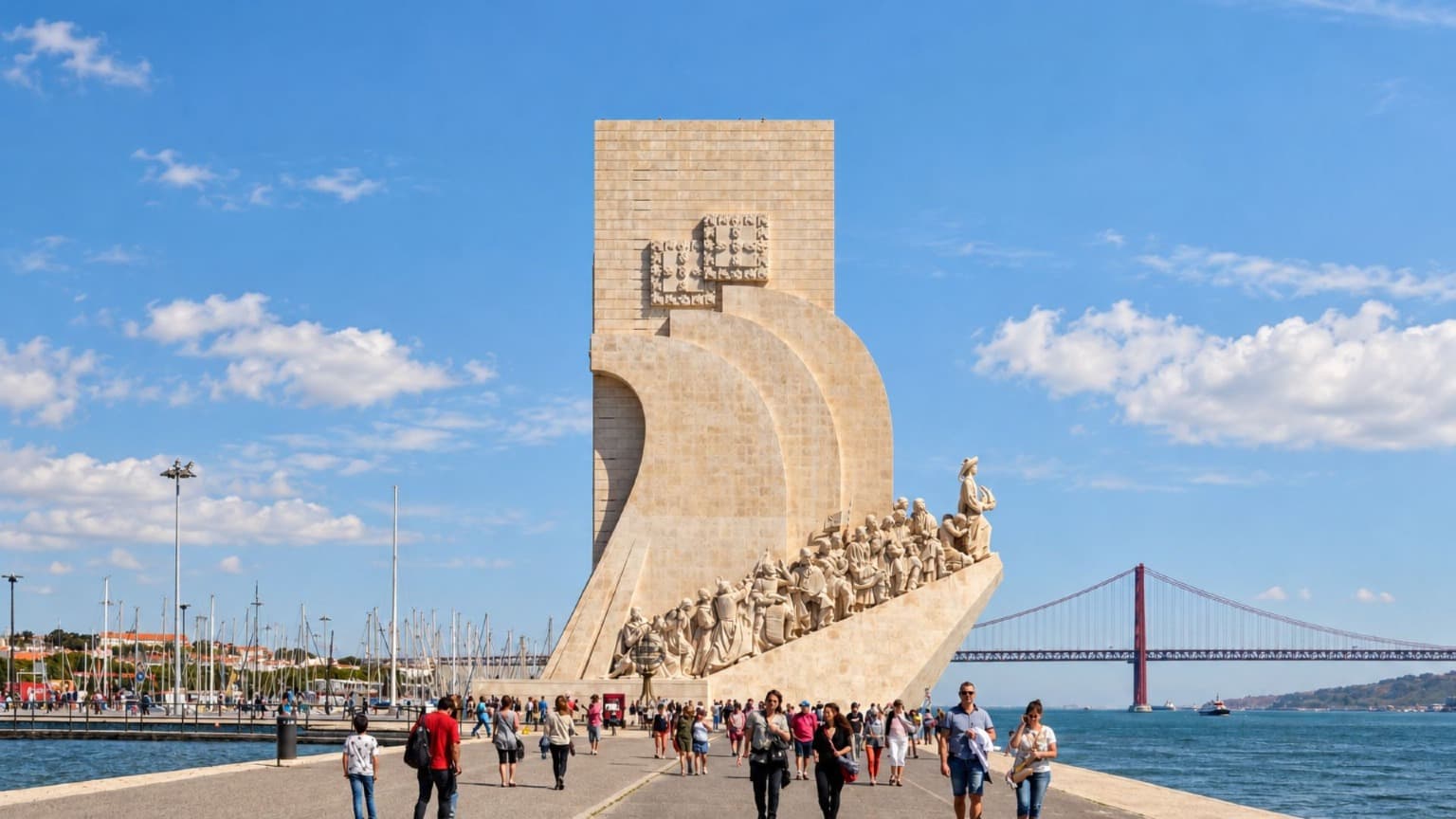
Built in its present form in 1960, the Padrão dos Descobrimentos commemorates Portugal's maritime expansion and shows how that history was represented in the 20th century.
4. Don't Miss the Rosa dos Ventos
Before leaving the Padrão, take a closer look at the Rosa dos Ventos, or Compass Rose, covering the square in front of the monument.
Created in black and red lioz limestone, the compass measures 50 metres across. At its centre is a 14-metre planisphere, with ships and dates marking routes associated with Portuguese maritime expansion during the 15th and 16th centuries.
It was inaugurated in 1960 and offered by South Africa as part of the commemorations surrounding Infante D. Henrique.
Walk across the Rosa dos Ventos at ground level, then look at it again from the Padrão's viewpoint. The planisphere and maritime routes are much easier to understand from above.

The 50-metre Rosa dos Ventos traces maritime routes and dates associated with Portuguese expansion, best appreciated from the monument's viewpoint.
5. Follow the Tagus to Belém Tower
From the Padrão, continue west beside the river towards Belém Tower.
The walk itself helps reconnect the monuments with the river that explains why they are here.
Belém Tower was built during the reign of Manuel I as part of Lisbon's defensive system and originally stood much more clearly within the Tagus than it appears today. Its architecture combines military purpose with the royal and religious symbolism characteristic of the Manueline period.
Belém Tower reopened in 2026 after a year of restoration work and now operates a timed, limited entry system, so booking ahead is worthwhile.
Whether you enter depends on your time and interests. The interior reveals the Tower's military structure and historic rooms, while the upper terrace opens towards the Tagus. If time is limited, the exterior and riverside setting are still well worth experiencing.
That completes the essential half-day route.
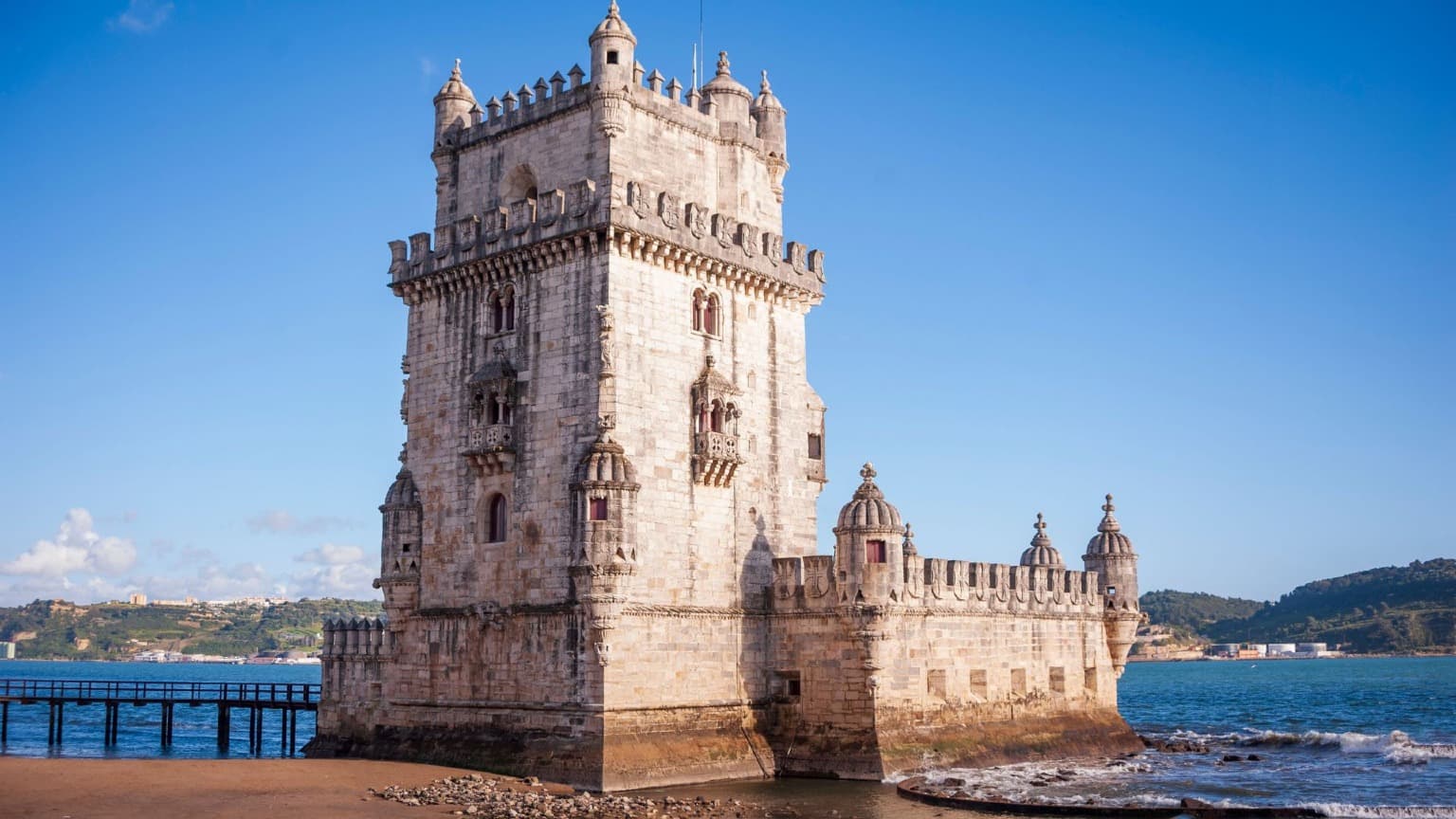
Built during the reign of Manuel I, Belém Tower once stood more prominently within the Tagus and formed part of Lisbon's maritime defences.
How to Spend a Full Day in Belém
With a full day, follow the same historic route at a more relaxed pace, stop for lunch and add one or two places that match your interests.
For Portuguese history, consider the National Coach Museum or Maritime Museum.
For modern and contemporary art, choose MAC/CCB or MAAT.
For families, the Maritime Museum and Planetarium are natural additions.
For gardens and a slower pace, spend time in the Tropical Botanical Garden.
And if your priority is simply enjoying Lisbon, leave room for the Tagus. One of Belém's pleasures is that you don't need to spend the entire day indoors.
More Things to Do in Belém
Once you've explored the essential route between Jerónimos Monastery and Belém Tower, Belém still has plenty to discover. Choose from the following museums, cultural spaces and gardens according to your interests and the time you have available.
National Coach Museum
A museum devoted to horse-drawn carriages may sound specialised, but the collection is far more impressive than the description suggests.
The Museu Nacional dos Coches dates back to 1905, when Queen Amélia opened it as a museum of royal coaches. Its collection of royal and ceremonial vehicles includes some almost impossibly elaborate pieces, and since 2015 it has been housed in a contemporary building by Paulo Mendes da Rocha and Ricardo Bak Gordon.
It is one of Belém's best choices for understanding royal life and ceremonial culture beyond the maritime history that dominates much of the neighbourhood.
The museum also works well for families. The scale and decoration of the vehicles make them immediately engaging without requiring a deep knowledge of Portuguese history.
Maritime Museum
If Jerónimos and the Padrão leave you wanting to understand Portugal's relationship with the sea in greater depth, the Museu de Marinha, or Maritime Museum, is a natural continuation.
Located beside Jerónimos, its collections explore navigation, ships and Portugal's long maritime history through models, maps and other objects.
For history enthusiasts and families, it can be one of the most rewarding additions to a full day in Belém.
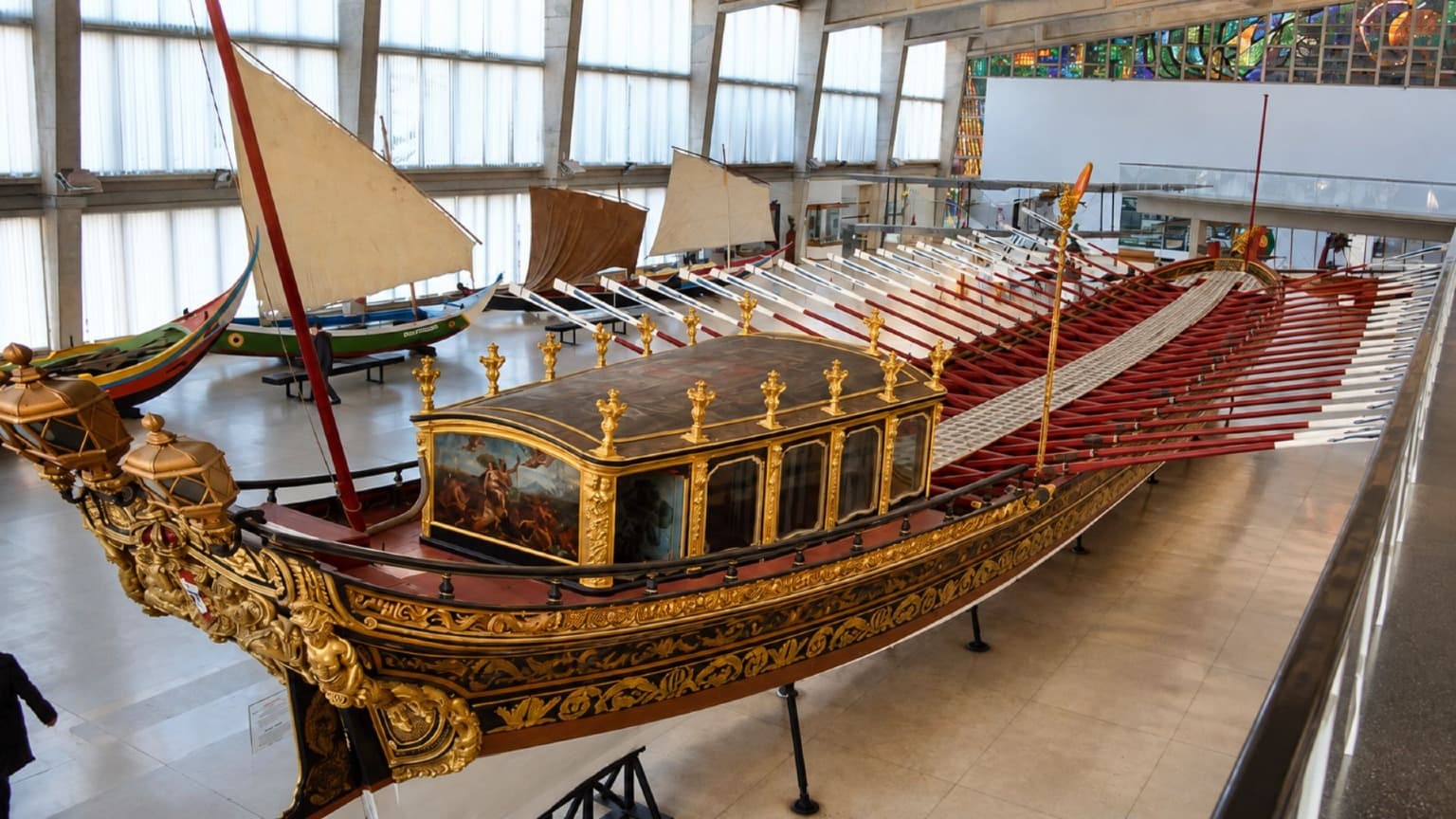
The Maritime Museum explores Portugal's seafaring history through historic vessels, ship models, maps and navigation instruments.
MAC/CCB and Centro Cultural de Belém
Belém also has a strong contemporary cultural identity.
The Centro Cultural de Belém, or CCB, is one of Lisbon's major cultural complexes, bringing together performance, architecture and the visual arts.
Within it, MAC/CCB: Museum of Contemporary Art and Architecture Centre presents modern and contemporary art. The museum adopted the MAC/CCB name in 2023, after earlier lives as an exhibition centre and, until 2022, the Berardo Collection Museum.
It provides a striking contrast with the Manueline architecture and maritime history dominating much of a first visit to Belém.
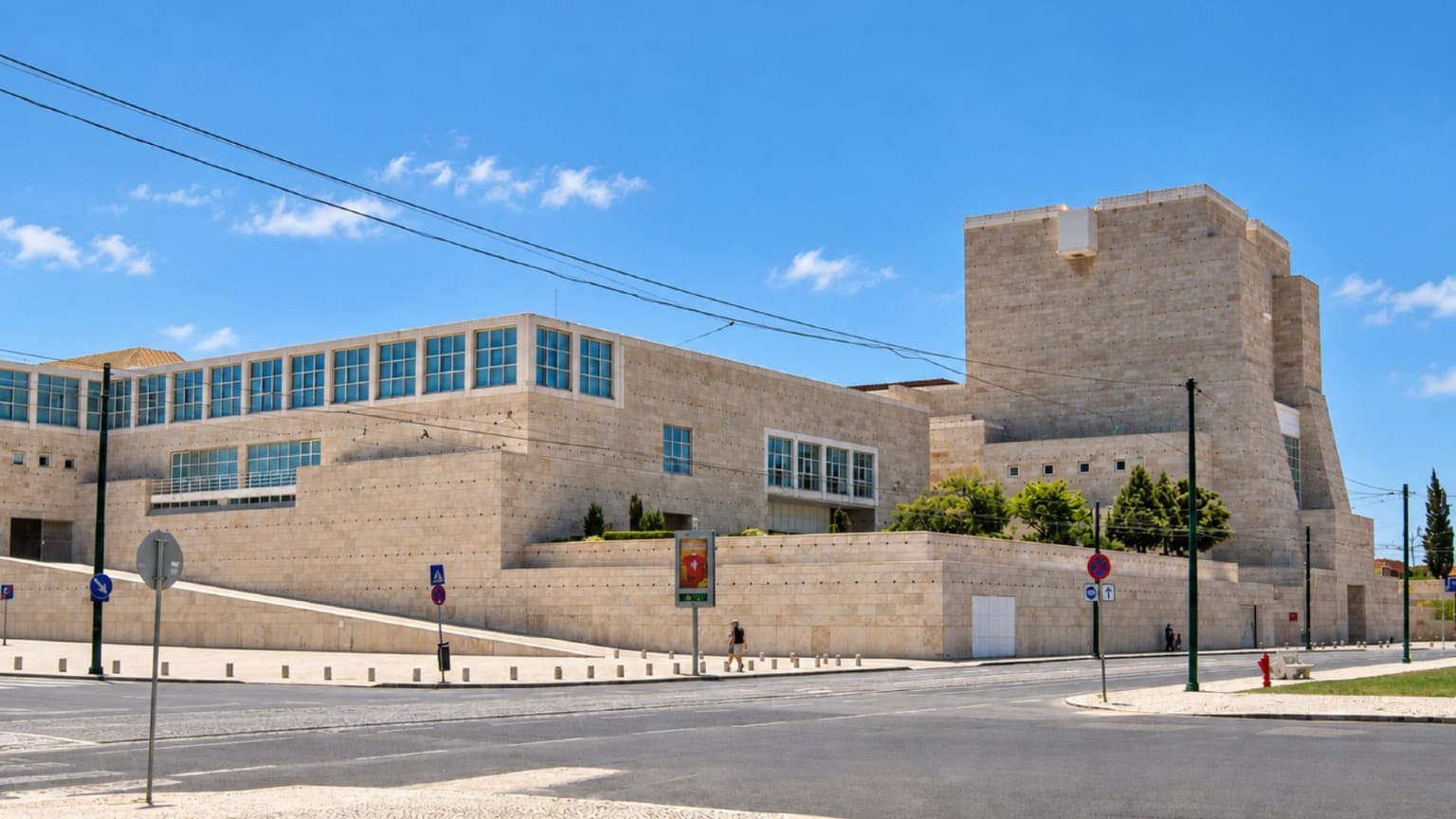
The Centro Cultural de Belém adds a contemporary cultural dimension to the neighbourhood, with exhibitions, performances and modern architecture.
MAAT
Further east along the river, the Museum of Art, Architecture and Technology, better known as MAAT, gives the waterfront a distinctly contemporary architectural identity.
The museum extends across contemporary exhibition spaces and the historic Central Tejo power station, while its low, curving riverside building has itself become part of Lisbon's waterfront landscape.
Even if you don't enter the exhibitions, the surroundings are worth exploring as part of a longer walk beside the Tagus.
MAAT is also useful when planning around weekly closures because its closing day differs from several of Belém's other major cultural attractions.
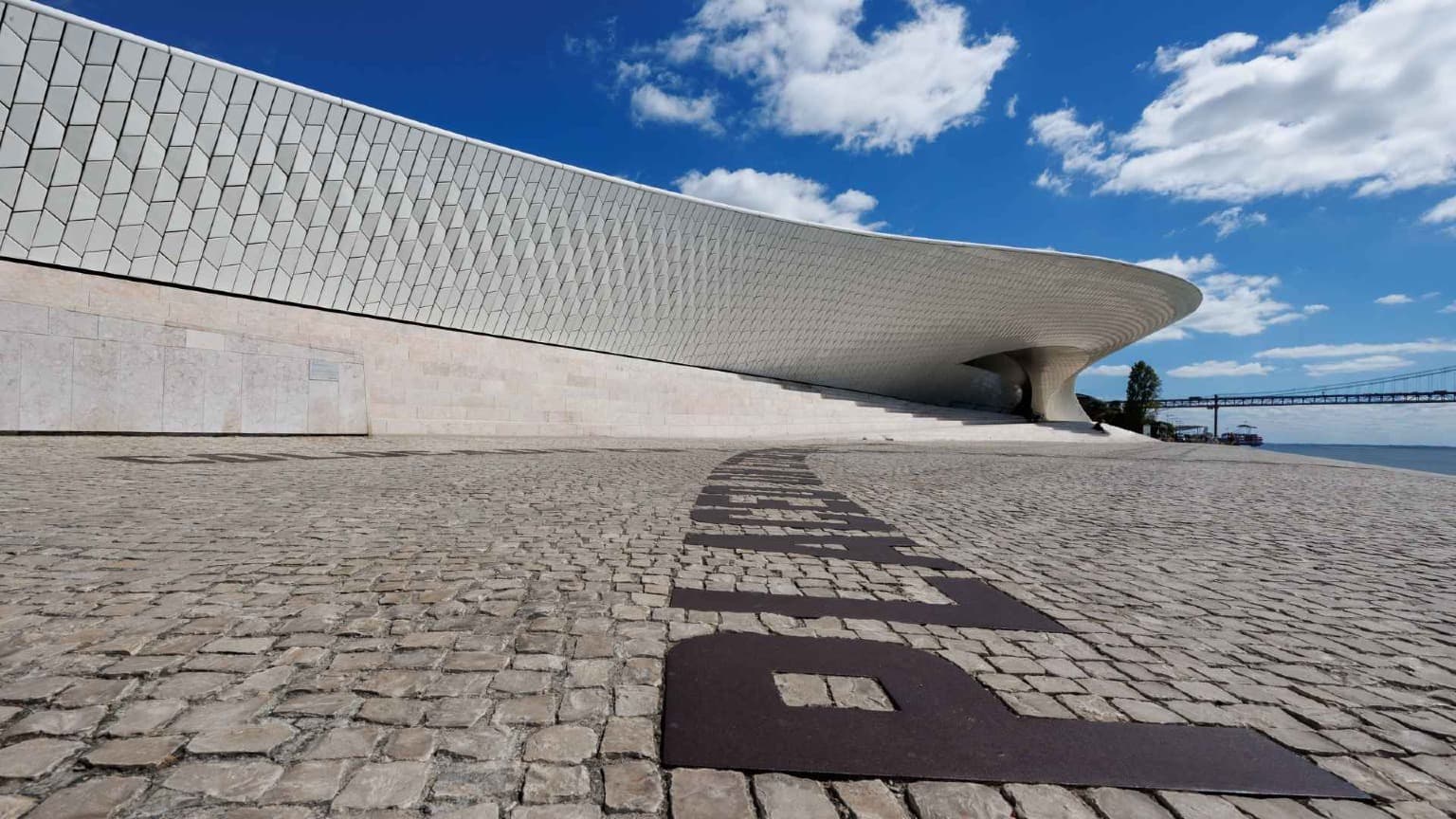
MAAT's distinctive riverside building brings contemporary art, architecture and technology to Lisbon's historic waterfront.
Tropical Botanical Garden
For a quieter change of pace, step into the Jardim Botânico Tropical.
Its shaded paths and tropical vegetation feel far removed from the monumental spaces only minutes away.
Created in 1906, originally as the Jardim Colonial, the garden was established in the context of colonial agricultural research and teaching. It later hosted the Colonial Section of the Portuguese World Exhibition of 1940, traces of which remain within the garden today.
This historical layer gives the garden another dimension beyond its botanical collections, while its paths and greenery make it a welcome change of pace during a full day in Belém.
Belém Palace and the Presidency Museum
The pink Palácio Nacional de Belém is the official residence of the President of the Portuguese Republic, but visiting requires more planning than most attractions in this guide.
The palace is open to visitors through guided tours on Saturdays. Booking is recommended, and tours can be altered or cancelled on the day because of the presidential agenda.
For travellers interested in Portuguese political history, the adjoining Presidency Museum and a guided palace visit can make an unusual addition to the day.
For everyone else, simply recognising the building and its role adds context while exploring this part of Belém.
Walk Along the Tagus
Some of the most enjoyable time in Belém requires no entrance ticket. The riverside promenade connects many of the neighbourhood's landmarks while opening long views across the Tagus. Take time to watch the boats and look back towards the monuments. Much of Belém's history becomes easier to understand once the river is part of the experience.
Where to Eat in Belém
Pastéis de Belém may be the neighbourhood's most famous culinary institution, but it shouldn't be your only taste of the area.
We have selected five places, each suited to a different kind of meal.
Prova Enoteca: Best for Portuguese Wine and an Intimate Meal
In nearby Restelo, Prova Enoteca is a small, intimate wine bar and restaurant with a strong focus on Portuguese wines.
The food lends itself to sharing, with Portuguese and Mediterranean influences. The personal, relaxed setting makes this a good choice if wine is an important part of the meal.
With relatively few tables, booking ahead is sensible.
Nunes Real Marisqueira: Best for Premium Seafood
For a more elaborate seafood meal, Nunes Real Marisqueira offers a polished, high-end experience centred on fresh, seasonal fish and shellfish from the Portuguese coast.
The restaurant combines its seafood focus with an Art Deco setting, personalised service and a carefully considered wine selection.
Expect the price to reflect the ingredients and level of service, especially when ordering premium seafood.
This is our choice for travellers looking to turn lunch or dinner into an occasion.
Kanazawa: Best for Japanese Fine Dining
Just west of Belém, in neighbouring Algés, Kanazawa offers an unexpected change of pace from the area's Portuguese culinary traditions, specialising in Japanese kaiseki cuisine.
Led by Chef Paulo Morais, the restaurant holds one Michelin star and offers a highly intimate dining experience around an eight-seat counter. The format creates close interaction between the chef and diners throughout the meal.
Expect fine-dining prices, allow plenty of time for the experience and book well in advance.
O Frade: Best for Traditional Portuguese Cooking at the Counter
O Frade, on Calçada da Ajuda, is a small restaurant built entirely around its counter.
The cooking began with Alentejo recipes and now takes in traditional Portuguese food more broadly, with dishes such as duck rice and octopus stew.
Its intimate format is part of the appeal, so booking ahead is highly advisable.
Miolo: Best for Breakfast, Brunch or a Lighter Lunch
For something much more casual, Miolo is conveniently located on Rua de Belém, close to Jerónimos and Pastéis de Belém.
The café specialises in breakfast, brunch and lighter meals, with vegetarian, vegan and gluten-free options available.
It works especially well if you want a lighter break without committing a large part of your sightseeing day to lunch.
How to Get to Belém from Central Lisbon
Belém lies west of Lisbon's historic centre, but getting there is straightforward.
• By Train
From Cais do Sodré, trains on the Cascais Line stop at Belém.
For visitors already near Cais do Sodré, this is one of the most practical options because the journey isn't affected by road traffic.
Belém station leaves you close to the National Coach Museum and within walking distance of Jerónimos and the waterfront.
• By Tram
The 15E is the classic public transport connection between central Lisbon and Belém.
Its current route runs from Praça da Figueira through Praça do Comércio and Cais do Sodré before continuing west through Belém towards Algés.
It can be an enjoyable way to arrive, but road conditions and passenger numbers can affect journey times, so allow enough time if you have a reserved monument entry.
• By Bus
Several Carris bus routes serve Belém.
The most convenient option depends on where you are starting in Lisbon, so check current journey information before travelling.
• By Taxi or Rideshare
For families, groups or travellers with limited mobility, a taxi or rideshare can be the simplest door-to-door option.
It also makes sense if you're staying somewhere poorly connected to Cais do Sodré or the 15E.
💡 Tip: For a more active way to reach Belém, consider a guided bike tour from Lisbon's historic centre. See our recommended cycling experience in the Discover Belém by Bike section below.
Getting Around Belém
Once you're there, walking is the best way to experience the historic core.
Jerónimos, Pastéis de Belém, the Padrão and Belém Tower fit naturally into one route, with Praça do Império, gardens and the Tagus waterfront connecting them.
Distances are slightly greater than they can appear on a map, especially if you add MAAT or attractions towards the edges of the neighbourhood. Comfortable shoes help, and in warmer months so does carrying water.
Treat the walking as part of the visit.
Is the Lisboa Card Worth It for Belém?
Potentially, especially if you intend to visit several paid attractions and use public transport during the same validity period.
The Lisboa Card currently includes public transport and admission to numerous museums and monuments, including Jerónimos Monastery and Belém Tower.
A Lisboa Card does not currently mean you can simply arrive at Jerónimos or Belém Tower whenever you want.
Both monuments require Lisboa Card holders to reserve a date and time. You first need to redeem your voucher and obtain your Lisboa Card number before booking the relevant visit slot, and access remains subject to availability.
Whether the card saves you money therefore depends on your itinerary.
If you plan to enter several included attractions and use public transport extensively, it may represent good value. If you mainly want to walk through Belém and enter only one monument, compare the current card price with individual admissions before buying.
Visiting Belém with Children
Belém is one of Lisbon's easier areas to adapt for families. The open spaces and waterfront provide breaks between indoor attractions, while several museums work well with younger visitors.
The Maritime Museum is a natural choice for children interested in ships and exploration, while the nearby Planetarium offers an experience centred on astronomy.
The National Coach Museum can also work well. Its large, richly decorated carriages are immediately visual, even for children with little interest in conventional museums.
Pastries, gardens and time beside the river can help balance a day filled with history and sightseeing.
When Is the Best Time to Visit Belém?
For the most complete experience, choose a day when the attractions you most want to enter are open. Monday requires attention. Jerónimos Monastery, Belém Tower, the National Coach Museum and MAC/CCB currently close on Mondays, while other attractions follow different weekly schedules.
Belém itself doesn't close. Outdoor sights, gardens, the waterfront and some cultural spaces can still make the area worth visiting.
💡 Tip: Monday isn't the best choice for a first visit if Jerónimos, Belém Tower and the major museums are your priorities. Check the official opening information for the places you want to visit before setting your itinerary.
During busy periods, starting earlier gives you more flexibility. If you have reserved monument entry times, build the rest of the day around them.
During Lisbon's hotter months, also remember how exposed parts of the waterfront can be around midday.
Visit Belém with a Local Guide
Belém is easy to explore independently, but historical context can make a considerable difference.
Jerónimos, the Tagus, the Padrão and Belém Tower belong to connected stories spanning several centuries. Understanding why these monuments are here, what they originally represented and how their meaning has changed over time can turn a beautiful riverside walk into a much richer experience.
👉 Want to explore Belém with a local expert? Discover our Private Belém Walking Tour, a curated experience offered by one of our trusted local partners, connecting the neighbourhood's monuments, maritime history and wider historical context.
Explore Belém from the River
For a different perspective, discover Lisbon's waterfront from the Tagus, where landmarks such as Belém Tower and the Padrão dos Descobrimentos can be appreciated from the water.
👉 Prefer to explore by boat? Our Lisbon Sailing Tour with Drinks & Appetizers offers a relaxing way to enjoy the riverside scenery. Alternatively, end your day with a Lisbon Sunset Sailing Tour with Drinks & Appetizers, watching the city and river change in the evening light.
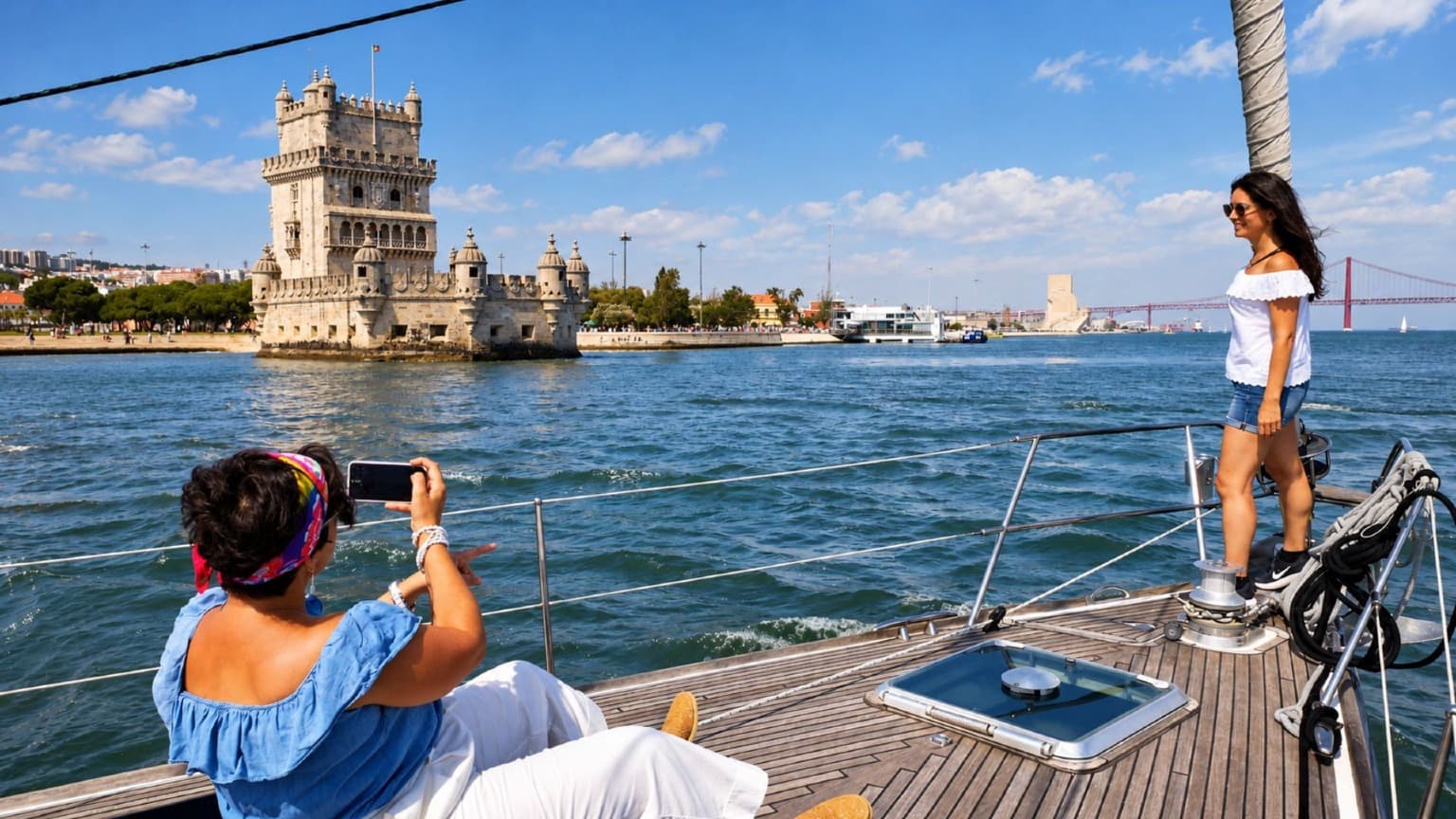
A sailing trip offers a different perspective of Belém, with views of the monuments from the river that shaped the neighbourhood's history.
Discover Belém by Bike
Cycling offers another enjoyable way to reach Belém while discovering more of Lisbon along the way. From the historic streets of the city centre to the scenic waterfront, the journey combines iconic landmarks, local stories and beautiful river views at a relaxed pace.
👉 Enjoy exploring on two wheels? The Lisbon Downhill Bike Tour: City Highlights, History & Local Tastes, operated by one of our trusted local partners, takes you from Lisbon's historic centre towards Belém with a guide, combining sightseeing, local stories and Portuguese flavours.
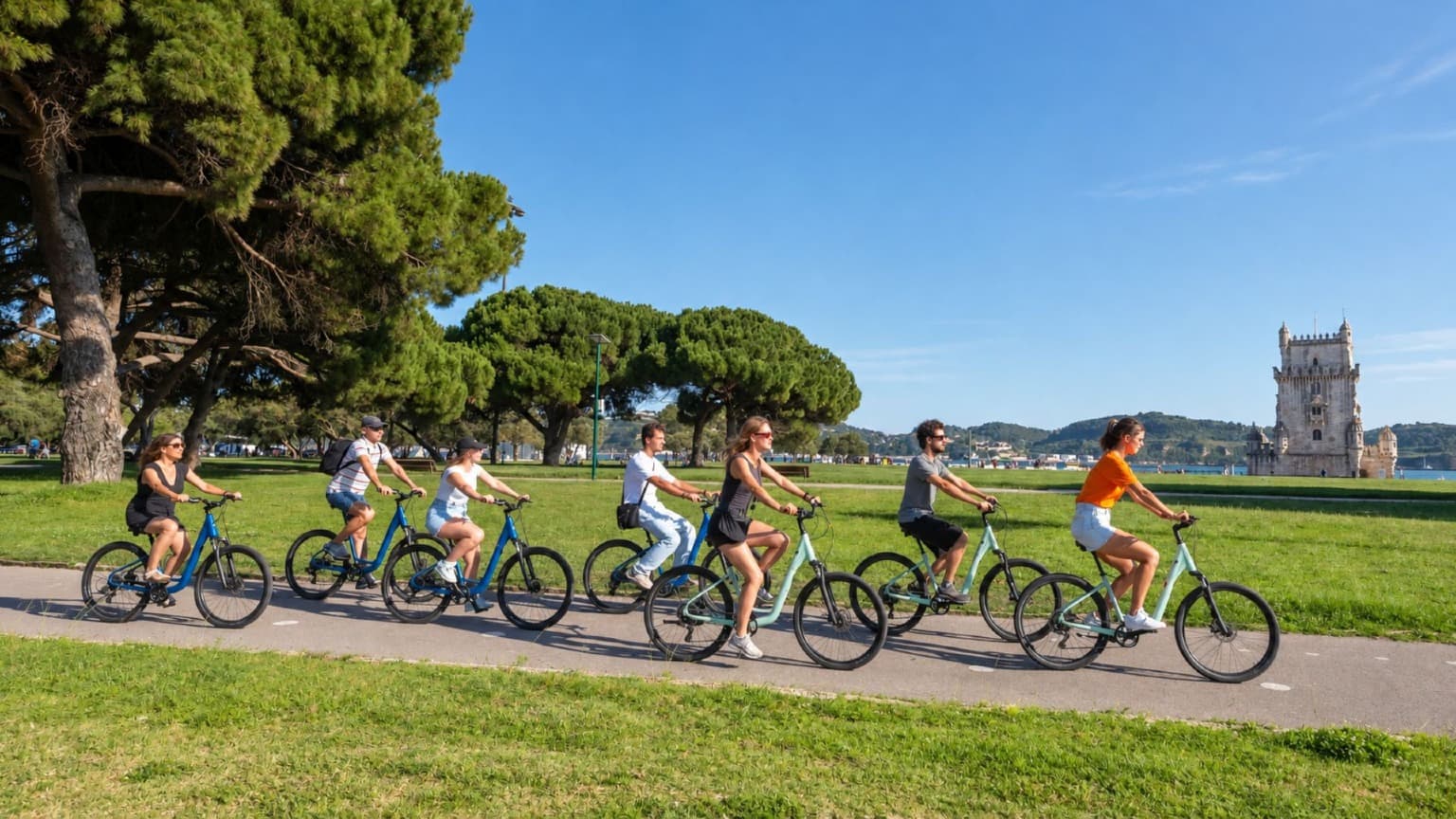
Exploring Belém by bike combines the city's historic landmarks with open riverside scenery.
What to See Near Belém
If you have additional time, two neighbouring areas are easy to combine with Belém.
• Ajuda
Uphill from Belém, Ajuda offers another perspective on Portuguese royal history. Its major attraction is the Palácio Nacional da Ajuda, a former royal residence, alongside the Royal Treasure Museum. It makes most sense for travellers whose interests lean strongly towards monarchy, decorative arts and Portuguese history.
• Alcântara and LX Factory
Heading back towards central Lisbon brings you to Alcântara, home to LX Factory. The former industrial complex has been transformed into a collection of restaurants, shops, creative businesses, street art and cultural spaces. LX Factory is sometimes included on lists of things to do in Belém, but geographically it belongs to Alcântara.
It can still be an excellent place to finish the day, especially if you're heading back towards central Lisbon and want drinks, shopping or dinner after visiting the monuments.
Continue Exploring Lisbon
Belém rewards curiosity because almost every part of the neighbourhood leads naturally into another story.
👉 If Belém is only one part of your stay, explore our Lisbon Travel Guide for more places, experiences and ideas across the Portuguese capital.
Frequently Asked Questions About Visiting Belém
Written by the Cooltour Oporto team