Tagus River in Lisbon: Best Things to Do, Walks & Boat Trips
October 21, 2026

Lisbon's waterfront offers long stretches for walking and cycling, connecting historic neighbourhoods with open views of the Tagus.
The Tagus River, known as the Tejo in Portuguese, shapes Lisbon from historic Belém to modern Parque das Nações. The best ways to experience it include sailing on the river, walking or cycling along the waterfront, crossing by ferry to Cacilhas and watching the city change in the evening light.
Lisbon is often described through its hills, viewpoints, tiled façades and historic neighbourhoods. But to understand the city properly, you also need to look towards the water.
The Tagus has influenced Lisbon for centuries. Its wide estuary provided favourable conditions for navigation and commerce, helped the city develop into an important port and later became closely connected with Portugal's maritime expansion.
Today, the river plays another role in the experience of Lisbon. Former working waterfronts have been transformed, long promenades invite walking and cycling, ferries continue to carry people between the two banks, and sailing boats offer a new view of the city's skyline.
A waterfront walk can fit naturally into a city itinerary. With more time, sailing, cycling or crossing to the south bank can reveal a side of Lisbon that is easy to miss when exploring only its streets and viewpoints.
This guide brings together the best ways and places to experience the Tagus River in Lisbon, from Belém to Parque das Nações and across the water to Cacilhas.
The Tagus River in Lisbon at a Glance
Portuguese name: Rio Tejo
Best ways to experience it: Sailing, walking, cycling and crossing by ferry
Best historic waterfront: Belém
Best central waterfront: Praça do Comércio and Ribeira das Naus
Best modern waterfront: Parque das Nações
Best local river experience: Ferry between Cais do Sodré and Cacilhas
Best for sunset: A sailing trip, Ribeira das Naus or the Belém waterfront
Best free experience: Walking beside the river
Why the Tagus River Matters to Lisbon
Lisbon grew with the Tagus for centuries, and the river shaped its port, its trade and its place in the world.
The Tagus reaches the Atlantic through a broad estuary whose navigability and sheltered conditions encouraged settlement, trade and maritime activity from an early period. Phoenicians, Romans and later civilisations all recognised the strategic advantages of this location.
During the period of Portuguese maritime expansion, the Tagus became connected with voyages linking Lisbon to Africa, Asia and the Americas. Ships departed and returned through the estuary, while trade transformed the city and strengthened its international importance.
That history also has a darker dimension. Maritime expansion became intertwined with conquest, colonial rule and the trafficking and enslavement of people. Understanding Lisbon's relationship with the Tagus therefore means recognising both the exchange and wealth the river helped generate and the human consequences of the systems that developed around that expansion.
The river continued to evolve with the city. From the late 19th century, major port works reshaped Lisbon's waterfront, while later transformations gradually opened parts of it to public space, culture and leisure.
The result is the Lisbon visitors encounter today: historic monuments beside former port areas, contemporary architecture beside marinas, ferries crossing between communities and long stretches where the city once again turns towards the water.
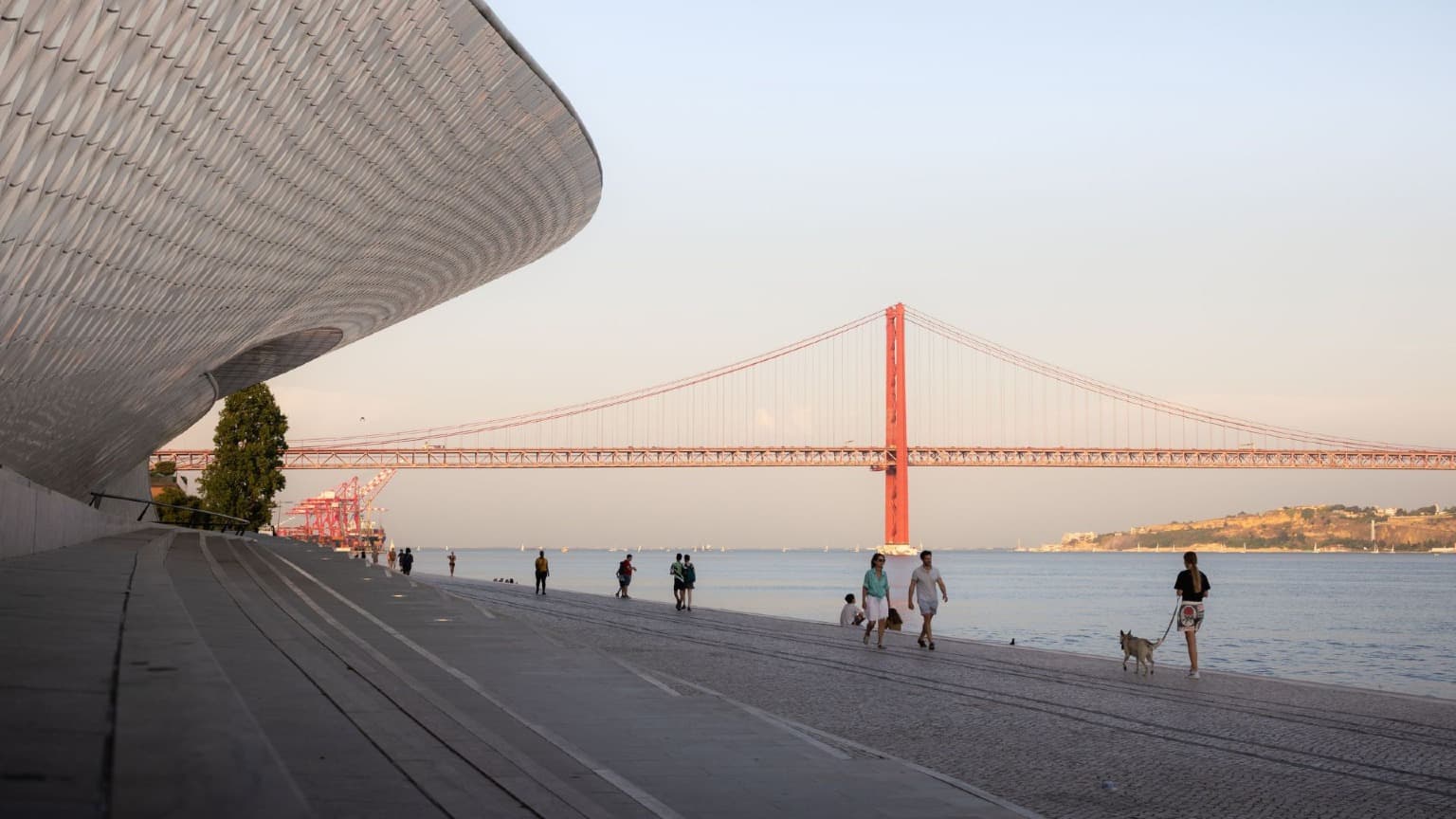
The riverside promenade beside MAAT connects contemporary architecture with Lisbon's historic waterfront and views of the 25 de Abril Bridge.
Best Ways to Experience the Tagus River in Lisbon
There is no single best way to experience the Tagus. Seeing Lisbon from a boat feels very different from walking beside the river, and crossing to the south bank changes the view again.
These are the experiences we would prioritise.
1. See Lisbon from the Water on a Sailing Trip
If you only choose one dedicated river experience, sailing is one of the best ways to understand Lisbon's relationship with the Tagus.
From the water, the city's geography becomes much clearer. Lisbon rises above the northern bank, its hills forming the backdrop while landmarks that seem disconnected on land become part of the same waterfront.
Sailing west brings views towards the 25 de Abril Bridge and Belém, while looking back towards central Lisbon reveals a skyline that is difficult to appreciate from within the city itself.
It also changes how you see individual monuments. Belém Tower was built in direct relationship with the river, and the Padrão dos Descobrimentos was designed to face it. From the Tagus, that connection becomes immediately visible.
A daytime sailing trip is the better choice if your priority is sightseeing and photography. Daylight makes it easier to identify individual monuments, appreciate Lisbon's architecture and follow the changing waterfront as you sail.
👉 Want to see Lisbon from the water? Our curated Lisbon Sailing Tour with Drinks & Appetizers, offered by a trusted local partner, combines sailing on the Tagus with views of Lisbon's waterfront, Portuguese appetizers and drinks.
👉 Prefer a private experience? For couples, families or groups of friends who would rather have the yacht to themselves, our partner also offers a Private Lisbon Sailing Tour with Drinks & Appetizers, a good option for special occasions.
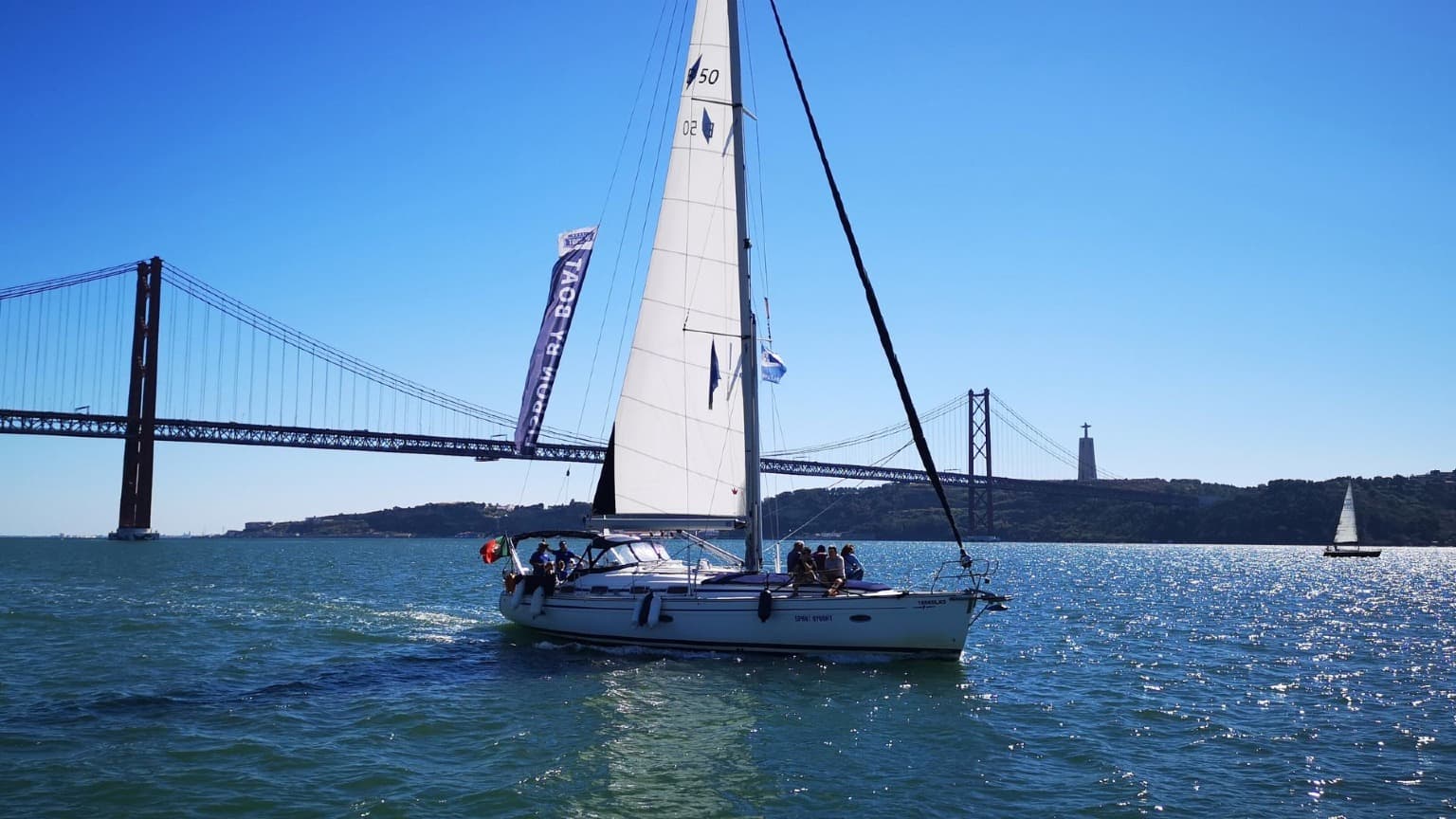
Sailing on the Tagus reveals Lisbon's waterfront from a different perspective, with the 25 de Abril Bridge connecting the city to the south bank.
2. Walk Lisbon's Historic Waterfront
One of the most accessible river experiences begins directly in the historic centre at Praça do Comércio. The square opens directly onto the river. From Cais das Colunas, you can follow the landscaped waterfront west through Ribeira das Naus to Cais do Sodré, where ferries cross the Tagus towards the south bank.
We cover each stop in the places section below.
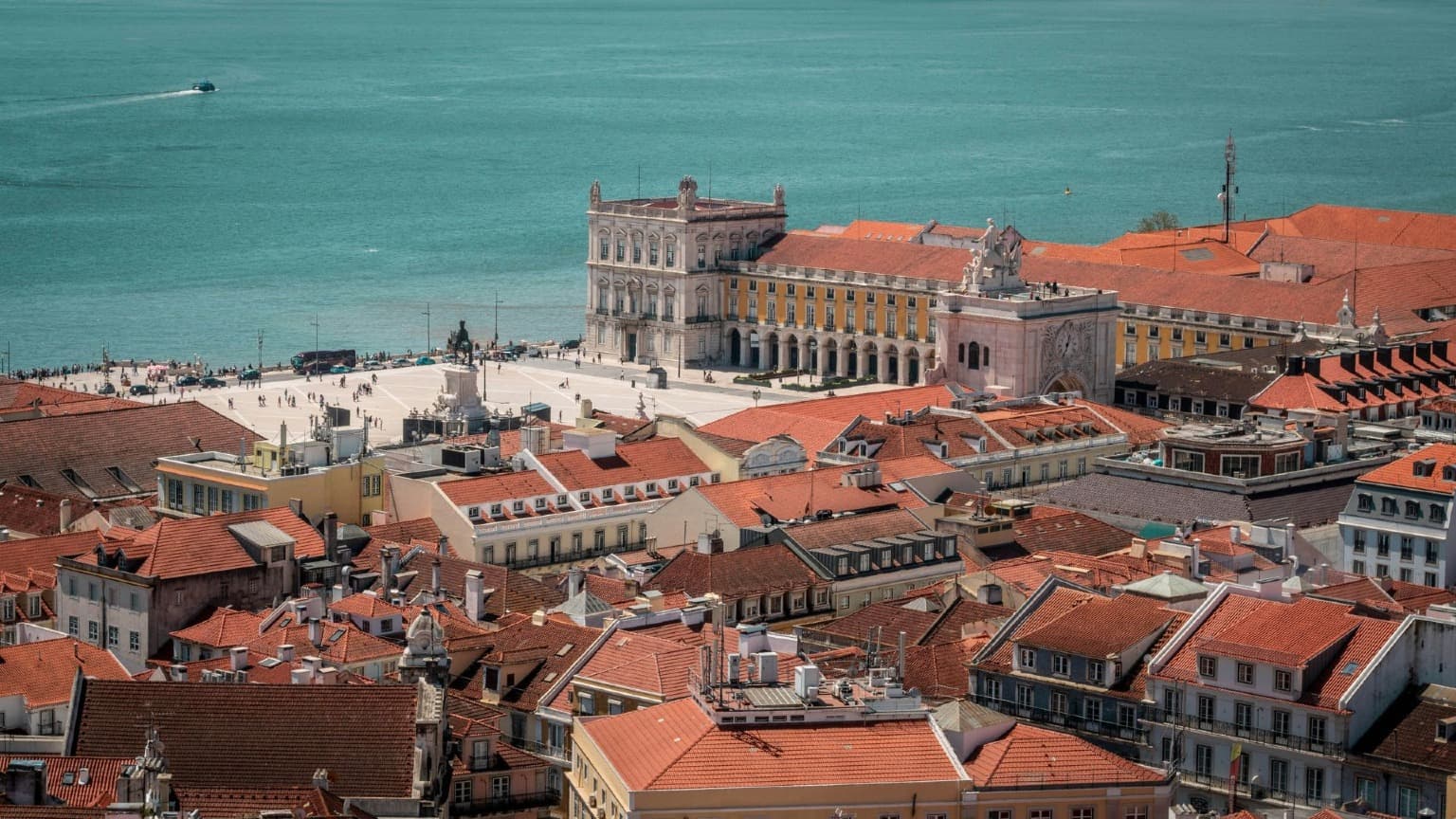
Praça do Comércio opens towards the Tagus, reflecting the importance of the river to Lisbon's commercial and maritime history.
3. Cycle Along the Tagus
Lisbon's hills can make cycling demanding, but the waterfront offers a much gentler way to explore parts of the city by bike.
The western riverside around Alcântara and Belém suits combining cycling with sightseeing. Along the way, the landscape moves between former port areas, the 25 de Abril Bridge, contemporary architecture around MAAT and the monumental waterfront of Belém.
Cycling also changes the scale of the riverfront. Distances that can feel long on foot become easier to connect, allowing you to experience several parts of Lisbon without spending the day climbing its hills.
👉 Prefer to explore with a guide? The Lisbon Riverside Bike Tour: Belém to Downtown with Local Tastes, offered by one of our trusted local partners, follows Lisbon's waterfront from Belém towards the historic centre, combining sightseeing, local stories and Portuguese flavours along the way.

The relatively flat riverside routes around Alcântara and Belém make cycling a practical way to explore Lisbon beyond its steep historic streets.
4. Cross the Tagus to Cacilhas
One of the simplest ways to experience the river is also one of the most local.
From Cais do Sodré, ferries cross the Tagus to Cacilhas, on the south bank in Almada.
These boats are part of Lisbon's public transport network, carrying commuters and other passengers between the two sides of the estuary. For visitors, the crossing offers something more: a short journey directly across the Tagus and an increasingly wide view back towards Lisbon. It is not a sightseeing cruise like a sailing tour, but it is an inexpensive way to be on the water and reach the south bank.
As the ferry moves away from Cais do Sodré, the city's hills and waterfront begin to form a single skyline.
💡 Ferry tip: Schedules change, so check current timetables with the operator, Transtejo & Soflusa, before travelling.
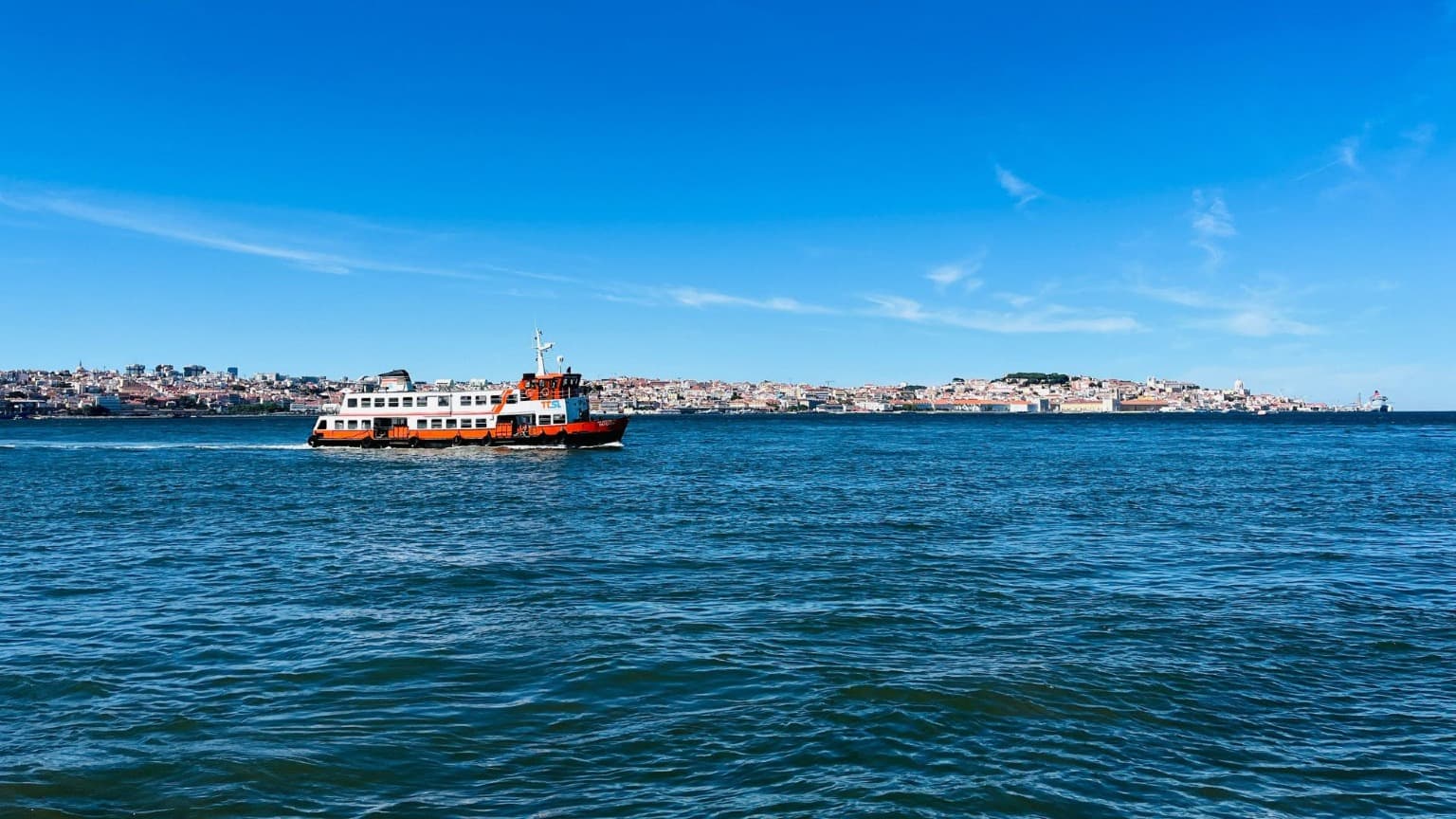
Public ferries connect Lisbon with communities across the Tagus, offering an everyday transport experience and wide views of the city's waterfront.
5. Watch the Sunset Over the Tagus
Evening is one of the most atmospheric times to experience Lisbon's waterfront.
The broad expanse of the Tagus reflects changing light across the city, while boats, bridges and the opposite bank gradually become silhouettes.
A sunset sailing trip is a good choice if you want atmosphere more than detailed sightseeing. As daylight fades, the changing colours of the river and Lisbon's skyline become the main attraction.
👉 Want to experience sunset from the water? The Lisbon Sunset Sailing Tour with Drinks & Appetizers, available through one of our curated local partners, combines sailing on the Tagus with sunset views, Portuguese appetizers and drinks.
👉 Looking for something more personal? Our partner also offers a Private Lisbon Sunset Sailing Tour with Drinks & Appetizers, ideal for couples, families or groups celebrating a special occasion.

A sunset sailing trip offers changing views of the Tagus as the evening light falls across the river and Lisbon's skyline.
A cruise is not the only way to enjoy the evening: Ribeira das Naus is one of the most convenient options if you're already in central Lisbon, while the Belém waterfront offers a more open setting away from the historic centre.
Crossing to the south bank provides yet another view, allowing you to watch Lisbon itself change colour across the water.
Best Places Along Lisbon's Waterfront
The Tagus accompanies Lisbon for kilometres, but the character of the waterfront changes considerably from one area to another.
These are the places we think are most useful for visitors to understand.
Praça do Comércio and Cais das Colunas
Few places illustrate Lisbon's historical relationship with the river as clearly as Praça do Comércio, also known as Terreiro do Paço.
Following the destruction caused by the 1755 earthquake, the reconstructed square opened towards the Tagus and became one of the defining spaces of the new Baixa.
At the river's edge, Cais das Colunas descends towards the water between two stone columns. The pier belongs to the reconstruction of this area after the 1755 earthquake and later became one of Lisbon's symbolic river entrances, although the structure and its columns have undergone changes over time.
Today, visitors sit on the steps and watch ferries and sailing boats cross the river. Historically, this waterfront represented one of Lisbon's important points of arrival.
It is a good place to begin understanding why central Lisbon faces the Tagus the way it does.
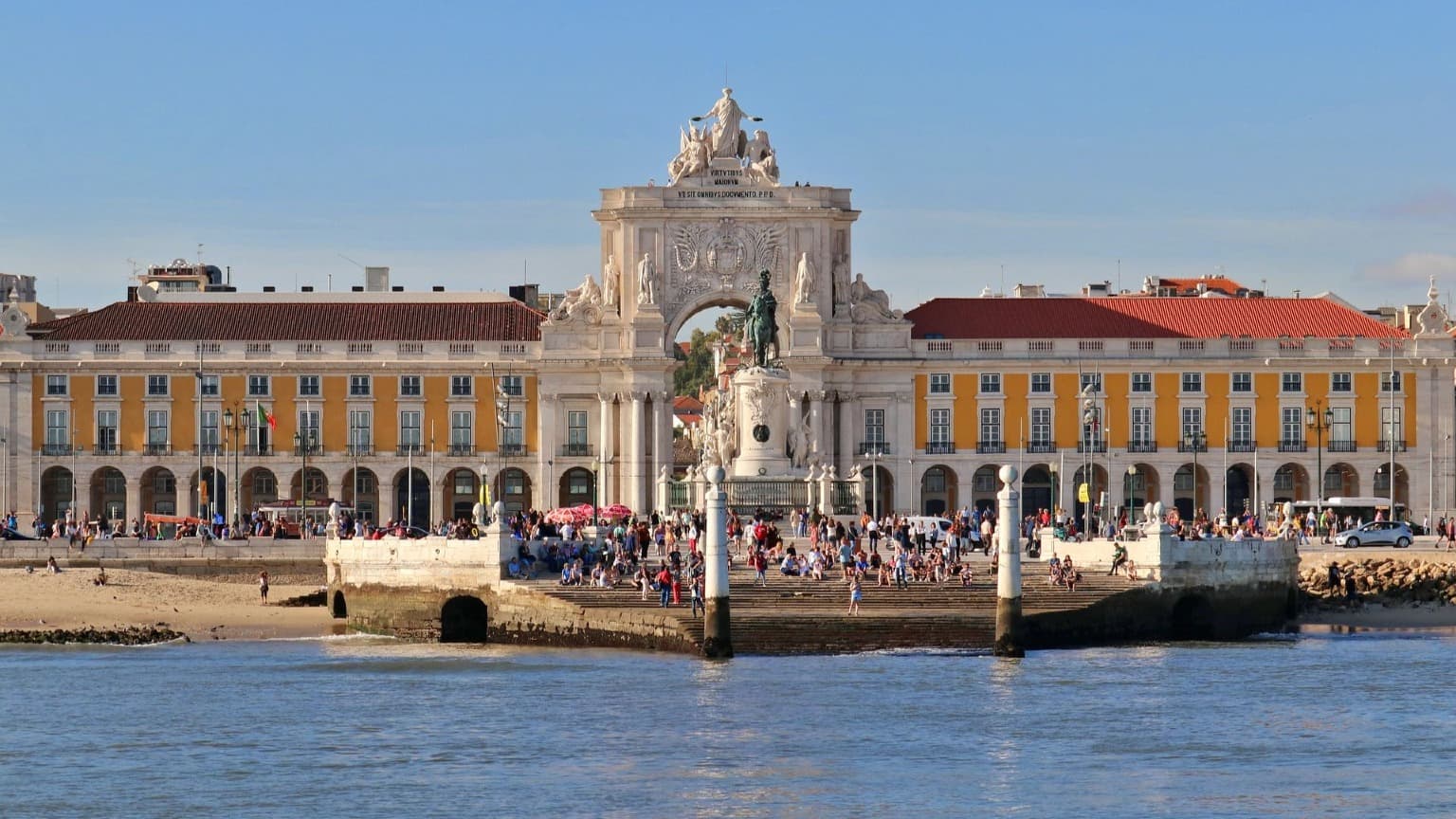
Cais das Colunas marks one of Lisbon's historic river entrances, opening directly onto Praça do Comércio and the reconstructed Baixa district.
Ribeira das Naus
Walk west from Praça do Comércio and the formal architecture gives way to Ribeira das Naus.
Its name recalls the area's historical connection with shipbuilding and maritime activity, while the present waterfront has been redesigned as public space.
Broad paths, lawns and steps descending towards the river make it one of central Lisbon's most inviting places to stop without needing to visit an attraction.
Together with Praça do Comércio and Cais das Colunas, Ribeira das Naus forms one of Lisbon's most enjoyable waterfront walks. Follow the river west towards Cais do Sodré for a short, scenic route that fits naturally into a day exploring Baixa or Chiado.
Cais do Sodré
At Cais do Sodré, the river becomes part of everyday city movement.
Trains depart west towards Belém, Estoril and Cascais, while ferries connect Lisbon with destinations on the south bank.
Cais do Sodré is where you see how Lisbon still moves around the Tagus.
It is also a convenient starting point for crossing to Cacilhas.
Alcântara and Docas de Santo Amaro
Continue west and the waterfront becomes increasingly shaped by Lisbon's port and industrial history.
Around Alcântara, former warehouses, docks, marinas and transport infrastructure sit beneath the 25 de Abril Bridge.
At Docas de Santo Amaro, old waterfront warehouses have been transformed into restaurants and leisure spaces beside a marina, with the bridge rising almost directly overhead.
The area feels quite different from monumental Belém or elegant Praça do Comércio and forms a useful transition between central Lisbon and the western waterfront.
For a longer riverside walk, continue west towards MAAT and Belém, where the waterfront connects museums, gardens and historic monuments. Allow extra time if you plan to visit attractions along the way.
Belém
In Belém, Lisbon's relationship with the Tagus becomes inseparable from its maritime history.
Jerónimos Monastery, the Padrão dos Descobrimentos and Belém Tower all connect in different ways with the period when Portuguese ships departed from this part of the river towards distant parts of the world.
Today, the waterfront combines monuments, museums, gardens and long open stretches beside the Tagus.
👉 Planning to spend more time in the neighbourhood? Read our complete Visiting Belém in Lisbon: What to See, Things to Do & How to Plan Your Day guide, or go straight to the monuments with our Belém Tower & Jerónimos Monastery guide.
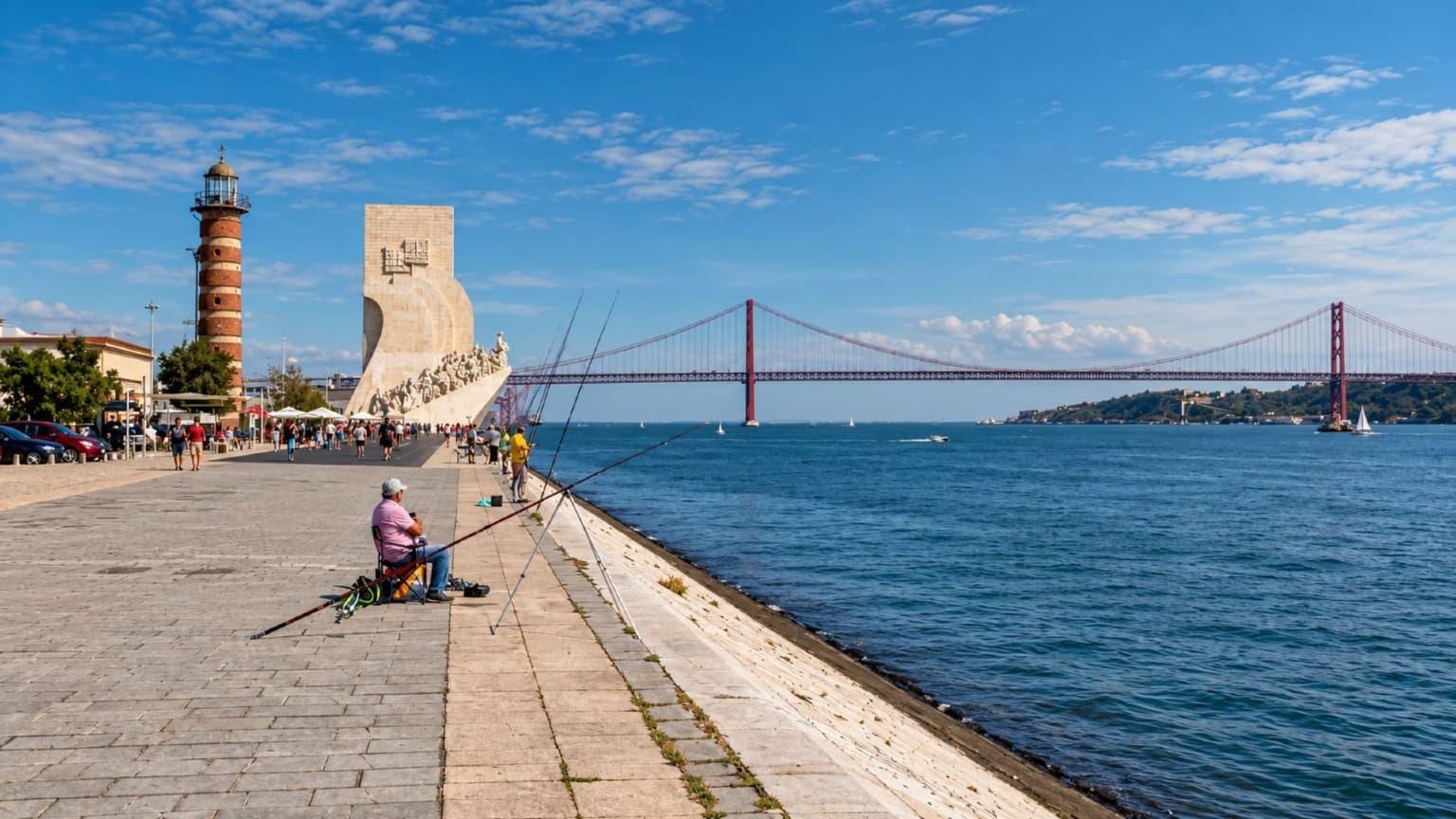
The Belém waterfront connects the Padrão dos Descobrimentos with open views of the Tagus, bringing together Lisbon's maritime history and riverside public spaces.
Parque das Nações
At the opposite side of the city, Parque das Nações shows a modern relationship between Lisbon and the Tagus.
Much of the area was transformed for Expo '98, creating a modern district of contemporary architecture, gardens, cultural attractions and riverside public space.
Here the waterfront feels open and spacious. Gardens and promenades extend beside the Tagus, while the Vasco da Gama Bridge dominates the horizon farther north.
The Oceanário, cable car, marina and landscaped gardens make Parque das Nações a good choice for families. Its spacious riverside promenade is also ideal for a relaxed walk, with contemporary architecture, public art and views towards the Vasco da Gama Bridge along the way.
It's a side of Lisbon that contrasts sharply with Baixa and Belém.
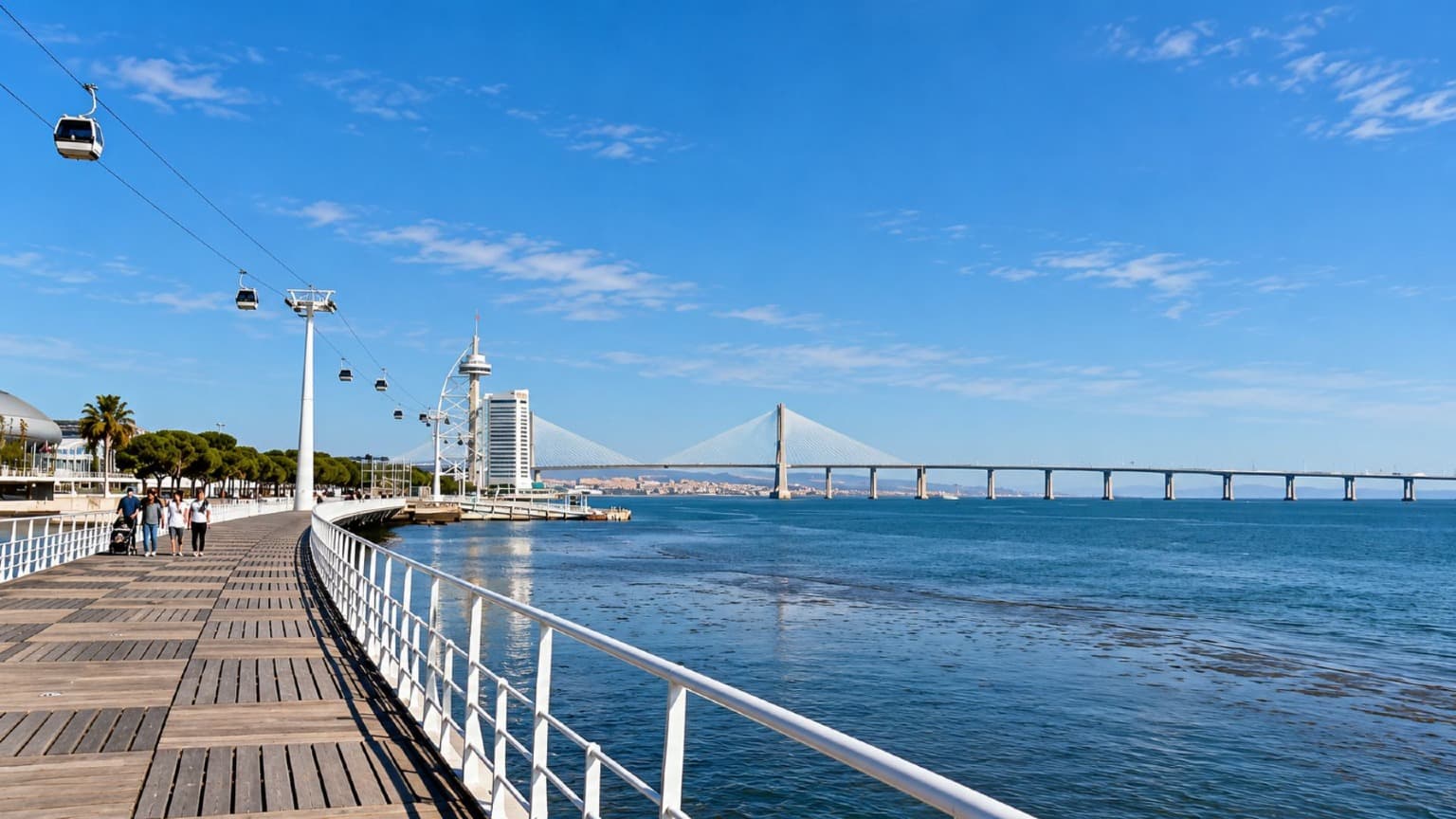
Developed during the transformation of eastern Lisbon for Expo '98, Parque das Nações offers modern architecture, landscaped promenades and views towards the Vasco da Gama Bridge.
Cacilhas
Technically outside Lisbon, Cacilhas belongs in any guide to the Tagus because of the view when you turn around.
From the south bank, Lisbon finally appears as a complete city, not a collection of streets and neighbourhoods.
The hills rise behind the waterfront, the 25 de Abril Bridge stretches across the estuary and the distance allows you to understand the scale of the landscape.
Cacilhas is also a good place to stop for a meal, with several restaurants serving traditional Portuguese dishes, fresh fish and seafood. It's worth allowing some extra time to explore the area and enjoy lunch or dinner overlooking the river.
Sometimes the best way to see Lisbon is to leave it for an hour or two.
💡 Tip for active travellers: Follow the waterfront from Cacilhas towards Cais do Ginjal before heading uphill to the Sanctuary of Cristo Rei (Christ the King). Allow approximately 45 minutes for the one-way walk, which combines riverside scenery with a climb to one of the area's most impressive viewpoints, overlooking Lisbon, the Tagus and the 25 de Abril Bridge. Check the walking route on Google Maps before setting out, and wear comfortable shoes.
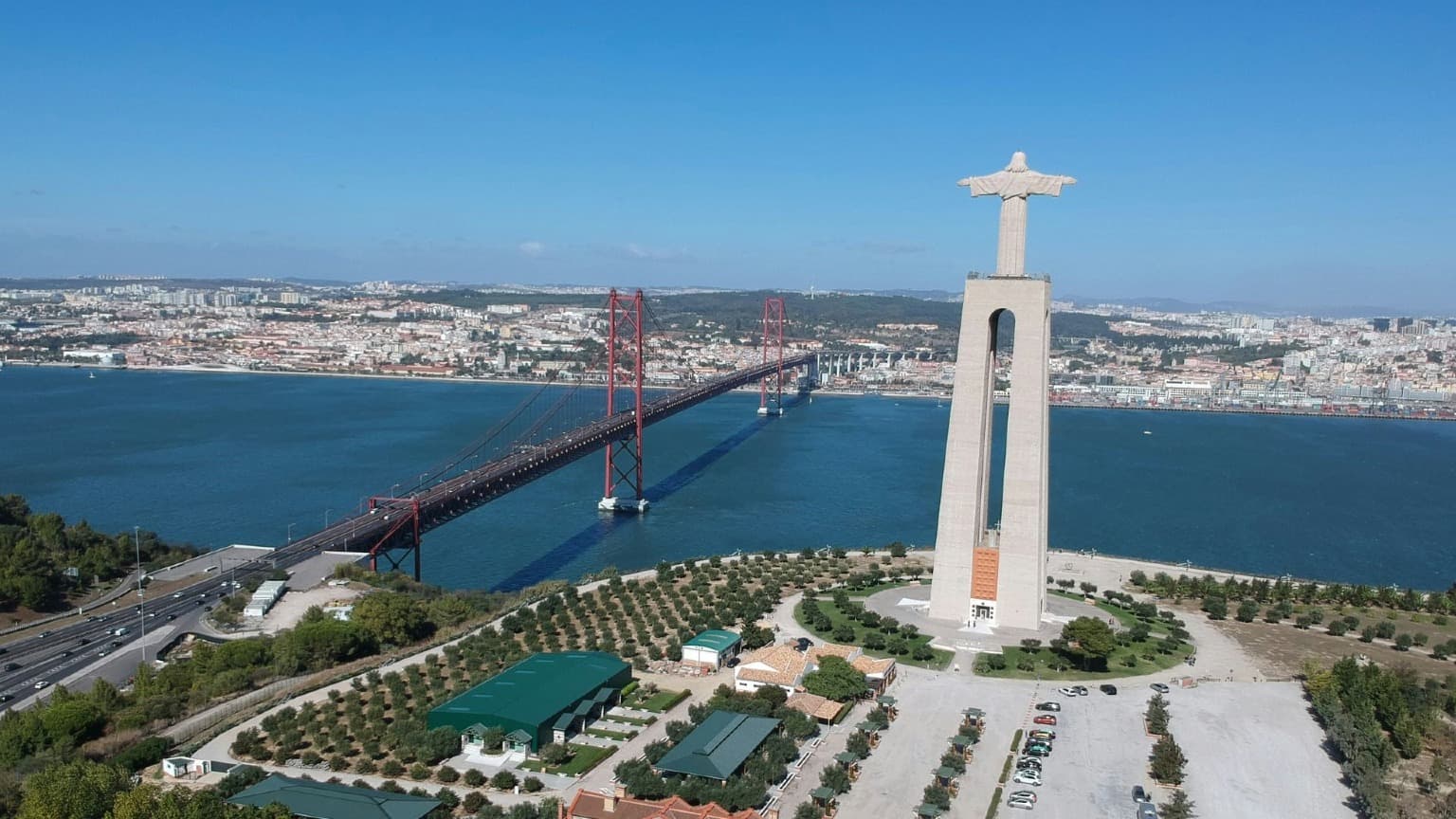
The Cristo Rei Sanctuary stands above the south bank of the Tagus in Almada, offering panoramic views towards Lisbon and the 25 de Abril Bridge.
Best Tagus River Walks in Lisbon
For travellers who prefer exploring on foot, three routes stand out:
• Historic waterfront: Praça do Comércio to Cais do Sodré. A short, central walk through Cais das Colunas and Ribeira das Naus, easy to combine with Baixa or Chiado.
• Western waterfront: Alcântara to Belém. A longer route connecting the former docklands, MAAT and Belém's historic monuments.
• Modern waterfront: Parque das Nações. A spacious riverside promenade with gardens, contemporary architecture and views towards the Vasco da Gama Bridge.
Best Time to Experience the Tagus
There isn't one perfect time because the character of the river changes throughout the day.
Morning works well for walking and cycling, especially during warmer months. The waterfront is generally more comfortable before the strongest daytime heat.
Afternoon suits travellers combining museums, monuments and riverside exploration, especially around Belém or Parque das Nações.
Sunset is the most atmospheric time for sailing or simply sitting beside the Tagus.
Evening brings another mood, especially around central Lisbon, where illuminated buildings and movement along the waterfront replace the daytime sightseeing atmosphere.
Season matters too.
Spring and autumn generally lend themselves well to longer walks and cycling. Summer brings long evenings but also stronger heat and exposed waterfront areas during the middle of the day.
Winter can still produce beautiful days on the Tagus, but conditions on the water matter more when planning a boat trip.
💡 Sailing tip: Check the weather forecast and information from your operator before a sailing experience.
How to Include the Tagus in Your Lisbon Itinerary
The Tagus rarely needs a day of its own. It often works better when integrated naturally into the places you're already visiting.
• If You Only Have an Hour
Walk from Praça do Comércio through Ribeira das Naus to Cais do Sodré.
It requires little planning and immediately adds the river to your experience of central Lisbon.
• If You Have Half a Day
Choose one main river experience.
That could mean a sailing trip, cycling along the western waterfront, exploring Belém beside the Tagus or taking the ferry to Cacilhas and spending some time on the south bank.
• If You Have a Full Day
You can connect several experiences.
For example, explore Belém during the day and finish with sunset sailing, or walk the central waterfront before crossing to Cacilhas later in the afternoon.
Another option is to dedicate part of the day to Parque das Nações, especially if the Oceanário or contemporary Lisbon interests you.
• If You Have Several Days in Lisbon
Spread the river across your stay.
Belém deserves its own half or full day, while the central waterfront fits naturally around Baixa and Chiado. Sailing can become an evening experience, and Parque das Nações or Cacilhas can occupy another part of your itinerary.
This way, the Tagus gradually becomes part of how you understand Lisbon, not another attraction to tick off.
Continue Exploring Lisbon
👉 For a broader look at the Portuguese capital, explore our Lisbon Travel Guide for more places, experiences and ideas across the city.
Frequently Asked Questions About the Tagus River in Lisbon
Written by the Cooltour Oporto team