Ribeira Porto: Discover the Historic Heart of Porto
October 19, 2023
Updated: July 2026
Long before Portugal became an independent kingdom, Porto was already an important settlement on the banks of the Douro River. Over the centuries, the city grew from the hilltop around Porto Cathedral (Sé do Porto) down to the riverside quarter known as Ribeira, creating the historic centre that today is recognised as a UNESCO World Heritage Site.
With its colourful façades, narrow medieval streets, lively squares and spectacular river views, Ribeira remains one of Porto's most iconic neighbourhoods. Throughout the day, visitors fill its cafés, restaurants and terraces, while traditional rabelo boats glide along the Douro and street musicians add to the neighbourhood's vibrant atmosphere. Most visitors return to Ribeira more than once during a stay in Porto, whether for a morning coffee by the river or a sunset walk along the quay.
For centuries, Ribeira served as Porto's commercial and maritime hub. Goods arriving by river and sea passed through its quays, merchants traded along its streets, and traditional rabelo boats transported barrels of Port Wine down the Douro River from the Douro Valley to the wine lodges of Vila Nova de Gaia. This close relationship with the Douro River helped shape Porto's identity and prosperity.
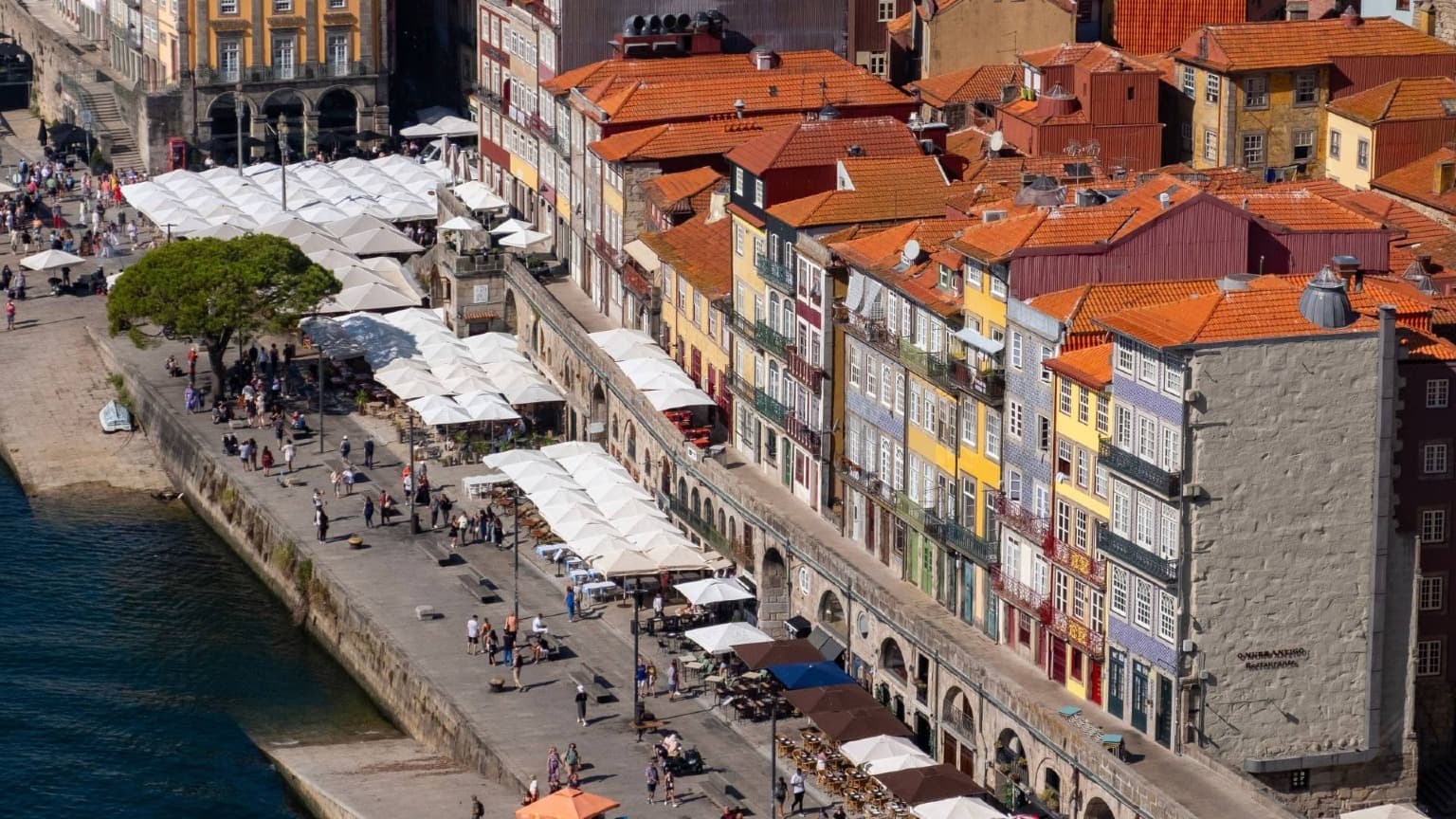
Recognised as a UNESCO World Heritage Site, Ribeira has been the historic and commercial heart of Porto for centuries.
Praça da Ribeira (Praça do Cubo)
The heart of the neighbourhood is Praça da Ribeira, often referred to as Praça do Cubo because of the contemporary sculpture by Portuguese artist José Rodrigues that now occupies its centre.
Historically, this square served as one of Porto's main commercial gateways, where merchants, fishermen and travellers gathered along the riverfront. Today, it has become one of the city's liveliest meeting places, surrounded by cafés, restaurants, outdoor terraces and historic buildings.
The sculpture, commonly known as Cubo da Ribeira, generated considerable debate when it was installed during the 1980s. Today, however, it has become an unmistakable landmark that symbolises Porto's ability to embrace modernity while preserving its historic identity.
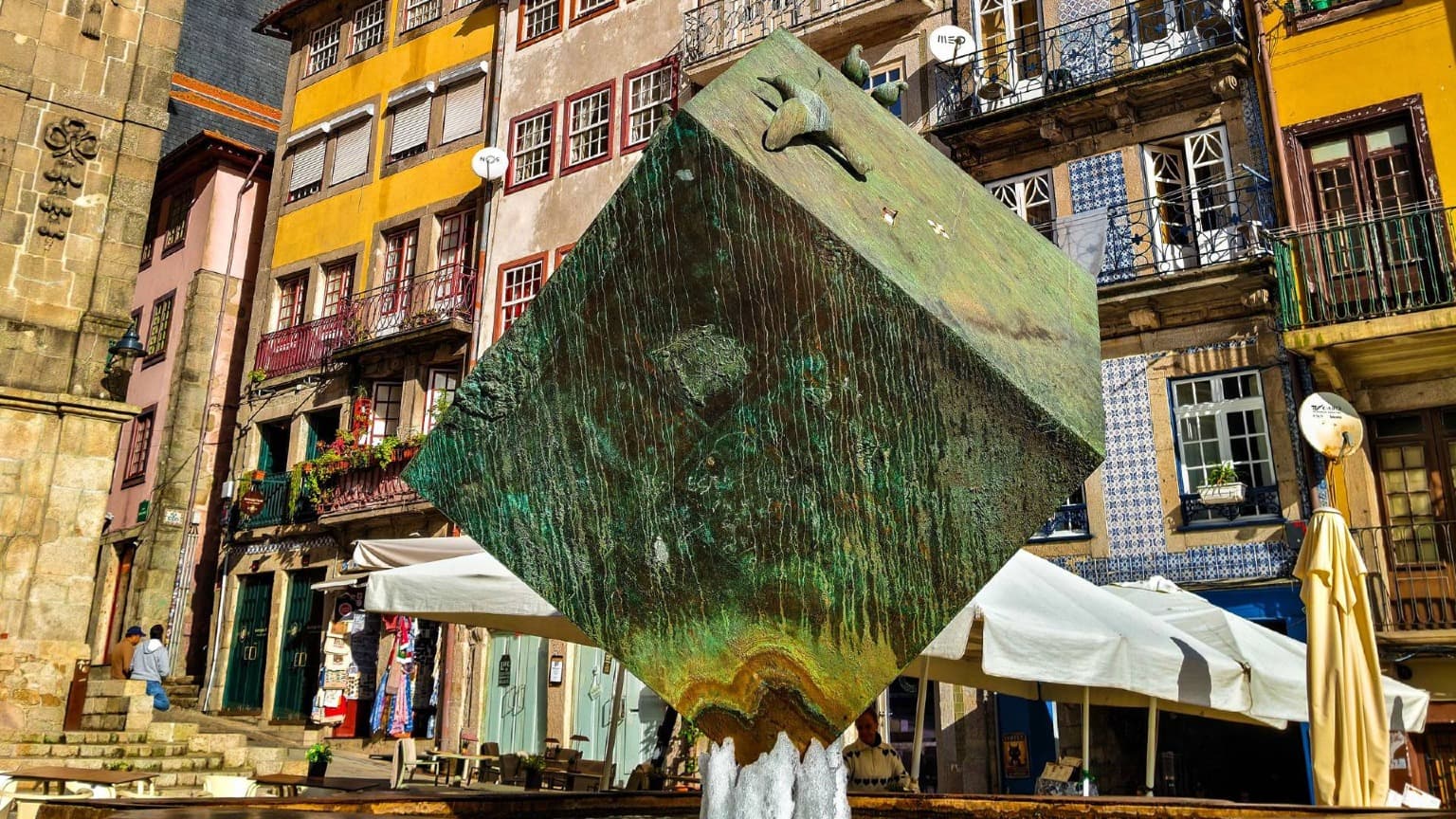
Praça da Ribeira, also known as Praça do Cubo, remains one of Porto's liveliest meeting places, blending history, public art and local culture.
Muralha Fernandina and Muro dos Bacalhoeiros
One of the best reminders of Porto's medieval past is the Fernandine Wall (Muralha Fernandina). Built between the 13th and 14th centuries, these defensive walls once surrounded and protected the growing city.
Although only sections of the original fortifications remain today, they provide a fascinating glimpse into medieval Porto. One of the most picturesque areas is Muro dos Bacalhoeiros, where visitors can enjoy panoramic views over the Douro River, the colourful Ribeira waterfront and the Port Wine lodges of Vila Nova de Gaia.
Casa do Infante
Located just a short walk from the river, Casa do Infante is one of Porto's most historically significant buildings. According to tradition, Prince Henry the Navigator (Infante D. Henrique) was born here in 1394 and later became one of the leading figures of Portugal's Age of Discoveries.
Today, the building houses Porto's Municipal Historical Archive and a museum where visitors can discover archaeological remains dating back to the Roman occupation, alongside exhibitions dedicated to Porto's commercial history and Portugal's maritime expansion.
Luís I Bridge
The Luís I Bridge dominates Ribeira's skyline and is one of Porto's most photographed landmarks.
Designed by engineer Théophile Seyrig, a former collaborator of Gustave Eiffel, the bridge was inaugurated in 1886 and has become one of the defining symbols of Porto. It connects Porto with Vila Nova de Gaia across two levels: the upper deck, used by pedestrians and the Metro, and the lower deck, shared by pedestrians, cyclists and vehicles.
Walking across the lower deck offers close-up views of the colourful riverside, while the upper deck provides one of the most spectacular panoramic viewpoints in Porto.
Things to Do in Ribeira
From quiet morning walks to lively evenings by the river, here's how to make the most of Ribeira:
• Wander through Ribeira's narrow medieval streets and colourful riverside promenade.
• Cross the iconic Luís I Bridge to Vila Nova de Gaia.
• Take a Douro River cruise and admire Porto from the water.
• Walk or cycle along the scenic riverfront.
• Browse artisan shops and local souvenir stores.
• Visit at sunset, or enjoy a Porto Sunset Cruise when the riverside is bathed in golden light.
• Enjoy a glass of authentic Port Wine or a Port Wine Tasting overlooking the Douro.
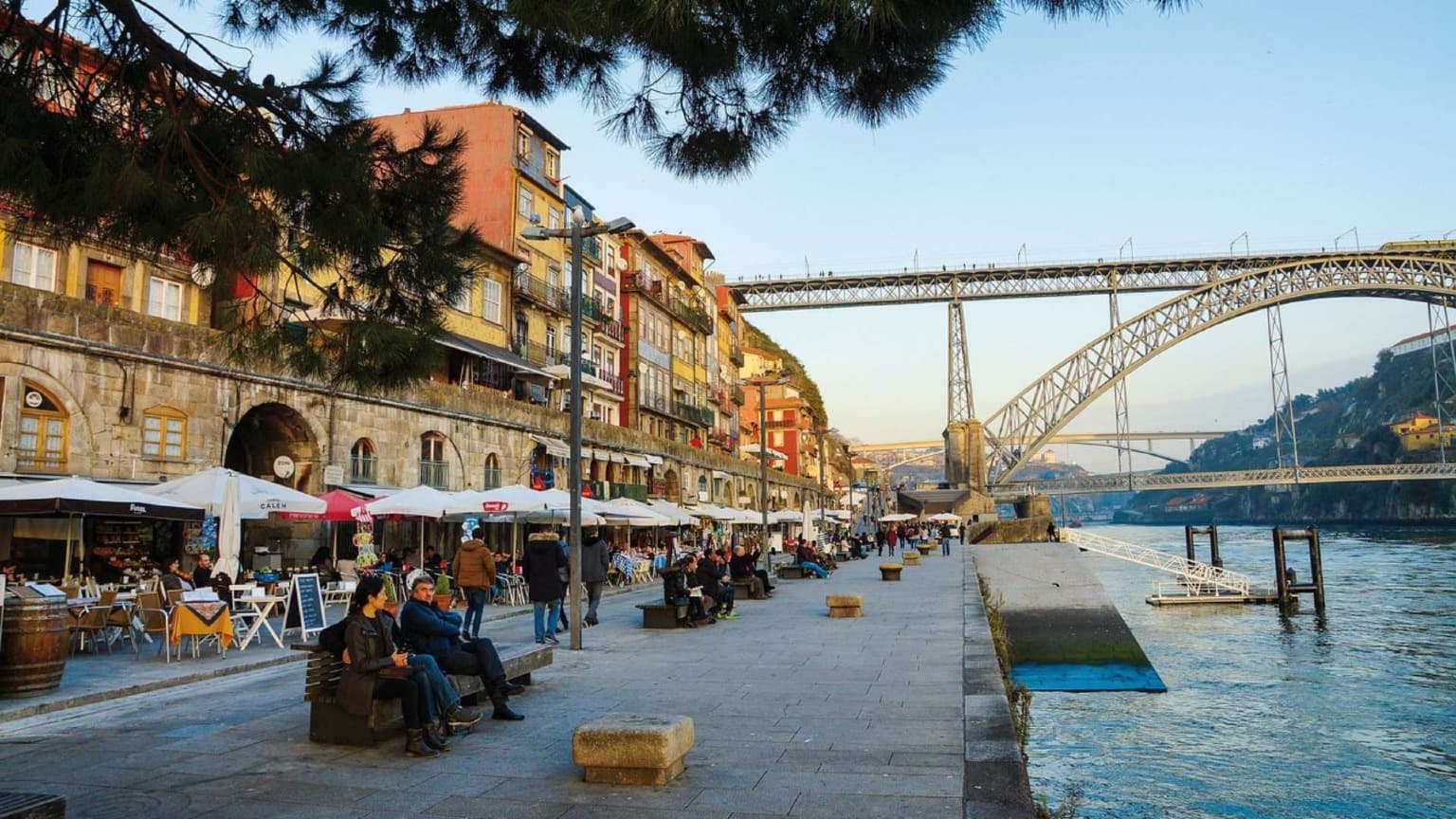
Walking along Ribeira's scenic riverfront is one of the best ways to experience Porto's unique atmosphere and views over the Douro River.
Practical Tips for Visiting Ribeira
Ribeira is best explored on foot and can easily be combined with nearby attractions such as Porto Cathedral (Sé do Porto), São Bento Railway Station and the Clérigos Tower.
Ribeira stays lively throughout the day, but visiting on weekdays or early in the morning means fewer crowds and a quieter view of its historic streets. Late afternoon and sunset provide some of the most memorable views over the Douro River.
As many of the streets are steep and paved with traditional cobblestones, comfortable walking shoes are highly recommended.
Ribeira captures the essence of Porto like nowhere else: layers of history, the everyday rhythm of one of the city's oldest neighbourhoods, and some of Porto's finest river views, all within a short walk. It remains, just as it always has, the place where Porto's past and present meet.
Experience Ribeira with a Local Guide
A local guide adds context that's easy to miss exploring Ribeira alone: the reasons behind a façade, the history behind a square's name, the stories locals still tell about the neighbourhood.
👉 Private Porto Walking Tour by Cooltour Oporto explores Porto's historic centre, including Ribeira, while revealing the city's fascinating history, architecture and local culture.
If you would like to discover Porto through its flavours, 👉 Porto Food Tour by Cooltour Oporto also includes a walk through Ribeira while introducing you to traditional Portuguese cuisine, regional specialities and carefully selected local establishments loved by residents.
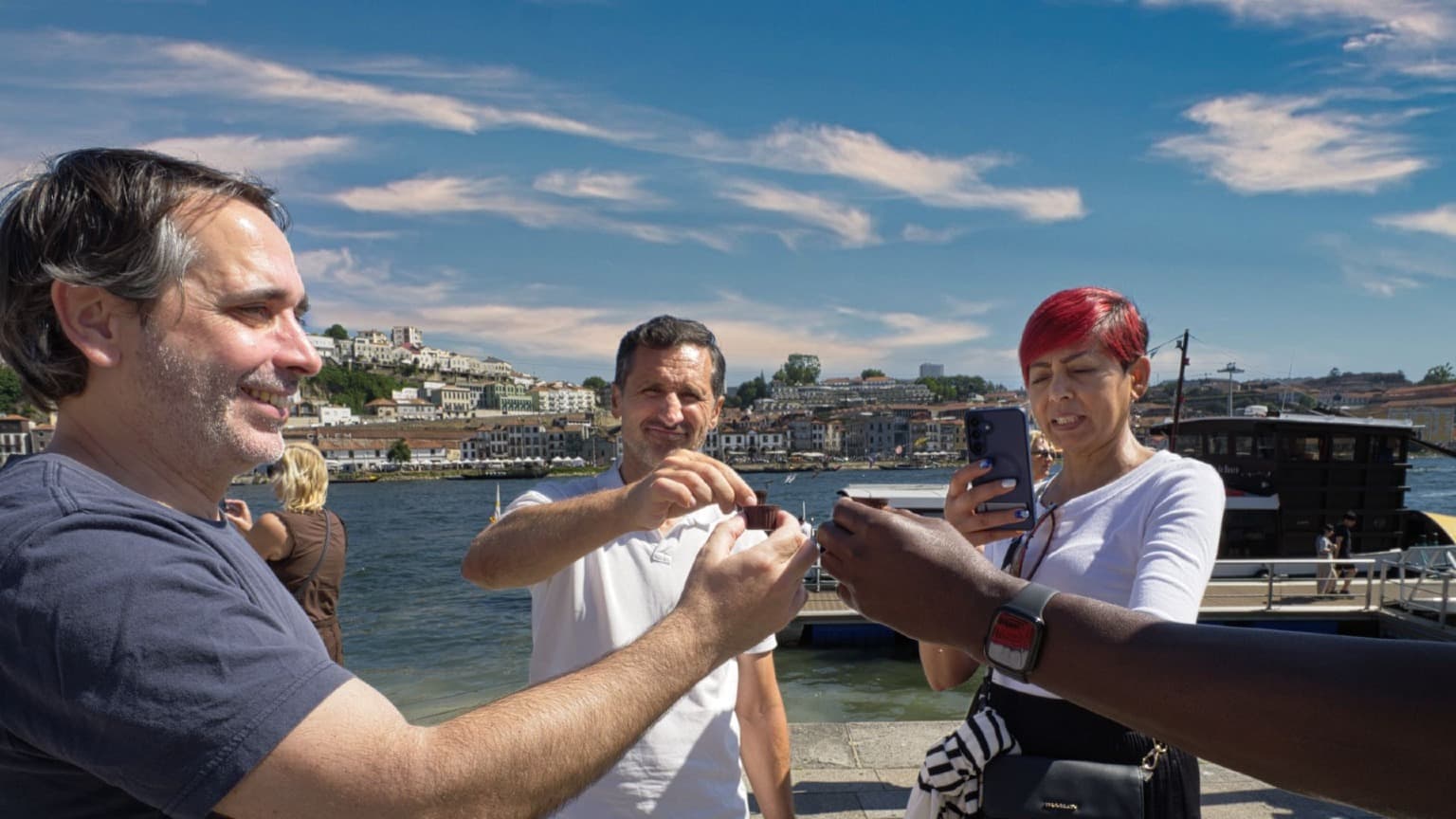
Exploring Ribeira with a local guide combines Porto's history, culture and traditional gastronomy into one authentic experience.
Frequently Asked Questions
Written by Gonçalo Castanho, founder of Cooltour Oporto and a Porto-based tourism entrepreneur with over 20 years of experience creating immersive and responsible travel experiences across Portugal.