Carnival in Portugal: Dates, Traditions & Best Carnival Celebrations
February 10, 2026
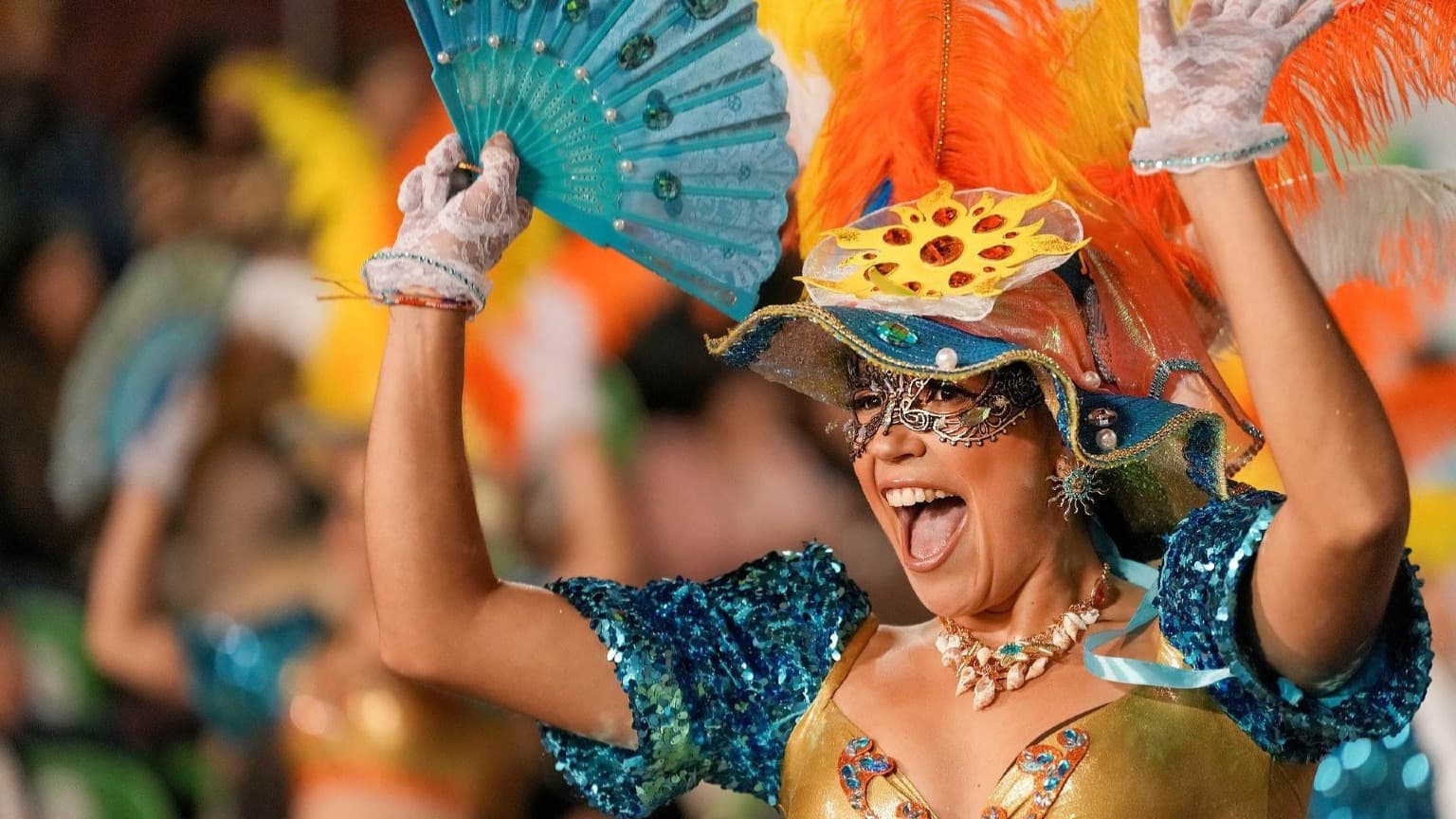
A vibrant Carnival parade in Torres Vedras, one of Northern Portugal’s largest and most energetic Carnival celebrations.
Carnival in Portugal is one of the country’s most expressive and playful celebrations, blending ancient traditions, satire, music, and community spirit. Celebrated every year on the Tuesday before Ash Wednesday, Carnival marks the final moment of festivity before Lent. Carnival dates change annually.
From small villages to large coastal towns, Carnival is experienced differently across the country. Some places focus on humour and social commentary, others on folklore and ritual, and others on large-scale parades and nightlife. What they all share is a strong sense of identity and participation.
Whether you are visiting Portugal during Carnival season or planning a future trip, this guide brings together the meaning of Carnival, how it is celebrated, and where to experience the most iconic festivities.
👉 If you’re planning a wider trip, our Portugal Travel Guides: Explore the Country Region by Region help you understand how Carnival fits into different destinations across the country.
Note: Carnival dates change every year - this article is updated annually with confirmed dates and events across Portugal.
When Is Carnival Celebrated in Portugal?
Carnival always takes place on Carnival Tuesday, the day before Ash Wednesday.
The exact date changes every year, usually falling between February and early March.
In Portugal, Carnival is a public holiday in some municipalities, while in others it is optional for companies. In practice, many businesses, schools, and local institutions observe the day.
The Origins of Carnival in Portugal
Carnival has pagan roots, linked to ancient celebrations of abundance, disguise, and role reversal. The word “Carnival” comes from the Latin carnis levare, meaning “farewell to meat,” referencing the fasting period that begins with Lent.
Over centuries, Carnival evolved into a popular celebration combining:
• Costumes and masks
• Satirical performances and political humour
• Music, dance, and parades
• Local food and communal gatherings
In Portugal, Carnival is especially known for its irony and social criticism, often expressed through caricatures, giant puppets, and exaggerated costumes.
How Carnival Is Celebrated in Portugal
Carnival in Portugal is inclusive and intergenerational. Common elements include:
• School and community parades with children in costume
• Giant-headed figures (Cabeçudos or Gigantones)
• Satirical floats mocking public figures and current events
• Street parties, music, and dancing
• Traditional rituals such as the Burial of the Entrudo, symbolising the end of excess
Not all cities celebrate Carnival in the same way — and that diversity is what makes it so interesting.
Carnival Dates in Portugal (2026 Edition)
This section is updated annually with confirmed dates.
The Most Iconic Carnival Celebrations in Portugal
Carnival of Torres Vedras: from 12 to 18 February 2026
Often called “the most Portuguese Carnival in Portugal,” Torres Vedras is famous for its sharp political satire, Cabeçudos, and theatrical parades.
Recognised as Intangible Cultural Heritage, its traditions date back to the 16th century.
This is Carnival as social commentary — humorous, bold, and deeply rooted in local identity.
👉 More information (official program)
LINK: https://www.carnavaldetorresvedras.pt/
Carnival of Alcobaça: from 13 to 18 February 2026
Set against the backdrop of the Alcobaça Monastery, this Carnival often embraces creative themes, including pastry and confectionery-inspired costumes.
It includes:
• Children’s and senior parades
• Nighttime celebrations
• Family-friendly events
• The symbolic Burial of the Entrudo
👉 More information (official program)
LINK: https://www.cm-alcobaca.pt/62030/carnaval-de-alcobaca
Carnival of Podence: from 14 to 17 February 2026
Recognised by UNESCO as Intangible Cultural Heritage of Humanity, Podence hosts Portugal’s most authentic and ritualistic Carnival.
Key highlights include:
• The Caretos in colourful wool costumes
• The Marafonas parade
• The Burning of the Entrudo
This is a deeply traditional, rural Carnival experience unlike any other.
👉 More information (official program)
LINK: https://www.caretosdepodence.pt/
Carnival of Ovar: from 24 January to 17 February 2026
One of the largest Carnivals in Northern Portugal, Ovar blends Portuguese tradition with Brazilian influences.
With thousands of performers, its own Carnival royalty, and large-scale parades, it’s ideal for those seeking spectacle and energy.
👉 More information (official program)
LINK: https://carnaval.cm-ovar.pt/pt/default.aspx
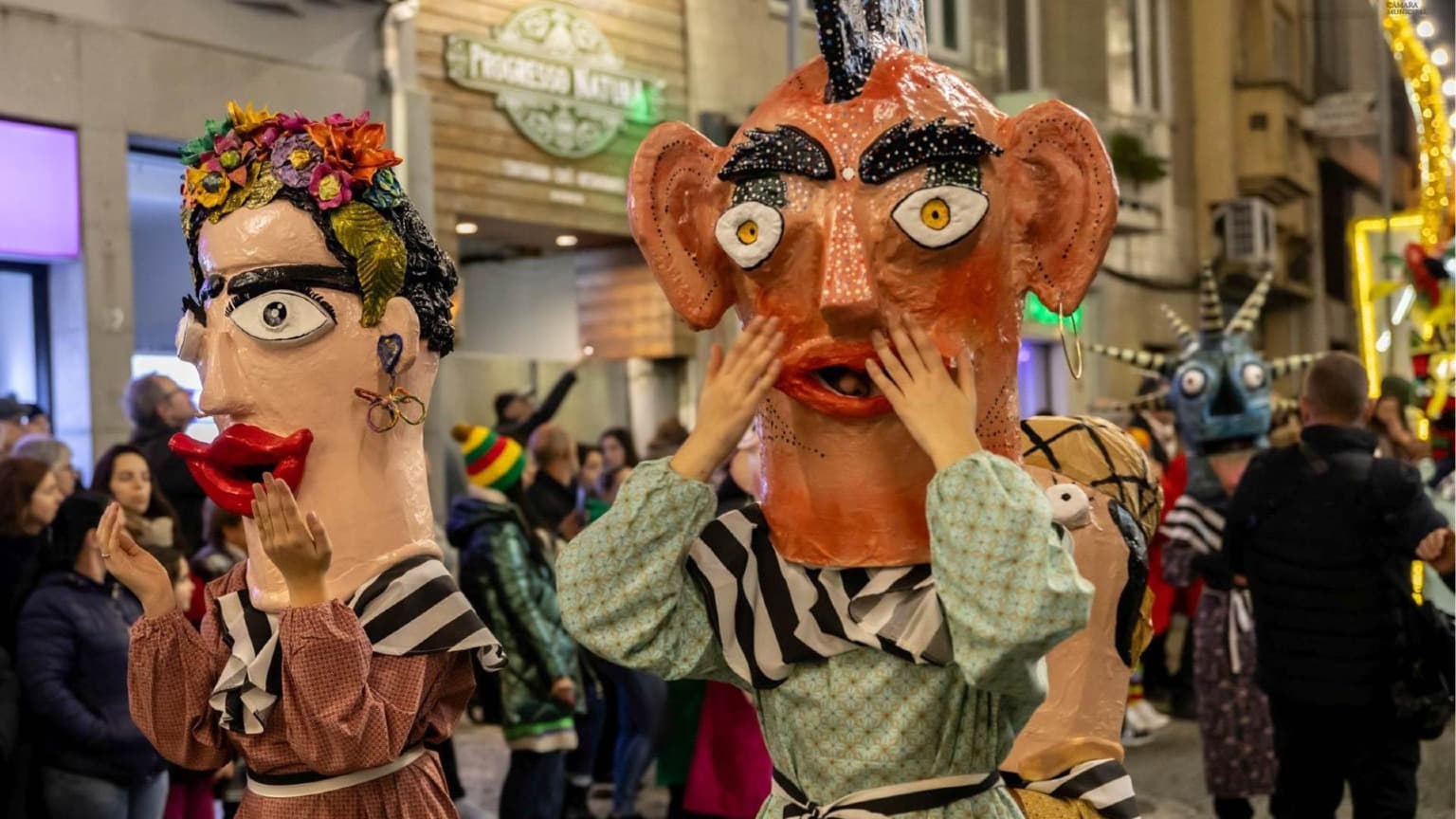
Cabeçudos giant masks during the Carnival of Ovar, one of the largest Carnival celebrations in northern Portugal.
Other Notable Carnivals in Portugal
• Carnival of Sesimbra: from 12 to 21 February 2026
◦ More information: https://carnaval.sesimbra.pt/
• Carnival of Estarreja: from 7 to 17 February 2026
◦ More information: https://carnavalestarreja.pt/
• Carnival of Sines: from 13 to 18 February 2026
◦ More information: https://carnavaldesines.pt/
• Carnival of Funchal (Madeira): from 11 to 22 February 2026
◦ More information: https://visitmadeira.com/en/whats-on/events/carnival/
Each offers its own rhythm, scale, and atmosphere.
Is Carnival Worth Experiencing as a Traveller?
Absolutely — especially if you value local culture over staged performances.
Carnival in Portugal is not a single festival, but a collection of community-led traditions. Some celebrations are loud and theatrical, others intimate and symbolic. Many travellers are surprised by how authentic and participatory Carnival feels compared to more commercial events elsewhere in Europe.
Practical Tips for Visiting Portugal During Carnival
• Check dates every year, as Carnival changes annually
• Smaller towns often offer more authentic experiences
• Plan transport in advance for major Carnival destinations
• Dress comfortably, costumes are welcome, but not required
• Combine Carnival with city visits or nature escapes
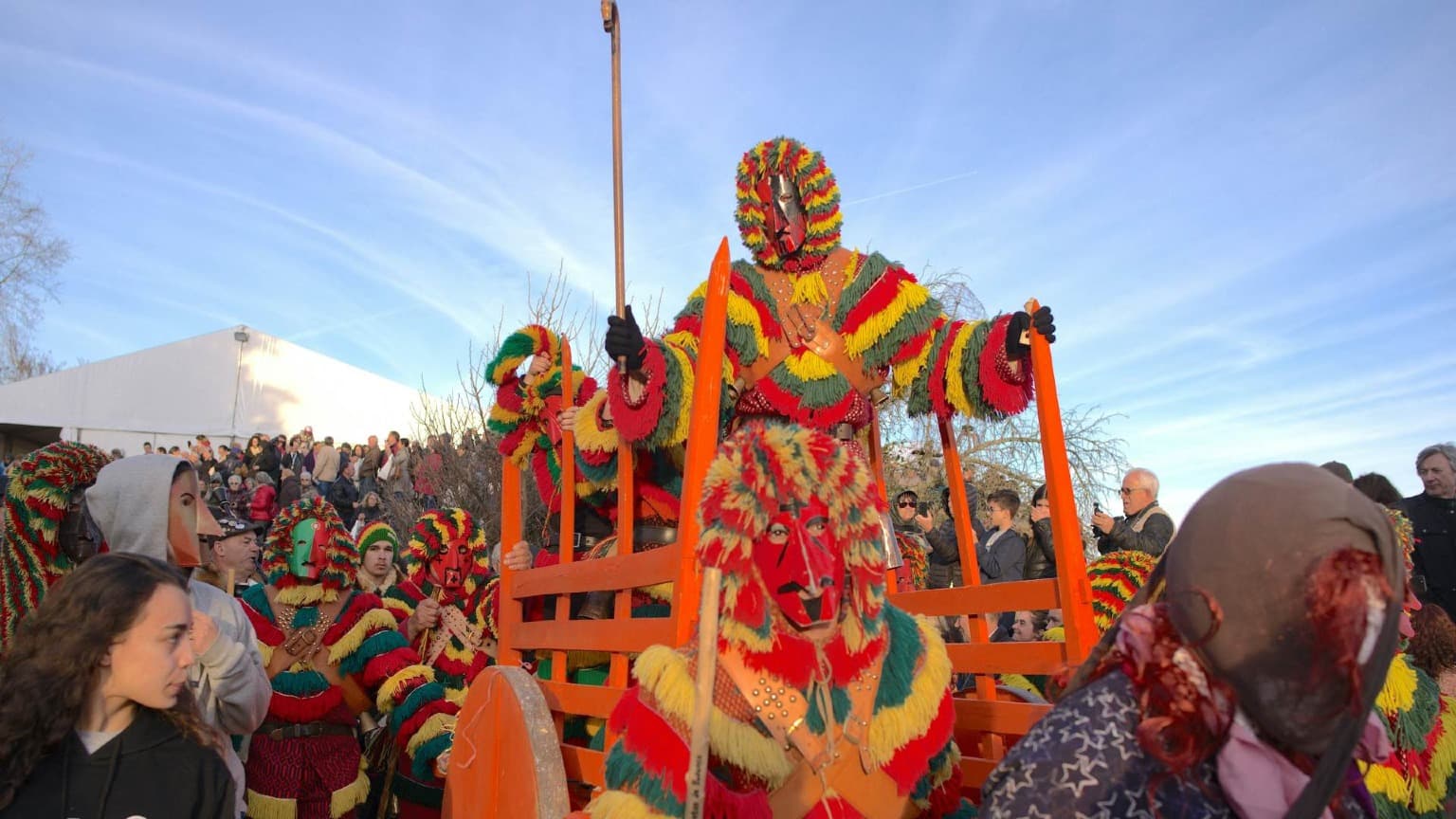
Caretos of Podence parading through the village, preserving one of Portugal’s oldest Carnival rituals.
Frequently Asked Questions About Carnival in Portugal
Carnival in Portugal: A Celebration of Identity
Carnival in Portugal is more than a party. It is humour, history, creativity, and collective expression — a moment when communities take centre stage and traditions remain alive.
If you want to understand Portugal beyond monuments and postcards, Carnival is one of the most revealing moments to visit.
Written by the Cooltour Oporto team