Visiting Batalha Monastery: History, Architecture & What to See
September 30, 2026
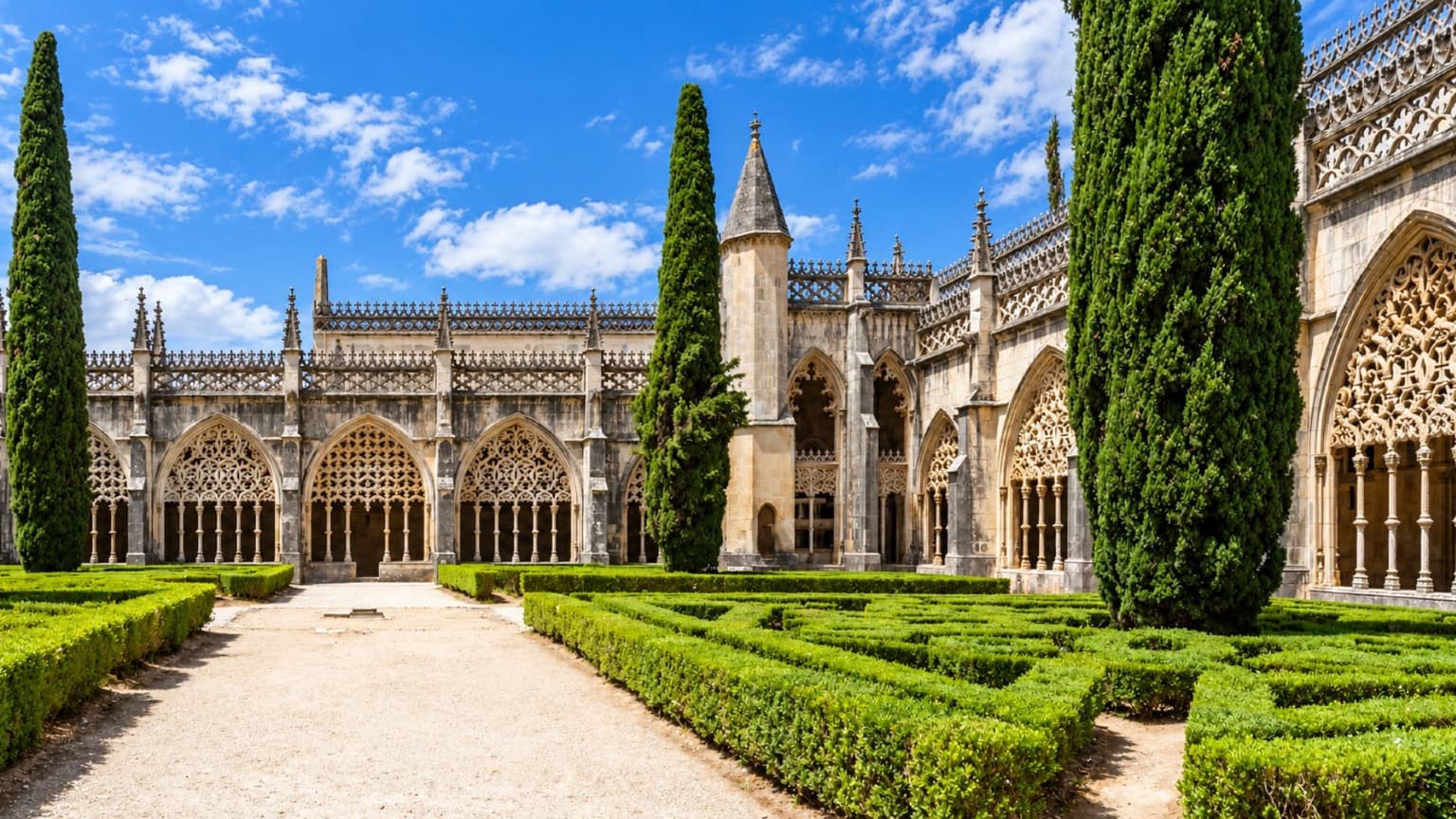
Beyond its monumental church, Batalha reveals remarkable spaces where Gothic architecture meets the intricate stonework of the Manueline style.
In Central Portugal, the Monastery of Batalha is one of the country's greatest architectural landmarks and a monument born from a defining moment in Portuguese history.
Its official name, the Monastery of Santa Maria da Vitória, recalls the Portuguese victory at the Battle of Aljubarrota in 1385. King João I had promised to build a monument dedicated to the Virgin Mary if his forces prevailed, and the monastery that followed became both a symbol of that victory and closely associated with the new Avis dynasty.
Construction continued for generations, bringing together some of the most important architects and craftsmen working in Portugal. The result is an extraordinary journey through Gothic architecture, from the soaring church and Founder's Chapel to the elaborate Manueline decoration of the Royal Cloister and the remarkable Unfinished Chapels.
Recognised as a UNESCO World Heritage Site since 1983, Batalha is a place where architecture and Portuguese history are almost impossible to separate.
Batalha Monastery at a Glance
Construction began: 1386
Founder: King João I of Portugal
Religious Order: Dominican Order
Architecture: Gothic, Flamboyant Gothic and Manueline, with later Renaissance elements
UNESCO World Heritage Site: Since 1983
Don't miss: Church, Founder's Chapel, Royal Cloister, Chapter House and Unfinished Chapels
Allow: Around 1.5–2 hours
Why Batalha Monastery Matters
To understand Batalha Monastery, you first need to understand the events of 1385.
Following the death of King Fernando I in 1383 without a male heir, Portugal entered a period of political instability and a succession crisis. At stake was not only the Portuguese crown, but also the country's relationship with neighbouring Castile.
João, Master of Avis, was acclaimed King João I of Portugal in 1385. Only months later, Portuguese and Castilian forces met at the Battle of Aljubarrota on 14 August 1385.
Led by King João I and his commander Nuno Álvares Pereira, the Portuguese forces emerged victorious. The battle helped secure the position of João I and the new Avis dynasty and became one of the defining episodes in medieval Portuguese history. Batalha Monastery would become its great architectural monument.
From the Battle of Aljubarrota to Santa Maria da Vitória
According to the tradition surrounding the foundation of the monastery, João I promised to build a monument dedicated to the Virgin Mary if Portugal was victorious at Aljubarrota. Following the victory, the king fulfilled his vow.
Construction of the Monastery of Santa Maria da Vitória began in 1386, close to the battlefield. The name itself, meaning Saint Mary of the Victory, preserves the connection between the monastery and the events that led to its creation.
What began as a monument of thanksgiving developed into something much greater. Over the following generations, Batalha became closely connected with the Portuguese monarchy and the Avis dynasty. It also became one of the most ambitious architectural projects undertaken in medieval Portugal.
Nearly Two Centuries of Architecture
Batalha Monastery was not the work of a single architect or even a single generation. Construction continued from the late 14th century into the early 16th century, allowing different architectural ideas to become part of the same monument.
The first major architect associated with the project was Afonso Domingues, who probably directed the works between 1387 and 1402. He was succeeded by Master Huguet, whose work had an enormous influence on the monastery and introduced some of its most ambitious Gothic elements.
Later generations continued transforming the complex. Mateus Fernandes, active at Batalha around the turn of the 16th century, is particularly associated with the spectacular Manueline decoration of the Unfinished Chapels.
The result is one of Batalha's greatest attractions: you can walk through the monastery and see Portuguese architecture evolving around you, from Gothic forms to increasingly elaborate Flamboyant Gothic and Manueline decoration, followed by Renaissance interventions.
What to See Inside Batalha Monastery
• The Church
The monastery church immediately impresses through its scale. Its interior rises to approximately 32.5 metres, with tall columns emphasising the verticality that characterises Gothic architecture. Despite the enormous dimensions of the building, the interior retains a sense of balance and architectural unity.
The height, stonework and light prepare you for the spaces that follow, where Batalha's connection with the Portuguese monarchy becomes even clearer.
• The Founder's Chapel
The Founder's Chapel is one of the most important spaces in the monastery. Designed by Master Huguet, it became a royal pantheon for João I and his family. At its centre stand the tombs of King João I and Queen Philippa of Lancaster, represented together on the tomb with their hands joined.
Around them are tombs associated with their descendants, the generation traditionally known in Portugal as the Ínclita Geração, or Illustrious Generation.
The chapel therefore tells a story that extends beyond the Battle of Aljubarrota. It connects Batalha with the dynasty that would play a central role in Portugal during the 15th century.
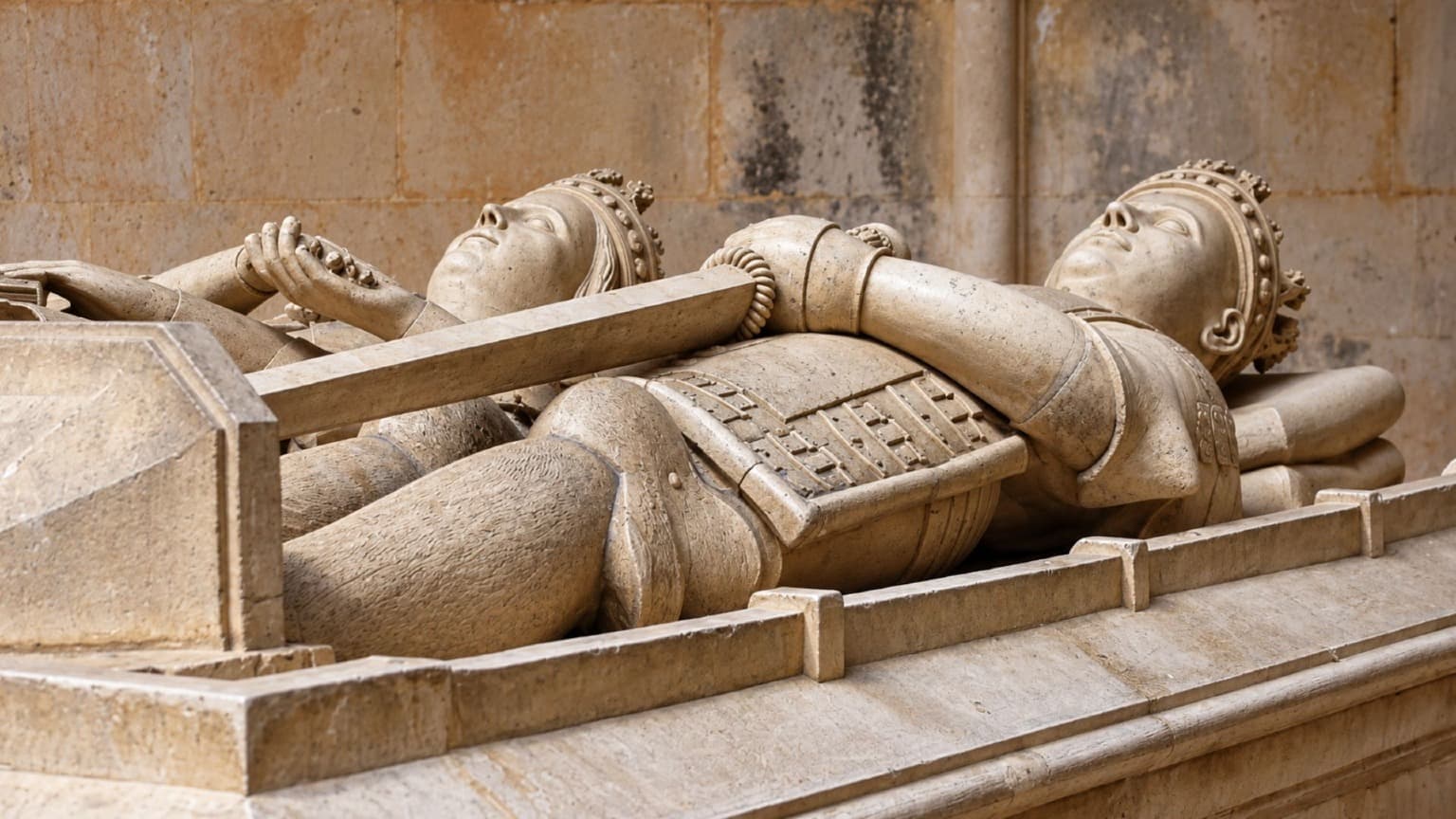
At the heart of the Founder's Chapel, King João I and Queen Philippa of Lancaster are represented together on their tomb, their joined hands symbolising their union.
• The Royal Cloister
The Royal Cloister, or Claustro Real, shows how Batalha continued to evolve long after construction first began. Its Gothic structure was later enriched with elaborate Manueline decoration, creating intricate stonework that contrasts beautifully with the more restrained architectural forms around it.
It is one of the best places in the monastery to slow down and look closely at the details. The cloister reveals how architectural styles were added to Batalha rather than simply replacing what came before.
• The Chapter House and Tomb of the Unknown Soldier
The Chapter House contains one of Batalha's most impressive architectural achievements: a large star-shaped vault associated with Master Huguet.
The room later acquired another layer of national significance: since 1921, it has housed the Tomb of the Unknown Soldier, commemorating Portuguese soldiers who lost their lives in the First World War.
This combination of medieval architecture and 20th-century remembrance gives the Chapter House a very different atmosphere from the rest of the monastery.
• The Unfinished Chapels
Perhaps no part of Batalha is as distinctive as the Unfinished Chapels, known in Portuguese as the Capelas Imperfeitas.
Created as part of a royal funerary project, the chapels were never completed, leaving an extraordinary open-air structure where towering stone walls rise without a finished roof.
Their elaborate entrance is one of the great examples of Manueline stone carving at Batalha, particularly associated with the work of Mateus Fernandes. Later Renaissance interventions added another architectural layer to the complex.
The fact that the chapels were never finished is precisely what makes them so memorable today. They allow you to see both the ambition of the project and the changing architectural history of the monastery in an unusually visible way.
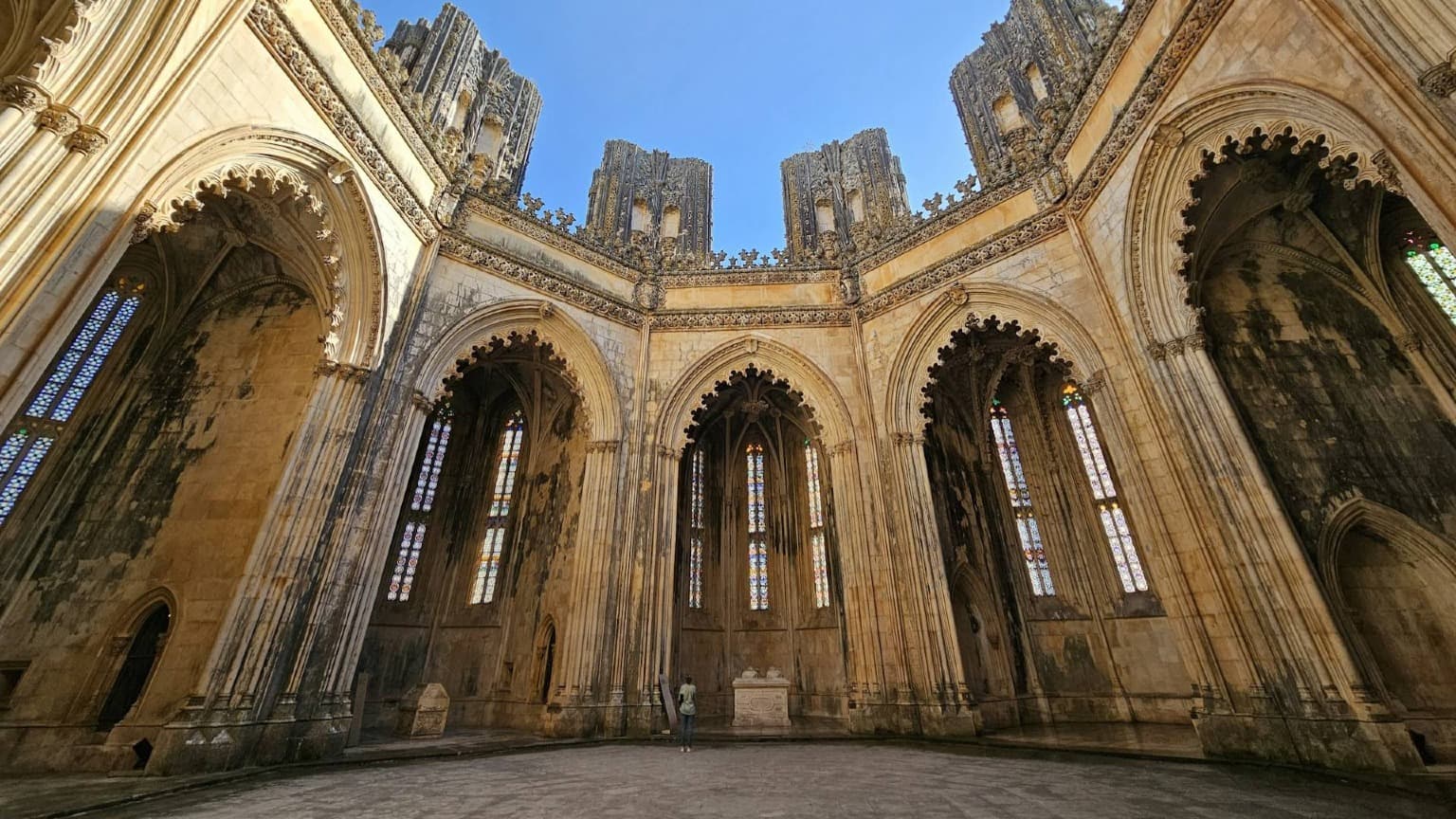
Open to the sky, the Unfinished Chapels reveal soaring Gothic and Manueline stonework, creating one of the most distinctive spaces within Batalha Monastery.
A UNESCO World Heritage Site
The Monastery of Batalha has been part of the UNESCO World Heritage List since 1983.
Its importance comes from both its architecture and its historical significance. Built to commemorate the victory at Aljubarrota, the monastery became closely associated with the Portuguese monarchy while developing into one of the country's greatest examples of Gothic architecture.
Its successive construction phases also document an important evolution in Portuguese architecture, bringing together Gothic, Flamboyant Gothic, Manueline and later Renaissance elements.
The Founder's Chapel, Royal Cloister, Chapter House and Unfinished Chapels make it possible to follow much of that architectural development within a single monument.
How to Visit Batalha Monastery
Batalha Monastery stands at the heart of the town of Batalha in Central Portugal.
Allow around 1.5 to 2 hours if you want enough time to explore the church, cloisters, Founder's Chapel, Chapter House and Unfinished Chapels without rushing.
Some of the most interesting parts of the monastery form part of the ticketed visitor circuit, so it is worth exploring beyond the main church rather than limiting your visit to the freely accessible areas.
Opening hours, admission prices and visitor conditions can change, so check the monastery's official information before travelling.
💡 Tip: Read a little about the Battle of Aljubarrota before your visit. Understanding what happened in 1385 makes the Founder's Chapel, royal tombs and even the name Santa Maria da Vitória much more meaningful.
Visit Batalha Monastery with a Local Guide
Batalha becomes much easier to understand when its architecture is connected with the people and events behind it.
A guided visit can help bring together the Battle of Aljubarrota, João I and the Avis dynasty with the architectural details of the Founder's Chapel, Royal Cloister and Unfinished Chapels.
👉 For travellers who would like to explore the monument in greater depth, our Private Batalha Monastery Tour is a curated experience offered by one of our trusted local partners, providing a more personal introduction to the history and architecture of this remarkable monument.
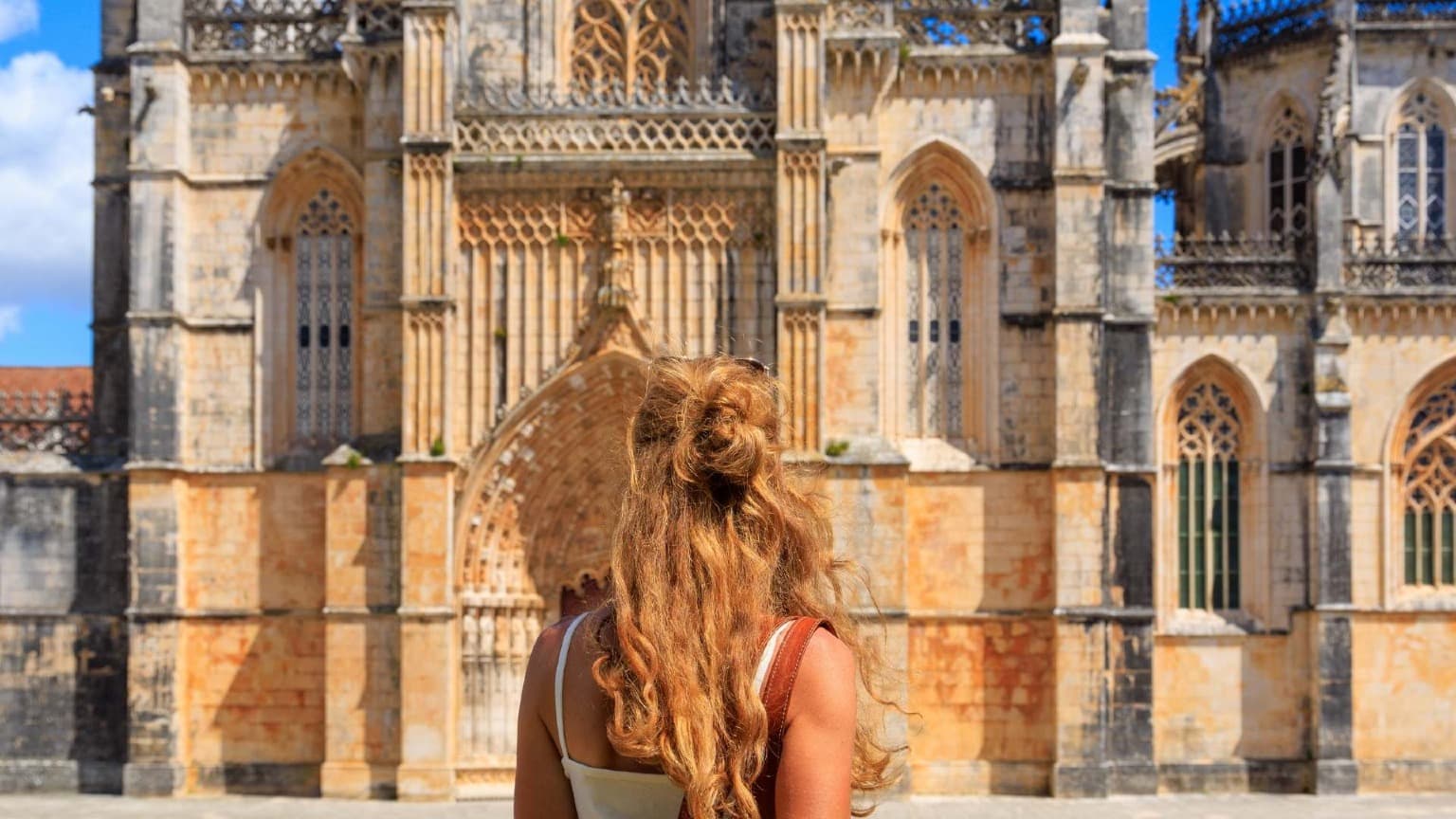
Exploring Batalha up close reveals the extraordinary detail of a monument shaped by generations of architects and craftsmen.
Exploring Central Portugal
Batalha is particularly rewarding when seen as part of a wider journey through Central Portugal.
Just a short distance away, Alcobaça Monastery tells a very different chapter of Portuguese history. Founded in the 12th century for the Cistercian Order, Alcobaça is associated with medieval monastic life and the extraordinary tombs of Pedro I and Inês de Castro.
Batalha, by contrast, grew from the political upheaval of the late 14th century and became closely connected with João I, the Avis dynasty and the architectural development of late medieval Portugal.
Visiting the two monasteries together therefore offers much more than a comparison of two UNESCO monuments. It provides a journey through different periods, architectural traditions and stories that helped shape Portugal.
Elsewhere in the region, Nazaré brings you to the Atlantic coast, Óbidos preserves one of Portugal's most atmospheric medieval towns, while Tomar reveals the history of the Knights Templar and the Order of Christ.
👉 Planning a longer journey? Explore our Central Portugal Travel Guide for more ideas on historic towns, monuments, landscapes and places to visit throughout the region.
Frequently Asked Questions About Batalha Monastery
Written by the Cooltour Oporto team