Livraria Lello: History and Visitor Guide
November 23, 2023
Updated: July 2026
Few places in Porto attract as much curiosity as Livraria Lello. Frequently ranked among the world's most beautiful bookstores, it welcomes visitors with an extraordinary blend of architecture, literature and history. Its neo-Gothic façade, sweeping crimson staircase and colourful stained-glass ceiling have transformed this historic bookstore into one of Portugal's most photographed landmarks.
Yet Livraria Lello is much more than an architectural masterpiece. For over a century, it has celebrated Portuguese literature, survived profound political and social change, and evolved from a traditional family-run bookshop into an internationally recognised cultural institution. While many visitors arrive hoping to discover the "Harry Potter bookstore," its true history is every bit as fascinating as the myths that surround it.
Located just steps from Clérigos Tower, the Carmo and Carmelitas Churches, and Aliados Avenue, Livraria Lello is an essential stop when exploring Porto's historic centre. Whether you're passionate about books, architecture or simply discovering the city's cultural heritage, a visit offers a glimpse into one of Portugal's most remarkable literary landmarks.
In this guide, you'll discover the history of Livraria Lello, its unique architecture, the truth behind its connection to Harry Potter, practical visitor information, and tips to help you make the most of your visit.
Quick Facts
• Location: Rua das Carmelitas 144, 4050-161 Porto, Portugal
• Opened: 13 January 1906
• Architect: Francisco Xavier Esteves
• Architectural Style: Neo-Gothic with Art Nouveau influences
• Famous For: Its iconic crimson staircase, spectacular stained-glass ceiling, and rich literary heritage
• Admission: Ticket required (redeemable against the purchase of selected books)
• Recommended Visit Time: 30–60 minutes
• Nearby Attractions: Clérigos Tower, Carmo and Carmelitas Churches, and Aliados Avenue
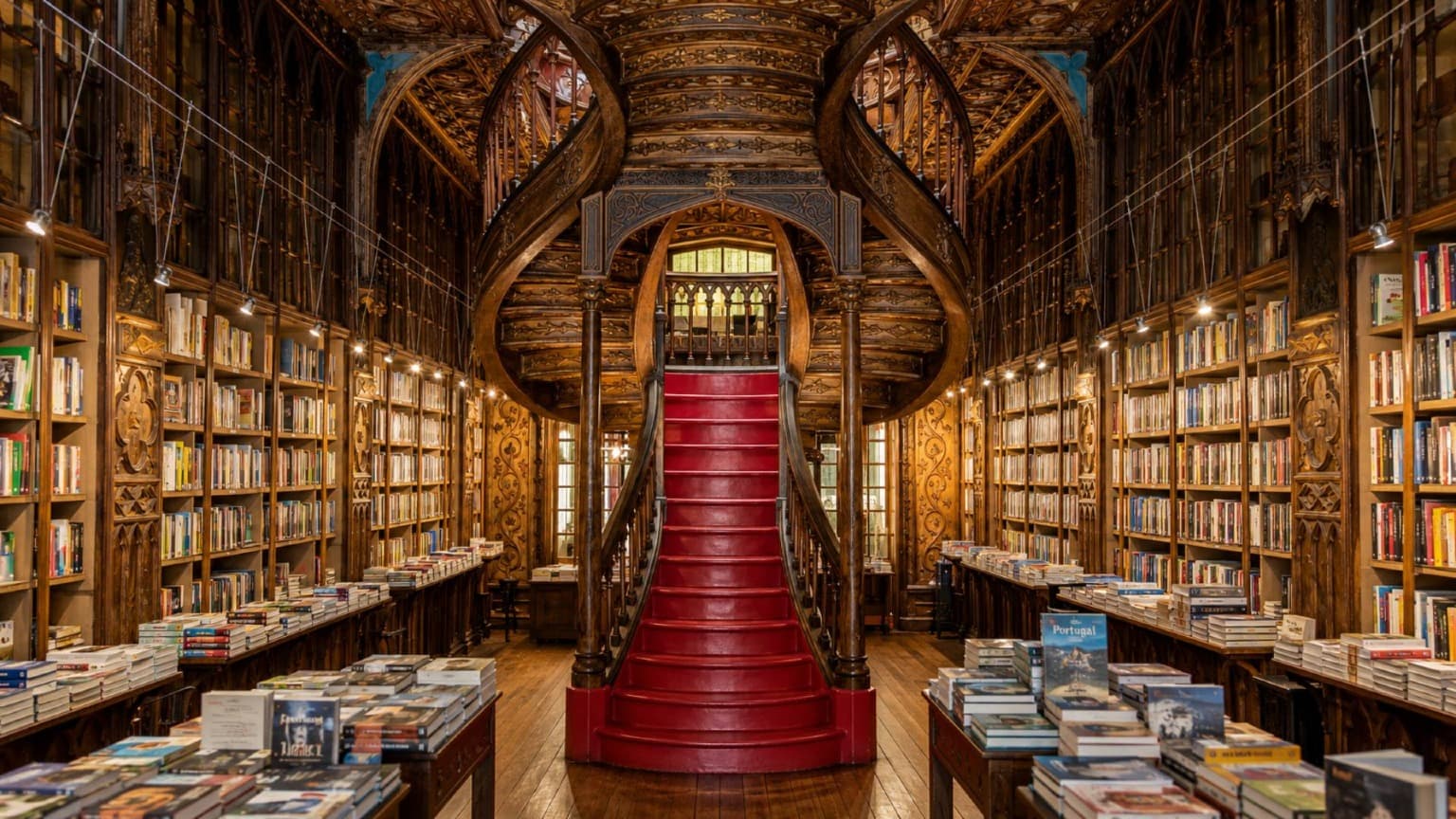
Step inside Livraria Lello, one of the world's most beautiful bookstores, where architecture and literature come together.
The History of Livraria Lello
The story of Livraria Lello began long before the building visitors admire today opened its doors. Its origins can be traced back to 1869, when French bookseller Ernesto Chardron founded the Livraria Internacional de Ernesto Chardron on Rua dos Clérigos. Specialising in Portuguese and foreign literature, the bookshop quickly earned a reputation as one of Porto's leading literary establishments.
After Chardron's death, the business changed hands several times before being acquired in 1894 by brothers José Pinto de Sousa Lello and António Lello. Rather than abandoning the bookstore's established reputation, they continued trading under the name Livraria Chardron de Lello & Irmão, combining Chardron's respected legacy with their own growing ambitions.
The Lello brothers were passionate about books, publishing and culture. At a time when Porto was experiencing rapid economic and intellectual growth, they envisioned a bookstore that would become a destination in its own right, a place where architecture would inspire visitors as much as the books lining its shelves.
To bring that vision to life, they commissioned engineer Francisco Xavier Esteves to design an entirely new building on nearby Rua das Carmelitas. Construction took several years before the new Livraria Lello officially opened on 13 January 1906.
The inauguration immediately attracted attention. Newspapers praised the elegance of the building, while Porto's cultural elite gathered to admire what was widely regarded as one of the most beautiful bookstores ever built in Portugal.
More than a century later, Livraria Lello remains true to its original purpose. It continues to operate as a bookstore, welcomes readers from around the world and stands as one of Porto's most enduring cultural landmarks.
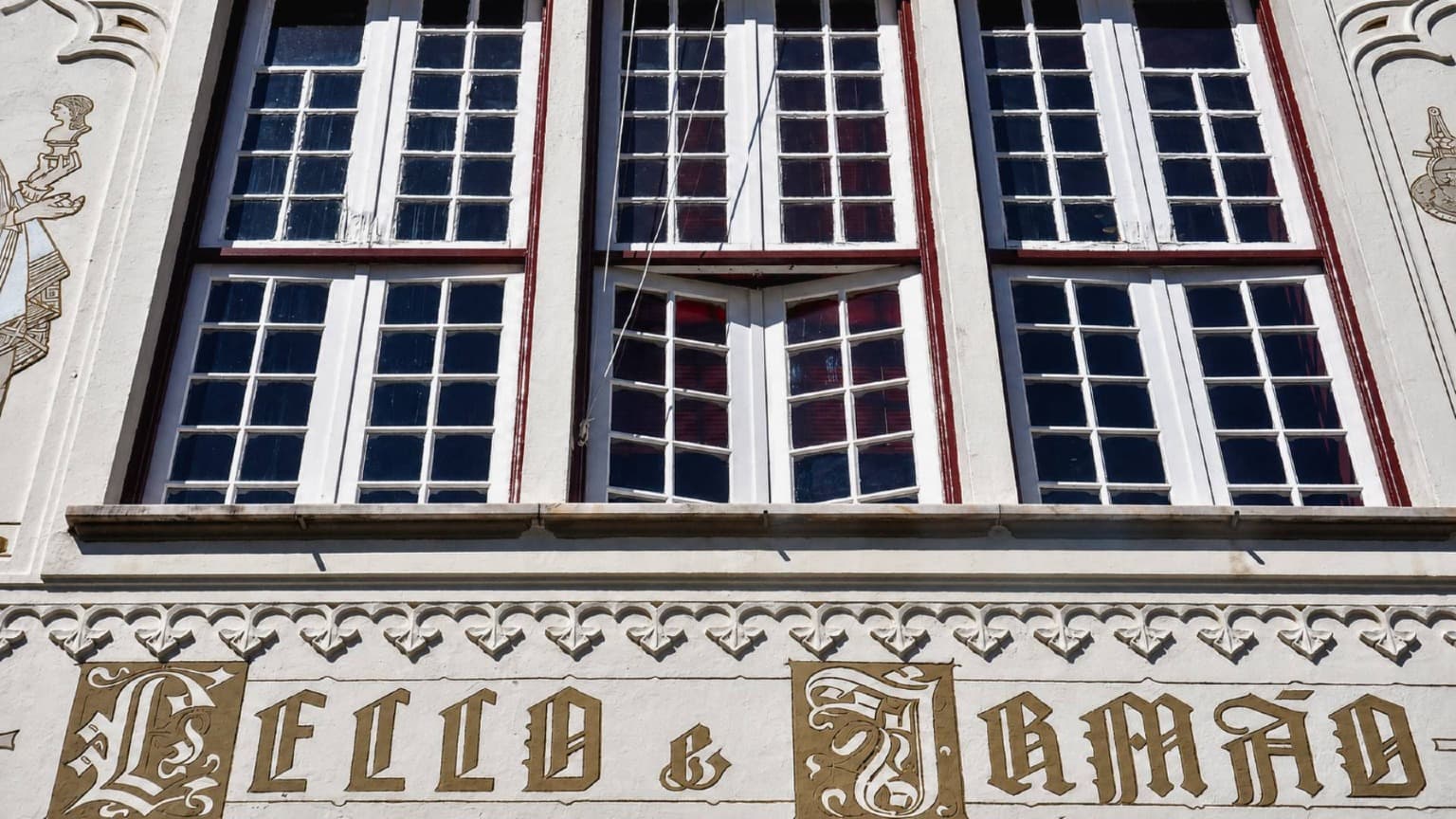
Livraria Lello has welcomed readers and visitors since 1906.
Architecture: A Bookstore Designed to Impress
Stepping through Livraria Lello's front doors, it's immediately clear that this was never intended to be an ordinary bookshop. Every detail, from the carved stone façade to the elegant galleries overlooking the sales floor, reflects the Lello brothers' ambition to create a place where literature and architecture would complement one another.
Designed by engineer Francisco Xavier Esteves, the building combines Neo-Gothic architecture with decorative elements inspired by Art Nouveau, two styles that were particularly influential in Europe at the turn of the twentieth century. The richly ornamented façade immediately captures attention, with pointed arches, slender columns and intricate stone carvings framing the entrance. Above the windows, two painted figures represent Art and Science, symbolising the knowledge and creativity that the bookstore sought to promote from its very beginning.
Inside, the sense of craftsmanship continues. Curved wooden bookshelves rise towards the upper galleries, ornamental plasterwork decorates the ceilings, and natural light pours in from above, creating an atmosphere unlike that of a modern bookstore. Rather than overwhelming visitors with grandeur, the design invites them to slow down, look around and discover new details from every angle.
Although the interior appears to be crafted almost entirely from carved wood, this is one of Livraria Lello's best-kept architectural secrets. Much of what visitors assume to be timber is, in fact, painted plaster and reinforced concrete. At the beginning of the twentieth century, these innovative materials allowed architects to create flowing decorative forms that would have been far more difficult and expensive to produce using traditional woodworking techniques.
More than a century after its inauguration, the building remains remarkably faithful to its original design. Careful restoration projects have preserved its distinctive character while allowing millions of visitors each year to experience one of Porto's most celebrated landmarks.
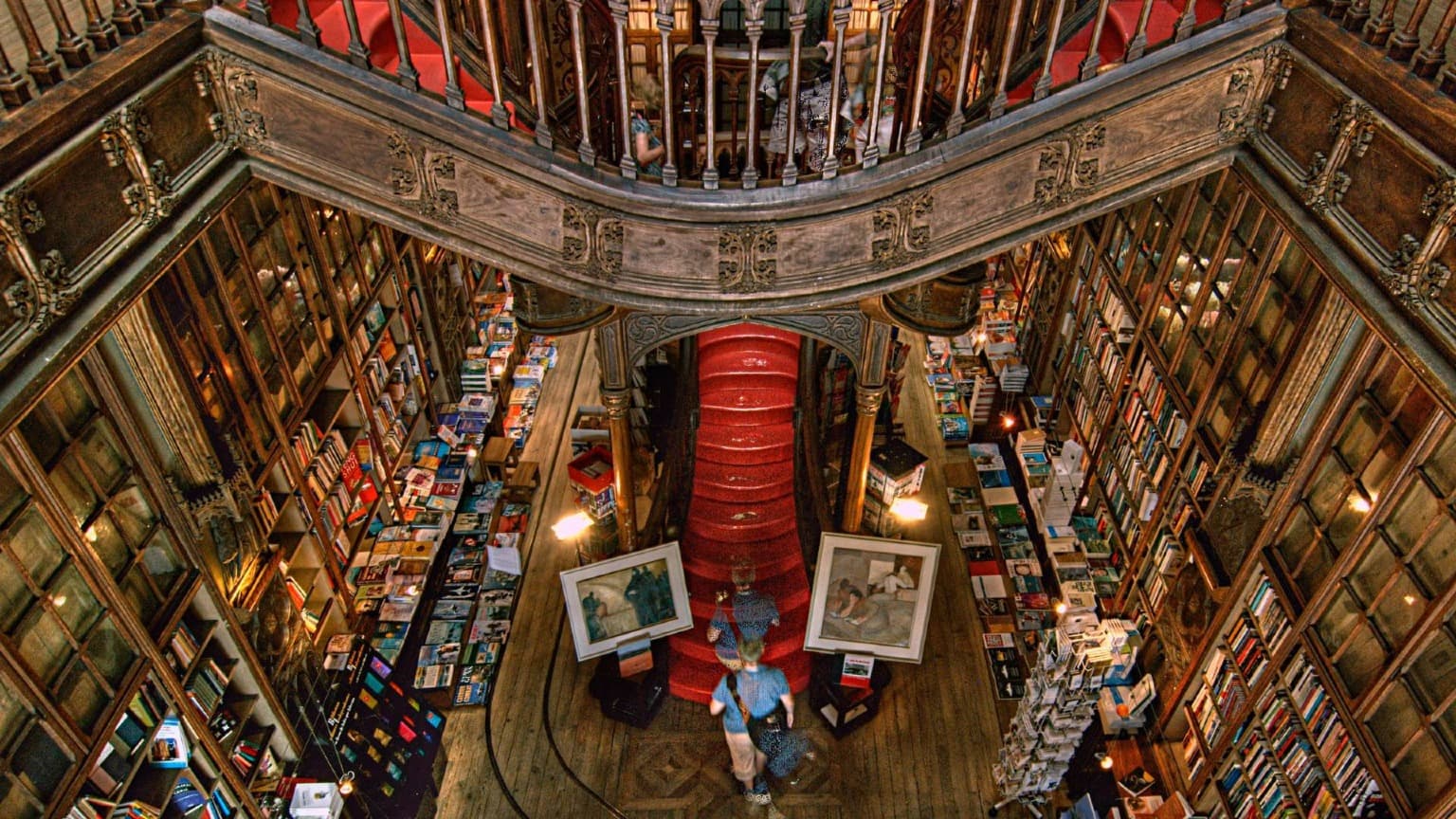
Livraria Lello combines Neo-Gothic architecture with beautifully crafted bookshelves and galleries.
The Crimson Staircase
The staircase is undoubtedly the feature that first captures most visitors' attention.
Rising gracefully from the centre of the bookstore before dividing into two sweeping curves, it creates a striking focal point that naturally draws the eye upwards. Countless photographs have been taken from its steps, yet seeing it in person is a very different experience. The gentle curves, rich colours and changing light create a sense of movement that photographs rarely capture.
Many visitors assume the staircase has always been crimson, but that wasn't the original intention. When Livraria Lello opened in 1906, it was finished in a colour designed to imitate natural wood. During later restoration work, the finish evolved into the deep red tone that has since become one of the bookstore's defining features. Today, it's difficult to imagine the interior any other way.
The staircase also demonstrates the ingenuity of early twentieth-century engineering. Although it resembles finely carved timber, much of its structure is made from reinforced concrete finished with painted plaster. This allowed the architect to achieve elegant flowing curves while ensuring the staircase was strong enough to support generations of visitors.
Standing beneath it, it's easy to understand why the staircase has become the visual symbol of Livraria Lello. It isn't simply decorative; it shapes the entire experience of the space, guiding visitors naturally towards the upper gallery while framing one of the bookstore's most memorable views.
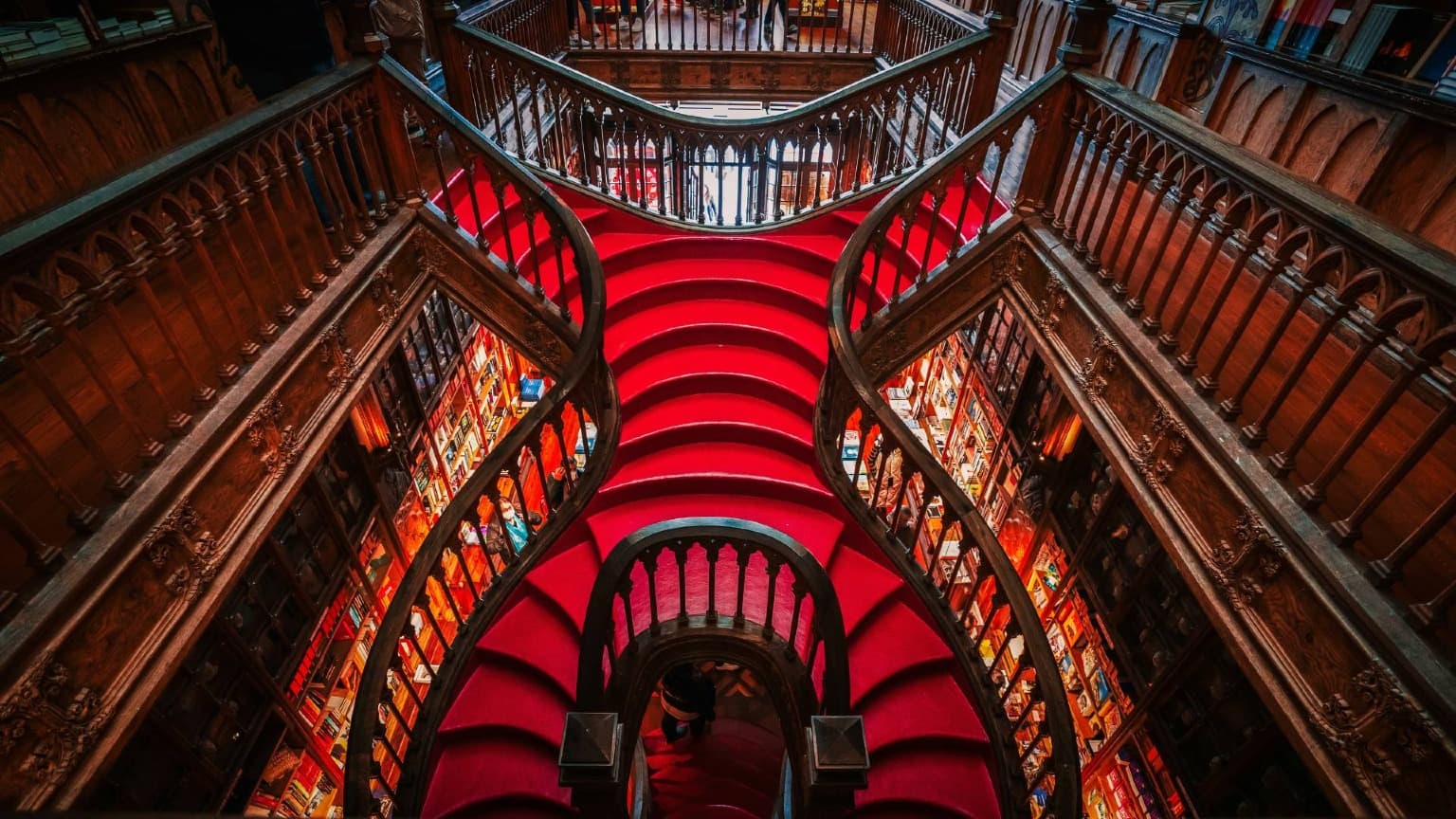
The iconic crimson staircase is the architectural centerpiece of Livraria Lello.
The Stained-Glass Ceiling
Before leaving the ground floor, it's worth taking a moment to look up.
Suspended above the bookstore is a magnificent stained-glass skylight measuring approximately eight metres long by three and a half metres wide. Designed by Dutch artist Samuel Van Krieken and produced by the renowned Portuguese workshop Vidraria Antunes, it fills the interior with natural light that changes subtly throughout the day.
At its centre appears the Latin phrase "Decus in Labore," commonly translated as "Dignity in Work." The motto perfectly reflects the philosophy of the Lello brothers, who believed that books, education and hard work could inspire personal and cultural progress.
The skylight is far more than an architectural ornament. It transforms the atmosphere inside the bookstore, softening the light and creating the warm colours that have become one of Livraria Lello's defining characteristics. On sunny mornings, the glass casts gentle reflections across the galleries and bookshelves, rewarding visitors who pause to appreciate the building beyond its famous staircase.
Together, the staircase and stained-glass ceiling create one of Porto's most recognisable interiors. They are often photographed separately, but they were designed to work as a single composition, balancing light, colour and movement within the heart of the bookstore.
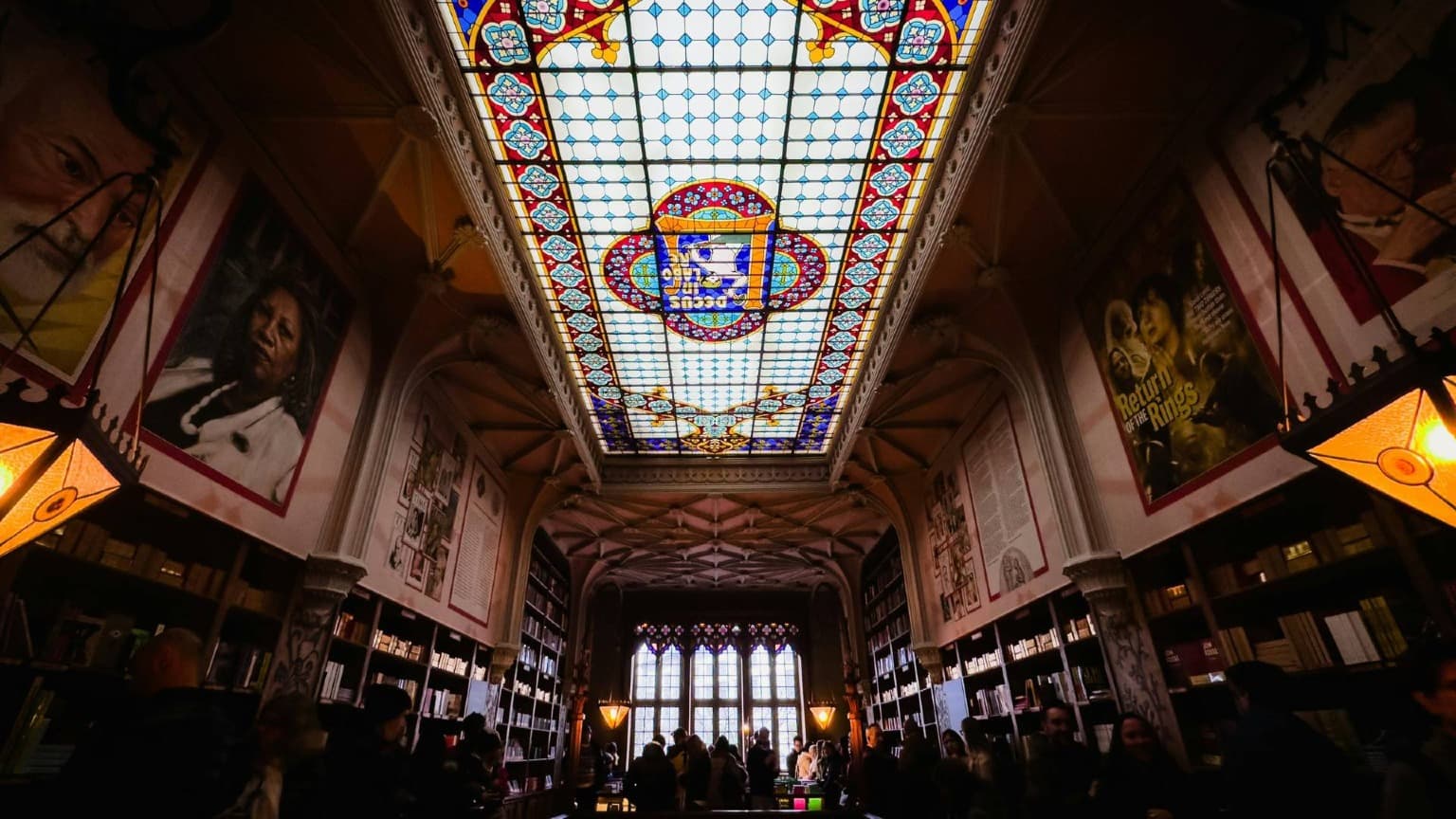
The stained-glass ceiling fills Livraria Lello with natural light throughout the day.
Portuguese Literature and the Lello Legacy
Long before Livraria Lello became an international tourist attraction, it was a meeting place for readers, writers and publishers. The bookstore played an important role in Porto's cultural life, offering a carefully curated selection of Portuguese and international literature while helping promote authors whose works shaped the country's literary identity.
The Lello brothers were not simply booksellers. They were also publishers who believed that books should be both intellectually enriching and beautifully produced. Alongside their commercial activity, they published works by Portuguese authors, invested in high-quality editions and helped make literature more accessible to a growing reading public during the late nineteenth and early twentieth centuries.
Walking through the bookstore today, visitors will notice several busts honouring some of Portugal's most celebrated writers. Among them is Eça de Queirós, widely regarded as Portugal's greatest realist novelist and author of classics such as The Maias and The Crime of Father Amaro. Also represented is Camilo Castelo Branco, one of the country's most prolific nineteenth-century writers, whose novels explored love, tragedy and Portuguese society with remarkable intensity.
Another figure commemorated inside the bookstore is Teófilo Braga, a writer, historian and the second President of the Portuguese Republic. His presence reflects Livraria Lello's broader commitment to education, intellectual debate and the preservation of Portugal's literary heritage.
Although international visitors now fill its rooms every day, books remain at the heart of the experience. The shelves continue to feature Portuguese fiction, poetry, history and children's literature alongside international bestsellers, while exclusive collector's editions and beautifully illustrated publications have become some of the bookstore's most sought-after souvenirs.
More than a century after opening its doors, Livraria Lello continues to fulfil the vision of José and António Lello: creating a bookstore where architecture draws visitors inside, but literature gives them a reason to stay.
Harry Potter: Separating Myth from Reality
Few places in Porto have generated as much speculation as Livraria Lello's supposed connection to the Harry Potter series. For years, guidebooks, travel blogs and social media posts have suggested that the bookstore inspired Hogwarts Library or Flourish and Blotts, leading countless fans to include it on their Portugal itinerary.
The origins of the story are easy to understand. J.K. Rowling lived in Porto between 1991 and 1993, teaching English while working on ideas that would eventually evolve into the Harry Potter novels. During that time, she became familiar with many aspects of Portuguese culture, from the city's cafés and streets to the academic traditions associated with the University of Porto.
However, the popular story linking Livraria Lello directly to Hogwarts is not supported by historical evidence.
In 2020, Rowling publicly addressed several long-standing myths about the origins of Harry Potter. Among them was the claim that Livraria Lello had inspired her fictional world. She stated that she never visited the bookstore while living in Porto, did not even know it existed at the time, and added that it "has nothing to do with Hogwarts."
That statement surprised many readers, but it serves as a useful reminder that popular stories often become accepted as fact through repetition rather than evidence.
None of this makes Livraria Lello any less remarkable. In fact, its genuine history is arguably more compelling than the myth itself. The bookstore had already earned international recognition for its architecture, publishing tradition and cultural significance long before Harry Potter became a global phenomenon.
For fans of the series, visiting Livraria Lello can still be an enjoyable experience. The dramatic staircase, colourful stained-glass ceiling and labyrinth of bookshelves naturally evoke the atmosphere of a fantasy novel, even if they were never intended to represent Hogwarts. Appreciating the bookstore for what it truly is, a masterpiece of architecture and a landmark of Portuguese literary culture, offers a far richer experience than chasing a story that has since been disproved.
Planning Your Visit
A visit to Livraria Lello is easily combined with a walk through Porto's historic centre. The bookstore sits on Rua das Carmelitas, just opposite Clérigos Tower and a short stroll from the Carmo and Carmelitas Churches, Aliados Avenue, São Bento Station and the Ribeira district.
Because of its popularity, planning ahead can make a significant difference to your experience. Admission is by ticket, which can be purchased online or at the nearby ticket office. The value of the ticket can usually be deducted from the purchase of eligible books, allowing visitors to leave with a memorable souvenir while supporting the bookstore's original mission.
Queues are common throughout the year, particularly during weekends, school holidays and the summer season. If your schedule allows, consider visiting shortly after opening or later in the afternoon, when the flow of visitors is often more manageable.
Photography is permitted for personal use, but remember that Livraria Lello is still a working bookstore. Taking a moment to browse the shelves, discover Portuguese authors or simply admire the craftsmanship of the building often proves more rewarding than rushing through in search of the perfect photograph.
Before your visit, it's worth keeping a few practical points in mind:
• Admission: Entry requires a valid ticket.
• Visit Duration: Allow 30 to 60 minutes to explore the bookstore comfortably.
• Book Purchases: Admission can usually be redeemed against the purchase of selected books.
• Accessibility: Due to the building's historic design, some areas may present challenges for visitors with reduced mobility.
• Opening Hours: These may vary throughout the year, so it's always worth checking the official Livraria Lello website before your visit.
👉 For tickets and the latest visitor information, visit the official Livraria Lello website.
Is Livraria Lello Worth Visiting?
If you're interested in architecture, literature or Porto's cultural heritage, Livraria Lello is undoubtedly worth including in your itinerary.
That said, it's also important to visit with realistic expectations. This is no longer the quiet neighbourhood bookstore it once was. Today, it is one of Portugal's most visited attractions, and the number of visitors can sometimes make the experience feel quite different from the peaceful literary atmosphere many imagine.
The best way to appreciate Livraria Lello is to look beyond its most photographed corners. Notice the intricate stonework on the façade before you enter. Take time to admire the stained-glass skylight instead of heading straight for the staircase. Browse the shelves dedicated to Portuguese literature or leaf through one of the beautifully produced collector's editions. These small moments reveal why the bookstore has remained an important cultural institution for more than a century.
Its enduring appeal lies not in any connection to fictional wizards, but in its authentic story. Livraria Lello stands as a testament to the Lello brothers' ambition to create a bookstore where architecture, craftsmanship and literature could coexist under one roof. More than 120 years after opening, that vision continues to attract readers and travellers from around the world.
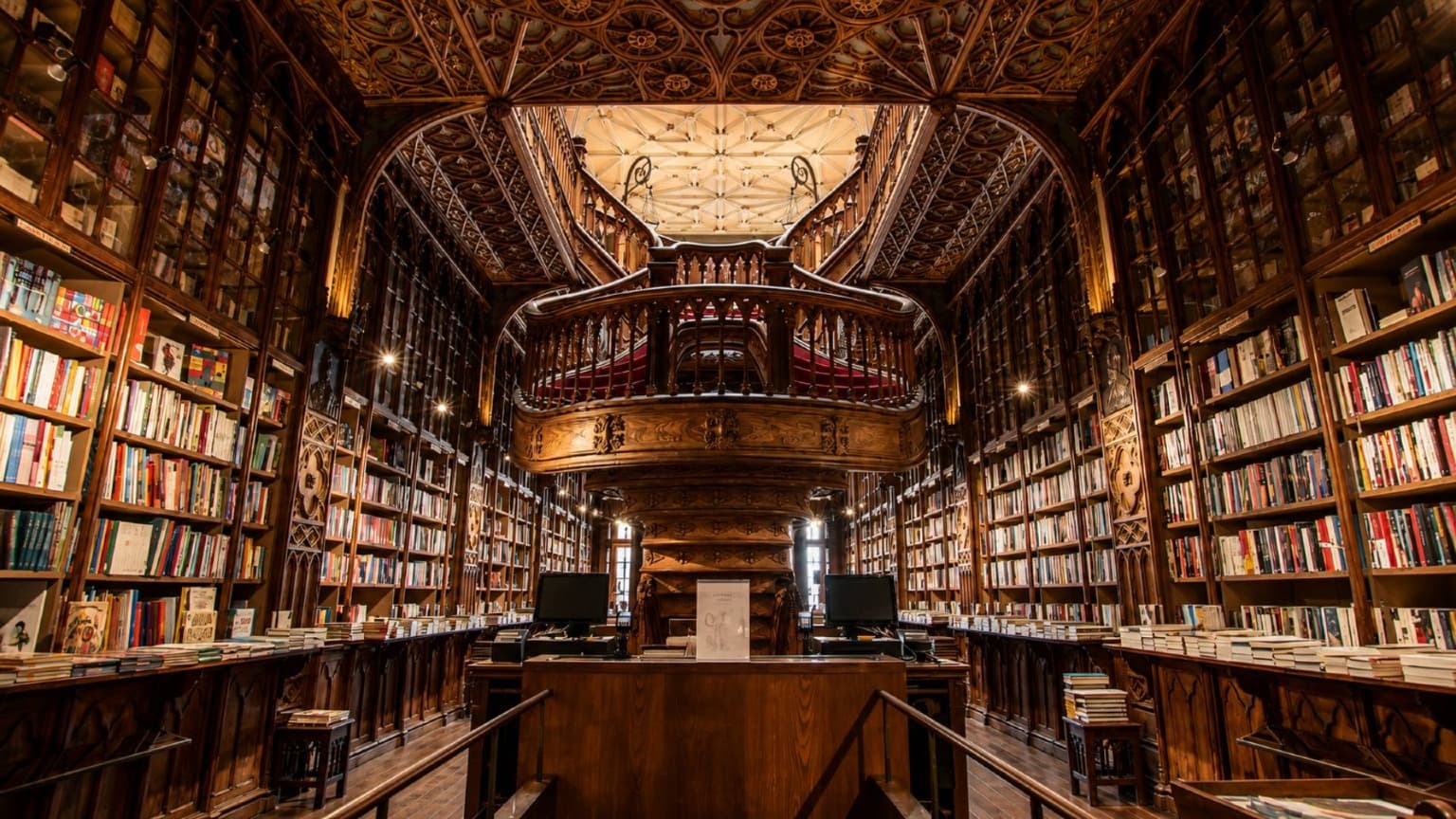
Beyond its famous staircase, Livraria Lello remains one of Portugal's most celebrated bookstores.
Discover More of Porto with Cooltour Oporto
Livraria Lello is just one of many landmarks that tell the story of Porto's rich cultural heritage. Within a few minutes' walk, you can climb Clérigos Tower, admire the azulejos of São Bento Station, visit the historic Porto Cathedral, or wander through the medieval streets leading down to the Ribeira, a UNESCO World Heritage Site overlooking the Douro River.
If you'd like to discover these places through the eyes of a local guide, our Private Porto Walking Tour explores the city's history, architecture and traditions at a relaxed pace, offering insights that are easy to miss when exploring independently.
For travellers who want to experience Porto through its flavours as well as its history, our Porto Food Tour combines local gastronomy with stories that have shaped the city's identity, introducing family-run businesses and traditional dishes that have been enjoyed for generations.
👉 Planning your trip? Explore our complete Porto Travel Guide for more ideas on what to see, where to eat and how to make the most of your time in Portugal's second city.
Frequently Asked Questions
Written by Gonçalo Castanho, founder of Cooltour Oporto and a Porto-based tourism entrepreneur with over 20 years of experience creating immersive and responsible travel experiences across Portugal.