The Carnation Revolution: Portugal's Most Meaningful Day
April 17, 2026
On April 25th, 1974, a flower ended a dictatorship. Half a century later, that red carnation still defines what it means to be Portuguese, and April 25th remains one of the most authentic national celebrations a traveller can witness.
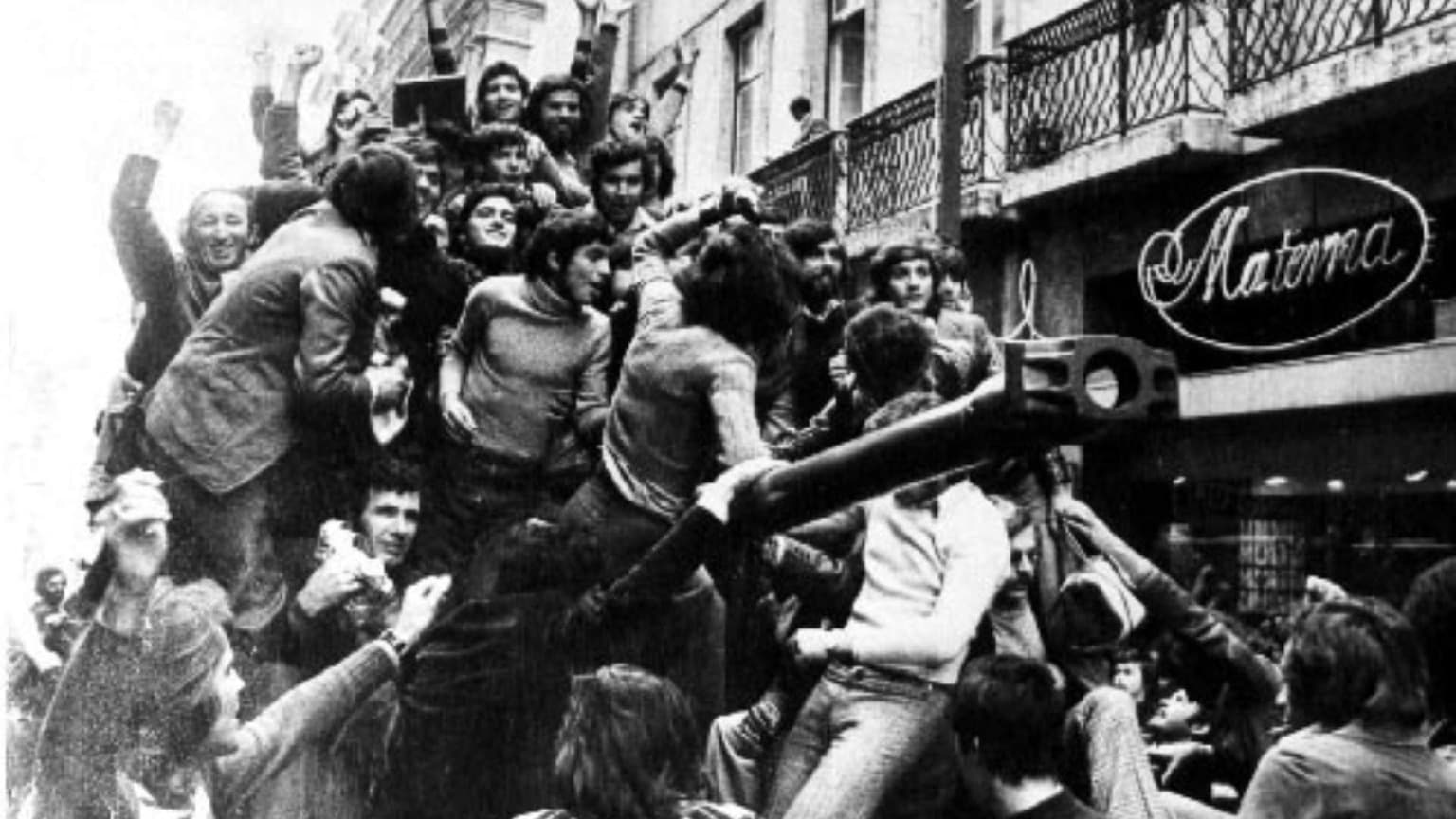
Lisbon, April 25, 1974. Jubilant civilians climb onto military vehicles as news of the peaceful coup spreads through the city, one of the most remarkable scenes of 20th-century European history. © Unknown author / Centro de Documentação 25 de Abril / CC BY 4.0
What Was the Carnation Revolution?
Just before dawn on April 25th, 1974, a song played on a Lisbon radio station. Grândola, Vila Morena, a melody by folk singer Zeca Afonso, was the pre-arranged signal. Within hours, a network of mid-ranking military officers known as the Movimento das Forças Armadas (MFA) had seized key installations across the country, ending 48 years of authoritarian rule under the Estado Novo regime.
What followed was extraordinary. Civilians did not flee the soldiers, they embraced them. Flower sellers handed out carnations from their market stalls, and crowds tucked the red blooms into the barrels of rifles. Not a single shot was fired in anger. By afternoon, the dictatorship had collapsed. The revolution had a name: the Revolução dos Cravos, the Carnation Revolution.
It was one of the most peacefully executed political transitions of the 20th century, and it stands today as a foundational moment not just for Portugal, but for the global history of democracy. It is widely regarded as one of the most peaceful revolutions in modern European history.
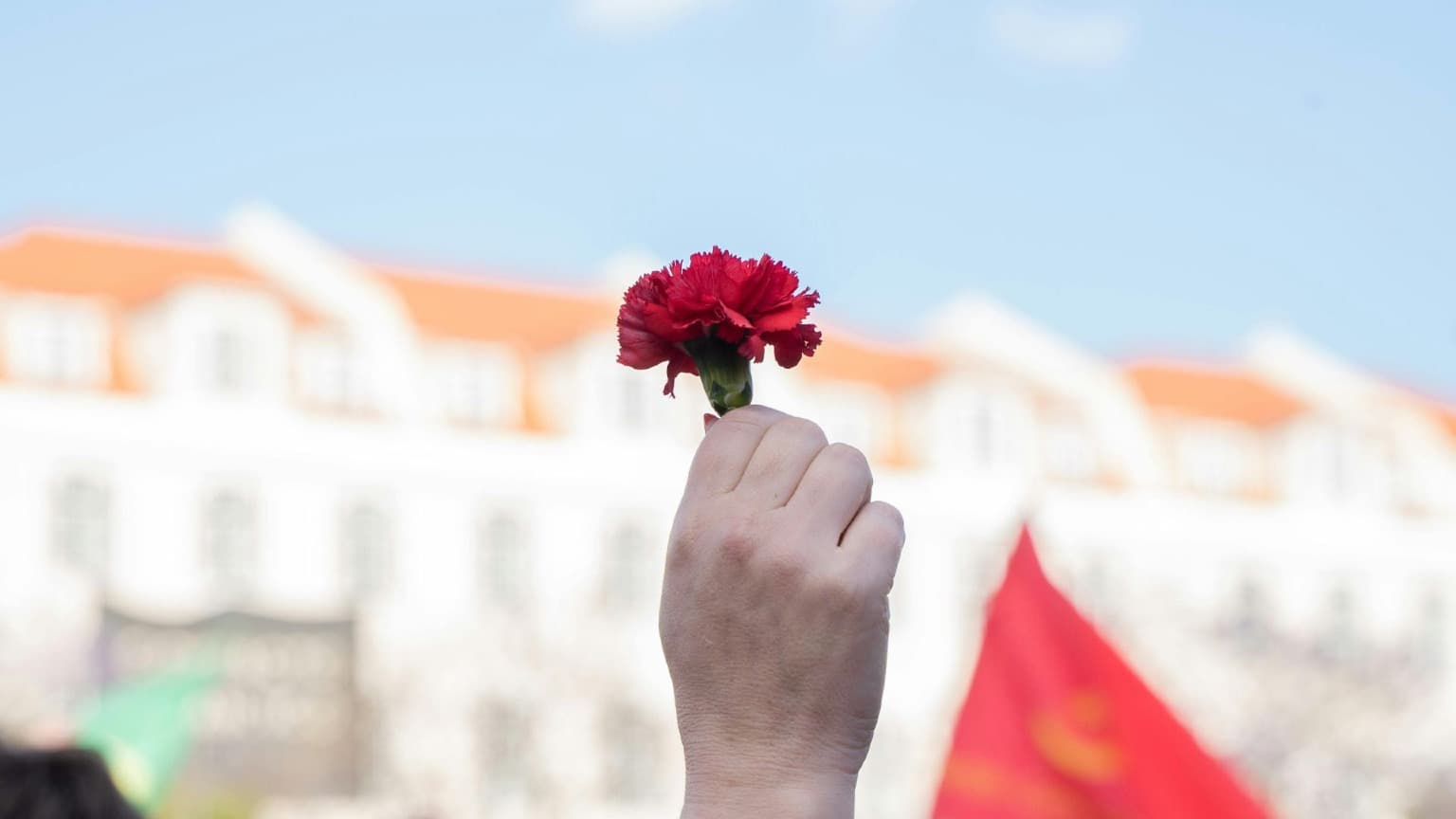
A fist raised against the April sky, holding a single red carnation, the enduring symbol of Portugal's Carnation Revolution and Freedom Day (Dia da Liberdade), celebrated every April 25th.
"The flower sellers had carnations, the soldiers had rifles, and somehow the flowers won."
Why Did the Regime Fall?
The Estado Novo dictatorship, founded by António de Oliveira Salazar in 1933 and continued by Marcelo Caetano, had grown increasingly unsustainable through the 1960s and early 1970s. The decisive blow came from an unlikely source: the military itself.
Portugal was fighting three simultaneous colonial wars in Africa — in Angola, Mozambique, and Guinea-Bissau, with no end in sight. Soldiers who had spent years in those conflicts returned disillusioned. Resources were stretched, casualties were mounting, and international isolation was growing. The officers who formed the MFA were not ideological revolutionaries; many were pragmatic young men who simply saw no path to victory and no justification for the continued cost.
Beyond the military, Portuguese society had quietly changed. A generation had grown up under censorship and political repression, and the gap between the regime's rhetoric and daily reality had become impossible to ignore. When the MFA moved in April 1974, the population did not resist, it celebrated.
Why the Carnation Revolution Stands Apart
Military coups, even successful ones, rarely look like this. Several features made the Carnation Revolution genuinely singular in modern history: It was led by mid-ranking officers, not generals or political elites, a rare case of institutional change driven from within the institution itself. It unfolded with almost no violence, a detail that still astonishes historians. It triggered immediate, far-reaching consequences: not just a change of government, but the dismantling of colonial empire, the legalisation of political parties, and the rapid introduction of free elections.
Some scholars mark April 25th, 1974 as the opening moment of what political scientist Samuel Huntington called the "third wave of democratisation" — a global spread of democratic transitions that continued through the 1970s, 80s, and beyond.
Freedom Day: How Portugal Celebrates April 25th
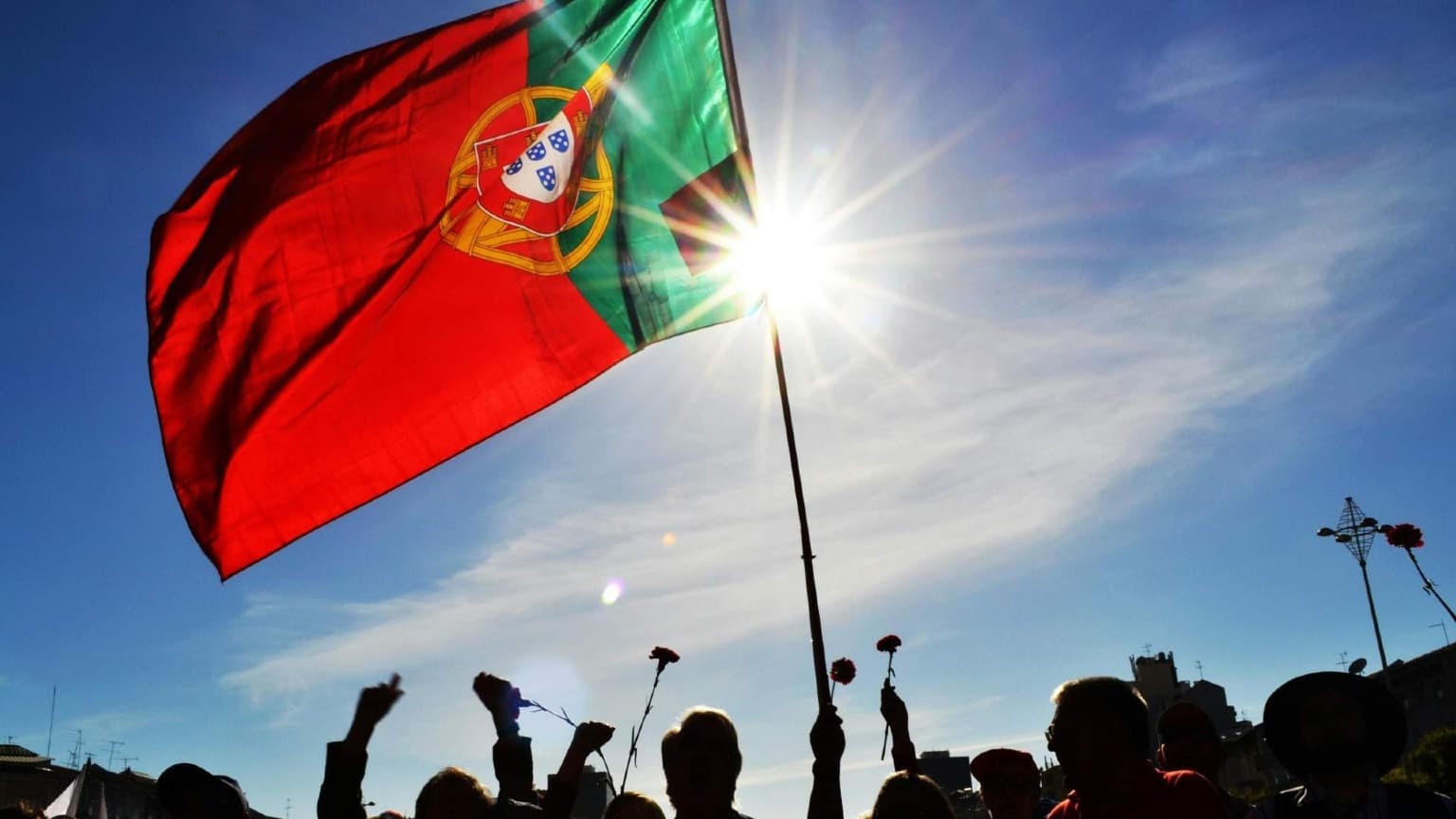
Silhouettes of people raising red carnations and the Portuguese flag against a bright blue sky, a scene repeated every April 25th at Freedom Day celebrations across Portugal.
Today, April 25th is a national public holiday known as Dia da Liberdade — Freedom Day. Across Portugal, the day is marked by a combination of political ceremony, civic remembrance, and genuine popular celebration.
In Lisbon, the Assembleia da República holds formal sessions, and the 25 de Abril Bridge is a focal point for commemorations. But the celebrations are far from institutional formality. Streets fill with music. Carnations appear everywhere — in windows, lapels, and market stalls. The atmosphere is something between a national festival and a collective act of memory: festive, political, and deeply personal all at once.
Porto offers one of the most vibrant settings to experience the day. Avenida dos Aliados, the city's grand central boulevard, becomes the heart of a two-day program of concerts, parades, and civic events that draws both locals and visitors in enormous numbers.
April 25th in Porto: 2026 Celebrations
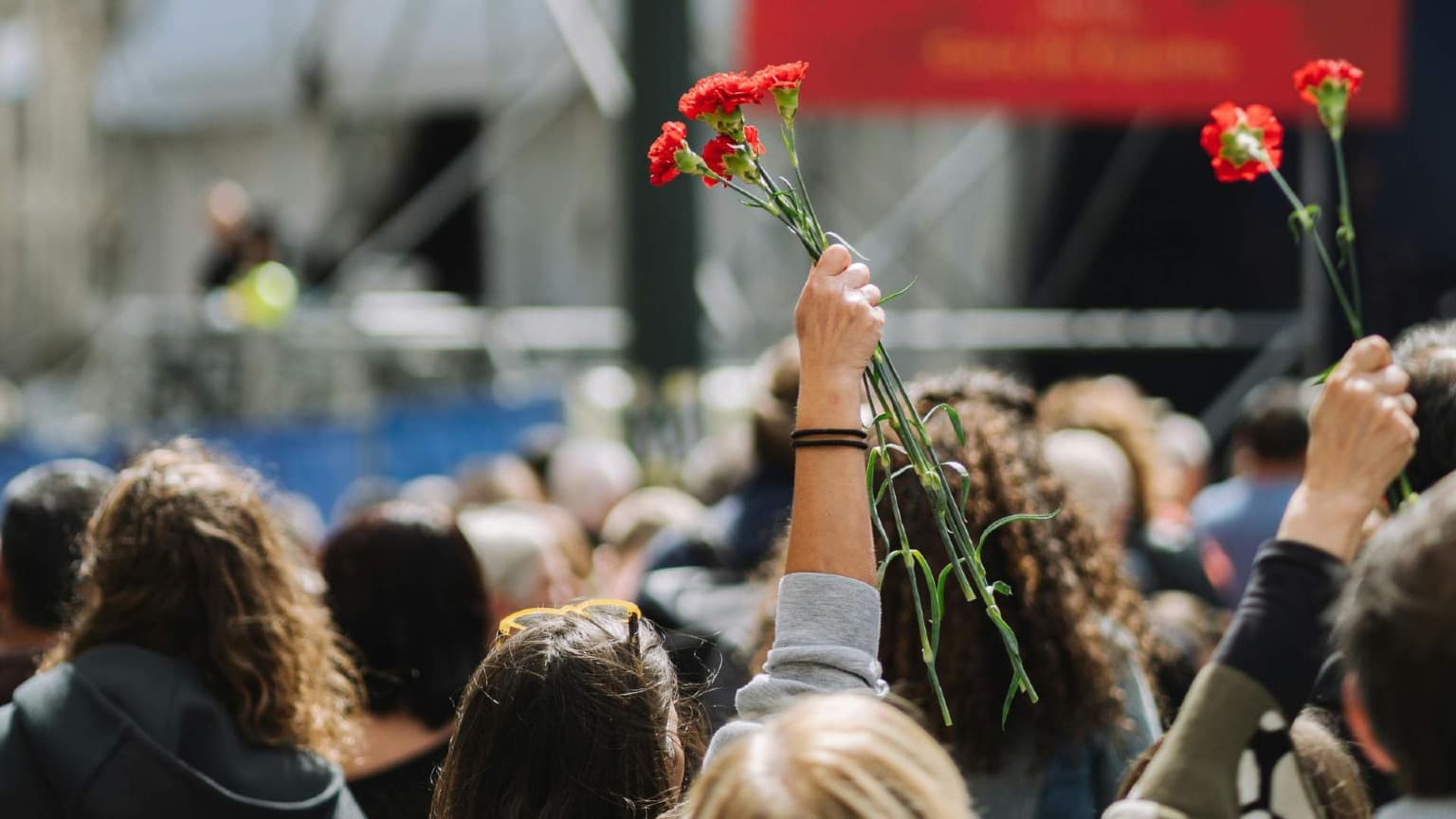
Avenida dos Aliados, Porto. Crowds fill the boulevard for the April 25th Freedom Day celebrations, carnations raised above their heads, Porto's annual tribute to the 1974 Carnation Revolution.
Porto's 2026 celebrations unfold under the theme "Por Abril. Pela Constituição. Pela Paz. Com Dignidade. Com Futuro" — linking the anniversary to present-day values of peace, dignity, and democracy. Events span two days, centred on Avenida dos Aliados.
Thursday, April 24th — Evening Program
| 22:00 | Concert by Carlão — Avenida dos Aliados
| Late evening | University of Porto Choir performs Grândola, Vila Morena
| Midnight | Fireworks over Avenida dos Aliados
Friday, April 25th — Freedom Day
| 10:00 | Children's activities and traditional games — Praça do General Humberto Delgado
| 14:30 | Tribute to Anti-Fascist Resistance Members — Largo de Soares dos Reis
| Afternoon | Freedom Parade through the city, arriving at Aliados
| 15:00 | Concert: Labuta
| 16:15 | Concert: Galandum Galundaina
All events are free to attend. Check Porto's official municipal website for any programme updates closer to the date.
Practical Tips for Visiting Porto on April 25th
• Book early – Accommodation fills up weeks in advance for this weekend. Book as early as possible.
• Arrive early – Evening events and the Freedom Parade draw enormous crowds. Arrive 45–60 minutes ahead.
• Use public transport – The Metro and buses serve Aliados well. Avoid driving into the centre on April 25th.
• Dress for the weather – Late April in Porto can be warm but changeable — a light layer is wise for evening events.
• Join respectfully – This is a deeply felt national day, not a tourist festival. Observe solemn moments with quiet.
• Explore beyond Aliados – Porto's historic neighbourhoods, Mercado do Bolhão, and the Douro waterfront are all nearby.
Why April 25th Still Matters
Fifty years on, Freedom Day is not merely commemorative. In Portugal — as in many democracies, the values the revolution represented feel newly relevant: freedom of expression, independent institutions, civic participation, the peaceful transfer of power. April 25th is the day Portugal takes stock of those values publicly, together.
For travellers, this is what makes it so unusual. Most countries' national holidays have been smoothed by time into parades and fireworks, the original meaning worn thin. April 25th retains a quality of lived urgency. People who remember 1974 still march. Young people carry carnations not as a historical gesture but as something they mean. The celebration has not been designed for tourism — it belongs to Portugal, which is precisely what makes it worth experiencing.
Visitors looking to explore Porto beyond the celebrations can discover the city's gastronomy and history through our Porto Food Tour or join a Private Porto Walking Tour through the historic centre — both offered by Cooltour Oporto.
Frequently Asked Questions
Written by the Cooltour Oporto team